Showing posts with label valentines day. Show all posts

Thursday, February 9, 2023

Plants With Romance

An illustration of a tree with black bark and pink and red hearts for foliage. It also says Happy Valentine's Day.


The traditional plant gift on Valentine’s Day is, of course, the rose. More specifically, red roses. But, what about blazing a new trail and give a living plant? All these plants have love-related names, and they will last a lot longer than those cut flowers. After all, who can forget a Forget-Me-Not? 

Bleeding Heart (Lamprocapnos spectabilis)

A close-up of the dangling, pink and white flowers of the Bleeding Heart plant.
In early spring and summer, the delicate arching branches of this elegant perennial fill with puffy heart-shaped petals that have protruding white inner petals. Most commonly the outer petals are pink, but there are some all-white versions. The Bleeding Heart is native to countries in Northern Asia (Siberia, Korea, Northern China and Japan) and North America. Here is a video with more information on this garden favorite.

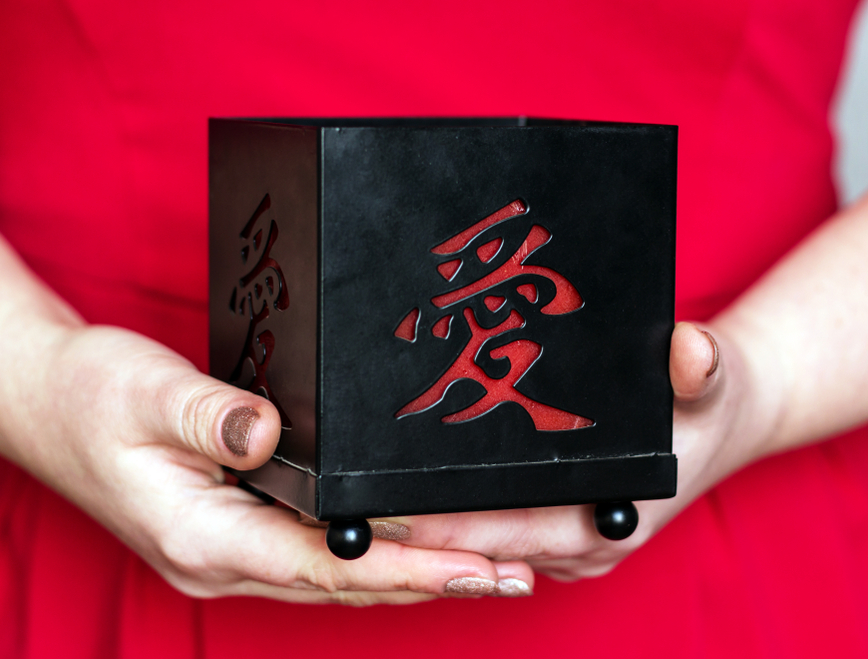
Hands with red nail polish holding a black laquer box with the Japanese  kanji symbol for love on it.
Fun Fact: In Japan there is a legend about a man who falls deeply in love with a beautiful woman and spends everything he has on gifts trying to win her. The hard-hearted woman takes the gifts but rejects him. Penniless and heartbroken, he stabs himself in the heart. The cool thing about this story is that it can be told by using the various parts of the flower.

Forget-Me-Not (Myosotis sylvatica)

Freshly picked blue and yellow forget-me-nots.
These popular plants have grey-green, hairy stems and an abundance of little flowers that can bloom throughout the growing season. To me, these flowers look like the typical flower that children draw; but their name comes from two Greek words: “mus” for “mouse and “otis” for “ears”, so others must think they look like mouse ears. These flowers are generally blue with yellow centers, but with 50 species in the family you’ll find pink and white variations as well. Forget-Me-Not flowers are relatively scent-free during the day, but at night they become very fragrant. This plant carries much symbolism, read more about it here.

A man with dark hair wearing armor on the left and a wioman withe red hair wearing a red dress on the right.

Fun Fact: As the story goes, a German knight was strolling along the Danube River with his ladylove when he went to pick some of these little blue flowers for her. He ended up in the water and was taken by the strong current. As he was being swept away, he called out “Forget me not!”. 

Love Lies Bleeding (Amaranthus Caudatus)

A close-up of the red flowers spilled from green leaves.An Aztec dancer in Mexico City wearing elaborate regalia.And since the path of love is anything but smooth, I present the Loves Lies Bleeding. This large annual has small, blood-red flowers that spill out from bright green leaves. This show-stopper makes a great ornamental plant, but it is also edible and has a plethora of medicinal uses. A native of the western hemisphere, It be traced back 7-8,000 years and was a domesticated grain crop 6,000 years ago. Watch this video to see how to cook amaranth. To the Victorians, this plant symbolized hopeless love, while others have seen it as a representation of Christ’s wounds on the cross.

“Fun” Fact: Amaranth was a staple food of the Aztecs, but it was also used ritualistically. They would honor their god of sun and war, Huitzilopochtli, by making little statues of him from human blood and amaranth grains. Which were then considered a real treat and gobbled down enthusiastically. Read mire about the Aztecs and amaranth here.

Closeip of the bright pink and orange berries of th Hearts-A-Bursting plant.

Hearts-A-Bursting (Euonymus americanus)

A drawing of a finger hovering over a spindle with threads in it.This deciduous shrub is native to the east coast of the US, from Florida all the way to Canada. The flowers of this plant are fairly non-descript; it’s the showy fruit that gives it is name. When the fruit appears it’s glossy red, with a warty strawberry-like texture. As it becomes mature, the fruit opens to expose a glossy, almost neon-orange berry. All parts of this plant are poisonous and should not be ingested by humans. It is a favorite of wildlife, however, and they can eat it with impunity.

Fun Fact: The European version of this plant, Euonymus europaeus, is known as the Spindletree because its spines were used to make the sharp spindles on spinning wheels. In the tale of Sleeping Beauty, she pricks her finger on her spinning wheel and falls asleep - or into a coma. This came from the once-popular belief that the wood was so poisonous that even the smallest cut could cause comas and death.

Lad’s Love (Artemisia Abrotanum)

Cloe-uo of hands grinding herbs with a mortar and pestle.Close-up of the foliage from a Lad's Love plant.This herbaceous shrub grows to be about 3’ x 3’ and has aromatic and bushy fern-like leaves. Lad’s Love is originally from southern Europe, but it was first introduced to our continent way back in the 1600s. This plant has a ridiculous number of common names, but Southernwood is one of the most widely used. People enjoy this plant just for its lemony, camphor-like scent and lovely foliage, but over the years it has been used for everything from pest control to medicine. One if it’s common names is “Maiden’s Ruin’, which reflects one of its rumored qualities – it’s supposed to be an aphrodisiac. Check out this video for one man’s adults-only take on the smell.

A gif of hands planting, watering and growing hearts in a flowering pot.
Fun Fact: According to folklore in southern Europe along the Mediterranean, teenage boys can kickstart their beard growth by using a facial ointment made from the ashes of this plant, olive oil and rosemary.


Happy Valentine’s Day to one and all!

Submitted by Pam


Wednesday, February 12, 2020

February Roses

A dark pink rosebud dusted with snow
February is the perfect time to think about roses, for any number of reasons. Many people are still in the doldrums of winter and the simple act of browsing through images of beautiful blooms can transport a person into the warmer and more fragrant days ahead. There is also a rose care factor to this month; certain maintenance is recommended in this time spot. There is Rose Day; which you may or may not be aware of (but we’ll get to that later). And then there is Valentine’s Day; when more than 224 million roses are grown every year for this day alone.

Hands in orange garden gloves pruning some pink roses.Most rose care calendars recommend pruning in February. If you do so and how you do so will depend on the region you live in and your personal preference. Many people have strong opinions on what is “right”. There are some standard recommendations according to which type you grow; but, when it comes to rose care, the varieties are more alike than not. If you are not committed to a care regime or just need some input, the people at the American Rose Society may be helpful, find a chapter near you.
Lovely lavender rosesA dew-kissed yellow and pink Peace Rose
Should you choose to prune this month, follow up with these steps to keep your roses happy as they bounce back:  (1) Dispose of all cuttings carefully (they are great hiding spots for pests). (2) Apply a nice layer of mulch (approximately 3”) around the plant base. (3) Apply products to treat preventatively for mildew, such as Monterey Bi-Carb Fungicide and (for larger applications) Milstop. (4) Keep weeds away (they are also great hiding spots). (5) Fertilize – we recommend DTE Rose & Flower Mix.

Sun shining down on a garden of pink roses
As long as your ground is not frozen and the worst of your winter is over, February can also be a good time to do some rose planting. Bare root plants take to the soil well in this dormant stage and should be established by spring. They are also cheaper than the larger sized plants you’ll find in warmer weather. Transplanting can be done in February as well, with the same stipulations as the bare root plants. If you plant accordingly and keep maintenance going, you should be all set to sit back and watch the flowers pop out as their season arrives.

Close-up of a beautiful yellow roseFebruary 7th is Rose Day (not to be mistaken with National Rose̒ Day for wine lovers). Rose Day, unlike Valentine’s Day, is not necessarily for lovers. Since the different colors of roses are supposed to mean different things, this may be a good day to send some lavender or yellow roses instead of the more romantic-leaning red ones. For more than you ever thought you’d want to know about the meanings behind rose colors. Rose Day is apparently meant to be the opening salvo in the war to win the heart of one’s beloved. There is a whole week of warm-ups to the big day of Valentine’s (aka Valentine’s Week): the 8th is Propose Day, the 9th is Chocolate Day, the 10th is Teddy Day, the 11th is Promise Day, the 12th is Hug Day and the 13th is Kiss Day. Does this sound completely unfamiliar to you? It does to me. But, it is apparently a big thing in India.
A bottle full of a clear liquid with pink rose petals in an around it
A perfect white roseSure, roses are beautiful and all, but they are more than just their good looks. Rose water and rose oil have been used for thousands of years for skin and hair care. The heady fragrance has been sought after just as long and has been distilled down from the petals and (in more recent history), manufactured artificially (just not the same). People just love that rose smell and they want it on themselves, in their homes and cars, on their dogs and more places that defy a proper classification (like the human bowel). Luckily, one can appreciate all these rose products year round.

A brick house with climbing pink roses surrounding a windowPlease excuse the awkward segue, but roses are also coveted by many as food. They are a close
relative of other fruits like apples, almonds, cherries, peaches and pears and can be cooked and eaten in the same ways. In case you would like to grow some roses as a way to explore their culinary attributes, here is an excellent article to inspire you. For more recipes, go here.  Get your roses taken care of in February and enjoy some deliciousness in the months to come.
A coffin-shaped black box with a skeleton on front opening to show some more illustrations inside and long-stemmed red roses.

Valentine’s Day is a couple of days away and the kitsch and sweetness level is at an all-time high. And there are a lot of people reaching for those 224 million roses previously mentioned and putting them in lovely vases. There is not much room for sentimentality in my world, so my preference would be the Nightmare Before Christmas roses.

Happy Roses, Everyone!

Submitted by Pam


Featured Post

5 Cool Things About Nematodes

It’s September, and here at ARBICO, it’s Beneficial Nematode season. Every year we put our Beneficial Nematodes on sale at this time to enc...