Showing posts with label climate change. Show all posts

Thursday, September 15, 2022

5 Cool Things About Nematodes

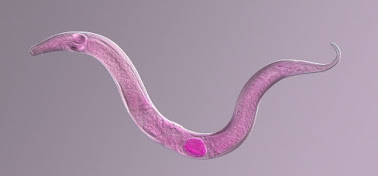
An image from a microscope of a nematode that's been colored pink for contrast.

It’s September, and here at ARBICO, it’s Beneficial Nematode season. Every year we put our Beneficial Nematodes on sale at this time to encourage our customers to get them in their garden before winter and get a jump on any soil-dwelling pests looking for a place to overwinter. If you’ve been using them, you know how big a difference they make and if you are not familiar with what they can do, now is the time to try them out. Beneficial Nematodes really should be considered an essential garden tool. To set your thought on these tiny beings, I’ve gathered some interesting tidbits about nematodes in general. 

THEY ARE LITERALLY EVERYWHERE

Antarctic soil nematodes - Scottnema lindsayae
Antarctic Soil Nematodes

According to a study done in 2019, there are 57 billion nematodes for every human on our planet and they make up four out of every five animals. The type of nematode that we sell here at ARBICO are the type that prey on insects, known as Entomopathogenic Nematodes (EPNs), but they are only one of the many varieties found in the land, water and bodies of living things on earth (for more on this, see my nematode blog from 2019). The air is the only place in our world that they do not inhabit (they have no wings). In the aforementioned article, the researchers discovered that the majority of nematodes actually live in artic and sub-artic environments and not the rainforest, as one might expect (see a fun video here). An oft-repeated anecdote about the ubiquitous nematode says that if you were to remove all but nematodes from the planet, Earth’s topography would still be recognizable in the nematode mass that remains . 

THEY ARE ANCIENT

Artist's version of the Devonian Period - fish are coming onto land.
Nematodes are not just everywhere; they have been here way before us. The oldest nematode discovered thus far is the Palaeonema phyticum and it lived during the Devonian period 419-359 million years ago (many millions of years before vertebrates).This nematode was found trapped in amber inside a land plant, but it had some characteristics of aquatic nematodes. This was the long period when the land, and all its flora and fauna, was developing from the sea, so these characteristics were no doubt a reflection of its evolution from a water nematode to parasite of land animals. As far as humans go, there have been references to nematodes and how they plague people as far back as 1500 BC. 

THEY ARE CLIMATE WARRIORS 

A man(from the back) working at a computer with an image of nematodes on it. There are flowers on the desk beside the computer.
Soil nematodes naturally create healthy soil and are essential to a thriving ecosystem. They aid in maintaining a healthy soil structure by aerating it, play a huge role in decomposition, and are active participants in cycling carbon and nutrients. The artic nematode scientists I mentioned before determined that a large and healthy nematode population is directly related to soil carbon. In other words, the more nematodes there are the more carbon is kept in the soil. There are scientists out there right now hoping to find a way to address climate change by studying how nematodes use carbon and their effect on its emissions.

THEY'VE BEEN KEY IN IMPORTANT SCIENCE
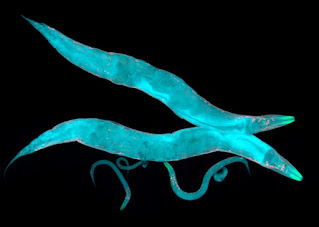
An image of 2  Caenorhabditis elegans nematodes.
Caenorhabditis elegans 
Nematodes have proven to be a boon for researchers when a multi-cellular subject is needed. They are amazingly similar to human biology in several important ways – they develop from a single cell, have complex development, maintain a nervous system and even seem to have the capacity to learn (more here). It seems safe to say that these characteristics are what drew scientists to the Caenorhabditis elegans nematode when looking for a study subject for DNA research. It ultimately became the first multi-cellular organism to have its DNA fully sequenced. This scientific breakthrough was a world-changing event that has led to a great many scientific and cultural changes. On another note, this particular nematode was on board the Space Shuttle Columbia when it exploded on re-entry on February 1, 2003. All seven astronauts were killed, but their test-subject nematodes survived. For more on how this happened and what scientists were able to learn from it, check out this article

THEY CAN BE ZOMBIES

A hand protruding from the dirt.
Okay, so not exactly zombies because they don’t eat brains; but they can go into a living-dead state. They do this through a process called cryptobiosis, whereby they are able to suspend all their metabolic activity. Everything just stops. This extreme hibernation is as close to death as something alive can be. Nematodes go into this state when environmental conditions are extreme and unfavorable and will stay in it until conditions improve. This can make it challenging to fight damaging nematodes, but this ability is another source of interest to scientists, especially climate scientists. We all know we are in a time of extreme climate change, so there is hope that we can learn something about how to survive from the humble nematode. There are other creatures who have the ability to hibernate in this way, this short article gives some great examples.

An image of a grey nematode swimming along.
When you add some Beneficial Nematodes to your yard or garden, you are not just helping your plants. You are also taking climate action in some small way by putting nematodes to work doing their thing.

Take Care

Submitted by Pam


Friday, April 30, 2021

5 Tree Cities of the World

A spinning half-globe topped with grass and a tree.

It’s Arbor Day – a chance to appreciate, tend to, and perhaps save, the trees around us. Protecting our tree canopy is an essential component in the fight against climate change, so every day should be Arbor Day. And these efforts need to be global. It is with this mind-set that the Arbor Day Foundation began Tree Cities of the World in 2019. This a program that recognizes cities around the world that have taken exceptional care of their urban forests and have committed to their sustainability. In order to receive recognition, a city (or town) must meet five standards: They must establish responsibility on a municipal level; they must have a law or policy that mandates tree management; they must keep an accurate assessment of the trees they have; they must have dedicated funds for all this; and they must celebrate their achievements annually to keep awareness and enthusiasm strong. To this date, 120 cities have been recognized, with over 2,000,000 trees planted. This has been made possible by more than 618,000 volunteer hours in all these cities. In this blog, I’d like to take you around the world and introduce you to some of these places.

Buenos Aires, Argentina

A road in Buenos Aires, Argentina covered in purple-blooming jacaranda trees.

Buenos Aires (BA), the capital of Argentina and its largest city, can be found in the southeastern part of South America spread out along the banks of the Rio de la Plata. BA is well known among dendrophiles as a city with an abundance of gorgeous greenery. Here is a tree guide that walks you through some its most stellar species. One tree that’s mentioned in the guide and is strongly associated with BA is the jacaranda. They are all over the city and bloom magnificently in November (their springtime). Here is a collection of some incredible images of them. BA is also an artsy city, and the love of art and the love of trees combine in this statue – the mythical strongest man is holding up the oldest tree in BA. 

Teo women climbing amongst the massive, twisty trunk of a tree.
Hyderabad, India

This busy metropolis in south central India is the only city on the subcontinent to be recognized. As climate changes have brought more extreme monsoons (and weather in general), Hyderabad has had to deal with huge numbers of trees falling. The work of activists to save their trees has led to this recognition, of which they are understandably proud. Part of their tree-saving efforts have been to discourage the planting of non-native, flashy species and encourage the hardier native varieties. Trees have a long history of being valued in India; they have deep religious, historic, and cultural value. Case in point: Hyderabad is home to a 400-year-old Baobab tree, given to the ruler Quli Qutub Shah by a merchant from Madagascar. It is known as Hathyan ka Darakht.

Kampala, Uganda

A wooden walkway in a Kampala park, covered in moss, ferns, and trees.
You’ll find Kampala in east-central Africa, on the shore of Lake Victoria, Africa’s largest fresh-water lake. The only African city recognized, Kampala may seem like an unlikely candidate given the fertile forests in this country. But they have, unfortunately, been recovering from and dealing with ongoing civil conflicts for some time. These conflicts have led to famers and other stewards of the land to be displaced and rampant habitat destruction. In response, Uganda has created programs to re-train people and re-forest the environment, such as Trees for the Future and welcomed help from afar, such as this program backed by the Welsh government. For its own small bit of Uganda, Kampala has made a commitment to preserve and protect its urban canopy and its lush parks showcase their efforts.

Snow and frost-covered trees in a park opposite a metal railing. Photo by Andrey May on Pixabay.
 Krasnoyarsk, Russia

Krasnoyarsk is the third largest city in Siberia and sits in the epicenter of Eurasia. At first glance, this seems like another unlikely tree-saving place since Russia is home to the most trees on the planet. But Russia has a long history of planting trees for conservation and remediation purposes. The Soviet added green spaces to their planned cities and trees were even planted as part of the Chernobyl cleanup. So, it’s actually surprising that this is the only recognized city in Russia. The citizens of Krasnoyarsk know that their spectacular natural treasures are what makes them special, and they are fighting to preserve them. By all accounts their summers are lovely, but Siberia is famous for its winters. To see the beauty of  Krasnoyarsk at -30°C (-22°F), check out this video.

Thousands of orange and yellow monarchs roosting on a tall oyamel fir tree.
Morelia, Mexico

This beautiful and historic city in western Mexico is the capital of the state of Michoacán. It is home to a lush natural environment, including the UNESCO Monarch Butterfly Bioshpere Reserve. This is where monarchs end their southern migration, and between October and March millions of these beauties land here. Unfortunately, this area is also home to violent drug cartels, illegal logging, and general lawlessness in the forests. Nevertheless, there are many brave conservationists who staunchly defend their natural resources, sometimes to the death. The situation is dire there and could conceivably end the monarchs for good. All of this makes it so much more commendable that Morelia has vowed to protect their precious trees. 

An orange tree beside a lake with green trees on the opposite shore.
Wellington, New Zealand

On the southside of the North Island of New Zealand you’ll find their capital, Wellington. Surrounded by natural beauty, this charming city is continually being placed at the top of "most livable" cities lists. It is, like New Zealand in general, dedicated to the care and preservation of its natural resources, which includes its urban trees. Back in 1997, the citizens of Wellington set a goal to plant 2 million trees, and they’re getting close. It’s no wonder that the Arbor Day Foundation recognized them the first year they started the Trees of the World program.

A gif of comedian Jimmy Fallon hugging a tree
So, go out there and appreciate a tree today everyone!     
       
Submitted by Pam


Thursday, May 14, 2020

What's This Bug? The Shaggy-Legged Gallinipper.

Close-up of a Psorophora ciliata - The Shaggy-Legged GallinipperThese days everyone wants to just get out and get on with their summer fun (except for those of us in AZ who are entering our self-imposed, heat-avoiding annual lockdown); but, remember there are hungry creatures out there waiting anxiously for your return. Case in point: The Shaggy-Legged Gallinipper (SLG). If you think this sounds like something you might hear on a show like “Moonshiners”, you aren’t far off. “Gallinipper” is an heirloom Southern term for an exceptionally large insect with a frightening bite. Which this is and it has hairy legs.

Close-up of a Shaggy-Legged Gallinipper mosquito sitting on a finger.So, what is this bug? It's a mosquito (Psorophora ciliata), but not your average skeeter. It’s unusual in many ways. First of all, the SLG is big (as you’ve no doubt deduced) – like 3 to 6 times as big as a typical mosquito. It’s fairly rare and does not appear unless there has been abundant wet weather. It’s also an aggressive carnivorous predator that prefers other mosquitoes as prey, but does not limit itself to them. On the up side, it’s not a vector for disease transmission to humans.

A map showing in gray the areas where the Shaggy-Legged Gallinippers can be found in North America.
SLG Distribution  
The SLG is a mosquito that is hard to miss and hard to forget. At about the size of a quarter, you will see these suckers coming. While their size may be intimidating, they are not the largest mosquito in the world. That honorific belongs to the genus Toxorhynchites and can be found worldwide. Toxorhynchites mosquitoes are huge, but at least they are not bloodsuckers. More on them here.

A flooded meadow with more water in than foreground and more green in the background.Although their territory is expanding as our climate changes, the SLG is primarily found in the Southeastern and Midwestern parts of the US. That being said, they have been reported as far north as Ontario and as far south as Argentina. Even though recent severe hurricanes and flooding have been followed by a rise in the SLG population, these are still uncommon mosquitoes. Everything has to fall into place for them to emerge in numbers, This is due to how they have adapted their lifecycle to respond to flooding events. SLG females have the ability to hold sperm until they find an ideal egg-laying time and location. They then fertilize the eggs as they are being laid and create an egg bank (which can contain a million eggs) for future hatching. For an SLG mom the perfect spot is not in standing water like many mosquitoes, it is on moist and low-lying ground that will likely flood at some point. This means they could be in anything from a drainage ditch to a woodland meadow. There the eggs will sit for as long as it takes for water to reach and cover them, then they will hatch. This waiting period can be years-long long, but the eggs are specially adapted to remain viable when dry and can easily overwinter. Once a hurricane or some sustained thunderstorms bring water to them, all these patient eggs will burst out all at once and the race will be on to start the next generation.

A close up of the head of the Shaggy-Legged Gallinipper Mosquito.
A female with her syringe-like proboscis
 Due to the transient nature of the pools from which the SLG emerges, these mosquitoes have a short eggs-to-adults period at just over a week. The adults then only live for a couple of weeks. Both of these are factors in why they grow so large and ferocious. They first grow big in their larval stage when they are eager carnivores, dining on other mosquito larvae and other aquatic invertebrates, and size matters when it comes to the ability to capture and consume prey. Likewise, being bigger and stronger for their short lives means that they can produce more eggs or sperm and do not need to feed to bulk up. Females may only need one full blood meal to get the nutrition she needs, which reduces the likelihood that she will seek out a human to bite and also puts her out of the disease-transmission game. However, by all accounts, you don’t want to get bit even once by one of these. It has been reported that their bite feels like a stabbing and is strong enough to go through two layers of cotton.

A black and white cartoon of people reading a large screen that says>< "Giant Mosquitoes Advancing On City"Here at ARBICO, we have some fabulous mosquito control options to arm yourself with before heading out there this summer. However, if you live in certain areas that are prone to flooding and/or hurricanes and still hope to be out enjoying nature in the coming months, be aware that you may get nailed by a large and strong lady mosquito. But, she’ll probably only bite once. Of course, she has billions of sisters that she hangs out with, so……

Submitted by Pam

Tuesday, November 27, 2018

Global Seed Vault – Securing A Better Future

Global Seed Vault in Svalbard, Norway
Built in a vacant coal mine deep within arctic permafrost, the Global Seed Vault contains the most diverse collection of food crops on the planet. The vast collection, amounting to a whopping 864,000 samples, houses close to 4.5 million seeds. Among the cataloged seeds are 159,000 varieties of wheat and 146,000 types of rice. These seeds have been kept for reasons varying from ensuring genetic diversity to expressing individual, commercially valuable traits.

The bank itself was conceived as a fail-safe in the event of global catastrophe with an emphasis on maintaining food security in less developed countries. This focus cast a gazing eye on the future when it was built in 2008 with the Crop Trust, its operating body, calling it “the final backup.” In the case of nuclear war or the rampant population growth expected over the next 100 years, these seeds will be there for emergency use – viable and ready to plant.

That viability was threatened in 2017 when the changing climate reared its head. Up until then, the Global Seed Vault had proven to be the perfect place for storing its grand collection. Located 800 miles within the Arctic Circle in Svalbard, Norway, one would think that melting ice would be low on the list of worries – and it was. Unfortunately, the permafrost that had previously encapsulated the vault began to melt and left thousands of years of agriculture in limbo. Thankfully for the vault and any future generations who may need its services, the water did not reach any of the seed collection. It did, however, serve as a fair warning.

Heeding the warning, the Norwegian government has allocated $10 million to buffer the vault’s defenses against mounting challenges, climate-driven or otherwise. With new emergency power units, refrigeration systems and a brand new concrete access tunnel, scientists hope to avoid any further scares. Agriculture is expected to be hit increasingly hard by the stressors caused by climatic changes and food security will play an important role in maintaining the safety, health and cohesion of billions of people worldwide.

It is time to be thankful for the people keeping their eyes on future generations. Without them we would not have some of the things we take for granted. For better or for worse, a few seeds may be all it takes to make or break our species and, like other vaults around the world, the Global Seed Vault is securing a better future for all of us.

Click Here To Browse Our Organic & Heirloom Seed Catalog To Start Your Winter Garden Today!


- Contributed by Sterling N.

Featured Post

The Spiritual Messages of Insects

We are deep in the hot, sweaty, and buggy time of year. It’s summer and millions and billions of insects have appeared to put a damper on wh...