Showing posts with label beneficial nematodes. Show all posts

Wednesday, May 1, 2024

How to Control Grubs - The Sneaky Lawn Pest!

Grubs are the larva of various types of beetles and chafers, such as the Japanese beetle or European chafer. 

You’re likely concerned about them because of the potential damage they can do to your lawn. 

While both grubs and adults can cause damage to your plant, the biggest problem is actually the fact that grubs and chafers are prey for a variety of animals, including moles, skunks, and raccoons. These creatures will tear up your lawn to get to the grubs, quickly turning your grass into a field of potholes.  

Before investing time and resources into curtailing your grub problem, double check

that the issue actually is grubs! 

  • To see if your yard or garden has a grub problem, dig out a section of dirt using a shovel. This should be around 2-inches deep. 
  • Parse through the dirt to discover the white, C-shaped grubs. They’re usually under an inch long. 
  • Finding one grub doesn’t mean that you need to sound the alarm. Grubs and beetles are part of our natural ecosystem after all. However, if you’re finding an overwhelming amount of grubs in your samples, it’s time to take action.  

Nematodes


Nematodes are some of the best biological control agents on the market. They’re effective at eliminating grubs, though they are ineffective against adult beetles. Application of beneficial nematodes is simple. First, make sure that the soil is moist since nematodes require a moist environment. They are applied with the substrate they come in, just mix with water and apply to soil. See this link for more information. Apply the nematodes to the moist soil in the late afternoon. You can use a sprayer or a sprinkler-style watering can to do so. Depending on the severity of the infestation, multiple applications may be needed so continue to monitor for signs of damage and be prepared to reapply if needed.


Milky Spore


While beneficial nematodes are capable of eliminating a wide variety of insect pests, milky spore is a specific, bacteria-based form of pest control. If you’re using milky spore, you’re focused on getting rid of Japanese beetle grubs. The ideal time for soil application is in late July or early August. This is when the grubs are closest to the surface of the soil and feeding on your plant roots. While they’re biting into roots, the grubs will also ingest milky spore bacteria. Once this happens, the bacteria begin to rapidly multiply, killing the grub within 3 weeks. As the grub decomposes, the multiplying bacteria are released back into the soil to infect new grubs. 


Milky spore is very harmful to Japanese beetle grubs, but has no effect on various beneficial insects, household pets, or humans. 


Due Diligence


Keeping a healthy lawn goes a long way towards eliminating grub infestations and preventing noticeable grub damage. A healthy lawn that receives regular rainfall (or is artificially supplied with water through an irrigation system) will have much stronger roots. Keeping the grass trimmed at 3-4 inches can also strengthen the root system of your grass. Cutting grass below 3 inches can cause root stress, which in turn results in a higher susceptibility to grub damage. Of course, a proper fertilizing routine goes a long way too! 


Robin - @ ARBICO Organics


Thursday, September 15, 2022

5 Cool Things About Nematodes

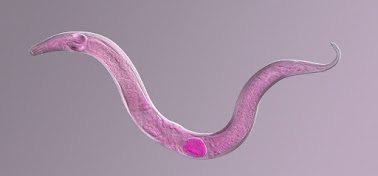
An image from a microscope of a nematode that's been colored pink for contrast.

It’s September, and here at ARBICO, it’s Beneficial Nematode season. Every year we put our Beneficial Nematodes on sale at this time to encourage our customers to get them in their garden before winter and get a jump on any soil-dwelling pests looking for a place to overwinter. If you’ve been using them, you know how big a difference they make and if you are not familiar with what they can do, now is the time to try them out. Beneficial Nematodes really should be considered an essential garden tool. To set your thought on these tiny beings, I’ve gathered some interesting tidbits about nematodes in general. 

THEY ARE LITERALLY EVERYWHERE

Antarctic soil nematodes - Scottnema lindsayae
Antarctic Soil Nematodes

According to a study done in 2019, there are 57 billion nematodes for every human on our planet and they make up four out of every five animals. The type of nematode that we sell here at ARBICO are the type that prey on insects, known as Entomopathogenic Nematodes (EPNs), but they are only one of the many varieties found in the land, water and bodies of living things on earth (for more on this, see my nematode blog from 2019). The air is the only place in our world that they do not inhabit (they have no wings). In the aforementioned article, the researchers discovered that the majority of nematodes actually live in artic and sub-artic environments and not the rainforest, as one might expect (see a fun video here). An oft-repeated anecdote about the ubiquitous nematode says that if you were to remove all but nematodes from the planet, Earth’s topography would still be recognizable in the nematode mass that remains . 

THEY ARE ANCIENT

Artist's version of the Devonian Period - fish are coming onto land.
Nematodes are not just everywhere; they have been here way before us. The oldest nematode discovered thus far is the Palaeonema phyticum and it lived during the Devonian period 419-359 million years ago (many millions of years before vertebrates).This nematode was found trapped in amber inside a land plant, but it had some characteristics of aquatic nematodes. This was the long period when the land, and all its flora and fauna, was developing from the sea, so these characteristics were no doubt a reflection of its evolution from a water nematode to parasite of land animals. As far as humans go, there have been references to nematodes and how they plague people as far back as 1500 BC. 

THEY ARE CLIMATE WARRIORS 

A man(from the back) working at a computer with an image of nematodes on it. There are flowers on the desk beside the computer.
Soil nematodes naturally create healthy soil and are essential to a thriving ecosystem. They aid in maintaining a healthy soil structure by aerating it, play a huge role in decomposition, and are active participants in cycling carbon and nutrients. The artic nematode scientists I mentioned before determined that a large and healthy nematode population is directly related to soil carbon. In other words, the more nematodes there are the more carbon is kept in the soil. There are scientists out there right now hoping to find a way to address climate change by studying how nematodes use carbon and their effect on its emissions.

THEY'VE BEEN KEY IN IMPORTANT SCIENCE

An image of 2  Caenorhabditis elegans nematodes.
Caenorhabditis elegans 
Nematodes have proven to be a boon for researchers when a multi-cellular subject is needed. They are amazingly similar to human biology in several important ways – they develop from a single cell, have complex development, maintain a nervous system and even seem to have the capacity to learn (more here). It seems safe to say that these characteristics are what drew scientists to the Caenorhabditis elegans nematode when looking for a study subject for DNA research. It ultimately became the first multi-cellular organism to have its DNA fully sequenced. This scientific breakthrough was a world-changing event that has led to a great many scientific and cultural changes. On another note, this particular nematode was on board the Space Shuttle Columbia when it exploded on re-entry on February 1, 2003. All seven astronauts were killed, but their test-subject nematodes survived. For more on how this happened and what scientists were able to learn from it, check out this article. 

THEY CAN BE ZOMBIES

A hand protruding from the dirt.
Okay, so not exactly zombies because they don’t eat brains; but they can go into a living-dead state. They do this through a process called cryptobiosis, whereby they are able to suspend all their metabolic activity. Everything just stops. This extreme hibernation is as close to death as something alive can be. Nematodes go into this state when environmental conditions are extreme and unfavorable and will stay in it until conditions improve. This can make it challenging to fight damaging nematodes, but this ability is another source of interest to scientists, especially climate scientists. We all know we are in a time of extreme climate change, so there is hope that we can learn something about how to survive from the humble nematode. There are other creatures who have the ability to hibernate in this way, this short article gives some great examples.

An image of a grey nematode swimming along.
When you add some Beneficial Nematodes to your yard or garden, you are not just helping your plants. You are also taking climate action in some small way by putting nematodes to work doing their thing.

Take Care

Submitted by Pam


Thursday, November 4, 2021

Creatures To Be Thankful For

An image of Earth, showing different ecosystems like jungles and underwater.
At this time of year, we are all encouraged to find things to be thankful for and this year I'm encouraging you all to look beyond humans and to consider all the other living things that help us survive on our planet. Without the input of these creatures, the conditions that allow people to live comfortably would not exist (or perhaps humans wouldn’t exist at all). All of these deserve our gratitude. While we are familiar with many animals that are essential for the environment (hello, bees), there are many others you may not think of. I’d like to introduce you to some.

A black silhouette of a female praying mantis
BENEFICIAL INSECTS & NEMATODES- Here at ARBICO beneficial insects are a big part of our daily lives, so I can’t help but mention them first as something to be thankful for. We are all about good bugs that kill bad bugs. We have bugs that fly around hunting others, bugs that crawl around to hunt, and others that burrow through the soil while hunting. Some like specific prey, and some eat just about everything they come across. What all these beneficials have in common is that they feed on things that feed on our food. In other words, they keep gardens free from predators, so they can grow lushly and produce prolifically. If you are not familiar with all that we have, this page will get you started on learning more.

An artist's rendering of Bifidobacteria, a beneficial bacteria.
 BENEFICIAL MICROORGANISMS - As far as beneficials go, insects may be the stars of the show, but beneficial microorganisms are essential supporting characters. Without healthy soil, full of bacteria, mycorrhizae (and even fungi), your soil will not be able to sustain any plant life. These tiny beings are crucial for our survival, but it’s probably safe to say they never cross the mind of most people. Let’s take a minute to be thankful for them. We have a great many products that have one form or another of beneficial microorganisms, but they really shine in our microbial inoculants.

Silhouettes of bats flying through the trees against a blue sky
BATS – There’s nothing scary about bats; they are gentle mammals that are great to have around.. On any “World’s Most Dangerous Animals” list, you’ll find mosquitoes listed as the most dangerous  (those that don’t include humans, that is). They kill roughly 725,000 people a year from the various diseases they carry, so any animal that can put a dent in that number should be thanked. An individual bat can eat 1-2,000 mosquitoes an hour, so just imagine how many a large colony can take care of! Experts say that birds eat more mosquitoes than bats, but those bats that are not insect-eaters are pollinators. So, bats are either eating a deadly insect, or pollinating our plants – a two-fold reason for appreciating bats. One more thing: their guano is excellent fertilizer. 

A close-up of a beaver in water with his eyes and nose poked out above the surface.
BEAVERS – Most of you reading this have probably never see a beaver in the wild, but you should be thankful for them nonetheless. These North American mammals are tireless stewards of our waterways and their busy aquatic lifestyle keeps wetlands wet, groundwater levels up, and provides essential firebreaks that protect forests. Even if you don’t have beavers where you live, all life benefits when waterways are working as they should. Any creature that protects such a crucial resource as water get my thanks. This article tells how scientists in California are working with beavers to combat devastating drought and fire caused by climate change that state.

Snakes swimming in a blue ocean with a reef below them full of colorful coral and fish.
SHARKS -  I realize that this creature provokes a visceral response in many people, but it really does play an important part in keeping our oceans in balance. And we all know that a healthy ocean is key to life on Earth. Sharks preserve the balance in the sea by being an apex predator, but they also keep coral reefs healthy. They do this by eating the fish that eat the herbivores that graze on algae. When there is too much algae, the coral (and other species) will die off (for more on why reefs are important, watch this video). On the other hand, the appetite of sharks also prevents the overgrazing of seagrass (which store carbon and help prevent erosion). They do this by eating herbivore fish, so they are really working both sides of the equation.  For more on the what the wondrous shark can do, here is an excellent short article. Thanks, you big toothy environmental warrior! 

A close-up of a Red Squirrel.
 SQUIRRELS – Squirrels are (with the exception of Australia and Antarctica, found all over the world),  so they are very familiar to most people. These bushy-tailed little mammals are both endearing and entertaining as they scamper about in their busy little way. And it’s this behavior that we should be thankful for. As squirrels gather, eat, bury, store, and poop out seeds and nuts they are keeping the forest floor groomed and are ensuring a healthy distribution of future plants and trees. According to this article, it’s estimated that squirrels can be credited with planting millions of years every year in North America alone.

Green and purple phytoplankton under a microscope.

PHYTOPLANKTON – These microorganisms are even more important to life on Earth than soil microorganisms. These microscopic marine algae are a key component in both marine and freshwater ecosystems, but their impact goes beyond the water. As the foundation of the aquatic food chain, without this tiny creature whales, seals, sea birds and even humans would go hungry. But probably the most important role that phytoplankton play is in producing oxygen – up to 2/3 of the world’s atmospheric oxygen. We are all aware that trees produce oxygen, but it is these hardworking microorganisms that produces the most for us by far. This, simply put, is why we need clean oceans. So that they can continue to thrive and survive. Although they may be hard for some people to appreciate because they cannot be seen, let’s just consider them magic. A vital environmental magic.

A squirrel standing on a stack of nuts and munching on one. Of course, there are many other creatures on this planet to appreciate; in a well-functioning ecosystem all parts played by each species are important. I challenge you all to notice, and be grateful for, those that I did not have space or time to mention.

Take Care                           Submitted by Pam


Thursday, January 14, 2021

What's This Bug? The Fungus Gnat.

A close-up of a Fungus Gnat
These itty bitty insects are fungus gnats, although they go by many names, including “soil maggots”, “soil gnats”, and, (very commonly) “fruit flies”. People often mistake fungus gnats for fruit flies, but if you look closely you will see that they look more like tiny mosquitoes than any kind of fly. Although they look like mosquitoes, they don’t behave like them. They can’t bite and are utterly harmless to humans. However, they do have a nasty habit of flying around people’s faces, so it’s pretty easy to inhale or swallow one. Unpleasant but not necessarily dangerous.

Houseplants in pots on a windowsill looking our onto a wintry scene.
Many people say that fungus gnats are worse in winter, but they may have been around all year long and you just didn’t notice them. Conditions in the home during winter are perfect for fungus gnats to thrive and people are inside more with their plants, so if you have a problem you will notice it during the cold weather months. And then there is the bringing-inside factor: when the temperature plummets, people scramble to bring in their plants that have been sitting on the porch or patio. It's very common to have hitchhikers on recently-outdoor plants, so always check them carefully before re-homing them.

Tiny black insects, fungus gnats, all over a green leaf.
Fungus gnat adults are harmless to plants – it is their offspring that cause the trouble. The adults lay their eggs in soil and within 3 days the larvae emerge and they are mighty hungry. Their foods of choice are fungi, decaying organic matter, and plant roots and they begin feeding as soon as they hatch. This feeding continues for about 10 days, at which time the larvae will pupate. A short 4 days later, the adults emerge from the pupae ready to reproduce. This short life cycle means that you could potentially have a continuous population of fungus gnats in your plants. When you take into consideration that these insects will thrive all year round in your climate-controlled home, it pays to be on guard and prepared to put down any potential infestations. 

Rows of potted plants on light-colored shelves. It's a greenhouse in Dublin, Ireland. Photo by Soff Garanavano Puw on Unsplash.
Fungus gnats can be a big problem in greenhouses. The conditions (moist & warm) that are optimal for
propagation are also optimal for fungus gnat development. Their larvae will not only damage roots and cause wilting or plant death, their root-eating behavior can open wounds that allow soil-dwelling pathogens in. One small opening can lead to massive damage to crops or plant collections. For more on what to watch out for and ways to control fungus gnats in these situations, check out 
this short but informative article.

 Because the larvae do their feasting underground, the signs of their activity are often hidden until the damage has been done and the plants are visibly suffering. Your best tactic is to be pro-active and take the following steps:

An arm holding a yellow watering can and watering a tall green plant in a green container on a wooden table.
Watch for flying adults - Fungus gnats are not great fliers, so you won’t see swarming like other insects do. What you may see is their sudden appearance as you water or turn lights on. The water will disrupt their hop-flying around the soil and, like other insects, light will draw them to it. Bear in mind that fungus gnats are very small, only 1/8”-1/10” long, and have clear wings and long antenna. If the insects flying around your plants don’t have these characteristics, then you have another insect pest problem. Here’s some more information on how to identify fungus gnats.

Watch your watering – Proper watering is not only important for overall plant health, it is an invaluable tool to control soil-dwelling larvae. Simply put, fungus gnats like living in soggy potting soil. Remember that plants require less water in winter, so your regular watering schedule should be cut back in cold months. Make sure that your plants are draining thoroughly and give the top couple of inches of soil (where the larvae like to dwell) a chance to dry out between waterings. 

A yellow sticky trap with insects on it. It sits in a container of basil.

Use sticky traps – Whether you have 15 or 15,000 plants, sprinkling some sticky traps around your growing area is a great way to find out what insects you have in there. And, with a little math, you should also be able to get at least a rough idea of how many there are. We carry a wide variety of sticky traps; you should be able to get whatever size, shape, and color you want here.

If you are a visual learner, we have a video about fungus gnats that you may enjoy. It’s a cartoon and (I think) rather fun.

An image of tiny gnats flying beside a plant.

If you think you have (or know you have) a fungus gnat problem, don’t despair - there are a lot of ways to get rid of them. Here at ARBICO, we have many solutions, including Beneficial Nematodes and beneficial insects that prey on fungus gnats. Interestingly, although fungus gnats are not related to mosquitoes, many of the products used to control mosquitoes work for them as well. If you would like more information on ways to control fungus gnats, go to our ARBICO Organics fungus gnats page here.

Submitted by Pam


Wednesday, September 2, 2020

A Perfect Paring: Cannabis and IPM

A bud of cannabis at the bottom of a wine glassCurrent cannabis growing norms are ideal for practicing Integrated Pest Management (IPM). Whether they are motivated by the desire to grow healthy, clean plants, or purely by regulatory constraints, the end result is the need to minimize impacts on people and the environment. IPM begins with getting your soil or soil medium right and moves on to pest prediction, trapping and monitoring; using cultural, biological and (carefully vetted) chemical controls and, throughout it all, conscientious observation and record-keeping to plan for the future (for more on all this see our IPM page here). All of which works perfectly for a well-run grow.

A close-up of a cannabis bud - Photo by Avery Meeker on UnsplashA good portion of IPM practices are pretty straight forward and easy to initiate, even for beginners to the field. The biological controls part, however, can be daunting (if not downright confusing) even for seasoned growers. Here at ARBICO Organics, our mission is to guide growers towards these best practices and help them maintain smooth and efficient biological control using the proper beneficials for the job.

Any IPM program no matter the crop or growing style, works best when it’s started before you even touch a plant. Soil/soil mediums should be pathogen-free, yet full of microbial life, before any plants go into it. The introduction of beneficial nematodes and/or Stratiolaelaps scimitus (Hypoasis miles), for instance, can offer early, pro-active protection from a long list of insect pests. Hypoasis miles specifically preys on the dreaded fungus gnats. A little bit of pre-emptive treatment early on can save you financial and emotional hardship later.

The life stage of a cannabis plant - seed, seedling, vegetative, flowering and harvest.Another necessary step to be taken from the start is close monitoring of the grow environment. Not only to ensure that plants are in optimal growing conditions, but also to spot pests and pathogens as soon as they appear. Biological controls work best over time, so it is important to apply them at the first sign of trouble. This is often the stage where growers who are new to biological control falter. We have been conditioned to reach for a killing spray as soon as we see a bug, so there is sometimes a learning curve and a change in expectations that needs to happen. Instead of squishing the bug instantly, observe and identify it, discover where it came from, and determine if there is a population living in your plants. Armed with the specific knowledge of what you’re up against, you can move on to your
next step – choosing the beneficial to use - with confidence.

An indoor grow - Photo by Ryan Lange on UnsplashKnowing the pest you need to control is important, but when choosing the right beneficial agent for your specific needs your growing environment needs to play a role in your choice as well. Certain beneficial insects have specific temperatures and relative humidity requirements to perform their best, while for other insects the amount of light can affect their biological functions. Outdoor growers are restricted in their choices by their environment, whereas indoor growers have more options, including modifying their conditions to ensure that the beneficials thrive. There are some biologicals that can work indoors and out for most situations, but for optimal control, you’ll want the best beneficial for the specifics of your grow. This does not mean that the “all-purpose” biologicals are no good, only that they are but one part of a multi-tool IPM approach.

A man with a cap on examining cannabis plants- Photo by Terre Di Cannabis on UnsplashThere is a wealth of beneficial/predatory insects and organisms that work extremely well to control pests in cannabis cultivation. Some of these include predatory insects and mites, parasitic wasps, microorganisms, and the afore-mentioned beneficial nematodes. Amongst the predatory insects, there are generalists (non-selective) predators and specialist (targeted) predators. The generalists aren’t picky eaters and go after lots of different insects in various life stages. They include Assassin Bugs (Zelus renardii), Green Lacewings (Chrysoperla rufilabris), Minute Pirate Bugs (Orius insidious), and even Ladybugs (Hippodamia convergens). The specialist predators have specific dietary proclivities and either consume or parasitize particular prey. They include Mite Predators (Phytoseiulus persimilis), Aphid Wasps (Aphidius colemani), and the Fungus Gnat Predator Hypoasis miles that I mentioned earlier. Unless you have used beneficial insects before or you are a professional in the good-bug field, it is perfectly normal to not know what to choose. That’s what we are here for. Likewise, if you can't identify the insect plaguing your plants, take a picture of it and give us a call (our specialist will tell you where to send it). Armed with the picture and your input, it is usually very easy for our pros to figure out your problem.

Spider mites on a cannabis plant
Once you have determined which beneficial to use, it is essential that you treat with the right amounts at the right time and keep it up. Continuity and scheduling should be your mantra at this point. Most pest insects reproduce at an energetic pace; you will need to outpace that reproduction with scheduled applications of sufficient amounts of predatory insects. Additionally, some specialist insects require a lead time in order to receive them, so you will need to plan to cover that time frame. Using beneficial/predatory insects is very much like taking antibiotics – do not stop your treatment just because the condition seems better; it is essential to complete the prescribed course.

A German Shepherd dog with his tongue hanging out in a field of glittering cannabis.If you have questions (and why wouldn’t you?), I encourage you to dig into our website. A good place to start would be our Hemp/Cannabis page. We also have a Cannabis Catalog with products that have been hand-picked for the industry. We have worked hard to provide comprehensive content to inform and guide any visitors, and I feel confident that you can begin your road to IPM through our pages. But, for those of you who prefer a person-to-person exchange, our Bio-Control Specialists are also available for free consultations Monday-Friday from 8:00-4:30 pm. (we are on Mountain Time). Let them help you figure out what will work for you. For more on cannabis and IPM, you may also be interested in reading “5 Questions with Arianna Weisbly Taylor” in the July 2020 issue of Cannabis Business Times.

Take Care.
Submitted by Pam

Friday, September 13, 2019

Earth's Hidden World Is Not For The Squeamish.

One Blue Marble by Nasa's Earth Observatory. The Blue, white and green Earth against a black sky.
Here at ARBICO we talk about nematodes a lot – specifically our Beneficial Nematodes. These microscopic creatures control a variety of pests in the soil through parasitization. Our customers love them because they are easy to use and highly effective. By the way, they are on sale now through the end of September.

As helpful as the nematodes we carry are, they are by no means the only kind of nematode (aka roundworm) out there and “beneficial” is not a term one would use to describe many of them. Although they are not often seen, nematodes are found literally everywhere on our planet, including intensely inhospitable places like the deepest ocean trenches (they make up 90% of the sea life on the ocean floor) and miles below the Earth’s surface. In fact, the only place they don’t seem to be is flying solo through the air, as they have no wings. Of all the animals on the globe, four out of five are nematodes. They survive and flourish spectacularly and (for the parasitic varieties) have developed fascinating ways to prey on and reproduce within their chosen hosts. While their sheer numbers are staggering, their seemingly endless variations and specializations are downright amazing.
A brown and black fish swimming along a sandy bottom in the blue sea.
Close-up of a foot with the sole caked in mud.There are 60 species of human parasitic nematodes that cause a very long list of ailments with symptoms that run from the merely uncomfortable to life-changing to fatal. Elephantitis is a particularly gruesome disease that is caused by the bite of a mosquito infected with the parasite. In this way, the nematode has hitched a ride on the insect to get to its ultimate human prey. Gastrointestinal disorders are probably the most common human condition caused by nematodes, some of which may pass through a person without them even noticing. These nematodes travel into the human gut through body openings to get to the nutrient-rich digestive system. This happens just like you think it does.According to the CDC (Centers for Disease Control and Prevention), Hookworms infect 576-740 million people worldwide. These parasites live in the soil and are picked up through the feet. But, how do they do that? According to this article, they locate their prey by smell (insert smelly feet joke here). And then they leap.

A silver colored roundwormThe nematodes I’ve been talking about are in the microscopic world, but they can get much, much bigger. Consider, if you will, Placentonema gigantissima. This is the largest known (anywhere from 9-28 feet) roundworm and lives in the placenta of sperm whales. With such an obscure hiding place, it’s no wonder it was not discovered until 1951. Marine nematodes contain not just the largest, but the smallest nematodes as well. We know this because there are scientists who study nematode penis size.

There is no shortage of yucky-yet-cool nematodes. Sphaerularia bombi, a bumblebee parasite is one such creature. Once it has reached maturity inside its host, the female’s uterus will expel from its genital opening and swell into a massive bumpy sack outside the body. This sack, easily twenty times the size of its body, becomes a giant feeding organ gorging itself on nutrients. Learn more here.

Close-up pf a white Sphaerularia bombi roundworm with enlarged,white bulbous uterus prottuding from the body.
Sphaerularia bombi
Another nematode super-specialist is the Panagrellus redivivus. Nathan Cole, known as the father of Nematology in the US, first identified this non-parasitic guy back in the 19th century. This worm is very tolerant of acidity and alkalinity and has claimed some unique spots by feeding on yeast and living in vinegar and even German beer coasters. Although these nematodes are harmless, you may want to ensure that your vinegar is filtered.

Nematodes have been proven to be the culprit in a mystery from the Civil War. After the Battle of Shiloh in 1862, soldiers began noticing a couple of things: there was a greenish-blue glow coming from some of their untreated wounds and those that had the glow healed better than those without. With no knowledge of microbiology, they attributed this glow to a higher power and called the phenomenon “Angel’s Glow”. Fast forward to 2001, when a microbiologist and her son decided to take on the mystery. They figured out that the glow came from a nematode carrying a bioluminescent bacteria that feeds on microorganisms. As this shiny little bacteria fed on its preferred meal, it consumed microorganisms that could cause infection. Here is more on this time traveling detective story.

If the gross factor doesn't bother you, here are some videos showing roundworms in action. This one is a roundworm in a cat's intestine; this one is a large nematode eating a smaller one and this one is a roundworm emerging from a mosquito larvae.

Cartoon nematodes running to and devouring a boat
As if it weren’t enough that nematodes dominate our life on earth, scientists are working on taking them to the next planet. It really does make sense, though, since they have so thoroughly saturated every aspect of life on earth. In order to replicate our world elsewhere, it would behoove us to include those roundworms that work for us in insect control and agriculture.

If you are still not convinced that nematodes are everywhere, you should know that they live in Bikini Bottom with Sponge Bob. And apparently have a voracious appetite.

Submitted by Pam

Friday, September 6, 2019

A Busy September in the Garden

Yellow and red roses on a two-toned wooden table with a white envelope that says "September". Photo by Brigitte Tohm on Unsplash
Now that Labor Day is in the rearview mirror and all the kids are back in school, people everywhere are amping up for the busy fall season. This is especially true for gardeners. This time of year is chock-full of gardening and taking-care-of-outside chores. As most serious gardeners know, September is not the end of the season. In reality, it is the beginning. What you do between September and late November will help determine how heavy your workload is for next spring.

An assortment of leafy greens in a silver colanderMany gardeners are well on their way to having a fall garden by now. Depending on where they live, the planning and prep has been done and they have already planted or are ready to move on to planting. Those winter greens and vegetables will be very welcome as fall turns to winter.

But what if you are not doing a fall garden this year? If you want to plant in the spring or just want a healthy backyard environment for your warm weather enjoyment, there is a lot that can be done now to make that happen. Putting in a little time now can save you time, money and worry as you come out of winter next year.

A skeletal black tree on a green and misty hillside.  Photo by Adarsh Kummur on Unsplash.
Plant a tree: If you are not up to going the whole fall garden route but still want to get your hands in some soil, consider planting a tree. Every day is a great day for a tree, but September through November is the ideal time for planting one. This will give their roots time to establish before hard freezes and allows them to concentrate their energy on growing roots before they put out leaves in the spring. The key to success with this schedule is to encourage strong and healthy root growth and to water deeply. We recommend Root Build 240 for the roots. For more information, check out our tree planting blog here.

Multicolored plants in clay pots stacked against a brick building.Apply Beneficial Nematodes: We strongly encourage fall applications of these microscopic organisms to control pests that overwinter in the soil. We have beneficial nematodes that can control a myriad of pests, including various beetles, ticks, fungus gnats and caterpillars. Apply some now and apply again in the spring to knockdown any pests that got away. These fascinating creatures do amazing unseen work in the ground. We have a ton of information on them here. And they are on sale through September!

Move your garden to containers: If you have some plants that you’d like to keep going or some favorites that you like to have around, put them in containers. It will be easier to protect them (and yourself) from the elements. Put them close to the house or on a porch for easy access and raise them off the ground; this will keep them from becoming waterlogged in the wetness of fall and winter. Here is a video with some tips on fall container planting. 

Colorful fall leaves on a lush green lawn.Lawns: Your lawn will enjoy some dethatching, fertilization and aeration at this time of year. And, while you’re at it, you may as well go after those stubborn perennial weeds. Weeds draw up nutrients in the fall to prepare for winter; if you apply herbicide now it will be drawn up as well. Corn Gluten Meal may work well for you; it will fertilize as well as kill weeds. Check out our blog on this versatile corn by-product. We also have many other excellent weed control options here.

Clean out sheds, greenhouses and cold frames: Now that the weather is cooling off (except here in Southern Arizona), get out and clear up the clutter that it was just too darn hot to deal with over the summer. If you are planting again, you will want this clean slate. If you are not, cleaning now will give you a chance to move items that shouldn’t be out in the cold and free you from spending your spring days going through debris from the year before. Be sure to empty and clean out all the compost and decaying plant matter from old pots and containers to keep overwintering pests from finding a home there.

Teardrop shaped small pumpkin on dark soil and surrounded by green leafy vines.Photo by Steffi Pereira on UnsplashTrim things up: Help your plants by maximizing light sources as we move into the darker months. Remove thick or overhanging vegetation around your garden, greenhouse or patio. To encourage pumpkins to ripen by Halloween, trim up any leaves and/or re-direct vines that may be shadowing them. If you have apple trees – lucky you – run the mower under them so you’ll be able to easily spot any windfalls.


Young blond haired boy in jeans and a blue shirt playing in a pile of brown leaves, Photo by Scott Webb on UnsplashCompost: Not composting? Start now to take advantage of falling leaves and dead plant material. If you are already composting, you probably know already that the bounty of leaves in the fall are an excellent addition to a compost pile. Check out our composting products here.

A closeup of a hand holding some daffodils and daisies. Photo by Sam Mgrdichian on Unsplash


Plan for beauty
: Now that you have a trimmed up and cleaner yard environment, and a plan for all the fallen leaves that someone will have to rake up, it's time to plant bulbs for next year’s enjoyment. Stick them in now and when they start popping out next spring you will be so glad you did.                                                                 
Above all, get out and enjoy this time of beautiful time of year. The sunny, cool days and crisp nights of autumn are something that this Virginia native gets homesick for every year at this time.

Submitted by Pam


Friday, June 28, 2019

Making The Most Of Predatory Insects

Closeup of a black and red ladybug beetle dangling from the bottom of a cluster of white flowers Photo by Janice Gill on Unsplash
Beneficial insects and beneficial organisms are the backbone of what we do here at ARBICO Organics. We send out millions and millions of insects, beneficial nematodes and other living creatures. While we refer to them broadly as “beneficials”, they are (with a few exceptions like earthworms, bees and green lacewing adults), predatory beings. Some are direct predators of insects and larvae and others, like some of our bacterium and fungi compete for resources and overwhelm pathogenic cells. It is a constant war in the microscopic and microbial world.Whether you are growing indoor tomatoes or tending to a larger landscape, predatory insects can be an important tool for you.

Recently our Operations Manager, Arianna Taylor, was asked by Cannabis Business Times magazine to answer a few questions for an upcoming issue. They asked her how to get the best results when using predatory insects for pest control in an IPM (Intergrated Pest Management) program. Here is what Arianna has to say on this subject:

Long fields of green crops with dark brown furrows. Phot by Adele Payman on UnsplashWhy are predatory insects an integral part of an Integrated Pest Management Program?
Any good pest control program begins with a well thought out plan; working predatory insects into that program early on can make a big difference. By introducing insects early and establishing strong populations of predators, pest insect numbers can be kept below thresholds therefore preventing excess treatments. Sometimes other treatments are necessary, that is the beauty of IPM. No one thing is going to be good enough to solve the problem. Predatory insects are just one piece of the IPM pie and work congruously with the other mechanisms for pest control. IPM programs have room for multiple modes of action including trapping, mechanical control, predatory insects and if necessary, spraying in moderation.Overuse of certain insecticides can lead to resistance in insect populations. By minimizing chemical input and using predatory insects as a pest control method, insect resistance is avoided and end product testing risks reduced. 

A greenhouse with plants on either side of a tile walkway leading to a green door in a brick wall with stained glass church-like windows. Photo by Renee Fisher on UnsplashHow can I create an environment conducive for optimal insect effectiveness?
Predatory insects, like many living things, have requirements for living environments. Keeping temperatures and humidity in ranges for predator activity increases effectiveness. Idea temperature and humidity along with the preferred food source promotes maximum predator reproduction rates. Cover cropping can help provide conducive habitats for predator breeding as well as help to control moisture within the soil. The use of compatible or soft insecticides can also keep pest populations under control. 

Why is continuity important in a predatory insect program?
Ensuring that predatory insects are thriving can lessen the pest population. By providing good habitats and augmented predator releases, predators can outcompete a pest. A single application of predatory insects will not provide the rate of consumption necessary to compete with rapid pest reproduction rates. Repeated applications on a schedule allows for introduction of additional predators while others transition through life stages. Specialist insects often require additional lead times, so planning is a necessity.

How can I use predatory insects to help control not just plants in the greenhouse, but surrounding foliage and structures to prevent infestation?
Woman with orange shirt and black pants walking between the rows of a white plastic covered hoop house. Photo by Raychan on Unsplash
When introducing predators as part of an IPM program, it is a requirement to look at the environment as a whole. This includes monitoring and treating the entire area surrounding the growing operation. If the greenhouse, for example, is surrounded by pest laden plants, measures must be taken to prevent those pest from moving into the grow. Clean and clear pathways and walkways, use sprays to knock down or eliminate pests or introduce beneficials in surrounding plants if economic thresholds allow it. 

I want to use predatory insects, but I need to spray. What should I consider?
A black and red ladybug on a green plant approaching lots of little white aphids. Photo by Jordan Spraggins on Unsplash
A ladybug hunting aphids
Timing is everything. Applying compatible or soft sprays can help to bring down pest populations to a level in which predator introductions can thrive. When using sprays, make sure there are no residual effects that will harm predators. Many biological sprays can be used in conjunction with predators and cause no harm to their populations. 
As the requirement for final product testing becomes everyday practice, we learn that using chemical inputs during flowering is problematic. It is nearly impossible to ensure that late use of insecticides will not test at levels which prevent the product from going to sale. When using predatory insects in late stages of growth, the need to worry is eliminated.*
*Some labs are testing for foreign matter and Arbico Organics cannot guarantee that leaving insects, in whatever capacity, on the plant will not prevent a result of failing.


Tomatoes of many colors lying on a wooden surface. Photo by Vice Lee on Unsplash
If you are unclear as to just how to get going 
with our insects, we are available Monday-Friday 8am-5pm Mountain Time (with some holiday-related closures, of course). We have a roomful of consultants who are more than happy to help you work through your options and best practices; just call 800-827-2847. If you have a specific question, you can also shoot Dr. Buglady an email at drbuglady@arbico.com.

Here’s wishing you beautiful tomatoes in all the best colors!

Submitted by Pam & Arianna

Featured Post

5 Cool Things About Nematodes

It’s September, and here at ARBICO, it’s Beneficial Nematode season. Every year we put our Beneficial Nematodes on sale at this time to enc...