We’ve all heard of indigo; some of us think of it as a color and some of us even know that it’s a plant that makes blue dye. But fewer of us know the length and breadth of the story of indigo. And no one knows the whole story.
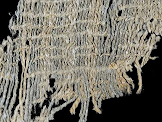 |
| Oldest Indigo Cloth |
The use of indigo dye is an ancient practice that quite literally goes back as far as recorded history. For decades, scientists believed they had the oldest piece of indigo cloth. It was from the
5th Dynasty (~2465-2323 BCE) in ancient Egypt. That changed when archaeologists discovered a fabric remnant in an excavation in Peru. That well-preserved piece, cotton dyed with indigo, was made more than 6,100 years ago. This meant it was roughly 1,500 years older than the Egyptian piece (
here’s video on the find). Not only did this expand the indigo timeline, but it also stunned the scientific world. The indigo plant grows easily and well in many parts of the world, and there are many native species, but getting that brilliant blue dye is a complex process. Had the knowledge of indigo popped up nearly simultaneously on both continents? Or had there been some sort of still-unknown trade between the two? Or was it aliens?
Traditionally, it has been believed that the Indus Valley - or Harappan - Civilization (c. 3300-1300 BCE) was the birthplace of indigo. Situated
strategically the area of modern Pakistan and northwest India, this was a
highly-advanced trading culture that reached across their known world. They
were peers of ancient Greece and Rome and introduced indigo to that
Mediterranean world sometime in the 2nd or 3rd century.
In fact, the Greeks gave indigo its name - “indikon”, meaning “from India.
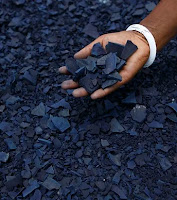
The Indus Valley people didn’t just produce indigo; they elevated the weaving and dyeing of fabrics to an art form. This naturally made their textiles an in-demand commodity. They traded prepared indigo dye as well, but the knowledge of how to make blue from a green plant with pink flowers was a closely guarded secret within families. In order to transport the dye, and maintain their monopoly, the prepared indigo was shipped in hard, dry blocks that looked more like a mineral than a plant product. Even after the Indus Civilization died out, India remained the source of indigo; it was rare and highly prized elsewhere. It wasn’t until the
Age of Exploration (1400s-1600s) that European nations were able to acquire a steady supply from India. And as they plundered the New World, the dazzling blue colors and quality of the indigo fabric there became nearly as desired as the golds and gems.Watch
this well-made short video for more on the history and spread of indigo.
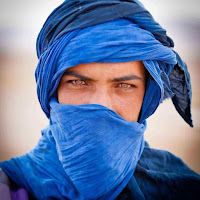 |
| Taureg Man |
As indigo moved along the trade routes, people naturally learned how to make it with their local varieties of the indigo plant. People around the globe adopted the wearing of this color as a part of their identity. Many still do, like the Tuareg (the Blue Men of the Sahara) and the Yoruba of Western Africa, and the Dong of China. When indigo reached Japan around the 10th century AD, they adopted it with their characteristic intensity. Indigo is known as aizome there and the creation of indigo-dyed fabric is a highly-regarded, yet fading, artisanal skill
While growing indigo is fairly straight-forward, making the
dye is a time-consuming and labor-intensive process. First the leaves are
fermented (not soaked) in vats, often in-ground to easily regulate the
temperature inside. Then additional components are added to warm up the mix and
oxidize the indigo. This is when the blue color begins to emerge. In can take
months to complete the fermenting and oxidation process, and then the wringing
out, drying and possibly re-emerging the fabric proceeds. The darker the
indigo, the deeper the blue, and the longer it takes.
Here is much
more on the dyeing process.
So why have millions of people across millennia gone to all the effort it takes to make this dye? It creates undoubtedly beautiful colors, but it also imbues fabric with some amazing qualities.
It makes fabrics softer: When added to cotton, it makes a fabric that gets softer with washing. Indigo only binds to external parts of the cotton, so each wash strips away a little of the indigo with some of the dye. The color fades a little, but the fabric is softer. People who spend a lot of time in the same clothes would find this especially desirable.
It has insect repellent properties: The elites in ancient Egypt slept under indigo-dyed mosquito nets and in Japan field workers and arborists still wear traditonal indigo to keep the bugs away.
It's antibacterial: It has been widely used to soothe and treat skin condition like eczema. In Japan, samurai would wear it under their armor to stave off wound infections.
It controls body odors: This is clearly another advantage for someone who is wearing, and working in, the same clothes for long periods of time. It may also explain why they used it for shrouds in Ancient Egypt.
It’s fire-retardant: Japanese firefighters draped themselves in indigo for protection. Supposedly it works up to 1500°F. I wonder how they came to that conclusion 1000 years ago?
It dyes hair: Because some ancient people were as vain as modern ones can be.
And since there are always non-believers despite thousands
of years of practical knowledge, many of the above “claims” have been backed up
by modern scientific testing.

Sadly, after so many years of people loving it, indigo finally went into decline when the German company BASF created a synthetic version in 1897. Thankfully it’s still appeciated by many people.
Submitted by Pam


 People around the world are gearing their Earth Day activities to fit their local needs. In India (which is on track to become the most populous nation in the world this year) they have programs that are on-going, but they spotlight them on Earth Day. Some of their biggest concerns are clean water, plastic pollution and the protection of their many unique species of plants and animals (especially since many of them are endangered). They are also working to educate people in ways that pollution and habitat destruction hinders economic growth. In an over-packed and poor country, this is an urgent need. Read more here on all they are doing – it’s impressive. Australia, Spain, Japan and South Africa are just some of the other countries that mark the day in their particular way– this article discusses seven of them.


