 |
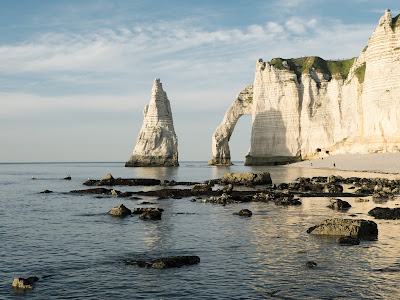
| Beautiful Normandy, France |
This week we had
World Environment Day on June 5th
and the
75th anniversary of the D-day invasion in
Normandy, two weighty topics back to back. The combination of these two events made me wonder about the effect that World War II had on the environment. The answer is “wide-spread and ongoing” and quite eye-opening.
WWII was fought or felt in virtually every corner of the world, with the two main fronts being the Pacific (
War in the Pacific) and Europe (
The European Theater). Many of the key fighting nations had far-flung colonies that were not in these areas; but they pulled soldiers and resources from them, so distance was not a shelter for citizens of those countries. Even those parts of the world that were spared fighting in their homeland were not spared the economic and (as we shall see) environmental effects.
I found a really interesting site that clearly explains how WWII came to be by using a series of maps, check it out
here.
 |
| Alfonton Ortega from LA making crosses after D-day |
Perhaps the greatest hit to the environment from WWII came from the sheer loss of life.
Somewhere between 50 and 80 million people died worldwide. This includes military and civilian deaths and deaths due to famine and disease. The nations that suffered most were the Soviet Union, with 22-28 million dead and China (fighting the Japanese) with 15-20 million gone. Amongst the dead would have been the caretakers of the land, those that dredged out waterways, disposed of waste, managed fish and wildlife resources, planted trees, etc. Not to mention those with academic knowledge about the environment, such as scientists and teachers. A gruesome truth is that not only were these people gone, but their corpses caused an ecological disaster in and of themselves. In the aftermath of a battle, military equipment, salvageable items and general booty would have been taken by troops or locals. Often the dead were left where they were. In places such as Eastern Europe/Western Russia (where there had been massive loss of life in horrible conditions),
the land could not be plowed after the war – there were simply too many bones to be able to get a plow through. To this day, people are still going out and removing bodies for re-internment.
 |
| Vanuatu, South Pacific |
The War in the Pacific (for the Americans) did not have the vast battlefields as in Eastern Europe. This was an island-hopping war supported by ships and planes. But these vessels did not carry just men; they inadvertently carried weeds and spores of species on their surfaces as they traveled from island to island. The native ecosystems of the islands were forever altered by these small invaders. Additionally, loud planes and even louder guns caused noise pollution, which disrupted local species both in and out of the water. Imagine how quiet those islands were for thousands of years (probably longer) and then came the boom. The ships and planes did not always stay above water, of course. Many went down and leaked oil and contaminants into the water. Time and human effort have cleaned up most of these to the point that the wrecks are now
draws for tourists. In
Palau, some of the wrecks have been salvaged and
sold off to pay for war claims.
By now, I expect many of my readers to be wondering about whether I will talk about the atomic bombs dropped on Hiroshima and Nagasaki in Japan. This is arguably the biggest environmental concern ever, much less what came out of WWII, but it is also so much more and there is just too much there to wade into in this blog and do any of it justice. If you'd like to learn more and watch a short video, go
here.
Toxic shipwrecks were and are still a problem in the Atlantic; especially following such big events as
Dunkirk and D-day.Trace amounts of
oil can still be detected in these waters from the ships that were lost.
 |
| Bocage district, western France |
The war in Europe was characterized by widespread land degradation and habitat destruction. From the Normandy landscape of
bocage (or hedgerows), where ancient barriers were knocked over and torn down, on through some of the most beautiful landscapes and towns in Europe, armies on both sides caused near total destruction. Not all the damage was done in battle; heavy equipment tore up the ground, destroyed vehicles leaked oil and heavy metals and large areas were cut down to make way for troops and lumber.
 |
| Aftermath of WWII, France |
The recovery that Europe made after the war is nothing short of phenomenal. Starting with nothing but the need to survive and a renewed respect for teamwork, land was slowly returned to viability and new and improved social orders were formed.
The environmental effect of WWII goes far beyond what one can point to: goods needed for the war effort created new technologies and a military-industrial complex that needed new sources and infrastructure to support it. Chemical, munitions and aviation factories, working non-stop, required large amounts of electricity and pumped out lots of dirty emissions. The need to win the war, and fast, trumped any misgivings about long-term detriments. The post-war civilian demand for what these factories created (plastics, synthetics, pesticides, herbicides, petroleum-based products, medicines, aluminum and more) meant that this industrial beast stayed fed.

After decades of continued industrialization, many parts of the US were blanketed by smog and waterways churned with pollutants. There had been early voices of concern about war-related pollution, but it took until you could literally see the pollution before the environmental movement became part of the social zeitgeist and people were willing to fight for change. Although environmental issues are more widely accepted than ever, we still have a long way to go to overcome complacency. Here at
ARBICO Organics, we will continue to do what we’ve been doing for the last 40 years – offering earth-friendly alternatives and keeping poisons out of our world one customer at a time.
Submitted by Pam


 People around the world are gearing their Earth Day activities to fit their local needs. In India (which is on track to become the most populous nation in the world this year) they have programs that are on-going, but they spotlight them on Earth Day. Some of their biggest concerns are clean water, plastic pollution and the protection of their many unique species of plants and animals (especially since many of them are endangered). They are also working to educate people in ways that pollution and habitat destruction hinders economic growth. In an over-packed and poor country, this is an urgent need. Read more here on all they are doing – it’s impressive. Australia, Spain, Japan and South Africa are just some of the other countries that mark the day in their particular way– this article discusses seven of them.