Showing posts with label kissing bugs. Show all posts

Friday, March 8, 2019

Backyard Assassins - Assassin Bugs, Zelus renardii

What Are They?

Assassin Bug Up Close
They may look like kissing bugs, but they aren’t! Assassin Bugs are garden predators in the family Reduviidae. They come in an assortment of sizes, shapes and colors ranging from the large, ridge backed wheel bugs to the milkweed assassin bugs (Zelus longipes) dressed for Halloween. The common thread running through them all is their immense appetite for other insects, particularly the plant-feeding kind.

Gardener’s Note: If you look closely, assassin bug egg clusters can be found near food sources laid on leaves and branches.

How Do They Work?

A Wheel Bug Showing Off
Assassin bugs pin prey with their strong front legs and use a “beak” (rostrum) to pierce them, then inject a mixture of digestive enzymes and venom. This noxious concoction liquefies their prey's innards making a bit of a bug slurpee. The same burly front legs used for pinning are coated in a sticky resin that allows these backyard assassins to trap pests without escape, saving them for a later meal. Nimble and hungry, assassin bugs both ambush and actively hunt for food, making them a versatile beneficial predator in gardens and farms. Similar to Minute Pirate Bugs (Orius insidiosus), assassin bugs have a tendency to kill for the sake of killing instead of stopping when they are full. Just what we want as pest-abhorring gardeners. View a video of an assassin bug hunting here (video credit: Smithsonian Channel).

Why Use Them?

"Please don't interrupt my meal. Thank you kindly."
The leafhopper assassin bug gives gardeners and growers a multi-tool predator in the growing area. They gleefully feed at all life stages on most garden pests including aphids, leafhoppers, thrips, small caterpillars and mealybugs. In addition to their broad prospective menu, assassin bugs live for up to two months and reproduce rapidly, making them ideal for continued control of a target pest. If you don't want to use pesticides, assassin bugs will give you a hard working organic defense against your garden foes.

Our assassin bugs (Zelus renardii) are reared locally at our Catalina insectary north of Tucson. They are available online or for in store pickup in 250 count egg clusters. 

- Contributed by Sterling N.

Thursday, August 23, 2018

This Summer’s Kiss Is One To Miss


One of the least popular insects that appear in our desert over the summer months is the Kissing Bug (Triatominae, subfamily of Reduviidae), also known as conenose bugs, vampire bugs or Mexican bed bugs. The variety of names reflects the fact that there are many (up to 85) species in the Americas, with about 15 in the United States. 

As temperatures have warmed across the continent, kissing bugs have been able expand and thrive in new areas. These 6-legged, winged insects vary in color from a light brown to black and have red, yellow or tan markings along their abdomens. They are small (about ½-1” long) and rather flat (unless they’ve recently fed) with an elongated oval shape. They can be easily mistaken for assassin, wheel or stink bugs (and even cockroaches).

And now for the gory stuff: Kissing bugs feed on mammalian blood through all five stages of development, from nymphs through adults. Females lay eggs between June and September and their offspring hatch out and begin seeking blood in 1-3 weeks. Although they can go long periods without feeding, these bugs feed more regularly when hosts are readily available. A single feeding can last a disturbing amount of time: 20-30 minutes. Their preferred hosts include dogs, opossums, coyotes, mice, skunks, raccoons and humans. 

Kissing bugs get their name from their proclivity for biting people on the face, especially around the eyes and lips. They are able to get so close without being detected because they are nocturnal and seek out sleeping prey. They then inject an anesthetizing agent before they draw blood, so the sleeper is usually not even aware of the bite when it happens. They will wake up with unexplained marks or welts on their skin.

Although kissing bugs are undoubtedly blood-suckers, researchers have found that they also feed on plants. They source sugars and proteins from plants and this seems to keep them healthier and more energetic so that they can bite more people.

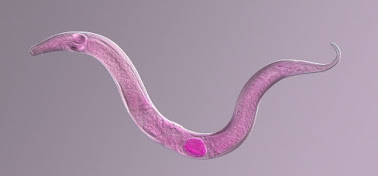
Kissing bugs pose a danger to people because they can carry the parasite Trypanosoma cruzi, which causes Chagas disease. This serious disease is found all over Mexico, Central and South America. As many as 21,000 deaths a year are attributed to Chagas disease in these regions. While there have been some cases in the United States, it is, thankfully, rare here. This is due to the type of species we have here. Chagas is spread through the bug’s feces. They defecate while feeding and when a person wakes up and scratches at the bite, he/she introduces the infected poo into their body. Kissing bugs in Arizona don’t exhibit the type of behavior that spreads the disease; they don’t defecate where they feed.


Chagas disease may not be a serious threat to people here, but kissing bugs can still be dangerous. People can be allergic to the saliva (and, thus, the bite) of these bugs. While a very small number of people are affected from the first bite, the trouble usually begins with subsequent bites. It is then that an allergy can develop. These allergic reactions can vary in severity from flushed skin to nausea and vomiting to life-threatening anaphylaxis. The Centers for Disease Control and Prevention has a great deal of information on Chagas here: https://www.cdc.gov/parasites/chagas/

There is no immunotherapy available to protect you from developing dangerous allergies to kissing bugs. If you have reason to believe they are in your area, your best course of action to protect yourself is to keep them out of your house. They will fly (but not very far) looking for their next meal, so to make it more difficult for them:

  • Seal any cracks or crevices that lead from outside into your home (in and around doors, windows, eaves, etc.)
  • Clean up wood, rock piles and animal nesting areas in the yard and move items they can hide in away from the house.
  • If you dry clothes on the line, bring them in as soon as they are dry.
  • Keep your pets indoors, especially at night.
  • In Arizona, pack rats and their nests are favorite lodging places for kissing bugs. While pack rats are difficult to control on their own, ridding yourself of them will also lessen your chances of having kissing bug problems.

To get rid of the kissing bugs in your yard, try a combination of granules as a barrier and a spray insecticide to cover the area. Essentria™ G Granular Insecticide and EcoPCO® AR-X Multi-Purpose Insecticide would be good choice.

The University of Arizona College of Medicine is currently researching kissing bugs and is asking for input from the public. They are seeking live bugs as well as individuals who have been bitten. They are asking that, if you come across a kissing bug, do not touch or squash it. Place a glass or other container on top of it for 24 hours and then seal the bug inside and contact them. 

-Contributed by Pam @ ARBICO Organics

Featured Post

5 Cool Things About Nematodes

It’s September, and here at ARBICO, it’s Beneficial Nematode season. Every year we put our Beneficial Nematodes on sale at this time to enc...