Showing posts with label world history. Show all posts

Friday, June 7, 2019

What The War Left Behind.

White cliffs on a beach with white spyres coming out of the light blue sea. Normandy, France
Beautiful Normandy, France
This week we had World Environment Day on June 5th
and the 75th anniversary of the D-day invasion in Normandy, two weighty topics back to back. The combination of these two events made me wonder about the effect that World War II had on the environment. The answer is “wide-spread and ongoing” and quite eye-opening.

WWII was fought or felt in virtually every corner of the world, with the two main fronts being the Pacific (War in the Pacific) and Europe (The European Theater). Many of the key fighting nations had far-flung colonies that were not in these areas; but they pulled soldiers and resources from them, so distance was not a shelter for citizens of those countries. Even those parts of the world that were spared fighting in their homeland were not spared the economic and (as we shall see) environmental effects.

I found a really interesting site that clearly explains how WWII came to be by using a series of maps, check it out here.

Black & white photo from World War Two showing an American soldier, Alfonton Ortega from LA, making white crosses after the D-day landing.  
Alfonton Ortega from LA making crosses after D-day
Perhaps the greatest hit to the environment from WWII came from the sheer loss of life.
Somewhere between 50 and 80 million people died worldwide. This includes military and civilian deaths and deaths due to famine and disease. The nations that suffered most were the Soviet Union, with 22-28 million dead and China (fighting the Japanese) with 15-20 million gone. Amongst the dead would have been the caretakers of the land, those that dredged out waterways, disposed of waste, managed fish and wildlife resources, planted trees, etc. Not to mention those with academic knowledge about the environment, such as scientists and teachers. A gruesome truth is that not only were these people gone, but their corpses caused an ecological disaster in and of themselves. In the aftermath of a battle, military equipment, salvageable items and general booty would have been taken by troops or locals. Often the dead were left where they were. In places such as Eastern Europe/Western Russia (where there had been massive loss of life in horrible conditions), the land could not be plowed after the war – there were simply too many bones to be able to get a plow through. To this day, people are still going out and removing bodies for re-internment.

A curved image of a diver swimming by a wreck in a blue lagoon with a white sand beach and green hill. In Vanuatu, South Pacific
Vanuatu, South Pacific
The War in the Pacific (for the Americans) did not have the vast battlefields as in Eastern Europe. This was an island-hopping war supported by ships and planes. But these vessels did not carry just men; they inadvertently carried weeds and spores of species on their surfaces as they traveled from island to island. The native ecosystems of the islands were forever altered by these small invaders. Additionally, loud planes and even louder guns caused noise pollution, which disrupted local species both in and out of the water. Imagine how quiet those islands were for thousands of years (probably longer) and then came the boom. The ships and planes did not always stay above water, of course. Many went down and leaked oil and contaminants into the water. Time and human effort have cleaned up most of these to the point that the wrecks are now draws for tourists. In Palau, some of the wrecks have been salvaged and sold off to pay for war claims.

By now, I expect many of my readers to be wondering about whether I will talk about the atomic bombs dropped on Hiroshima and Nagasaki in Japan. This is arguably the biggest environmental concern ever, much less what came out of WWII, but it is also so much more and there is just too much there to wade into in this blog and do any of it justice. If you'd like to learn more and watch a short video, go here.

Toxic shipwrecks were and are still a problem in the Atlantic; especially following such big events as Dunkirk and D-day.Trace amounts of oil can still be detected in these waters from the ships that were lost.

View looking down on green fields seperated by rows of dark trees. Bocage district, western France 
Bocage district, western France
The war in Europe was characterized by widespread land degradation and habitat destruction. From the Normandy landscape of bocage (or hedgerows), where ancient barriers were knocked over and torn down, on through some of the most beautiful landscapes and towns in Europe, armies on both sides caused near total destruction. Not all the damage was done in battle; heavy equipment tore up the ground,  destroyed vehicles leaked oil and heavy metals and large areas were cut down to make way for troops and lumber.

Black and white people wandering around in smoky rubble.Aftermath of World War II, France
Aftermath of WWII, France

The recovery that Europe made after the war is nothing short of phenomenal. Starting with nothing but the need to survive and a renewed respect for teamwork, land was slowly returned to viability and new and improved social orders were formed.

The environmental effect of WWII goes far beyond what one can point to: goods needed for the war effort created new technologies and a military-industrial complex that needed new sources and infrastructure to support it. Chemical, munitions and aviation factories, working non-stop, required large amounts of electricity and pumped out lots of dirty emissions. The need to win the war, and fast, trumped any misgivings about long-term detriments. The post-war civilian demand for what these factories created (plastics, synthetics, pesticides, herbicides, petroleum-based products, medicines, aluminum and more) meant that this industrial beast stayed fed.

After decades of continued industrialization, many parts of the US were blanketed by smog and waterways churned with pollutants. There had been early voices of concern about war-related pollution, but it took until you could literally see the pollution before the environmental movement became part of the social zeitgeist and people were willing to fight for change. Although environmental issues are more widely accepted than ever, we still have a long way to go to overcome complacency. Here at ARBICO Organics, we will continue to do what we’ve been doing for the last 40 years – offering earth-friendly alternatives and keeping poisons out of our world one customer at a time.

Submitted by Pam

Wednesday, November 7, 2018

What Else Was Happening in 1621?


Although Thanksgiving is still two weeks away, most Americans are deep in their travel/food/football planning. As I was firming up my plans, I had a thought: We know the story of the first Thanksgiving
A painting of Pilgrim settlers gathering around a table with Native Americans
The First Thanksgiving by Jean Leon Gerome Ferris
(or at least one of the versions), but what were people doing in other places in the world that year? Here’s a quick tour of the world in 1621:
Portrait of the 17th century Japanese Shogun, Tokugawa Hidetada. He is wearing a black coat with a red lining and a small black hat.
Tokugawa Hidetada

JAPAN– Japan was under the rule of a Shogun, Tokugawa Hidetada. Hidetada was the son of the founder of the Tokugawa shogunate, which ruled Japan for 265 years (1603-1868). Tokugawa’s rule was notable for the extreme measures he took to control outside influences in Japan. Although Christianity had been banned under his father's rule in 1617, there were still Spanish and Portuguese missionaries in Japan openly converting individuals and building communities. Unhappy with this meddling in Japanese culture, Hidetada began executing missionaries and martyring believers. In 1622 alone he put 120 people to death for their religious practices. To further break away from outside influences, Hidetata took steps to severely limit the number of foreign vessels allowed to enter Japan.This time in Japan was depicted in the 2016 movie Silence from the novel of the same name by Shusaku Endo.  Draconian repression and isolationist acts aside, the Tokugawa shogunate was a time for peace and prosperity for many Japanese.

Portrait of the 17th century King Philip III of Spain and Portugal. He is wearing a  black suit with large white frills at the neck and wrist.  
King Philip III

BRAZIL – Portugal rules over Brazil, with King Philip III of Spain and Portugal as its absolute monarch in 1621. Throughout its long colonization of Brazil (1500-1815), the mechanics of administration were always difficult. The country was just so big and its rulers so far away. In 1621, in an effort to get better control, King Philip changed it from the Governate General of Brazil into two states: State of Brazil and State of Maranhão. Presumably this helped, as Portugal maintained control for another 194 years.

PHILIPPINES – The Spanish ruled over the Philippines for 333 years (1521-1898). In 1621, there was a religious revolt known as the Bankaw (or Bancao) Revolt. The agitators were tired of the religious dominance of the Roman Catholic Church and wanted a return to traditional beliefs. The battles went on for two years, but the revolt was ultimately squelched and the leaders executed.

NORWAY – In 1621, Norway was in the thick of a long and virulent witch-hunting phase. In the years between 1593 and 1692, there were at least 140 witch trials in the small village of Vardø. These trials resulted in 91 found guilty and either tortured to death or burned at the stake. This is an extremely high number when the population of the entire county would have been about 3,000 people. The Vardø witch trial of 1621 was the largest trial of this period, with many people losing their lives. The last to burn was Kristi Sørensdatter, on April 28, 1621. In June 2011, the Norwegian government dedicated the Steilneset Witch Trial Memorial as an apology to those lost lives.

Tianqi Emperor (Zhu Youjiao)
CHINA – In 1621, China was living in the waning years of the Ming Dynasty (1368-1644). The end of this dynasty was the result of a combination of things that went unchecked and untreated over a long period of time: infighting and power-grabbing by civic officials, intrigues and interference by palace eunuchs, a growing and unsettled populace and a succession of inattentive and ineffectual emperors. The emperor in 1621, the Tianqi Emperor (Zhu Youjiao) was one of these inept rulers. He was just 15 years old when he took the throne (following his father's mysterious death after ruling for less than a month). He was illiterate and uninterested in state affairs; he preferred to do carpentry. Before long, the scheming eunuch Wei Zhnogxian and the emperor's wet nurse,
Wei Zhnogxian
Madame Ke, had made themselves de facto rulers. Wei raised up his allies and destroyed his enemies. Meanwhile, Ke went to extremes to keep him away from any other female influences – she imprisoned and starved to death his concubines. Unfortunately for this ambitious duo, the emperor died young in 1627. By 1628 they were both dead; Madame Ke was beaten to death in an interrogation in 1627 and Wei hung himself in 1628.


Richard Jobson
AFRICA – Africa in 1621 was a hodge-podge of kingdoms, empires, sultanates and colonials. There was also any number of Europeans traipsing around the continent looking for adventure, riches and fame. One such explorer was Richard Jobson, who traveled 400 miles up the Gambia River in 1621 and 1622. He was seeking gold (which he did not find), but what he brought back was a unique chronicle of the then-unknown African interior. He was also an early voice against slavery. On his return, he wrote The Golden Trade Or A Discovery Of The River Gambia And The Golden Trade of The Aethiopian (1623), which can be read in its entirety here.

In 1621, many parts of Europe were fighting over religion, people in colonized areas were either trying to keep control or get out from under it and others were deeply entrenched in traditional ways. And then there are the areas where little is known about what people were doing. Those people may have been the lucky ones, no outsiders had gotten to them yet.

Submitted by Pam

Featured Post

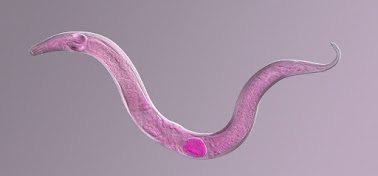
5 Cool Things About Nematodes

It’s September, and here at ARBICO, it’s Beneficial Nematode season. Every year we put our Beneficial Nematodes on sale at this time to enc...