Wednesday, May 25, 2022

What’s This Bug? The Lord Howe Island Stick Insect.


Closeup of a large black insect in a man's hand - the Lord Howe Island Stick Insect.

An aerial view of Lord Howe Island.
Lord Howe Island
This is the Lord Howe Island Stick Insect (Dryococelus australis), or LHISI, also known as Land Lobster, Walking Sausage, Tree Lobster and Lord Howe Island Phasmid (phasmids are insects that eat leaves and resemble sticks or leaves). It is considered to be the rarest insect in the world and is native to a small island off the coast of Australia . This is a big (up to 8 “ in length) and sturdy oblong-shaped insect with no wings. Females are considerably bigger than males and lay their eggs while hanging upside down from trees. Unlike most insects, the LHISI form mating pairs (this video shows all life stages and mating behavior). But these qualities and behaviors are not the most unusual things about them – that would be their whole back story.

The story of these insects would make an excellent movie – it has exotic locales, mad scientists, fortune hunters, explorers, bad guys and heroes and, in the end, the underdog wins. It’s also a master class in geographically isolated habitats and evolution therein and, inevitably,  the careless destruction of such environments. For these insects, though, it’s ultimately a story of triumph and rebirth that shows what can be done when caring and motivated people work to repair the damage done by their uncaring and unmotivated predecessors.

A map of Australia and Tasmania with Lord Howe Island marked in red.
The story really begins seven million years ago when Lord Howe Island was created by a volcanic eruption. Then it apparently sat there creating its own unique ecosystem until, in 1788, a British ship carrying convicts between penal colonies in modern-day Sydney and Tasmania stumbled across the island (it bears noting that they were clearly lost). Despite careful study, no evidence has been found that aboriginal or native Pacific Islanders had ever been there before these lost Brits, so the environment was pristine. 

In the years after its discovery by the British, it became a stopping point for whaling ships. The first permanent colony was formed in 1834, but the population was down to 11 people by 1849. When the Australian Gold Rush struck in 1851 the island again had a population surge as ships carrying would-be miners would put in port there. By the 1860’s, the rush was over and the only ones who were interested in this far, far off place were scientists. Charles Darwin had published his seminal study of evolution, On the Origin of Species, in 1859 and it sparked a rush of scientists seeking their own discoveries. 

"Red Jacket, Lightning and James Baines" painting of miner's ships by by Thomas Robertson
Ships carrying gold miners, 1850s
All this human activity created many ecological disasters on the island and the story of the LHISI perfectly illustrates the arch of destruction. This insect was first described by Xavier Montrouzier in 1855 (he was a few years ahead of the Darwin cult). At that time, the insects were all over the island and commonly used as fishing bait. And then came the rats. Unwanted passengers on ships all over the 
world throughout time, they have caused (and are continuing to) cause environmental devastation wherever they are. On Lord Howe Island , they
began being a presence in the late 1800s, but the real trouble started in 1918 when the SS Makambo went aground off the coast. Rats left that nearly-sinking ship and proceeded to enjoy the buffet of delicacies that Lord Howe had to offer. They wiped out many species of birds and fauna and raided the islander’s crops. And, of course, they gorged themselves on the delicious Walking Sausages. So much so that they were extinct on Lord Howe by 1920.

Ball's Pyramid in the foreground with Lord Howe Island in the background.
Ball's Pyramid with Lord Howe Island in the distance
In 2001, even though they’d been on the extinct list for 81 years, a group of Australian researchers decided to check out a nearby rock outcropping off Lord Howe’s coast called Ball’s Pyramid.  It’s the remnants of a volcano, known as a sea stack, sea spire or volcanic stack, and it’s the tallest in the world at over 1800 feet.  And, as described in this video, it looks like the lair of a super-villain. Over the years there had been a handful of climbers to the pyramid who’d found dead insects, so the scientists decided to venture out there and check it out to see there were any live LHISI. 
But they were limited to those areas that required no specialized climbing skills or gear, which greatly limited the search area but still encompassed most of its vegetation. They scrambled around in the day and found frass and eggs, but no adults. Thanks to the original scientists who’d carefully studied the LHISI on its home island, these modern insect hunters knew it was nocturnal, so they returned at night. Moving around carefully with only flashlights to light their way, they discovered a small colony of 24 adults feeding on and living under a single bush (Melaleuca howeana - found only on the pyramid and Lord Howe). How these insects made it across 14 miles of tempestuous ocean is still a mystery.

Scientist holding a Lord Howe Island Stick Insect at the Melbourne Zoo, Australia
At Melbourne Zoo
The scientists chose two breeding pairs to bring back to Australia and left the others undisturbed. One of the females became ill, but the incredible staff at Melbourne Zoo were able to nurse her back to health. As of 2019, 14,000 individuals have been bred from these two pairs. Meanwhile, steps have been taken to protect the population on inhospitable Ball’s Pyramid (more details here), which is part of the Lord Howe Island Permanent Park Preserve. These islands, and the sea around them, have also been declared a UNESCIO World Heritage Site. In the grand scheme of things, the LHISI is already a win for conservationists but the ultimate goal is to return them to their true home on the island. Australia has spent many years and millions of dollars to eradicate the rats and once it’s determined that they are truly gone, the insects will be reintroduced. That will be a truly triumphant day for these rare insects and the people who care for them.

A koala in a tree saying, "Really?"

Take Care.

Submitted by Pam

Monday, May 2, 2022

The World of Biorational Controls

A drawing of hands holding a glass globe with flowers all over it.

It wasn’t that many years ago that organic and natural pesticides were virtually non-existent in the retail sphere, so home gardeners, hobby farmers and the like had to make difficult decisions about the products they used. Thankfully, that’s changed greatly and nowadays we have a world of biorational controls to choose from.

There’s no hard and fast definition of biorational controls; the term covers products that have a reduced risk to living things and have little to no impact on the environment. This characterization is especially important when discussing pest control, fungicides and herbicides – all of which have an over-representation of toxic products on the market. Biopesticides (biological pesticides) and biofungicides (biological fungicides), certain minerals, botanical extracts, herbicides and soaps all fall within the biorational parameters. 

Biopesticides/Biofungicides 

Four insects covered in a white fungus - Beauvaria bassiana at work.
Beauvaria bassiana at work
This is arguably the category that’s seen the most innovation in the last 10 years or so. There are many types of biopesticides these days, including:

• Insecticides that use entomopathogenic fungi to kill specific groups of insects, like Beauvaria bassiana which infects a wide range of insects with deadly white muscardine disease and Isaria fumosorosea Apopka Strain 97 that kills mites and soft-bodied insects.

• Insecticides that use targeted strains of bacteria to kill specific insects, like Bacillus thuringiensis israelensis (Bti) that kills mosquito larvae, and Bacillus thuringiensis kurstaki (Btk), which kills Lepidoptera caterpillars.

• Insecticides that come from plant-derived oils and their extracts like Neem Oil and
Chrysanthemum cinerarifolium daisies, the pyrethrin daisy
Pyrethrins. Neem comes from the Neem tree, a native to the Indian subcontinent; it will kill soft-bodied insects and is also useful as a deterrent or repellent. Pyrethrins come from the Chrysanthemum cinerarifolium, a daisy, and can be used to control both soft-bodied and hard-shelled insects.

Biofungicides also use a variety of beneficial microorganisms to control plant pathogens like powdery mildew and botrytis. They work in multiple ways, but generally speaking they overpower the pathogens and out-compete them for resources. The ingredients in some common biofungicides include:

An illustration of rod-shaped microbes - Bacillus subtilis
Bacillus subtilis
• Bacillus amyloliquefaciens strain D747, a naturally occurring soil bacteria

• Bacillus subtilis – a bacteria found in the soil and the gastrointestinal tract of certain animals

• Trichoderma – This is a group of soil-dwelling fungi of which certain strains have been developed for maximum efficacy in the plant world. 

Bottles full of thyme oil with thyme leaves all around.
• Inorganic compounds like potassium bicarbonate, the active ingredient in Milstop 

• Botanical oils like the Thyme Oil in Thyme Guard.

These are deeply researched and complex products that are, nevertheless, easy to use and readily available to any size grower. I strongly encourage you to dig deeper into these categories; there are many products than I have pointed out and there is much more information on each product page. 

A woman wearing a hat inspecting a plant in a field of crops.
Biopesticides and biofungicides are excellent choices for IPM program and because they often only affect targeted pests, using them reduces the effects to non-target organisms. These products also cut down the danger of residual pollution and eliminate the problem of pesticide/fungicide resistance. They are also cost-effective overall as they reduce the need, and thus the cost, of conventional products.

Minerals

Complex rice terraces on a mountaintop in southern China.
Rice Terraces in Southern China
Mineral-based biorational controls are often products that have been around for a long time but are getting new respect as the interest in safe and natural solutions grow. For example, the use of kaolin clay for pest control dates back over 2,000 years. It works as a crop protectant and will also repel pests, cause irritation and confusion, and create an obstacle for feeding and egg-laying. The popularity of the kaolin clay product we carry, Surround WP, shows that modern consumers still see the value in this biorational mineral. Diatomaceous Earth (DE) has been used in China for 4,000 years. DE comes from the fossilized shells of microorganisms known as diatoms that has been crushed into a fine dust. It has innumerable microscopic sharp edges that cling to insects as they pass through it and mortally wound them by cutting up their exoskeletons. It will also absorb the waxy cuticle around the insect, which causes it to dehydrate and die in as little as 48 hours.
Leaves and petals spilling from a black bottles.

Botanical Extracts

Talk about a product line that has exploded in the last few decades! Using botanical oils for pest control is another case of an ancient-but-still-excellent method. Mineral biorationals  may have changed very little over millennia,  but oils have enjoyed a renaissance as newer, more target-specific and user-friendly formulas have been developed. Botanicals can now be found in pesticides, fungicides, bactericides and repellents. For more information on some of the most commonly used botanical extracts, check out my blog on the subject here. Happily, the use of botanicals is becoming main-stream; they’re easy on the environment in general and their use falls well within the principles of IPM.

A white picket fence with pink flowers in front of it and a sign that says, "Experimental Dandelion Farm. Do not disturb weeds".
        Herbicides

We have come a long way from spraying highly-toxic herbicides like DDT all over everything. Nowadays most people understand the need to keep weed control products, not just weeds, in check.  Biorational herbicides use a wide variety of ingredients to great effect. We carry herbicides that use corn gluten meal, botanical oils, iron, barrier controls, d-limonene (citrus oil), ammonium nonanoate (BioSafe Weed & Grass Killer) and citric acid. Biorational herbicides will not produce the quick knockdown of weeds that the toxic sprays can, but they are still highly effective for the patient and conscientious consumer.

A woman holding a white plastic sprayer and aiming it at plants.

           Soaps

Biorational insecticidal soaps are another product line that reflect the modernization and upgrade of an old school DIY form of pest control. Insecticidal soaps these days are potassium salts of fatty acids and are used to control soft-bodied insects and some path pathogens. One of our customer-favorite soaps is M-Pede, which, in addition to its insecticidal properties, is labeled as a curative control for powdery mildew.

Two children running happily through a garden.
As far as our pest control products go here at ARBICO, we have very few that cannot be classified as  biorational (traps come to mind). There are still some hard-to-kill pests that we struggle to find biorational controls for, but we are committed to finding as many as we possibly can and presenting them to you as soon as we do.

Submitted by Pam


Tuesday, April 19, 2022

Earth Day 2022


Drawing of the globe, with the words (clockwise from lower left)"" Make Every Earth Day Save Our Planet April 22".l,
It's that time again - Earth Day. This year it's on Friday, April 22, 2022. In years past,  ARBICO has chosen to mark Earth Day by selecting a worthy local non-profit to support. Traditionally, they have been agencies that are working to protect the environment and/or offer help to people in our community. This year, however, we are doing something different. In light of what’s happening in Ukraine, we would like to turn the spotlight on people that are doing exceptional work in unbelievably awful conditions there. Specifically, those that are struggling to help to Ukraine's animals. After all, what better way to honor our Earth than to care for the living creatures that call it home?

A family of a grandmother, mother and 2 children huddled together holding their cat
Some of the most striking images of Ukrainian refugees have been those of people with their pets (see some of them here). In our modern world of non-stop images and soundbites, it can be easy to become desensitized to the cruelty of war but when you see someone fleeing with a beloved pet the scene suddenly becomes relatable. We can see ourselves and our pets in them and the abstract of war begins to look like something familiar. What this invasion has shown us is that war can happen to a modern 21st democracy much like our own.

Close-up of a dog with a piece of debris impaled through its face.
The plight of animals in a war zone is not just heart-breaking and deeply sad, the violence puts aid workers in constant risk. Thankfully, there are many brave souls who are not deterred and are going over and above to save animals in ways big and small. We encourage everyone to support the International Fund for Animals in their work in Ukraine. They have been working on the ground in Ukraine since the Russian invasion of 2014 and currently have a  Disaster Response Team on the Ukrainian-Polish border. They aid refugees and their pets, source supplies for animal shelters, facilitate animal rescues from zoos and wildlife parks when possible, and so much more. One entity the Disaster Response Team  granted money and supplies to is the Ukrainian Bat Rehabilitation Center at the Ukrainian Independent Ecology in Kharkiv. For 20 years the dedicated researchers there have been studying the local bat population; but during this war-
A big-eyed dog wearing a blue muzzle at the train station in Lyviv, Ukraine
torn spring, as the shelling increased around them, the conservationists were forced to leave their hibernating bats behind in bat-boxes. Amazingly, when the team was able to make it back to check on them, the furry little mammals had remained largely untouched by the war around them. Their account of war-time bat conservation and the happy but harrowing ending to this chapter. For more links to what more emergencies that IFAW is responding to, check out the links on this page.

Alexandra Levitska, who operates 3 farm animal sanctuaries, surrounded by cows.
The bravery and commitment to animals that rescuers and caregivers have shown is astounding. Here is a video of a volunteer rescuing kangaroos and tapirs. This video is a plea from a small shelter. 

Although we are looking outside our community this year, we want to reinforce our admiration and gratitude to those agencies we have donated to on past Earth Days. Their work and the needs they address are as important now as they’ve ever been: Center for Biological Diversity, Desert Survivors, Community Food Bank of Southern Arizona and the Sonoran Institute.

Submitted by Pam

Monday, April 11, 2022

Fly Control with Fly Parasites

Close-up of the face of a housefly.
My mother used to say that nothing was certain but death and taxes. I’d like to amend that statement to include Arizona summer heat and summertime flies for everyone. We are all acutely aware of how annoying, disgusting  and relentless flies are and  keeping them away is never 100% effective. However, by introducing fly parasites into your world, you can make a powerful dent in their population. Here at ARBICO we pioneered the use of these invaluable insects some 40-plus years ago when the whole idea of using insects to kill insects sounded like science fiction to most people. Fast forward to 2022 and we are still raising and selling  Fly Eliminators® and  have greatly expanded our inventory of "good bugs" to include predators for the most common garden pests.

A female preparing to pierce a dark brown pupa. In the upper left hand corner with a line marked 1.5 cm that has a line under it. This is to show scale.
Fly parasites are non-stinging, gnat-sized wasps that use fly pupae as both a convenient sheltering place for their eggs as well as a food source for the eggs as they grow. Parasitoid wasps (aka parasitic wasps) are common in the insect world, but these particular ones are host-specific to flies. There are several species of fly parasites that are native to North America, but they are not usually present in large enough numbers to affect the fly population (which reproduces quicker and in larger numbers). The Fly Eliminators® we sell here at ARBICO are a proprietary mix of several species of these wasps, because diversity is beneficial in all parts of our world.

A picture showing the lifecycle of the fly parasite, beginning with the adult fly in the 7 o'clock position.
The world of parasitoid wasps is a ruthless and gruesome one that most people are never aware of, even though it’s happening all around us. This is because the wasps are mostly tiny insects and much of the activity is out of sight underground or out of sight within pupae. In addition, many parasitoid wasps are nocturnal. Fly parasites fall into all these categories. The females venture out under the cover of darkness and fly about a foot off the ground in search of fly pupae. Once they find the pupae, the wasp tears a hole in it and deposits as many as 10 eggs inside. She will keep moving through the fly larvae until all her eggs are gone. She can eliminate up to 100 fly pupae in her very short lifetime. As her eggs develop they will feed on the immature fly. This will eventually kill the fly, but not until the developing parasite has gleaned as much nutrition as it needs from the fly. So, they feed on it while it’s still alive in there – ruthless and gruesome.
Adult parasite emerging from brown pupa

Dark brown pupae showing the holes that parasites made upon emerging.Fly parasites hatch out of their pupae in 17-21 days, depending on temperature and other environmental factors. Flies, on the other hand, can lay five to six batches of eggs in a month (more on their lifespan here). Due to this disparity, in order to gain control of the fly situation you will need to regularly introduce the parasites to the area where flies are breeding – and in larger numbers than would normally be there. That way, there will always be a wasp ready to parasitize the next batch of fly eggs. That being said, the reproductive power of flies is such that parasites can control flies, but can’t eradicate them completely.

It’s important to remember that fly parasites are only effective against larval flies. For adult flies, you will need another source of fly control. It's also important to take measures to control or eliminate fly-friendly habitats like manure and wet areas. Check out our 4-Step Fly Control page for more information.

Close-up of the face of a horse with flies buzzing around it
Will they sting me or my animals? Or swarm?

In short, absolutely not. They are too small to do harm to anything but fly pupae. Plus, and this is a big one, they do not have stingers. Although the females have an ovipositor that could conceivably be mistaken for one. These are solitary insects; they mate, lay eggs and die. That’s it. They do not form social communities like colonies or nests that need to be protected or moved (the usual reasons for swarming).

Will they get rid of all the flies? 

A chart showing 22 different species of flies

Fly parasites are only interested in filth-breeding flies – other flies will not be affected by these wasps. Simply put, filth flies breed and feed in manure, rotting organic matter and other sweet or smelly or sweet and smelly areas. House flies are filth flies, as are stable flies. However, the female stable flies are also blood feeders (they need it to produce viable eggs). Stable flies may be controlled by fly parasites, but it isn’t very effective for them. So, a good rule of thumb is that if flies are biting you or your animals (and drawing blood), the parasites are not a good control choice. Here's a blog I wrote last year on this subject.

Would I need specific equipment to use these beneficial insects?

Brown fly pupa with white sawdust .
Nope – fly parasites are sold commercially while they are still cocooned in the fly pupae. They are about the size of a grain of rice an usually mixed with sawdust. All you need to do is go out to where your problem flies are, kick up a little dirt, sprinkle some pupae in and cover them over lightly with dirt. You don’t want to bury them, just cover them enough so birds won’t easily find them (these cocoons are quite the treat for both wild and domestic birds).If you don’t want to touch the cocoons, you can sprinkle them directly out of the package. An even distribution will cover more ground but is not strictly necessary.

Is it safe to use these around livestock and pets?

Close-up of a cow's face with flies buzzing all around it.
As I mentioned before, these insects do not bite or sting and are only interested in fly pupa. They will not harm domestic animals. We get calls fairly often about dogs getting ahold of a bag and eating them; although we encourage you to keep them away from pets, a dog can eat a bagful with no serious effects .

We have several pages on our site about how to purchase and use Fly Eliminators. I encourage you to peruse them at your leisure for more information. Or call one of our specialists at 800-827-2847; they have a wealth of information to share.

A small skeleton tapping a fly on its head. Take Care

Submitted by Pam

Tuesday, March 29, 2022

What’s this Bug? The Valley Carpenter Bee.

Closeup of a male Valley Carpenter Bee.
After decades of living in the Sonoran Desert of southern Arizona, I had never seen a golden bee until we found one floating in the pool last year. I was stumped as to what kind of bee it was, so I took a picture and brought it to my office full of bug people. I was informed that the golden fuzzy thing was a male carpenter bee (Xylocopa varipuncta), also known as Valley Carpenter Bees, Golden Carpenter Bees and Teddy Bear Bees.  Whatever you call them, they are really pretty.

Like many other species in the natural world, the male of the Valley Carpenter Bee (VCB) is flashier than the female. The males are a beautiful golden color, whereas the females are a flat black. She doesn’t get the looks, but she gets the size – the females are considerably bigger than the males. As a whole, carpenter bees (Xylocopa spp) are the largest bees in the US.

Female Valley Carpenter Bee
The VCB is a large, stout bee that may seem scary to some people, but it is generally a docile creature. This is due largely to the fact that they don’t have hives to protect. Instead of creating hives, the females build nests in wood (hence the “carpenter” moniker) in which to lay their eggs. They’ll tunnel into a wood host and creature multiple brood chambers. They will place a dollop of Bee Bread (a nutrient-packed, dough-like mixture of pollen, nectar and bee spit) in each chamber, lay an egg on top of it, and seal the chamber. The females will be in and out of the nest, collecting pollen and nectar, laying eggs and tending to offspring, storing pollen, or prepping the nest to be their winter home. These lady bees are not aggressive but will sting if you push them or mess with their nest. 

A piece of wood with the characteristic tunnels made by carpenter bees.
carpenter bee tunnels
While female VCB are tireless and social home-makers, the males are more solitary. According to this article, they will help their mate set up a nest and then will spend the remaining weeks of their lives in the area around the nest they’ve made. They do not live in the nest, instead they will bed down under leaves or in flowers in the area. Males in search of  a mate will be attracted to an active nest, so there can be some intense aerial fighting by the males over territory and females. A protective male VCB can probably ruin the day of a bee interloper but poses no risk to humans. They can dive-bomb you and buzz loudly around your head, but that is the most they can do as they have no stingers. Stinging is a right reserved only for the females apparently.

A golden male carpenter bee held between two fingers.
Many people have a generally unwarranted animosity towards carpenter bees. The belief is that they can and will do serious damage to structures. While this is certainly within the realm of possibility, it is not the norm in regard to VCB. These bees avoid painted or stained wood (which covers most man-made buildings) and head instead for the deciduous oak trees in their habitat. When oak isn’t convenient, they will go to any raw, soft or rotting wood. They do not feed on the wood; their need is simply a sturdy and safe place to start their family. Your best bet for keeping carpenter bees away from your house is to be proactive and take steps to block access to the wooden areas you want to protect. Fill in cracks and holes, paint and varnish exposed areas and add screening or flashing to the ends of timber. All of those steps are effective; use all of them to be extra-sure.

Like other native bees, VCB are crucial for pollination. But VCB are not completely altruistic when it comes to pollinating. Because they are so big and round, they are unable to reach the depths of long, narrow blooms. Instead of passing those flowers by, they skip the pollinating bit altogether -  they pierce the side of the flower and suck the nectar out. This belies the whole concept of mutualism between plants and pollinators, but it appears the VCB did not get the memo on that. Luckily, there are a lot of native blooms that the VCB can get into and pollinate.

Closeup of the face of a male Valley Carpenter Bee.
These beautiful, golden bees can be found from Texas to California and down into Mexico and Central America. If you live in those areas, keep an eye out for these guys buzzing around. This is the time of year when these males are at the height of their activity – by late spring they will be gone. It's a real treat to see one, I hope you get a chance to. But, in case you don’t, here’s a video.

Submitted by Pam
A gold covered bee flapping its wings.


Monday, March 7, 2022

Four-Legged Pest Control

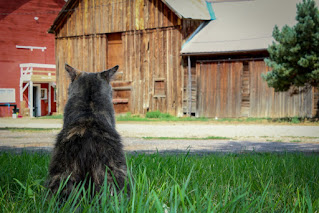
The back of a grey cat in foreground facing a barn.
 Pest Control is an issue that anyone who keeps  domestic animals is well aware of. Here at ARBICO we offer lots of natural and non-toxic ways to address all sorts of pests. But we do not carry the oldest method available – the cat. Ever since cats started hanging around with people at least 10,000 years ago, they have been feeding on insects and rodents that are drawn to humans and the animals we raise.

 Whether you have a big ole’ farm or a small homestead, you owe it to yourself and your animals to have a barn cat. If you have resisted the idea of cat ownership perhaps I can sway you with some of the good reasons to have one.

 First of all, let’s talk rodents: Everyone knows that cats go after mice; their predilection for hunting rodents is hard-wired in them and they are indefatigable in their efforts. Mice are not just gross, but they carry multiple nasty diseases that you don’t want introduced into your barn. Since keeping your animals healthy to maintain their value (and avoid vet fees) is arguably the most important part of raising livestock, rodent control is essential. Additionally, rodents can affect your bottom line if they decide that your livestock feed is a convenient meal. Feed is expensive and any loss to rodents can do real damage to that bottom line. The minimal cost of maintaining a couple of barn cats is definitely worth it for the protection they offer.

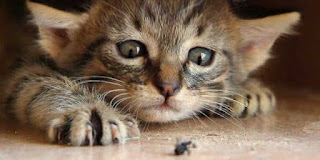
Close-up pf a grey striped cat trying to reach a bug.
Cats help keep insect numbers in check by hunting and eating them. While eating insects is not a vet-approved diet for a cat, they can generally do so with little or no trouble (learn more here). Which is a good thing, since a cat will chase down anything that flutters, crawls, flies, or skitters past it. Felines cannot clean up an infestation for you, but they may be able to keep numbers down enough to prevent one. And even one less fly is a blessing. According to this lady, flies are “sky raisins” to cats.

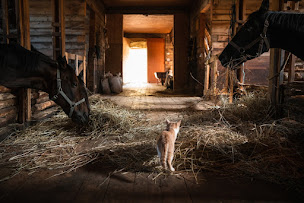
A tabby cat walking in the hay through horse stalls.
Barn cats are working animals, as opposed to family pets. They need to remain independent and tolerant of people, but not aggressive and hostile. A full-on feral cat will probably not make the best of barn cats and a housecat can’t be expected to do the work. You can sometimes bring a wild cat around to your way of thinking, but what you really need is a cat that is somewhere in between. Semi-wild if you will. Your best bet for acquiring this sort of cat is to adopt a feral one through an animal shelter. A feral cat that has been in a shelter will be at least somewhat conditioned to being around people and will have learned to see us as their food source. An even better adoption choice would be through a group that works with feral cats (this one focuses candidates for barn cats). A cat you receive from both kinds of places will have been fixed and vaccinated, greatly reducing the potential for disease as well as roaming and marking behavior.

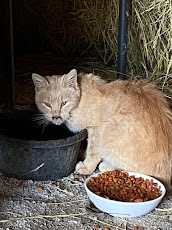
A tabby cat drinking from a black bucket with a blue bowl of food in front of it.
Acquiring a barn cat requires some commitment on your part. Although they are not pets, they are not wildlife either. You should be prepared to do what’s necessary to keep them healthy and fed. It may seem counter-intuitive to feed them if you want them to hunt mice and stuff, but it’s the thing to do. Not only is it compassionate, but you’ll also get better results from your little hunters. A well-fed cat will not only stick around, but it will also be able to spend its time patrolling its realm (aka recreational hunting) as opposed to the constant hunt for food which could lead them far away. 

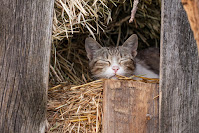
The face of grey and white cat sleeping in the hay.Along with feeding them, you should provide shelter as well. Like many of your other animals, they could be easy pickings for predators, so they will need a safe and cozy place for them to hunker down at night. Feed them at the end of the day in the location where you want them overnight and they will quickly learn where they should be at nightfall. In the morning, let them out when the chickens and everyone else goes out.

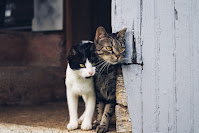
Two cats by a barn door. One is black and white and one is greyish brown.
There are a few factors to consider that will work to keep your felines happy and at home. First of all, you should  be in a rural, or at least semi-rural, area in order to keep your cats (and only your cats) on the job without interference. That being said, you may find a cat useful in town in a warehouse or nursery type of setup (with active monitoring). In truth, if your cats are spayed or neutered they will not be as attractive to or attracted by other cats. Secondly, when you adopt, you should take home a pair if you can. A cat that has a companion will be happier and more likely to stay put.

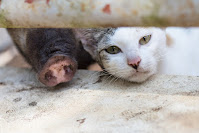
A white cat face and a pig's snot sticking out from a pen.
Bringing a barn cat into your world is an excellent way to give an animal a good life while keeping pests in check. They will love (maybe, they’re cats after all) and appreciate you for the chance, but your other animals will like them there as well. They like the
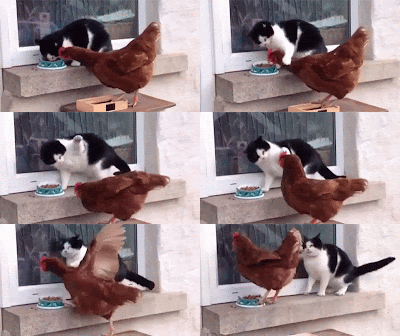
companionship of cats as much as people do - except for chickens. Chickens and cats have to learn to get along.
A balck and white cat and a chicken fighting over a bowl of food.

There is a surprising amount of information out there on barn cats. If this blog has gotten you to think about them, I encourage you do a quick search to get more information.

  Submitted by Pam


.


Featured Post

5 Cool Things About Nematodes

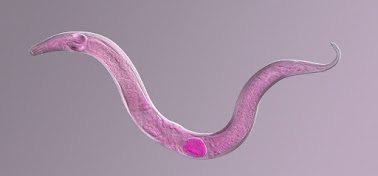
It’s September, and here at ARBICO, it’s Beneficial Nematode season. Every year we put our Beneficial Nematodes on sale at this time to enc...