Showing posts with label tulips. Show all posts

Friday, April 14, 2023

Flower’s Power

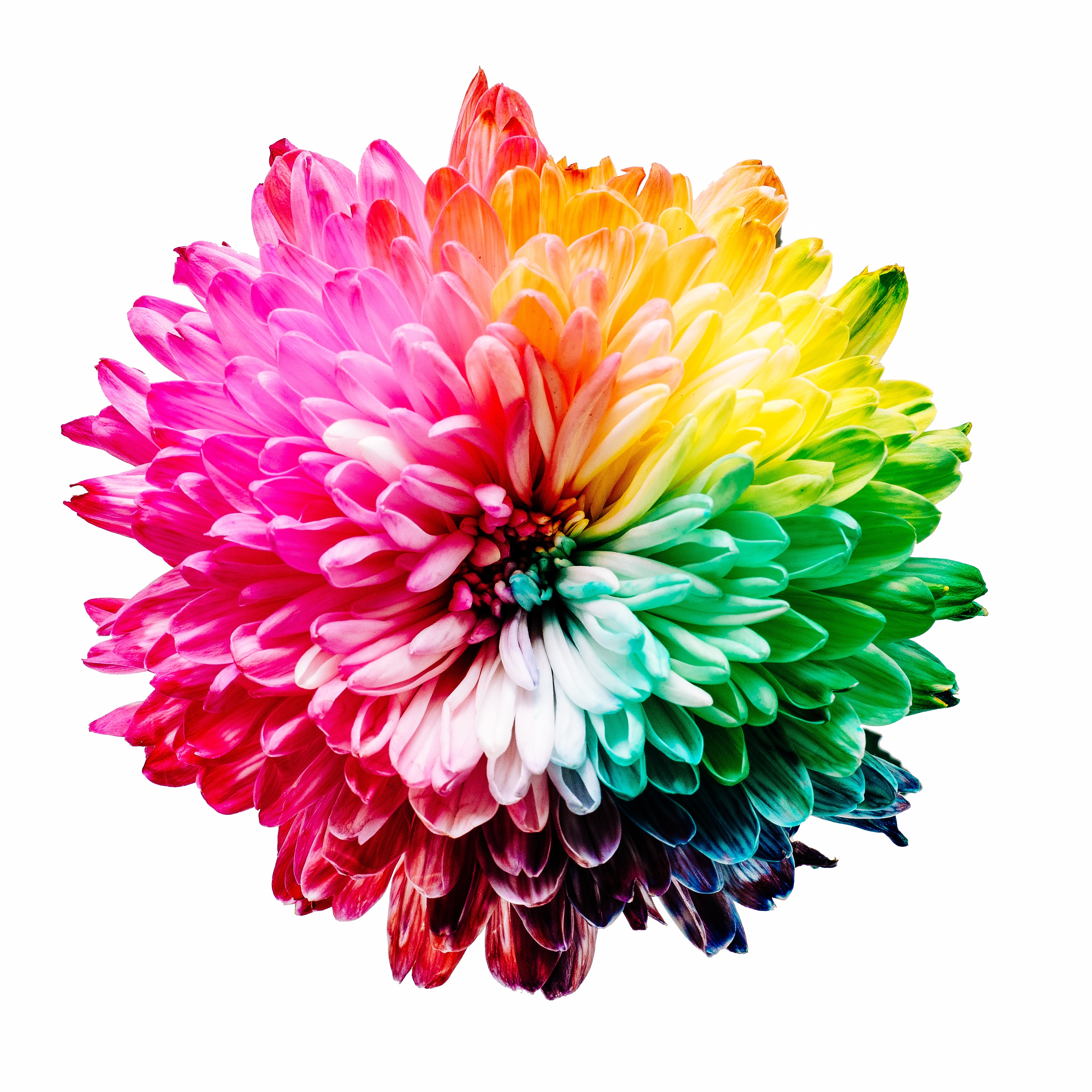
Mulr-colored psychedlic flowers on a black background.
 “If we could see the miracle of a single flower clearly our whole life would change.” –  Buddha

Humans have an undeniable attraction, and even reverence for, flowers that is unlike our appreciation for other objects in our natural world. Throughout our history, people have been inspired by flowers to write poetry and songs, give them symbolic power, philosophize about their purpose in the world, add them to our folklore, paint and draw them endlessly and so much more. The famous German philosopher, Goethe, claimed that he could look at a flower and experience our whole cycle of existence. Leaves or grass or sand have never garnered such adoration. What is it about flowers that moves us so?

Pink tulips with their bulbs still attached. Photo by Sixteen Miles Out on Unsplash.

Roses that represented the factions in the Wars of the Roses. From left: Red Rose of Lancaster, Tudor Rose and White Rose of York.
Roses of the Wars of the Roses
Flowers have shaped human behavior throughout our history and the importance and symbolism given to them has caused great destruction and ruined millions of lives. The Wars of the Roses (1455–1487), is a good example. The rose plant had nothing to do with the conflict (it was a “who will be king” thing), but it became a matter of life or death if you identified with the white or red roses. And then we have Tulipmania in the mid-1600s in Holland. At that time, tulip bulbs became a highly desired commodity, and their cost became wildly inflated. There is some question of just how crazy things got, but there’s no doubt that people suffered for their flower obsession. Then there is the flower that caused a number of wars and assorted violence and is still destroying lives on a daily basis – the opium poppy.
Tables of people earing and drinking at tables under blooming cherry trees. A Hanami Festival in Kyoto, Japan.
Hanami Festival - Kyoto, Japan

The Japanese have tuned the simple act of admiring flowers into a cultural phenomenon. Known as Hanami (flower viewing) the tradition of gathering to contemplate flowers dates back to at least the Nara period of their history (710-794 AD). Over the centuries, this practice has become focused on the undeniably gorgeous cherry blossoms of spring. These flowers are so important to the Japanese that, in 1909, the mayor of Tokyo gifted Washington D.C. cherry trees as a token of friendship between the two countries. This gift is appreciated every year by the throngs of people who come to D.C. to see the glorious blooms.  

“The rose is the flower and handmaiden of love – the lily, her fair associate, is the emblem of beauty and purity.” – Dorothea Dix

The Flower Power photograph by Bernie Boston, taken during the March on the Pentagon, October 21, 1967
The Flower Power picture - October 21, 1967
We are all familiar with the term “Flower Power”, and for most of us it brings images of flamboyantly colorful hippies dancing dreamily while holding daisies. But the full story is much more intricately layered and features riots, the anti-war and human rights movements, and even the Hells Angels. It begins in 1965 when the poet and activist Allen Ginsberg created a vision for street protests against the Viet Nam war. He saw a street full of flowers, theatrics and religious iconography (read more here), that would answer violent authoritarian suppression with gentle words and deeds. While he didn’t specifically say “Flower Power”, in a very short time the phrase was an integral part of the late 60s zeitgeist. The ultimate expression of this is the beautiful song “San Francisco"
Multi-colored blossom. Photo by Sharon Pittaway on Unsplash.
The apple-green Coelogyne mayeriana orchid. Photo by David Clode on Unsplash.
Coelogyne mayeriana orchid
by Scott McKenzie. 

People love to ascribe meanings to the different colors of flowers. For instance, we send red roses to show passion or deep love, while pink is more playful. But some people say that colors also can influence emotional health. In this theory, flower colors don’t just symbolize a message, they directly affect the person who is in the vicinity of them. Orange flowers bring optimism and sociability  while blue ones invoke serenity.  On a side note: Green is the most common color in the natural world, but green flowers are very rare (one exception is this beautiful orchid). I wonder what the philosophers make of that?

“In joy and in sadness, flowers are our constant friends.” – Unknown

Orange and white flowers amid white table settings. Photo by Amber Kipp on Unsplash.
Over the years scientists around the world have researched the effects of  flowers on people and these studies show what we all know instinctively – no matter the type or color, flowers make us feel good.  In Tokyo, they learned that people experience physiologically measurable benefits within four minutes of looking at roses. In the Netherlands, they found that diners with flowers on their tables were in better moods. Read more here

Close-up of a white magnolia blossom.
Magnolia blossom
In the course of writing this blog, I have concluded that the deep love that humans have for flowers is in our ancient DNA. During the Cretaceous period (145.5 to 65.5 million years ago) flowering plants burst on the scene and thrived spectacularly. Scientists believe the first flower looked very much like a magnolia blossom (see it here). The advent of flowers brought changes to the world, including fine-tuning insect life, that allowed humans to evolve and prosper (more on all this here). So, perhaps somewhere deep in our souls we just get what flowers mean. 

"One perfect flower says more in its silent beauty than all the voices in the world." - Me 

Multi-colored flowers spewings from a blue Earth.
Take Care
Submitted by Pam


Tuesday, September 28, 2021

What To Get In The Ground Right Now

A hand holding a trowel over a hole. The view is from the ground up.
In every garden across North America, summer crops are over and it’s time to consider what’s next. If your enthusiasm has continued unabated, you should get your fall garden going. If you’re ready to take a break but would like something to look forward to in the spring (and perhaps jump-start your garden fever), this is the perfect time to plant some bulbs. Or you could do both.

Before you plant anything, make sure to give your soil some love. Although this is always the thing to do, it is especially important after a long growing season. All those beautiful summer blooms and vegetables demanded a lot from the soil, it’s only fair to give it something back before asking for more. We have lots of excellent soil amendments and microbial inoculants that can pep up your dirt. And if you want specifics before adding anything, we have soil testing options as well. But really, it’s not all that complicated: get in there and work the soil some, add amendments or inoculants and water well. This short article explains these three steps. Even if you are done gardening for the year, you should still treat your dirt to some Beneficial Nematodes. They will go in and clean out any grubs that are trying to overwinter in your soil.

A little blond boy watering a raised bed with a silver metal watering can. Photo by Filip Urban on Unsplash.
What you plant in your fall garden is naturally dependent upon your geographical location. However, all but the most northern of climates can still squeeze out some vegetables. In fact, there are many delicious vegetable options whose flavors and colors are heightened by cold weather. If the onset of frost is somewhat fluid in your area and you’re worried about committing to a garden, you may want to plant your veggies in containers that can either be moved into the shelter of a covered area or moved directly inside. You could also plant in raised beds - they are more easily protected from the effects for cold weather than in-ground gardens. Here are some excellent choices for plants that grow quickly and can be grown in-ground, in raised beds, or in containers (for more container ideas, check out this article):

Different types of lettuce growing in black earth.
Lettuce – There are too many scrumptious lettuce varieties to list here, and they all grow quickly enough for a fall harvest. Many of these varieties also able to tolerate light frost. Other salad-type vegetables like arugula, kale and mustard greens are also good fall choices.

Spinach – The savoy varieties of this plant are especially fond of cooler weather, but all of them will provide a delicious addition to your fall meals. Since spinach can grow in full sun or partial shade, it should not suffer unduly if you have to move it under some type of shelter part-way through its growing cycle.

A hand holding some red radishes with soil, roots and green tops still attached.
 Radishes – These crispy treats are made for fall gardens – they don’t appreciate hot weather and can grow in as little as 20 days. They do well outside, but you can also grow them on a bright windowsill and pluck them out as they become ready.

 Vegetable gardens are not the only kind of fall garden you can plant. If you enjoy flower gardens, there is no reason you can’t have one into the fall. Everything from chrysanthemums to pansies can provide color for you alongside your changing trees. This article from Good Housekeeping highlights 30 different flowers to have in a fall garden.

Purple hyacinths blooming from bulbs in the garden.
Now is the time to plant bulbs for spring blossoms. This is the perfect avenue for someone who is doesn’t want to deal with often unpredictable fall weather and would just prefer to plant for the warmer days to come. Planting bulbs is a little like planning a surprise party for yourself – choose which ones you like the best, pick the place you want them to be and wait for them to pop up when the time is right. Here are some of the most beautiful treats you can plant right now:

Hyacinths – These are some of the earliest of spring flowers to peek out. According to this article on the planting of and care for hyacinth bulbs, they appear sometime after crocus and before tulips. Whenever they show up, their lavish pink, purple, red or blueish-purple blooms will be a highlight in any garden.

Tulips – If you are considering flower bulbs and trying to decide which ones, just add “tulips” to your list. Within their vast variety of styles, shapes and colors will be something that will be perfect for your garden. Picking which one will be the hard part, though, as they are all spectacular. Here is a short article on just some of them. 

Tall stalks of purple allium tilted in the wind.
Alliums – If you want some long-lasting drama in your garden and are ready to expand out of the traditional tulip-daffodil- crocus type of flower, the allium could be just right for you. These plants are part of the onion-garlic family, but their tall stalks and globe-shaped flowers are very different from those underground-growing cousins. Alliums can last many weeks in the garden and are favorites of pollinators. Here’s more on them.

Now I’d like to make a pitch for something that is both a relative of the allium, a vegetable, a bulb and a seed – garlic. If you plant some now, you will be able to harvest delectable, fresh garlic in July. But, you don’t have it plant it as a bulb. You can actually plant individual cloves as seeds – and each one has the potential to grow into a full-sized bulb replete with many cloves. For garlic beginners, it’s probably best to plant bulbs specifically cultivated for this purpose; but you can plant from grocery store garlic. This article will give you some help with this.

A Simpson's cartoon clip. Bart asks "What are you planting?" Homer says "A little bit of everything" and opens his hand to show a random assortment of things, including a gummi bear and a piece of candy corn.
Whatever you decide you want to do with your fall garden, just being outside on these cooler days is rewarding in and of itself. Especially here in southern Arizona, where we always eagerly await summer’s end.

Take Care.

Submitted by Pam


Thursday, April 1, 2021

A Tale of Two Easter Flowers

Easter lilies with pink and purple tulips in a clear glass vase on a grey table with white books in the background.
When we think of Easter, there are many images that come to mind: religious symbols, bunnies, baskets, and eggs. But there are also flowers – lots and lots of flowers (it’s spring after all). Two of the most iconic and beautiful are the Easter Lily and the tulip. At first glance, it may not seem that these two flowers are alike at all, but they have some surprising commonalities. These include their long international backstories that lead to the Pacific Northwest.

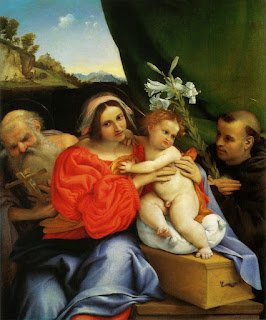
Lilies have been a symbol of purity, hope, and rebirth as far back as ancient Greece. With the rise of Christianity, this flower became associated with the Virgin Mary. One can find depictions of the lily in European religious art dating back at least to the 14th century (more on that here). Over time, the connotation of rebirth made these flowers an obvious choice for Easter celebrations, when Christians celebrate the resurrection of Christ. 

A 1521 painting showing Mary and the baby Jesus in the middle. In the background, left and right are two men. The man on the right is presenting them with a lilies on a stalk.
The lilies that have been so greatly admired for centuries in Europe are not the lilies that most Americans are familiar with. Europe has lilies that are native there, but the Easter Lily that we know is actually native to Japan. In the mid-19th century, Japanese bulbs were introduced to Bermuda and they did extremely well. In no time, Bermuda was providing 90% of these flowers to the US. Unfortunately, a virus struck in 1899 that decimated the crop (more here). After that, Japan was the only source for the lilies - until World War II changed everything.  Luckily, a WWI soldier, on his way home to Oregon from Japan in 1918, had smuggled some Easter Lily bulbs into the country to share with family and friends. That little bit of federal lawbreaking literally provided the seed for the Easter Lily economy in the Pacific Northwest today. So, after bouncing from Japan to Bermuda and back to Japan; 99% of the Easter Lily bulbs sold in North America are now produced by four family farms in Smith River, CA. Quite a journey for a flower. 

Eater lilies on a white background.
Tulips may not carry the religious symbolism that lilies do, but they have long been a cheerful harbinger of spring. One of the first flowers to bloom in springtime, these colorful beauties are always a welcome sight. Easter just wouldn’t be the same without the sight of tulips. People commonly gift tulips at this time of year, and apparently, their different colors carry meanings to recipients much like roses do. I know I’d be happy with any color.

Multicolored tulips for sale in Ukraine. Photo by John-Mark Smith on Unsplash.
Tulips are native to Central Asia, but we can thank the flower-lovers of the Ottoman Empire (based in modern-day Turkey)for introducing them to Europeans. The Ottomans prized these flowers and cultivated them in many colors and patterns. In the 17th century, Dutch tradesmen brought these beauties home. A quick side note: An important reason that lilies and tulips both traveled such great distances is their bulbs; unlike other types of flowers, bulbs take years to mature and can be transported in relative safety during this period.

Once tulips arrived in the Netherlands, they quickly became an obsession for many. Tulip Mania (1634-1637) was the height of this obsession, when tulips became the world’s most expensive flower and bulbs were sold that cost more than mansions. While this phenomenon was short-lived, the cultural and economic circumstances are still being studied. Luckily for all of us who appreciate their beauty, the bust of Tulip Mania did not mean the end of tulips in the Netherlands. To this day, the Dutch remain the world’s largest commercial producer; they export about 3 billion yearly. They even have a National Tulip Day in January (more on that, and other cool festivals, here).

A painting by Henrik Gerritz Pot, 1640, called Flora's Wagon of Fools. It shows people on a wagon with a sail. Many of them are dressed silly and are carrying tulips.
Tulips may be a national treasure in the Netherlands, but they have found a second home in Washington State. North of Seattle in the Skagit Valley, tulips have grown into a major industry that started with one man’s whim. George Gibbs, an English immigrant, was farming in the area in the 1890s when he randomly planted a few bulbs on his property. He dug them up a couple of years later and excitedly discovered that they had multiplied. With this new-found knowledge that the climate in Washington was perfect for tulip cultivation, he wrote to some Dutch growers for advice. Initially, they didn’t want to share their secrets, so he forged on without them. Later, though, he shipped some bulbs to them and they were so intrigued and impressed that they made the long trip to see his operation. From this one man’s dream, a world of tulips grew. Today, the Skagit Valley Tulip Festival attracts thousands every year from all over the world. If you’re in the area, the festivities start today and go through the end of April. 

Tulips in a field with structures in the background. Tulip Festival by Kelsey Dody on Unsplash.

While researching this blog, I was surprised to discover that both the Easter Lily and the tulip are edible. At least technically edible, most people do not claim they’re especially tasty. If you are interested in ingesting some beauty check out this article on eating tulips, which has an intense passage from a Dutch person who ate tulips when other food sources dried up during WWII. As far as Easter Lily food goes, this blogger is a real fan. 

                             White bunnies popping up in a field of tulips.

Take Care. Submitted by Pam


Featured Post

The Spiritual Messages of Insects

We are deep in the hot, sweaty, and buggy time of year. It’s summer and millions and billions of insects have appeared to put a damper on wh...