Showing posts with label weed control. Show all posts

Tuesday, May 22, 2018

Mother Nature’s Amazing Corn Gluten

If you ever need further proof of how wondrous Mother Nature is, look no further than Corn Gluten. This by-product of processed corn is nature’s weed and feed and can perform seemingly contradictory functions. Corn Gluten has the ability to be a powerful pre-emergent herbicide for weeds while also being a potent fertilizer for established plants.

Corn Gluten (whether liquid or granular), when used in sufficient volume, will inhibit the emergence of dormant weed seeds. As the seeds crack open to sprout, the Corn Gluten dries it out, which will stop the germination process. When germination stops, root development stops and the weed will cease to grow. Corn Gluten works well against most weeds, but not all. Types of weeds that are affected by Corn Gluten include:
  • Bermuda Grass
  • Crabgrass
  • Creeping Bentgrass
  • Curly Dock 
  • Dandelions
  • Foxtail
  • Lambsquarter
  • Pigweed
  • Purslane
  • Redroot Bigweed
  • Smart Weed

Corn Gluten, when applied in a lesser volume than the rate for herbicidal action, acts as a phenomenal fertilizer. This is due to its Nitrogen-rich properties (9-0-0). When used on established lawns and plants (those that are rooted with true leaves), Corn Gluten will promote richer turf color, thicker lawns and all-around healthier growth. Each additional application will build on what’s already there to encourage continued greening. As the slow release of the nitrogen greens up your growth, it will also aid in the creation of richer, healthier soil. An added dimension of weed control in Corn Gluten is that weeds prosper in poor soil; so, as your soil becomes healthier, you will see a natural reduction of weeds.

Here are a few other things to bear in mind before using Corn Gluten:

  • When using for weed control, apply when rain is not expected for a few days. It’s important to water in the Corn Gluten and then let it dry out.
  • Don’t sow a lawn or plant seeds for six weeks after applying Corn Gluten. This will give it a chance to lose its herbicidal qualities.
  • Corn Gluten will not change to pH in your soil. 
  • The Corn Gluten Meal sold as animal feed is not the same thing. Often people are lured by the lower price of this variation, but it simply does not have the same protein concentration to be effective as a seed killer.
So, to re-cap: Get your Corn Gluten out early and stop weeds in their tracks. Then, wait six weeks and begin using it again to add a blast of nitrogen to your lawn or garden. Continued usage will keep what you’re growing vibrant and aid in developing healthy, weed-resistant soil.


Tuesday, November 14, 2017

Great Soil is the First (and Best) Method for Fighting Weeds

Weed Control Begins With Soil Preparation
When I was just discovering my passion for gardening, one of my neighbors, an experienced gardener, gave me the best soil tutorial. On one of her walks, she noticed as I struggled to deal with weeds in my drought stricken yard. She stopped to chat and casually mentioned that I really needed to work on the tilth of my soil. When I asked what that meant, she kindly invited me to check out her garden – it would be better to see and feel what she meant.

When she poured some of her soil in my hand it was clear that what I saw, felt, and smelled was very different from the dirt that I was dealing with.  I had an immediate and visceral reaction to the wonderful musky richness.  The soil was soft and darkly colored and it felt good – plump, moist, lively – not thin, grainy and dry like the stuff I was dealing with. She told me that this was my goal in the garden - create soil that was dark brownish-black and smelled good, clean and earthy and held together but did not clump or fall through my fingers when moist.

Avoid weed problems the easy way. Build living soil with high nutrient content today!


How to accomplish this? Her message was simple – back off the chemical fertilizers, feed the soil by adding organic matter and she promised that over time my soil would become like hers and I would have no weeds. Really? No weeds??? I was a skeptic at first but over time I have learned that if I cultivate healthy soil and I make sure to water and fertilize properly* – weeds are unlikely to grow in such a healthy soil environment.

Organic Mulch Helps Build Healthy Soil
Adding organic mulch
can prevent weeds.
In the ensuing decades (yes decades), I've learned that most of us don't inherit or buy a piece of land with great soil, the fact of the matter is that we need to improve the soil with every growing season.  Our best friend in the garden is soil that is rich in micro-nutrients, has enough macro-nutrients to support what we are growing, and has abundant microbial life.  Good soil encourages:

• The breakdown of organic matter.
• Microbial life that develops good soil structure.
• Fights pathogens that would harm plants.
• Transforms minerals so they can be better used by plants.

It's not that I never have any weeds, but the weeds I do have are easy to manage. Another great lesson learned from a fellow gardener – pull weeds in the first 15 minutes you are in the garden and that bend and snap helps warm-up your muscles and joints in preparation for the tough gardening ahead. Smart advice to help avoid an aching back!

*Watering and fertilizing properly are dependent upon many factors – soil, temperature, humidity, wind, and the type and health of the plants you grow. It is important to know how all of these factors influence your garden's needs. Responding appropriately is a lot easier with knowledge. Just remember "The Three Bears" – not too much, not too little, just the right amount of water and fertilizer are very good things!

Featured Post

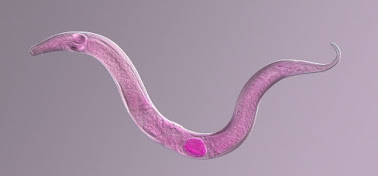
5 Cool Things About Nematodes

It’s September, and here at ARBICO, it’s Beneficial Nematode season. Every year we put our Beneficial Nematodes on sale at this time to enc...