Showing posts with label soil preparation. Show all posts

Friday, February 28, 2020

Planning To Plant? Give Your Soil A Meal First.

A collection of plants, pots and tools in preparation for planting.
In recent weeks, we’ve published blogs with an eye to helping you prepare for spring planting. There was one on the types of soil to use and one about soil pH. Last year about this time I did one on soil amendments. This time around, I thought I’d throw out the Single Ingredient Meals option. We have been working on expanding our line of these particular soil amendments as they are an excellent choice for someone who wants an effective amendment without having to fuss over the various nutrient options. These meals are also naturally sourced and slow to break down, giving your plants long-lasting, healthy and environmentally friendly benefits. In fact, most are OMRI listed or certified organic from another entity. Meals can also  be mixed with other meals and fertilizers to fit your unique needs and desires. With Single Ingredient Meals, you cannot make a wrong choice – they are all great for your plants. Let’s run through what we have to offer:

Purple alfalfa flowers on a green stalk.
Alfalfa flower
Alfalfa Meal: Alfalfa is just an all-round great addition to your garden. This perennial flowering plant is in the legume family and is stuffed with vitamins, amino acids and minerals. It is also a nitrogen-fixer and contains triacontanol, a hormone that stimulates root growth. It even helps with decomposition to keep that good organic material and all those nutrients in the soil and accessible to your plants. Alfalfa Meal also works well as a tea, which can then be applied as foliar feed. Roses love alfalfa, but it works equally well for other flowers as well as herbs, shrubs and trees. We carry Alfalfa Meal in a 40 lb. bag and in smaller boxes.  For more on the greatness of alfalfa, check out this article.

Green spinach leaves next to a bowl of pink salt.Blood Meal: This fertilizer is a by-product of meat packing and is usually sourced from cow blood. It is very high in nitrogen, which encourages leaf growth. It can also raise the acid level and lower the pH in soil. This meal is particularly effective when used for nitrogen-loving plants such as corn, broccoli, spinach, and other leafy greens. A side benefit of Blood Meal is that has some repellent properties when dry; deer and rabbits don’t like it. This article has some informative do’s and don’ts when using Blood Meal.

Three brown bulbs with white buds emerging.Bone Meal: This is another by-product of the meat industry and, like Blood Meal, it generally comes from cows. Bones are dense in calcium and phosphorous to keep vertebrates strong and healthy. Plants need these same minerals to grow vigorous and robust cells and roots and to photosynthesis efficiently. Use Bone Meal early in the growing cycle to get those plants going. It is particularly good to use when planting bulbs, flowering annuals, perennials and ornamentals. Bone Meal can be dangerous to dogs if they consume it, this article has more on that and other guidelines for usage.

A pile of beige and orange-ish crabs
Crab Meal: Also sourced from a food industry, Crab Meal (and other shellfish fertilizers) is made from the left-over shells after the meat has been removed. These Crustacean shells are high in nitrogen, but also contain plenty of calcium, phosphorous and magnesium. While all of these ingredients are excellent for your plants, it is the chitin in Crab Meal that sets it apart. Chitin increases plants' cell wall strength and encourages populations of beneficial soil microorganisms. These microorganisms release enzymes that help control pest nematodes in the soil. Slugs and snails don’t like it either. Crab Meal can be applied anywhere in the garden, but is especially helpful in vegetable gardens/flower beds and when used as a compost amendment to stimulate decomposition and nutrient availability. Here is a short, but helpful, article on shellfish fertilizers.

Bright pick roses over a white picket fence.
Fish Bone Meal: This fertilizer, a byproduct of the fishing industry, is a comfortable alternative for many people made uncomfortable by the slaughterhouse source of traditional mammal bone meals. Fish Bone Meal is high in phosphorous and calcium and will give you plants that can absorb water and nutrients more easily. Great for all plants, but particularly for flowering plants, bulbs and new garden beds. You will see the results in bigger, brighter blooms and more vibrant vegetables. Here is a video on the subject.

An assortment of fresh vegetables in a greyish-brown basket.
Kelp Meal: This first-rate fertilizer is made from Ascophyllum nodosum seaweed found in the waters of the North Atlantic. As it floats around, the kelp plant is able to filter the nutrient-rich ocean water to harness a multitude of micro and macro-nutrients. This allows kelp to grow at an amazing rate and, once dried and milled, Kelp Meal can do the same for your plants. Kelp Meal contains upwards of 60 minerals or elements, 12 vitamins and 21 amino acids. All plants love kelp, so feel free to use on any type of plant at any point in the growing season. We carry Kelp Meal from Down to Earth, Maxicrop and Soil Mender in a variety of sizes and prices, so you should easily find one that works for you. For more on Kelp Meal, read this article.

Neem tree
Neem Seed Meal: This soil additive is yet another beneficial product from the venerable tree. Neem Seed Meal is what remains after the oils are extracted and it is packed with macro and micro-nutrients that your plants will love. All those nutrients will help build a healthy microbial system and strong roots. This fertilizer also improves soil texture and increases organic matter in the soil. As if that weren’t enough, Neem Seed Meal also has a secret weapon – pest control. Just as Azadirachtin from the tree serves as a potent insecticide and repellent, the meal does much the same thing. The  target pests here are soil-dwelling and include grubs, root knot nematodes and root aphids. Use Neem Seed Meal on anything you grow; but it has a strong odor, so you probably won’t want to use it on indoor plants. We offer this remarkable plant product in the meal form and in the cake form. Here’s more on pesticides from the Neem tree pesticides.

A white dog lying on a bright green lawn.Corn Gluten Meal:  This is another fertilizer with a secret weapon – more on that in a minute. As a fertilizer, Corn Gluten Meal offers a non-burning, slow-release dose of nitrogen that will get the green going in your plants. This is especially true of turf, grasses, shrubs, trees and vegetable greens. This fertilizer should only be used on established lawns and plants (those that are rooted with true leaves), but use it as soon as the plants are ready in the spring to give them a strong start. And now to the secret weapon: When used in higher amounts than the fertilizer rate, Corn Gluten (in both granular and liquid forms) is an excellent pre-emergent to combat weeds. If you use it for this purpose, be careful to not apply in anywhere that you have just planted seeds or transplants.We carry a variety of Corn Gluten products. For more on this seemingly magical growth promoter and inhibitor in one, check out our blog on the subject.

A cartoon of a bagged product being added to a flower pot-which makes the flowers grow.

Here’s to happy planting!

Submitted by Pam

Wednesday, February 19, 2020

Preparing To Plant? Get Your Soil pH Right Ahead Of Time.


An illustration of garden tools and white pots on brown soil next to blue-green wheelbarrow

What is soil pH? 

In simple terms, it represents the acidity or alkalinity of the soil on a scale from 0-14. Anything lower than 7 is acidic, while anything higher than 7 is alkaline. While most plants prefer slightly acidic conditions (roughly 6.5), a number of flowering plants prefer soil in the range of 4.5-5.5. You should be able to determine what your plants like with a simple internet search.

Why does it matter? 

Soil pH indirectly affects plants in many ways. Chief among them is nutrient availability as soil pH directly impacts how a nutrient gets to plants.

Truog, E. (1946). Soil reaction influence on availability of plant nutrients. Soil Science Society of America Proceedings 11, 305-308


Something diagnosed as an iron deficiency based on plant symptoms may actually be a result of high pH not allowing the right iron compounds to form, leading to a lack of uptake. On the other hand, overly acidic conditions leave plants vulnerable to manganese toxicity from over-absorption (similar to metal poisoning in people). Soil pH also impacts soil life–again, slightly acidic is ideal for most soil-born organisms including earthworms and most microbes.

Why does it change?

Soil pH fluctuates based on a number of natural factors including rainwater leaching, acids formed from root respiration and acid formation from decomposition. Human inputs like chemical fertilizers can also have significant effects.

Monitoring & Adjusting:
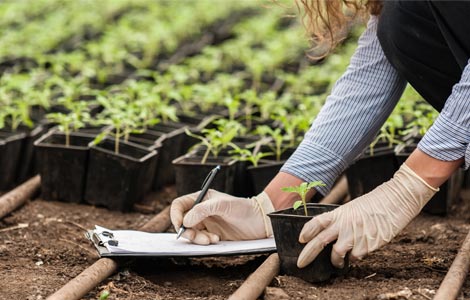
A person crouched down and writing on a white pad next rows of green plants in black containers.

  • First things first – test your soil. There are many choices for you test-wise, we carry a variety, but there are also high-end options out there. There are even some DIY techniques out there that you could give a whirl. Once you know the status, you can plan accordingly. 
  • Need to acidify the soil? Elemental sulfur may be your best bet and it can be top dressed to soil or worked into the top 6”. Tiger 90CR® Organic Sulphur should do the trick. If you prefer using a liquid (or are growing hydroponically), SaferGro pH Down will work wonders.
  • Need to boost alkalinity? Look to lime – commonly bought as calcitic limestone or dolomitic limestone. Not only does it raise pH, lime provides the secondary macronutrients calcium and magnesium. We recommend BONIDE® Hydrated Lime
Whether the soil needs major adjustment or not, it is a good practice to test soil pH seasonally in order to maximize your growing potential. Three green plants growing from mounds of brown dirt.
Submitted by Sterling (with Pam)

Thursday, January 30, 2020

Preparing To Plant? First, Pick The Right Soil.

Green sprouts popping out of dark soil. Photo by Jen Theodore on Unsplash.
As we move through winter and eye the upcoming spring, gardeners everywhere are preparing to plant. But before decisions are made as to where and what to plant, it is important to pick the right soil to plant in. Dirt is not just dirt. Potting soil, topsoil, native soil and garden soil are all different and each has unique and specific properties that make them suitable for different types of growing. Additionally, what you are planning to grow in the soil can color what type of soil you should use.

A colorful array of different types of soil.
Types of soil
All soils contain three components: clay, sand and silt. The percentages of each of these can vary widely according to geographical regions and mixes in bags. The first step to knowing what type of soil is optimal for you,  is to determine where and how you are growing. This will help determine whether you need soil that is more of one component than another.

Multi-colored pots filled with a variety of plants and flowers.
Are you planting in pots? Resist the temptation to use just any soil mix. Soil formulated for container growing provides enough drainage and aeration to allow healthy root growth, whereas denser soils may lead to compaction and water retention. Our recommendations for potting soil are A little girl squatting by a a raised garden bed. Photo by Kelly Sikkema on Unsplash.Tank’s Pro Coco-Soil Potting Mix, Tank's Pro-Lite Seeding & Potting Mix and Soil Mender 109 Potting Mix.

Considering a raised bed?
You’ll want something a little “heavier” than a potting mix, with a bit more organic matter. Blending potting mix with another pre-mixed soil blend at around a 50/50 ratio should yield close to what you need. Depending on what you’re planning to grow, you may want to tinker with that ratio to meet your plants’ needs. Take a look at our Prococo Coconut Coir Products; you may find just what you want in one of the three formulations.

A pile of black dirt with a gardening trowel in it and white gloves beside it.Should you use topsoil or garden soil? Topsoil is more of a general landscaping tool and can be used for filling out and leveling or conditioning native soil. It should not be used for new plantings. Here is what we have for topsoil. Garden soils are pre-mixed blends that contain added nutrients and other organic matter. Garden soil can be used when planting, but is only intended for in-ground use. For more on the differences and how to choose between them, check out this article.

A person kneeling down in brown dirt, holding some in both hands.Do you want to cultivate a garden plot? You’ve already got the native soil in place. But chances are your native soil will need some help to properly support what you’d like to grow. Your first step to figuring this out is to determine  what your native soil consists of, In this article, Home Depot suggests doing a “feel test” as follows:
Moisten a tablespoon of soil and roll it into a small ball.
If the soil pack together and is moldable, your soil contains clay.
If you can form a 2-3” ribbon with your ball of soil, you have a very high clay content.
If the ribbon falls apart or feels gritty, you have a mix of clay and sand.
If the soil ball will not hold together regardless of how much water you add, and it feels a little gritty, it’s sandy soil.
Once you know what you have, you'll have a better idea of how to get to where you need to be soil-wise.

A woman and a brown bear cub digging side by side in a garden plot. 
Yep, that's a bear cub.
A pink ceramic pot with a handle with a green cactus in it. Photo by Stephanie Harvey on Unsplash.Plants can grow in many different  soils, but the trick is to know which ones grow best in what. You can plan your garden by what the soil will support, or build the soil that can handle what you prefer to grow. Succulents, for instance, need good drainage, while flowers prefer lighter soils. How you approach what you cultivate is not important as long as you get to the right soil choice.

In the coming weeks, we will go through the steps to getting the soil ready to plant as we test for pH and add soil amendments.

Submitted by Pam (with Sterling)

Wednesday, December 4, 2019

World Soil Day - Build Soil. Help The World.

A drawing of a black rectangle with a green leafed plant growing in it. Some of the soil and leaves are blowing away on the right.Last Thursday Americans celebrated Thanksgiving, which is meant to be a day of gratitude. (Okay, you don’t have to be grateful for mean old Uncle Cyrus). But, as we were celebrating, I believe it is safe to say that very few people thought to be thankful for the ground they were standing on. Or for the soil that produced their annual feast. World Soil Day hopes to change that by building awareness of the precarious position of our soil in the world today.

Red/brown dirt ravines with green forest in the background - soil erosion from deforestation


World Soil Day is an annual event put on by the United Nations. It is observed worldwide on December 5th with outreach, functions and even contests. The basic purpose of this campaign is to raise awareness of and advocate for healthy soil. Every year there is a theme that relates to soil; last year it was soil pollution and this year it is soil erosion. All around the world, our soil is eroding at an alarming rate. According to the UN, one soccer field worth of soil is lost every five seconds and it is not an exaggeration to say that the very food we rely on is being threatened. Climate change (which is an even larger issue) plays a part in increased soil erosion, but an awareness of the importance of healthy soil and good soil management can make a real difference on a micro level. Big changes can be made in small steps. Here is a cool little cartoon on soil health from the World Soil Day site.

Yellow-orange flames in front of three men in turbans and white clothing. There are trees in the background.
Slash and burn farming in India
Aside from wind, water and other climatic factors, in many parts of the world soil erosion and degradation (when what soil is left is no good) is the result of human activity such as ecologically damaging farming methods like slash and burn agriculture. However, healthy soil loss from overgrazing, deforestation, mining and pollution is found everywhere. Combine all that with the extreme storms, drought and flooding that come from climate change and the need to do something is urgent. India, home to over a billion people, is already in crisis. Their largely poor and agrarian population is struggling and every year they are hit with intense monsoons and flooding. While the rains have always been a part of Indian life, they are becoming more and more extreme. The US is not immune to soil problems; this  enlightening article explains why we are running out of soil (including a super-interesting tidbit on the Roman Empire and their soil issues).

The Grand Canyon - the valley is purple-hued with a river running through it. The walls are yellowish. There are rocks and bushes in the foreground.
Here in Arizona, we have the premier example of water-caused soil erosionthe Grand Canyon. The canyon may have taken eons to be created, but we have all seen mini versions of it in our yards after heavy rains. This is a particularly thorny problem here in southern Arizona, where a good portion of our soil contains a Caliche layer. Caliche is, quite literally, as hard as concrete and does not allow water to pass through it. Combine this with the intense storms that we get during our summer monsoons (they can be bad, but not as bad as those in India) and there goes the surface soil.

Aerial view of a giant dust cloud bearing down on housing tracts. Photo by Jason Ferguson
Haboob bearing down on Phoenix
Additionally, we have extremely dangerous and damaging haboobs (dust storms), which are an exceptionally dramatic display of soil erosion. I once had the misfortune of being caught up in one of these on the freeway between Phoenix and Tucson. I am not a person who scares easily, but the whole experience was truly terrifying. Beyond the windshield everything is just a weird tan-orange color and all you can do is hope you don’t run into something and that nothing runs into you. Experts say you should pull over and turn off your lights (and pray nothing finds you), but I just got off on the first exit I could. I found out later that three people had died in a multiple car accident just ahead of me. If I hadn’t made that turn, I would have been a participant in that. Here is a video that really shows what they’re like.

Two hands holding a plant in black dirt. In the background is a field-on the left it is brown and on the right it is green.Addressing soil health is often done best right from home. Here at ARBICO, we have been singing the healthy soil song for decades. We have gathered a great many excellent products that anyone can use in their yard or garden to encourage strong soil that’s rich in microbial life. You could begin with a mineral (or more than one)  like Soil Replenish (Elemite), Andesite, Glacial Rock Dust or Harvest Gold Premium Soil Conditioner (Silica). To add nutrients and jump-start your soil biology, you can add items such as Fulzyme SP, Earth Alive Soil Activator, and Neptune’s Harvest Humate Concentrate. Or you could go the one-stop-shop route and get our Healthy Soil Recipe or John & Bob’s Clay & Hard Soil Kit (excellent for Arizonans). These are just a brief sampling of what we have to offer in the soil building arena, there is much more in our Soil Amendments, Micronutrients & Biostimulants category..

Short clip from the Food and Agriculture Division of the United Nations. The text reads, "Over 33% of the Earth's soils are already degraded and over 90% could become degraded by 2050".
If you are unable to contribute in changing the soil around you, I encourage you to consider recycling your green waste. And if you’re unsure of what to do with it once you’ve collected it, here is my blog with suggestions for that. If you are interested in reading more on soil building and/or soil in general, here is a link to some of our blogs that you may enjoy. Now, go out and get your hands dirty – and help the world!

                                                                                                                               Submitted by Pam

Friday, September 27, 2019

When There’s Just Too Much Water…

Close-up of a white crocus flower in the rain
Hurricanes, flooding, rain for days, tornadoes, high tides, early snow, late snow, snowmelt – whatever is causing it, it seems that people everywhere are dealing with more water than anyone wants. Even here in Southern Arizona; this week we’ve been hit with days of heavy rain courtesy of Hurricane Lorena. For anyone who has cultivated property, enjoys their yard or lovingly tends a garden, bringing it back after it’s been underwater is not an easy process. What type of damage a flood causes and how to recover (if you can recover) can depend on many factors.

pencil cartoon of two people on the roof of a house with floodwaters all aroungd; one has an umbrella and is saying" At what point does it stop being goof good for the garden?" By RoystonWhere to begin: The only actions that can be taken while the water is still present are diversion or pumping it out, both of which can be impractical at best in an active flood situation. Plus, neither can reverse damage to soil that has already occurred if it has been underwater for 12-24 hours. It is best in general to stay out of floodwaters; they can be full of contaminants and creatures. Fire Ants, for instance, form rafts of many thousands of individuals to escape floodwaters and you do not want to bump into one of those!

Once the water is gone: If there is trash or tree and plant debris, you will want to get that out of your space. If you have flood-deposited soil, you’ll have to decide if it should be removed. Although as little as one inch of silt can kill a lawn and three inches or more can harm a tree, removing it may not be the best idea. Adding and removing soil can be very hard work, is quite costly, puts you in danger of handling contaminants and is damaging to the soil (more on that below). It might be best to simply scrape residue away from some of the bigger plants and start all over.

Close up a person in red and blue rain boots and jeans walking in the mud. Photo by Daiga Ellaby on Unsplash
Assess your soil: Whatever you do, do not work wet soil – it can cause serious damage to the soil structure. Wet soil can easily become compressed, which can lead to compaction and drainage issues when it dries. Wait at least several days to weeks before digging and if you plan to rototill, the recommended wait time is 90 days. You will want to determine how your soil biology held up to all the water. Soil microbes are an essential part to a healthy soil and they need oxygen. If the soil is submerged overly long, water displaces the oxygen in it and beneficial microorganisms can suffocate and die. Anaerobic microbes, which do not need oxygen, may take their place. A foul smelling soil is an excellent indicator that this has happened and that the soil needs to be brought back to a healthy balance before any planting is done.

Close-up of a green plant in clay pot full of water.Plant viability: How your plants are affected by flooding depends on many factors: length of time they were under water, what kind of plants and how old they are, time of year and the type of water that flooded. Warm weather flooding will affect plants more than flooding that occurs when plants are dormant in cold weather. Salt water will be much more damaging to most plants than will fresh water. Determining the condition of your plants can be tricky as symptoms can take weeks, and even years, to appear. Vegetables and flowering annuals will show symptoms before trees and shrubs. Damage caused by flooding mirrors common disease problems, so the root cause is often unclear. Here is a list of symptoms that appear in water damaged plants.

Vegetable gardens: First off, any produce that has gone through a flood should not be eaten. This is an EPA recommendation and it makes good sense. With all the unknowns in floodwater, it is the only way to be sure you are not ingesting contaminants. With fruiting vegetables, any fruit on them during the flood needs to be discarded, but whatever grows later should be fine. If you wish to err on the side of caution, wash those fruits thoroughly and plant a non-edible crop for a season.

Close-up of a white crocus flower in the sunWhat to do before replanting: As with all planting, start with your soil. A soil test is highly recommended after flooding.Water is notoriously good at leaching nutrients from soil, so even a minor water issue can affect what you’re planting in. If a soil test is not for you, you should still amend your soil and lightly fertilize (no heavy fertilizer while the plant struggles to come back). You can’t go wrong with the following products: Begin with TerraClean 5.0 to eliminate soil-borne pathogens; apply BioAct™ SD to chew through organic material; use products like ROOTBiojuvant® Beny-GroEarth Alive™ Soil Activator™ or Inocucor Garden Solution® to return to a healthy microbial balance; add Earthworm Castings and, when the new plants are in, fertilize with DTE™ Liquid All Purpose or SaferGro® Biomin Starter®. Fungal diseases are common after floods and they are best controlled by applying proactively; so get ahead of the problem and plan to treat as soon as you can. Check out our Fungicides page for some excellent products to choose from.

Like fungal diseases, flood damage is best dealt with before it occurs. I will offer some suggestions on how to do that in this blog next week. Until then, stay dry out there.

Submitted by Pam

Friday, September 6, 2019

A Busy September in the Garden

Yellow and red roses on a two-toned wooden table with a white envelope that says "September". Photo by Brigitte Tohm on Unsplash
Now that Labor Day is in the rearview mirror and all the kids are back in school, people everywhere are amping up for the busy fall season. This is especially true for gardeners. This time of year is chock-full of gardening and taking-care-of-outside chores. As most serious gardeners know, September is not the end of the season. In reality, it is the beginning. What you do between September and late November will help determine how heavy your workload is for next spring.

An assortment of leafy greens in a silver colanderMany gardeners are well on their way to having a fall garden by now. Depending on where they live, the planning and prep has been done and they have already planted or are ready to move on to planting. Those winter greens and vegetables will be very welcome as fall turns to winter. Here is a delicious-sounding salad that features Brussels sprouts, pumpkin seeds – and a surprise touch.

But what if you are not doing a fall garden this year? If you want to plant in the spring or just want a healthy backyard environment for your warm weather enjoyment, there is a lot that can be done now to make that happen. Putting in a little time now can save you time, money and worry as you come out of winter next year.

A skeletal black tree on a green and misty hillside.  Photo by Adarsh Kummur on Unsplash.
Plant a tree: If you are not up to going the whole fall garden route but still want to get your hands in some soil, consider planting a tree. Every day is a great day for a tree, but September through November is the ideal time for planting one. This will give their roots time to establish before hard freezes and allows them to concentrate their energy on growing roots before they put out leaves in the spring. The key to success with this schedule is to encourage strong and healthy root growth and to water deeply. We recommend Root Build 240 for the roots. For more information, check out our tree planting blog here.

Multicolored plants in clay pots stacked against a brick building.Apply Beneficial Nematodes: We strongly encourage fall applications of these microscopic organisms to control pests that overwinter in the soil. We have beneficial nematodes that can control a myriad of pests, including various beetles, ticks, fungus gnats and caterpillars. Apply some now and apply again in the spring to knockdown any pests that got away. These fascinating creatures do amazing unseen work in the ground. We have a ton of information on them here. And they are on sale through September!

Move your garden to containers: If you have some plants that you’d like to keep going or some favorites that you like to have around, put them in containers. It will be easier to protect them (and yourself) from the elements. Put them close to the house or on a porch for easy access and raise them off the ground; this will keep them from becoming waterlogged in the wetness of fall and winter. Here is a video with some tips on fall container planting. 

Colorful fall leaves on a lush green lawn.Lawns: Your lawn will enjoy some dethatching, fertilization and aeration at this time of year. And, while you’re at it, you may as well go after those stubborn perennial weeds. Weeds draw up nutrients in the fall to prepare for winter; if you apply herbicide now it will be drawn up as well. Corn Gluten Meal may work well for you; it will fertilize as well as kill weeds. Check out our blog on this versatile corn by-product. We also have many other excellent weed control options here.

Clean out sheds, greenhouses and cold frames: Now that the weather is cooling off (except here in Southern Arizona), get out and clear up the clutter that it was just too darn hot to deal with over the summer. If you are planting again, you will want this clean slate. If you are not, cleaning now will give you a chance to move items that shouldn’t be out in the cold and free you from spending your spring days going through debris from the year before. Be sure to empty and clean out all the compost and decaying plant matter from old pots and containers to keep overwintering pests from finding a home there.

Teardrop shaped small pumpkin on dark soil and surrounded by green leafy vines.Photo by Steffi Pereira on UnsplashTrim things up: Help your plants by maximizing light sources as we move into the darker months. Remove thick or overhanging vegetation around your garden, greenhouse or patio. To encourage pumpkins to ripen by Halloween, trim up any leaves and/or re-direct vines that may be shadowing them. If you have apple trees – lucky you – run the mower under them so you’ll be able to easily spot any windfalls.


Young blond haired boy in jeans and a blue shirt playing in a pile of brown leaves, Photo by Scott Webb on UnsplashCompost: Not composting? Start now to take advantage of falling leaves and dead plant material. If you are already composting, you probably know already that the bounty of leaves in the fall are an excellent addition to a compost pile. Check out our composting products here.

A closeup of a hand holding some daffodils and daisies. Photo by Sam Mgrdichian on Unsplash


Plan for beauty
: Now that you have a trimmed up and cleaner yard environment, and a plan for all the fallen leaves that someone will have to rake up, it's time to plant bulbs for next year’s enjoyment. Stick them in now and when they start popping out next spring you will be so glad you did.                                                                 
Above all, get out and enjoy this time of beautiful time of year. The sunny, cool days and crisp nights of autumn are something that this Virginia native gets homesick for every year at this time.

Submitted by Pam


Friday, July 19, 2019

Man, It’s Stupid Hot Out There!

Silhouettes of high-rises against an yellow, orange and red sky with a big, white sphere
No matter where you stand in the climate change conversation, it is undeniably HOT out there these days – outrageously, hellishly, suffocatingly hot! 200 million Americans are currently experiencing record-breaking heat, with many places expected to reach temperatures higher than those we’ll have here in Arizona. And don’t give me the “it’s a dry heat” refrain, an oven is also a dry heat. I have lived in places with high humidity and know how debilitating it can be and most of the places dealing with this heat wave will also have that humidity. The combination of heat and humidity is just plain miserable.
Moving image of a side view of a woman on pulling on a fence. Both are on fire.
Never touch metal that's been in direct sunlight.

We Arizonans take pride in our ability to muddle through our summers. Most of us accept the heat as payment for having such mild winters. There are many strategies to get through, but when asked how one copes, my favorite response is “Live like a desert creature”. Simply put, avoid the sun at all costs, don’t over exert yourself and drink plenty of water. Seeking shade is a competitive sport around here in the hottest months; I’ve seen groups of people clumped together under the thin strip of shade a telephone pole offers.Even local reptiles know this game. Having said all that, many (probably most) Arizonans, myself included, are lucky enough to travel from air-conditioned homes in our air-conditioned cars to other air-conditioned locations. But, getting to that car in the parking lot and getting it cooled down can be pretty gnarly!

Three people in the water wearing masks that cover their whole faces and suits that completely cover their bodies. 
"Facekinis" in China - not creepy at all. 
People can wear lighter clothing (or add questionable sun protection like the image on the left) and adjust their routines in answer to excessive heat, but what is a  plant to do? The higher the temperatures, the more need for water; finding ways to stretch your water is key. In Arizona, Xeriscaping has long been a widely appreciated model for growing. With its emphasis   on water conservation, mulching and using heat   tolerant plants, it is an ideal solution for areas like   ours that experience heat and drought.The elimination or reduction of turf is also a key factor in Xeriscapes. Many people around the country still love their lawns, but in cities like ours where water is at a premium they have become less socially acceptable. I encourage every reader to reconsider their lawn and either eliminate or reduce them; it is a small but important way to serve the environment.

A backyard with a black fountain left front and plants and stepping stones leading to a small table in the rear
Backyard Xeriscape, Tucson, AZ
Adopting a Xeriscape approach to landscapes and gardening takes some planning ahead. This works well in Arizona because we always know it will be hot and dry. With current climate conditions being what they are, excessive heat and/or drought is a reality now for non-desert parts of our nation and, if you want to grow something, planning ahead is for everyone. Here are some ways you can build a heat tolerant green space; some take planning, but others offer heat help right away:

Soil Amendments – Building a soil that holds and properly distributes water and water-borne nutrients to plants is a solid foundation that gives plants the tools to fight the heat. You can chose something like Earthshine, a soil enhancer mix that contains biochar and other beneficial additives. Or a powder like Harvest Gold Organics Premium Soil Conditioner, which contains silica and micronutrients. Or even a single ingredient additive like the Elemite, also known as ARBICO Organics™ Soil Replenish™. Another (very affordable!) option is ARBICO Organics™ Rice Hulls. The bottom line is that any type of high quality soil amendment will bring you healthier soil, which means healthier plants that can better handle heat and drought stressors.

A close-up of a brown and black snail amongst white flowers. Photo by Krzysztof Niewolny on UnsplashComposting & Mulching – You can increase your soil’s water holding capacity by up to 7 times by simply adding compost. You can use ready-to-go compost or begin making your own; we have options for you here. Mulch, mulch, mulch – in any form, by any name, just do it! Mulching options are many: coco coir like Prococo Coconut Coir, Hulless Oats and other cover crops and biodegradable weed block paper, which provides weed control as well as mulch. Another interesting option is Slug Gone. This sustainable slug (and snail) control product is made from wool and is placed in and around garden beds. It will swell from the moisture and make a scratchy mat that slugs will refuse to cross. In performing its slug control duty, it also retains moisture and reduces water usage.
A solitary Yucca plant with a tall stalk in lots of white sand under a blue and white sky. Photo by Josh Rangel on Unsplash
Yucca in its native environment

Adjuvants – Another way to protect plants from heat stressors is to add adjuvants to their water. Yucca (Yucca schidigera) is a desert native and knows all the tricks to survive in such a harsh environment. Adjuvants like RAW Yucca Flow and Therm X-70 that use extracts from these plants deliver the secrets of the Yucca plant to your backyard. You can give your plants immediate heat relief by adding these adjuvants right away.

Covers – Use covers to protect your plants from the pounding sun. Here are many versions to choose from, or create your own. Here is a video to show you how.

Containers – Consider moving plants from beds to containers. Container planting makes water conservation easier and gives you the ability to move plants in and out of the sun.

Looking into the sun through bent-over sunflower stalks.Photo by Josh Rangel on Unsplash
Embrace heat-loving plants – Seek out and cultivate plants that are well adapted to hot weather. Here are some great heat-friendly plants that you are probably familiar with:
Sunflowers – with a name like that…
Amaranth - pretty – and you can eat it!
Echinacea – beloved by pollinators – and check out these cute earrings
Yarrow - native to temperate North America

Pink and white Yarrow flowers on tall green stalks.
Yarrow blooms
Unless you live in the far northern regions of our country, you may be surprised to find there are native summer species waiting to be loved. Here in the Tucson, we have a fabulous source for desert-adapted native and heirloom plants thanks to Native Seeds/SEARCH. They have a remarkable variety of interesting seeds and stories that go with them.

Stay cool out there.
                                                                                                                         Submitted by Pam

Featured Post

5 Simple Ways To Celebrate The Summer Solstice

The summer solstice will make its yearly appearance on Sunday, June 21, 2026. It is the longest day of the year and considered by many to be...