Showing posts with label organic gardening. Show all posts

Friday, January 28, 2022

Russian Dacha Farming

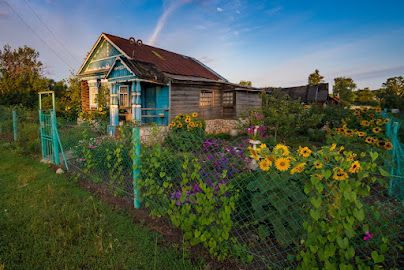
A house painted blue in front to the left with a garden on the right that has sunflowers in front.
This is the time of year when gardeners pour over seed catalogs and haunt home and landscape websites as they decide what their 2022 gardens will look like. If you’re still unsure of what you want to do, I’d like to suggest you take some inspiration from Russian dacha farms.

 For thousands of years Russians have been providing food for their tables from small, carefully tended gardens. The immense vastness of Russia both creates and solves the problem of getting fresh food to people. Remote settlements have never been able to depend on food deliveries, but they do have plenty of land. So, they plant. This long tradition of hard work and self-reliance has created a strong tie to the land, a peasant culture, that continues today amongst both rural and urban Russians. 

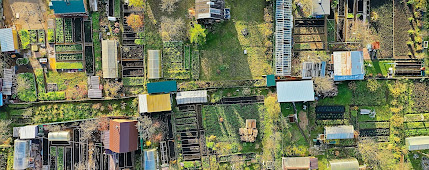
A drone view of a dacha community
The model for these garden plots is called dacha gardening. Dachas have been a  part of Russian life for centuries. At one time, they were mostly rural estates of nobleman and political elites looking to escape city summers. But, after the after the traumas of World War I and the Bolshevik Revolution, there were serious food shortages and the people turned back to what they knew – tending the land. The idea of a dacha changed from an elitist retreat to a small plot of land for growing a garden, with living structures that were initially very basic. Millions of city-dwelling Russians began commuting back and forth to their dacha gardens in the spring and summer. The whole custom has worked so well that it continues to this day. 

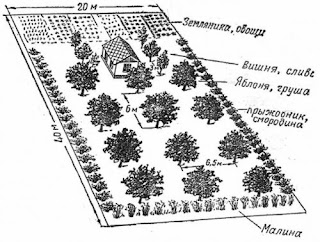
A drawing of the guidelines of a plot. (Source: Revue Jardins aupres des Oussas’bas, Moscow, April 1959, p.13)
The rise of dacha gardens in the early part of the 20th century was initially an informal and organic response to food insecurity, but the state soon stepped in to regulate the allotments. It was not just the land that was regulated, but also what was planted and how it was laid out. This may seem a bit over-reaching regulation-wise (something the Soviets were well known for), but in this case the model they presented was essentially what had been working for centuries. A traditionally laid out Dacha garden perfectly encapsulates not just Russian food culture but includes crops that can work within the short growing season to provide exactly what is needed and desired.

A shirtless Russian man leaning on a shovel by a smoking fire. He is surrounded by gardens and there is a blue house in the background.
Classic dacha gardens are an average of 600 square meters (or around 6458 square feet) in size and will contain cucumbers, tomatoes, beets, radishes, carrots, garlic, dill, horseradish and potatoes. Potatoes are especially important for a couple of reasons; they are undeniably nutritious, but they are also what old-fashioned vodka comes from (to this day, it is estimated that more than 90% of Russia’s potatoes come from small farms). Berries are also grown, with currants, gooseberries and strawberries being popular. Another essential ingredient in a dacha garden are the fruit trees, often placed around the plot to form growing fences. A wide variety of fruit trees are cultivated, including apple, pear, cherry and plum. And don’t forget the flowers – particularly those like the sunflower that offer more than just beauty. These crops create a beautiful garden that promises a well-rounded, nutritious and flavorful harvest. And, of course, it is all organic.

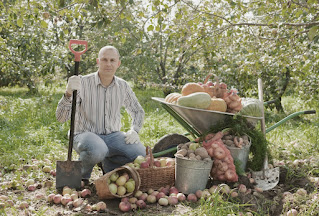
A bald man kneeling with a shovel by a wheelbarrow. There are a variety of fruits and vegetables around him.
There are two additional elements that define a traditional dacha garden but may not play well here in the US (for reasons I don’t believe I need to elaborate on) – the bounty of the harvest is shared with others and all the work is done by hand with tools (no animals or machinery). Throughout the Soviet period, how much people grew and how much they shared was highly regulated, but the mindset to share has long been a part of that cultural attachment to community and the land. Likewise, the practice of only using hand tools began in the past but continues today. It may have started out of the necessity of poverty or lack of access to resources, but nowadays people seek out the physicality of it all and there is pride in producing just what you and your handful of tools can coax from the earth. Again, this reflects that the ancient peasant culture is alive and well today.

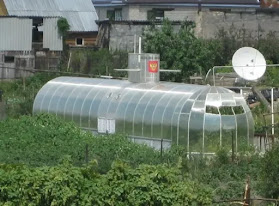
A greenhouse shaped like a Russian submarine in a garden plot. There is a satellite dish in the background.
Dacha gardens are a uniquely Russian creation that are like mini snapshots of their rich culture. After all, where else would you find a greenhouse shaped like a Russian submarine? If this blog has stirred your interest, there is a lot of information out there about them. You can research them as a food cultivation subject, or from a socio-political or historical viewpoint. There are probably other angles as well, but you get the idea. And if you are interested in what's  happening currently, here is a nice little video that shows what a dacha garden looks like for a family today, and this article is a first-person account of a dacha community that was written last summer.

To fingers pointing at a map of Russia.

Submitted by Pam

Tuesday, December 1, 2020

Local Organizations Gardeners & Plant Lovers Can Support On #Givingtuesday

Photo by Elaine Casap on Unsplash

In the spirit of giving and gratitude one fosters during Thanksgiving, we at ARBICO Organics wanted to share information about local organizations you can consider giving to and becoming involved with in honor of #givingtuesday!


Photo by Zoe Schaeffer on Unsplash 
Local urban gardens are a great way to get involved in growing, especially if you lack your own garden space! You can get some dirt under your nails and fulfill your gardening aspirations all while helping the community! You can locate urban gardens in your area by visiting the international database available at Urban Farming
 
Your local cooperative extension is also a terrific place for resources about growing in your specific area and may offer many ways to get involved in the local garden community scene! You can find your location by visiting the Pick Your organization’s website! 


Photo by Kelly Sikkema on Unsplash
Another fantastic way to support and give back to your community is to get involved with your local school system’s garden program. Working to teach children gardening skills and the importance of nutrition is a very valuable part of growing our community’s next generation! To find out more, visit your local school district’s website!
 

If you are more of a hands-off gardener, who prefers to find fresh produce from local farmers, consider joining a CSA. Not only is this a great way to diversify your fridge’s inventory, but it supports local growers and guarantees that you have the freshest and most in-season options! In many areas where farmer’s markets are closed due to COVID-19, this option will also help support farms that relay on these markets. To find a CSA in your area, visit Local Harvest
 
Local gardens and farms are just one place to start, don’t forget about local food banks and other organizations that help protect your local region’s biodiversity!
 
In Tucson, where our company is located, in addition to gardening and farming organizations,  we support the Community Food Bank of Southern Arizona, the Center for Biodiversity and the Sonoran Institute!
 
Let’s keep the spirit of giving going at this time and continue to support our communities! 

We are better together! 
 
Submitted by Aurora @ ARBICO Organics
 

Thursday, May 21, 2020

How’s Your Garden Going?

A drooping, dying sunflower - photo by Robert UllmannThis Covid-19 spring has seen a huge surge in the number of people planting gardens. It seems that being stuck at home during planting season has been inspirational for many, while others are suddenly interested in where their food comes from. With so many rookies dipping their toes in the gardening pool, there are bound to be some garden failures and the ensuing loss of interest. If you are one of these struggling gardeners, don’t despair; most gardening flubs come from a few common mistakes that can be avoided or fixed.

If you haven’t planted yet and are getting ready to do so, you can avoid future problems before you begin digging. If you haven't planted a garden yet and wonder if it is too early/late, here is a handy tool for determining when is best in your planting zone (where you live). For more information on planting zones, this article is helpful.

A map of the US showing in the different planting zones in an array of colors.
US Planting Zones
A successful garden begins with great soil, a knowledge of the land you’re working with,  what pests might be there, and a thoughtfully made plan. Let's see how that works:

Soil – Back in February I wrote two blogs on preparing your soil to plant; one is about feeding your soil before planting and the other is about soil pH. The important take away from both of these is that you should know what kind of soil you have and enrich it before planning your garden.

A field of crops bordered by a row of trees and a pond in the background. It's all bathed in afternoon light.
Where You’re Planting – Most people don’t think about where the sun lands in their yard until they are forced to move their lawn chair from place to place during a barbecue. But any plants you plant will notice where the sun is right away. Full sun, partial shade and full shade are critically important distinctions that you need to determine before you decide what to grow. Luckily, this article painlessly walks you through this process.


A brown dog with his whole head in a hole in a garden.Pests – Insect and soil-dwelling pests can put the kibosh on your garden dreams. But not all common pests are all that common everywhere. A beetle may be more of a problem where you live than an aphid, although both are considered common pests. Do some online research, visit a local nursery, or contact your county extension office (find yours here) to see what you're up against so that you can prepare and/or plant accordingly. Don’t forget to protect against warm-blooded pests as well. Just because you don’t see them doesn’t mean they aren’t there. Birds, deer, rabbits, and squirrels can quickly appear and devastate a garden just when you are ready to enjoy it, while moles and voles will be out of sight underground as they feast on roots (check out our selection of excellent animal control products here). And then there is the family dog – no matter how much you love them, they can and will destroy what you’ve built. Here are some ways to dog-proof the area.

Two women in long skirts with scarves on their heads looking out over a field.Planning – Having a great plan is the key to success in many things, and gardening is no exception. It is in this step of garden building that you can avoid some common gardening concerns before they even start. First of all, bring all your ambitions down a notch. Instead of tilling up a whole quarter-acre, why not just a small plot by the back door to begin with? Gardens are physically taxing and time-consuming, usually more so than an inexperienced gardener expects. Start small and expand gradually to avoid that overwhelmed feeling that takes the fun out of the experience. Another way to encourage success is to only plant what you like. While this seems logical, a surprising number of people don’t follow this simple rule. If you are doing a vegetable garden, don’t plant what your family won’t eat and appreciate. If you are doing an ornamental garden, don’t plant a high maintenance, slow-growing plant; try one that is quick and beautiful instead. Your commitment to the project should be rewarded by something you like, otherwise, your interest will wane.

A little boy in red boots digging a hole in a garden.
Now that you are ready to get your hands dirty, here are some pointers for laying down the proper foundation for a successful garden:

Dig Wide & Deep - Plants need loose soil around them for air and water to move around and for roots to grow, so make sure you put them in a hole that is plenty big enough. This article says the hole should be twice as wide and twice as deep as the pot the plant came in. It is hard for a plant to come back from a too-small hole (unless you dig them up and transplant them), so it’s best to go big here.

Spacing – This is important as an extension of the previous point, but it also touches on the look you’re going for in a garden and the growing practices of various plants in a vegetable garden. If you want a lush flowerbed, plant those babies close together. Do the opposite if you are planting perennials that take years to fully mature. If you are planting vining plants with bush plants, consider what might grow over the other. Additionally, consider how you will access your plants once they start to produce for you. All in all, carefully consider where growth will take each plant.
Landscaping by the water using red mulch between the plants.

Mulch, Mulch, Mulch – This important step is, unfortunately, often overlooked. No matter what type of garden you are planting, mulch is almost magical in its ability to hold moisture and soil in your garden. It is also very ornamental these days and comes in a huge variety of manmade and natural materials. Not sure what to use? This article should help.

Garden tools hung on a wall with the words "In case of zombies or yard work" written over them.Money Problems – Many people choose to start a garden as a way to relax and, perhaps, save a little money at the grocery store. And then the garden becomes a demanding money pit – not relaxing at all. Don’t go out and buy all sorts of gadgets and fancy gear. All you need are a handful of tools (see this article for the 5 basic and 5 nice-to-have items) and some old clothes that you don’t mind getting dirty and sweaty. Plants and seeds can get pricey if you go straight to the big-box store, so get creative with other ways to acquire them (again, your cooperative extension may be helpful), this article has some excellent ideas.

A Lego-man toy with a red watering can in a planter.If you have already planted, some of the things that could go wrong may already be in place. This does not mean that you can’t take steps to mitigate the situation, even if it means moving plants or even scrapping the whole thing and starting over. Here is a video that shows how to revive sick and dying plants.

The same Lego man as before, now actively watering.Whether you planted a while back or are just getting started, if you want a happy, healthy garden there are two things to practice regularly and properly throughout the growing season: weeding and watering. Weed whether you want to or not; weeding is like doing the dishes, the longer you put it off the worse it gets. Everyone
knows that watering is essential, but how your water is at the heart of a great garden. Frequent, shallow watering does not get the job done and leads to uneven watering. Slow, deep, and less frequent watering is the better method. However, as with everything else, what you are growing and where you are growing should have a huge impact on your watering practices.

Happy Gardening!                                                                                                 Submitted by Pam

Thursday, January 30, 2020

Preparing To Plant? First, Pick The Right Soil.

Green sprouts popping out of dark soil. Photo by Jen Theodore on Unsplash.
As we move through winter and eye the upcoming spring, gardeners everywhere are preparing to plant. But before decisions are made as to where and what to plant, it is important to pick the right soil to plant in. Dirt is not just dirt. Potting soil, topsoil, native soil and garden soil are all different and each has unique and specific properties that make them suitable for different types of growing. Additionally, what you are planning to grow in the soil can color what type of soil you should use.

A colorful array of different types of soil.
Types of soil
All soils contain three components: clay, sand and silt. The percentages of each of these can vary widely according to geographical regions and mixes in bags. The first step to knowing what type of soil is optimal for you,  is to determine where and how you are growing. This will help determine whether you need soil that is more of one component than another.

Multi-colored pots filled with a variety of plants and flowers.
Are you planting in pots? Resist the temptation to use just any soil mix. Soil formulated for container growing provides enough drainage and aeration to allow healthy root growth, whereas denser soils may lead to compaction and water retention. Our recommendations for potting soil are A little girl squatting by a a raised garden bed. Photo by Kelly Sikkema on Unsplash.Tank’s Pro Coco-Soil Potting Mix, Tank's Pro-Lite Seeding & Potting Mix and Soil Mender 109 Potting Mix.

Considering a raised bed?
You’ll want something a little “heavier” than a potting mix, with a bit more organic matter. Blending potting mix with another pre-mixed soil blend at around a 50/50 ratio should yield close to what you need. Depending on what you’re planning to grow, you may want to tinker with that ratio to meet your plants’ needs. Take a look at our Prococo Coconut Coir Products; you may find just what you want in one of the three formulations.

A pile of black dirt with a gardening trowel in it and white gloves beside it.Should you use topsoil or garden soil? Topsoil is more of a general landscaping tool and can be used for filling out and leveling or conditioning native soil. It should not be used for new plantings. Here is what we have for topsoil. Garden soils are pre-mixed blends that contain added nutrients and other organic matter. Garden soil can be used when planting, but is only intended for in-ground use. For more on the differences and how to choose between them, check out this article.

A person kneeling down in brown dirt, holding some in both hands.Do you want to cultivate a garden plot? You’ve already got the native soil in place. But chances are your native soil will need some help to properly support what you’d like to grow. Your first step to figuring this out is to determine  what your native soil consists of, In this article, Home Depot suggests doing a “feel test” as follows:
Moisten a tablespoon of soil and roll it into a small ball.
If the soil pack together and is moldable, your soil contains clay.
If you can form a 2-3” ribbon with your ball of soil, you have a very high clay content.
If the ribbon falls apart or feels gritty, you have a mix of clay and sand.
If the soil ball will not hold together regardless of how much water you add, and it feels a little gritty, it’s sandy soil.
Once you know what you have, you'll have a better idea of how to get to where you need to be soil-wise.

A woman and a brown bear cub digging side by side in a garden plot. 
Yep, that's a bear cub.
A pink ceramic pot with a handle with a green cactus in it. Photo by Stephanie Harvey on Unsplash.Plants can grow in many different  soils, but the trick is to know which ones grow best in what. You can plan your garden by what the soil will support, or build the soil that can handle what you prefer to grow. Succulents, for instance, need good drainage, while flowers prefer lighter soils. How you approach what you cultivate is not important as long as you get to the right soil choice.

In the coming weeks, we will go through the steps to getting the soil ready to plant as we test for pH and add soil amendments.

Submitted by Pam (with Sterling)

Friday, September 27, 2019

When There’s Just Too Much Water…

Close-up of a white crocus flower in the rain
Hurricanes, flooding, rain for days, tornadoes, high tides, early snow, late snow, snowmelt – whatever is causing it, it seems that people everywhere are dealing with more water than anyone wants. Even here in Southern Arizona; this week we’ve been hit with days of heavy rain courtesy of Hurricane Lorena. For anyone who has cultivated property, enjoys their yard or lovingly tends a garden, bringing it back after it’s been underwater is not an easy process. What type of damage a flood causes and how to recover (if you can recover) can depend on many factors.

pencil cartoon of two people on the roof of a house with floodwaters all aroungd; one has an umbrella and is saying" At what point does it stop being goof good for the garden?" By RoystonWhere to begin: The only actions that can be taken while the water is still present are diversion or pumping it out, both of which can be impractical at best in an active flood situation. Plus, neither can reverse damage to soil that has already occurred if it has been underwater for 12-24 hours. It is best in general to stay out of floodwaters; they can be full of contaminants and creatures. Fire Ants, for instance, form rafts of many thousands of individuals to escape floodwaters and you do not want to bump into one of those!

Once the water is gone: If there is trash or tree and plant debris, you will want to get that out of your space. If you have flood-deposited soil, you’ll have to decide if it should be removed. Although as little as one inch of silt can kill a lawn and three inches or more can harm a tree, removing it may not be the best idea. Adding and removing soil can be very hard work, is quite costly, puts you in danger of handling contaminants and is damaging to the soil (more on that below). It might be best to simply scrape residue away from some of the bigger plants and start all over.

Close up a person in red and blue rain boots and jeans walking in the mud. Photo by Daiga Ellaby on Unsplash
Assess your soil: Whatever you do, do not work wet soil – it can cause serious damage to the soil structure. Wet soil can easily become compressed, which can lead to compaction and drainage issues when it dries. Wait at least several days to weeks before digging and if you plan to rototill, the recommended wait time is 90 days. You will want to determine how your soil biology held up to all the water. Soil microbes are an essential part to a healthy soil and they need oxygen. If the soil is submerged overly long, water displaces the oxygen in it and beneficial microorganisms can suffocate and die. Anaerobic microbes, which do not need oxygen, may take their place. A foul smelling soil is an excellent indicator that this has happened and that the soil needs to be brought back to a healthy balance before any planting is done.

Close-up of a green plant in clay pot full of water.Plant viability: How your plants are affected by flooding depends on many factors: length of time they were under water, what kind of plants and how old they are, time of year and the type of water that flooded. Warm weather flooding will affect plants more than flooding that occurs when plants are dormant in cold weather. Salt water will be much more damaging to most plants than will fresh water. Determining the condition of your plants can be tricky as symptoms can take weeks, and even years, to appear. Vegetables and flowering annuals will show symptoms before trees and shrubs. Damage caused by flooding mirrors common disease problems, so the root cause is often unclear. Here is a list of symptoms that appear in water damaged plants.

Vegetable gardens: First off, any produce that has gone through a flood should not be eaten. This is an EPA recommendation and it makes good sense. With all the unknowns in floodwater, it is the only way to be sure you are not ingesting contaminants. With fruiting vegetables, any fruit on them during the flood needs to be discarded, but whatever grows later should be fine. If you wish to err on the side of caution, wash those fruits thoroughly and plant a non-edible crop for a season.

Close-up of a white crocus flower in the sunWhat to do before replanting: As with all planting, start with your soil. A soil test is highly recommended after flooding.Water is notoriously good at leaching nutrients from soil, so even a minor water issue can affect what you’re planting in. If a soil test is not for you, you should still amend your soil and lightly fertilize (no heavy fertilizer while the plant struggles to come back). You can’t go wrong with the following products: Begin with TerraClean 5.0 to eliminate soil-borne pathogens; apply BioAct™ SD to chew through organic material; use products like ROOTBiojuvant® Beny-GroEarth Alive™ Soil Activator™ or Inocucor Garden Solution® to return to a healthy microbial balance; add Earthworm Castings and, when the new plants are in, fertilize with DTE™ Liquid All Purpose or SaferGro® Biomin Starter®. Fungal diseases are common after floods and they are best controlled by applying proactively; so get ahead of the problem and plan to treat as soon as you can. Check out our Fungicides page for some excellent products to choose from.

Like fungal diseases, flood damage is best dealt with before it occurs. I will offer some suggestions on how to do that in this blog next week. Until then, stay dry out there.

Submitted by Pam

Friday, August 16, 2019

Planting Trees For Life

"A Society Grows Great When Old Men Plant Trees in Whose Shade They Know They Will Never Sit."


Planting trees combines both art and science. Current research has made planting trees a lot less labor intensive than in the past. When I first started gardening we were instructed to dig holes that were 4 times the width of the container and two times the depth. If the tree was fairly mature, this could mean digging several feet deep.


Universities across the country have adopted the simpler guidelines listed below:
  • Dig a hole 2 times the width of the rootball and exactly the depth of the rootball.
  • Do not amend the planting hole. Plant in the same soil that you removed while digging the hole. Make sure to orient the tree in the same direction it was reared in.
  • Water in the new tree – do not stomp or tamp the soil heavily. Use the water to 'close' the largest air gaps in the new planting.
  • Make sure that there is a well for the watering, but do not allow the water to collect around the trunk of the tree. This can invite diseases, particularly on newly planted trees.
  • Do not fertilize the newly planted tree; instead layer on some compost leaving a 2" clearing around the trunk. Place irrigation or watering lines on top of the compost.
  • Mulch around the tree well, again leaving at least a 2" clearing around the trunk.

Watering and fertilizing protocols differ based upon your choice of tree, your micro-climate and soil type. Check with your local County Cooperative Extension for detailed information for your area.

One product that can be added to the holes you dig for the new or transplanted tree is Root Build 240 (with a few exceptions). It is a blend of mycorrhizae - beneficial fungi that form symbiotic relationships with the root of plants. These fantastic fungi greatly expand the surface area of the root system helping to increase the plant's nutrient and water absorption with the secondary benefit of reducing transplant shock.

As always, reach out with your garden and pest questions!

Thursday, August 8, 2019

It’s Time To Get Your Zuc On!

A beige house with white trim has a comically giant-sized  zucchini on it's front-sized
Today is August 8th, which means it’s National Sneak Some Zucchini Onto Your Neighbors Porch Day! Just one of the many wacky holidays out there, this one was created as a way to help abundantly successful gardeners get rid of their excess zucchini. This particular day was created by Thomas Roy (and his wife, Ruth) and is just one of the over 90 holidays he has invented and copyrighted in the course of 26 years. Find out how here how that all came to pass.

A large green zucchini on the ground in front of a white door with green trim. There is bush with purple flowers on the right.Two clear mixing bowls, one with eggs and one with sugar and two zucchinisWacky as this zucchini-centric day may be, the need to dispose of excess produce is real. Zucchini is notoriously prolific and when you consider that you can make a dozen or more loaves of bread from a single giant zucchini, it is easy to see how quickly an abundance can become too much. After making all the traditional recipes and moving on to pickling some, making a chocolate cakewrapping it around fish for grilling and using it in nachos in place of tortilla chips, you may be out of ideas. Here are a few additional recipes anyway. Donating some to your local food bank (find one near you here) or a church is always a good plan. I am going to assume that, while moving through all the ways to cook it, you have pressed some onto your family and friends. You should be aware that this avenue can have unforeseen consequences. One summer a friend of mine had a bonanza of a tomato harvest. After days and weeks of cooking and eating them, she began handing bagfuls to everyone she came across. It got to be so much that some people began good-naturedly avoiding her, poor thing. Once you’ve exhausted all the options you can think of for using up your zucs, your neighbor’s porch might start looking pretty good.

Two green zucchinis on a brown wood railing
What I’ve found most interesting while reading up on NSSZOYNP Day is how people have taken the zucchini drop idea and made it their own. From Italy to the American West, bloggers, news entities and everyday people have been discussing and relaying experiences with squash subterfuge in all types of neighborhoods and dwellings. And no porch is necessary; zucchinis have been left in hallways, on desks, windowsills, welcome mats, railings and stoops. Many, if not most, of these zucchini are purchased for the express purpose of giving them away. In this way, the act of giving a zucchini has morphed from a need to find a home for extra squash into a way to get to know your neighbors and co-workers. So a personal need to get rid of something has become a way to spread kindness and build community. And that is just plain wonderful! The Zucchini Challenge, for instance, encourages creativity and a “pay it forward” mindset in a fun and easy-to-do manner. Some people embrace all the fun of the sneakiness and their neighbors’ puzzlement in their humorous adventures slinking around with vegetables. Others prefer a sweeter approach with a more thought-out presentation. There are even some cute tags to add to a zuc gift. It’s all about the positivity stream, no matter how it's approached.
Spinach leaves forming a heart atop pale green-white pasta in a square white bowl
So, if you have some zucchini lying around, leave it for a neighbor.You could even just leave it on a park bench or bus stop. Today, tomorrow or the next day would be fine. The idea is to share and be kind, however one does it, and those sentiments are needed every day. To keep the energy rolling, I think we should consider a day in the fall that could be Plop A Pumpkin On A Porch Day.


Submitted by Pam

Thursday, July 11, 2019

5 Biofungicides to Look Out For

Summer can be a hectic time for gardeners and farmers alike. The hottest months of the year bring about unique challenges and hurdles that can significantly influence the trajectory of a grow. Among these are seasonal pest problems, disease issues and of course – heat stress. In fact, the heat will be the catalyst for many pest and disease problems in these months. While there is little that can be done about the heat, knowing your garden and some steps you can take to reduce plant stress from the other two factors can be the difference between a successful or unsuccessful crop.

Today we’ll cover a few broad-spectrum, OMRI listed fungicides from the next generation of disease control that provide added benefits to the plants during these tough few months.

Cease Biological Fungicide

$75.50–$275.00
Cease uses a bacteria called Bacillus subtilis (also called Hay Bacillus) to combat disease and stimulate plant immune responses, which furthers a plant’s ability to maintain growth and health while fighting disease. Like most organic fungicides, Cease is best used early in the growing season as a preventive treatment. It will remain effective once disease symptoms have set in; however, it may only suppress certain diseases at that point. 

Bacillus subtilis stimulates induced systemic resistance (ISR) within plants. In short, this process allows the plant to respond to and resist pathogens more readily and successfully. 

Controls/Suppresses: Anthracnose, Black Spot of Roses, Botrytis, Downy Mildew, Fusarium, Leaf Spot (several species), Powdery Mildew, Phytophthora, Pythium, Rhizoctonia, Rust and Scab

Companion Biological Fungicide

Companion is proven effective for prevention, control and suppression of both soil and foliar diseases in organic production. It uses Bacillus subtilis like Cease, although it contains a different strain and is sold primarily for agricultural use. It works similarly in that it competes with plant pathogens and stimulates ISR to improve the plant’s own defenses. Additionaly, the systemic response has been helpful in reducing transplant shock and stimulating root growth.

Controls/Suppresses: Botrytis, Powdery Mildew, Fusarium, Pythium, Rhizoctonia, Xanthomonas, and many other diseases.

Prestop WG

$130.99
Prestop contains another naturally occurring microbe – Gliocladium catenulatum – to control plant diseases in three ways. It aggressively parasitizes pathogens, out-competes the pathogens in their own environment and inhibits further disease growth. This three pronged mode of action allows Prestop to maintain its effectiveness on foliar and root-borne diseases throughout the growing season. 

Controls/Suppresses: Alternaria, Bipolaris, Botrytis, Cladosporium, Colletotrichum, Fusarium, Mycosphaerella, Penicillium, Phytophthora, Plasmodiophora, Plicaria, Powdery Mildew, Pyrenochaeta, Pythium, Rhizoctonia, Sclerotinia and Verticillium

Mycostop Biofungicide

$31.00–$133.99
Similar to Prestop, Mycostop utilizes a three way mode of action (colonizes, parasitizes & stimulates plant defenses) to control soil-borne diseases. It has become an industry favorite for nurseries because of its effectiveness controlling damping off, wilt and other diseases common during propagation. When used early in the growing cycle, the Streptomyces strain in Mycostop fills out the areas where a pathogen could grow and cause issues. This pairing with the root system forms a biological barrier impermeable to disease cells. 

Controls/Suppresses: Seed Rot, Root and Stem Rot and Wilt caused by Fusarium, Alternaria and Phomopsis; Botrytis Gray Mold and Root Rots of Pythium, Phytophthora and Rhizoctonia; Seed or Soil-Borne Damping Off and Early Root Rot of vegetables, herbs and ornamentals

Regalia Biofungicide

$49.99–$220.00
Regalia may well be the king in the disease control castle at the moment. Its versatility in usage allows growers flexibility when applying it without sacrificing results. Once applied, Regalia triggers the plant’s ISR causing it to produce higher levels of specific proteins and growth inhibitors. These compounds prevent diseases from growing on or around the plant and end up increasing cell wall strength. This combination of effects leads to healthier growth, a cleaner growing area and increased yields. It can be used throughout the growing season and works best preventively before disease symptoms arise. 

Controls/Suppresses: Powdery Mildew, Fusarium, Early Blight, Shot Hole (aka Coryneum blight), Rhizoctonia spp., Brown Rot, Anthracnose, Bacterial Canker, Downey Mildew, Botrytis Neck Rot, Pythium spp., Rust, Stem Rot, Black Spot, Greasy Spot, Bacterial Spot, Phytophthora spp., White Mold, Fire Blight and more.

If you have questions about what was covered or further disease control options, we encourage you to call or email us so we can discuss it further. Our sales and technical support staff are available from 8 AM to 5 PM Monday through Friday. 

Friday, June 28, 2019

Making The Most Of Predatory Insects

Closeup of a black and red ladybug beetle dangling from the bottom of a cluster of white flowers Photo by Janice Gill on Unsplash
Beneficial insects and beneficial organisms are the backbone of what we do here at ARBICO Organics. We send out millions and millions of insects, beneficial nematodes and other living creatures. While we refer to them broadly as “beneficials”, they are (with a few exceptions like earthworms, bees and green lacewing adults), predatory beings. Some are direct predators of insects and larvae and others, like some of our bacterium and fungi compete for resources and overwhelm pathogenic cells. It is a constant war in the microscopic and microbial world.Whether you are growing indoor tomatoes or tending to a larger landscape, predatory insects can be an important tool for you.

Recently our Operations Manager, Arianna Taylor, was asked by Cannabis Business Times magazine to answer a few questions for an upcoming issue. They asked her how to get the best results when using predatory insects for pest control in an IPM (Intergrated Pest Management) program. Here is what Arianna has to say on this subject:

Long fields of green crops with dark brown furrows. Phot by Adele Payman on UnsplashWhy are predatory insects an integral part of an Integrated Pest Management Program?
Any good pest control program begins with a well thought out plan; working predatory insects into that program early on can make a big difference. By introducing insects early and establishing strong populations of predators, pest insect numbers can be kept below thresholds therefore preventing excess treatments. Sometimes other treatments are necessary, that is the beauty of IPM. No one thing is going to be good enough to solve the problem. Predatory insects are just one piece of the IPM pie and work congruously with the other mechanisms for pest control. IPM programs have room for multiple modes of action including trapping, mechanical control, predatory insects and if necessary, spraying in moderation.Overuse of certain insecticides can lead to resistance in insect populations. By minimizing chemical input and using predatory insects as a pest control method, insect resistance is avoided and end product testing risks reduced. 

A greenhouse with plants on either side of a tile walkway leading to a green door in a brick wall with stained glass church-like windows. Photo by Renee Fisher on UnsplashHow can I create an environment conducive for optimal insect effectiveness?
Predatory insects, like many living things, have requirements for living environments. Keeping temperatures and humidity in ranges for predator activity increases effectiveness. Idea temperature and humidity along with the preferred food source promotes maximum predator reproduction rates. Cover cropping can help provide conducive habitats for predator breeding as well as help to control moisture within the soil. The use of compatible or soft insecticides can also keep pest populations under control. 

Why is continuity important in a predatory insect program?
Ensuring that predatory insects are thriving can lessen the pest population. By providing good habitats and augmented predator releases, predators can outcompete a pest. A single application of predatory insects will not provide the rate of consumption necessary to compete with rapid pest reproduction rates. Repeated applications on a schedule allows for introduction of additional predators while others transition through life stages. Specialist insects often require additional lead times, so planning is a necessity.

How can I use predatory insects to help control not just plants in the greenhouse, but surrounding foliage and structures to prevent infestation?
Woman with orange shirt and black pants walking between the rows of a white plastic covered hoop house. Photo by Raychan on Unsplash
When introducing predators as part of an IPM program, it is a requirement to look at the environment as a whole. This includes monitoring and treating the entire area surrounding the growing operation. If the greenhouse, for example, is surrounded by pest laden plants, measures must be taken to prevent those pest from moving into the grow. Clean and clear pathways and walkways, use sprays to knock down or eliminate pests or introduce beneficials in surrounding plants if economic thresholds allow it. 

I want to use predatory insects, but I need to spray. What should I consider?
A black and red ladybug on a green plant approaching lots of little white aphids. Photo by Jordan Spraggins on Unsplash
A ladybug hunting aphids
Timing is everything. Applying compatible or soft sprays can help to bring down pest populations to a level in which predator introductions can thrive. When using sprays, make sure there are no residual effects that will harm predators. Many biological sprays can be used in conjunction with predators and cause no harm to their populations. 
As the requirement for final product testing becomes everyday practice, we learn that using chemical inputs during flowering is problematic. It is nearly impossible to ensure that late use of insecticides will not test at levels which prevent the product from going to sale. When using predatory insects in late stages of growth, the need to worry is eliminated.*
*Some labs are testing for foreign matter and Arbico Organics cannot guarantee that leaving insects, in whatever capacity, on the plant will not prevent a result of failing.


Tomatoes of many colors lying on a wooden surface. Photo by Vice Lee on Unsplash
If you are unclear as to just how to get going 
with our insects, we are available Monday-Friday 8am-5pm Mountain Time (with some holiday-related closures, of course). We have a roomful of consultants who are more than happy to help you work through your options and best practices; just call 800-827-2847. If you have a specific question, you can also shoot Dr. Buglady an email at drbuglady@arbico.com.

Here’s wishing you beautiful tomatoes in all the best colors!

Submitted by Pam & Arianna

Featured Post

5 Simple Ways To Celebrate The Summer Solstice

The summer solstice will make its yearly appearance on Sunday, June 21, 2026. It is the longest day of the year and considered by many to be...