Showing posts with label beetles. Show all posts

Tuesday, November 9, 2021

What’s This Bug? The Fiery Searcher Beetle.

Calosoma scrutator, the Fiery Searcher Beetle

This beautiful beetle is the Calosoma scrutator, commonly known as the Fiery Searcher or simply Caterpillar Hunter. As their name(s) suggests, these beetles are tireless and aggressive predators. Luckily for us humans, the foods they love best are some of the most crop-damaging pests around. They will prey upon a variety of insects in varying life stages, although their favorite is the caterpillar stage. Their dinner of choice depends on whether they are larvae or adults, as they hunt in both stages. Fiery Searcher larvae, since they are not as agile as the adults, prefer to target insects in their pupal stages while adults are way less picky (here’s more on their feeding preferences). According to this article, they favor the all-star list of crop pest which includes the larvae of imported cabbage worms and gypsy moths, the larvae, pupae and eggs of root maggots, as well as the Colorado potato beetle, diamondback moths, cutworms, cabbage loopers, aphids, asparagus beetles, slugs and flea beetles. Some species even eat snails. Fiery Searchers are exceptionally long-lived for an insect; they can live 2 years or more. And during their lives they can consume hundreds of insects. So, these are clearly helpers that you want to have in your yard and garden. 
Fiery Searcher larva (R) eating a Pipevine Swallowtail larva

These beetles live throughout North America, but their numbers are largest in eastern states. They are nocturnal, so even if you live in an area where they are prolific you may not see them. They spend their daylight hours in crevices, under leaf litter, logs and rocks and venture out in the dark. This night-life suits them well; it allows them to  stay hidden from those animals that like to prey on them and the insects that they like to eat are also hiding in daylight for the same reasons. As pests come out at night with a false sense of security and their eyes on your plants, the fiery searchers are ready to snatch them up. 

A Fiery Searcher beetle wrapped around the tip of a tree branch.

Fiery searchers are usually found in fields and gardens, although some live on forest floors. These beetles have wings, but rarely fly. Instead, they use their long legs to scamper up branches and tree trunks to grab a meal. They are especially fond of tent caterpillars and gypsy moth larvae, which they find up in the trees. Fiery searchers don’t just use their long legs to climb trees, their legs allow them to run very fast to chase down prey. Their burst of speed in pursuit of prey is similar to a cheetah’s, so much so that they have been called the cheetah of the insect world. 

A closeup of the head of the Fiery Searcher.
If you come across a fiery searcher, it is best to give it a wide berth. These are large insects (about 1-1½ inches) with big, sickle-shaped mandibles. They will not hesitate to give a nasty bite if you mess with them. And if that doesn’t do the trick, they can and will emit a foul odor when handled. Clearly they have some tools that help them remain the predator and not become prey.

Fiery searchers are around from May through November but are most active from May through June when trees have leafed out and caterpillar populations boom. In the fall, they will be scuttling around getting the last of the bug goodies before it gets too cold and it’s time to overwinter. They like to spend their winters under some bark or under a rock.

These beetles are glorious – not just in how pretty they are, but in their hunting game. They literally take no prisoners. Here’s a really informative video that shows them in action and this article contains three separate short illustrative videos . Enjoy the glory that is the fiery searcher on the hunt.

a little boy in a coonskin hat and glasses holding up 2 beetles on earring hooks and saying, "I made you some jewelry. Are your ears pierced?".

Take Care

Submitted by Pam


Friday, May 17, 2019

Dragons Live Among Us

Since I work in an insect-centric business, I decided to look at dragon insects in honor of the last episode of Game of Thrones (yes, I’m one of “those” people). Dragons are most closely associated with reptiles and there are many of those that look like dragons. There are also many sea creatures that are dragon-like. Not to mention real life flying dragons, like in this video. In the insect realm, there are some insects that have latched onto the dragon name for one reason or another, even though they don’t really resemble dragons much. Let's take a look at some of these:
Close-up of a beautiful yellow-orange dragonfly. Photo by James Wainscott on Unsplash.
Dragonflies – These are the creatures that first come to mind when thinking “dragons + insects”. There are 5,000 species of these fascinating flying insects and it seems that each one must be vying with the next to be the most beautiful. Here are some top contenders for that title. As lovely as they are, dragonflies are deadly predators who devour fellow insects. But how did they come to be called dragonflies? Interestingly enough, the name comes from folklore, although their homicidal inclinations may be what made the name stick. If you are interested in seeing an award-winning video of the dragonfly world, check it out here. The super-macro photography is simply amazing!
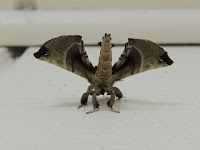
A brown and grey moth on a white background - the Spotted Apatelodes Moth (Apatelodes torrefacta)
Apatelodes torrefacta
Dragon Moths – This interesting guy is the Spotted Apatelodes (Apatelodes torrefacta), a native of the east coast of North America. These are not an energetic moths; it is common for them to stay motionless for many hours at a time. Here is a video that really shows why people call them Dragon Moths – fair warning, though:  it’s not doing anything. An interesting side note on this insect is that, for a short time, there was an airplane named after it.


Dragonhead Caterpillar – Now we get to an insect that actually has dragon features,specifically armored heads with multiple pointy horns and spines down the length of the body. At least, those are the basic ornamentations in this group of caterpillars, as each of the 400 different species in this group has its own spin on the dragon look. Some have Darth Vader-type black helmets and some look like fuzzy Gummi worms. Dragonhead caterpillars are found across the world in tropical and temperate environments and their looks are as varied as their environments. Check out a cool one trucking along here.

A black and white butterfly on a daisy - the White Dragonfly butterfly (Lamproptera curius)
Lamproptera curius
Dragontail Butterfly – As the name indicates, these butterflies have long and flowing tails like one would might see on a dragon. These beauties are common throughout most of Asia; but, unfortunately the White Dragontail Butterfly is defined as vulnerable and in need of protection in Pennisular Malayia. Here is a video that show how beautifully their spectacular tails move.


Close up of a golden colored ant - the The Pheidole viserion ant
Pheidole viserion

Dragon Ants – A few years back, scientists discovered two new ant species in New Guinea. While this may not be terribly surprising given the teeming cauldron of biodiversity that New Guinea is, these particular ants have a very unique appearance. Their very large heads are not unusual amongst ants, but their curve, hooked spiky armor along their bodies is. Apparently the scientists who got to name them are Games of Thrones nerds, because somewhere along in the naming process they decided that the ants look like Khaleesi’s dragons. So they became Pheidole drogon and Pheidole viserion. You can learn more about them and watch a virtual dissection here.
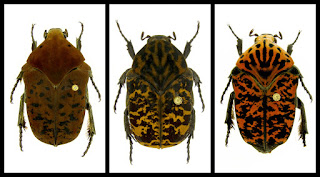
Closeup of three scarab beetles - Gymnetis drogoni, Gymnetis rhaegali and Gymnetis viserioni scarab beetles  
From left: Gymnetis drogoni, Gymnetis rhaegali and Gymnetis viserioni 
Dragon Scarabs – An entomologist from the University of Nebraska – Lincoln, Brett Ratcliffe, recently named some of his latest scarab beetle discoveries after the Game of Thrones dragons. Drogon became Gymnetis drogoni, Rhaegal became Gymnetis rhaegali and Viserion became Gymnetis viserion. Dr. Ratcliffe is an  admitted GOT fan, but his main reasoning for the names was to ride in on the pop culture wave and bring attention to the wondrous diversity in nature.The tactic is thoroughly effective; I did not know before I read about this that one in four living things on Earth is a beetle. Kudos to you, Dr. Ratcliffe!
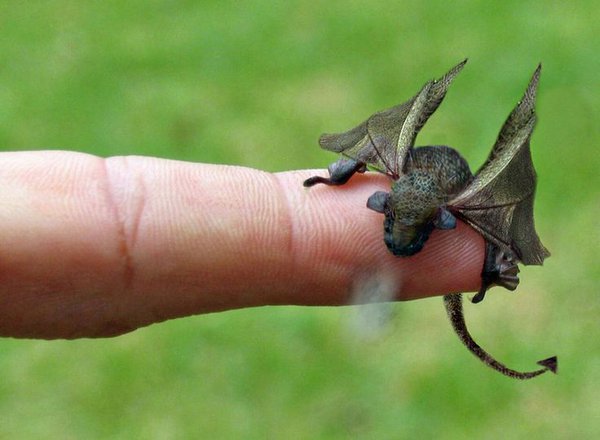
Closeup of a black baby dragon on a fingertip - really ral
Nope, not really real...
Game of Thrones is not the only dragon franchise that is everywhere these days. A much-loved child in my life is and has been obsessed with the colorful creatures in the How To Train Your Dragon trilogy. So, it’s been all dragons all the time around me lately. Nevertheless, I draw the line at disturbing baby dragon dolls (which you can get for the rock bottom price of $1,334.42) and I’m not buying that this is real, either. But, like all true Game of Thrones fans, I have cleared my calendar for Sunday night and am hoping that at least one dragon survives.


Submitted by Pam

Featured Post

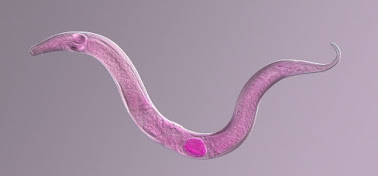
5 Cool Things About Nematodes

It’s September, and here at ARBICO, it’s Beneficial Nematode season. Every year we put our Beneficial Nematodes on sale at this time to enc...