Showing posts with label predatory insects. Show all posts

Wednesday, September 2, 2020

A Perfect Paring: Cannabis and IPM

A bud of cannabis at the bottom of a wine glassCurrent cannabis growing norms are ideal for practicing Integrated Pest Management (IPM). Whether they are motivated by the desire to grow healthy, clean plants, or purely by regulatory constraints, the end result is the need to minimize impacts on people and the environment. IPM begins with getting your soil or soil medium right and moves on to pest prediction, trapping and monitoring; using cultural, biological and (carefully vetted) chemical controls and, throughout it all, conscientious observation and record-keeping to plan for the future (for more on all this see our IPM page here). All of which works perfectly for a well-run grow.

A close-up of a cannabis bud - Photo by Avery Meeker on UnsplashA good portion of IPM practices are pretty straight forward and easy to initiate, even for beginners to the field. The biological controls part, however, can be daunting (if not downright confusing) even for seasoned growers. Here at ARBICO Organics, our mission is to guide growers towards these best practices and help them maintain smooth and efficient biological control using the proper beneficials for the job.

Any IPM program no matter the crop or growing style, works best when it’s started before you even touch a plant. Soil/soil mediums should be pathogen-free, yet full of microbial life, before any plants go into it. The introduction of beneficial nematodes and/or Stratiolaelaps scimitus (Hypoasis miles), for instance, can offer early, pro-active protection from a long list of insect pests. Hypoasis miles specifically preys on the dreaded fungus gnats. A little bit of pre-emptive treatment early on can save you financial and emotional hardship later.

The life stage of a cannabis plant - seed, seedling, vegetative, flowering and harvest.Another necessary step to be taken from the start is close monitoring of the grow environment. Not only to ensure that plants are in optimal growing conditions, but also to spot pests and pathogens as soon as they appear. Biological controls work best over time, so it is important to apply them at the first sign of trouble. This is often the stage where growers who are new to biological control falter. We have been conditioned to reach for a killing spray as soon as we see a bug, so there is sometimes a learning curve and a change in expectations that needs to happen. Instead of squishing the bug instantly, observe and identify it, discover where it came from, and determine if there is a population living in your plants. Armed with the specific knowledge of what you’re up against, you can move on to your
next step – choosing the beneficial to use - with confidence.

An indoor grow - Photo by Ryan Lange on UnsplashKnowing the pest you need to control is important, but when choosing the right beneficial agent for your specific needs your growing environment needs to play a role in your choice as well. Certain beneficial insects have specific temperatures and relative humidity requirements to perform their best, while for other insects the amount of light can affect their biological functions. Outdoor growers are restricted in their choices by their environment, whereas indoor growers have more options, including modifying their conditions to ensure that the beneficials thrive. There are some biologicals that can work indoors and out for most situations, but for optimal control, you’ll want the best beneficial for the specifics of your grow. This does not mean that the “all-purpose” biologicals are no good, only that they are but one part of a multi-tool IPM approach.

A man with a cap on examining cannabis plants- Photo by Terre Di Cannabis on UnsplashThere is a wealth of beneficial/predatory insects and organisms that work extremely well to control pests in cannabis cultivation. Some of these include predatory insects and mites, parasitic wasps, microorganisms, and the afore-mentioned beneficial nematodes. Amongst the predatory insects, there are generalists (non-selective) predators and specialist (targeted) predators. The generalists aren’t picky eaters and go after lots of different insects in various life stages. They include Assassin Bugs (Zelus renardii), Green Lacewings (Chrysoperla rufilabris), Minute Pirate Bugs (Orius insidious), and even Ladybugs (Hippodamia convergens). The specialist predators have specific dietary proclivities and either consume or parasitize particular prey. They include Mite Predators (Phytoseiulus persimilis), Aphid Wasps (Aphidius colemani), and the Fungus Gnat Predator Hypoasis miles that I mentioned earlier. Unless you have used beneficial insects before or you are a professional in the good-bug field, it is perfectly normal to not know what to choose. That’s what we are here for. Likewise, if you can't identify the insect plaguing your plants, take a picture of it and give us a call (our specialist will tell you where to send it). Armed with the picture and your input, it is usually very easy for our pros to figure out your problem.

Spider mites on a cannabis plant
Once you have determined which beneficial to use, it is essential that you treat with the right amounts at the right time and keep it up. Continuity and scheduling should be your mantra at this point. Most pest insects reproduce at an energetic pace; you will need to outpace that reproduction with scheduled applications of sufficient amounts of predatory insects. Additionally, some specialist insects require a lead time in order to receive them, so you will need to plan to cover that time frame. Using beneficial/predatory insects is very much like taking antibiotics – do not stop your treatment just because the condition seems better; it is essential to complete the prescribed course.

A German Shepherd dog with his tongue hanging out in a field of glittering cannabis.If you have questions (and why wouldn’t you?), I encourage you to dig into our website. A good place to start would be our Hemp/Cannabis page. We also have a Cannabis Catalog with products that have been hand-picked for the industry. We have worked hard to provide comprehensive content to inform and guide any visitors, and I feel confident that you can begin your road to IPM through our pages. But, for those of you who prefer a person-to-person exchange, our Bio-Control Specialists are also available for free consultations Monday-Friday from 8:00-4:30 pm. (we are on Mountain Time). Let them help you figure out what will work for you. For more on cannabis and IPM, you may also be interested in reading “5 Questions with Arianna Weisbly Taylor” in the July 2020 issue of Cannabis Business Times.

Take Care.
Submitted by Pam

Friday, June 28, 2019

Making The Most Of Predatory Insects

Closeup of a black and red ladybug beetle dangling from the bottom of a cluster of white flowers Photo by Janice Gill on Unsplash
Beneficial insects and beneficial organisms are the backbone of what we do here at ARBICO Organics. We send out millions and millions of insects, beneficial nematodes and other living creatures. While we refer to them broadly as “beneficials”, they are (with a few exceptions like earthworms, bees and green lacewing adults), predatory beings. Some are direct predators of insects and larvae and others, like some of our bacterium and fungi compete for resources and overwhelm pathogenic cells. It is a constant war in the microscopic and microbial world.Whether you are growing indoor tomatoes or tending to a larger landscape, predatory insects can be an important tool for you.

Recently our Operations Manager, Arianna Taylor, was asked by Cannabis Business Times magazine to answer a few questions for an upcoming issue. They asked her how to get the best results when using predatory insects for pest control in an IPM (Intergrated Pest Management) program. Here is what Arianna has to say on this subject:

Long fields of green crops with dark brown furrows. Phot by Adele Payman on UnsplashWhy are predatory insects an integral part of an Integrated Pest Management Program?
Any good pest control program begins with a well thought out plan; working predatory insects into that program early on can make a big difference. By introducing insects early and establishing strong populations of predators, pest insect numbers can be kept below thresholds therefore preventing excess treatments. Sometimes other treatments are necessary, that is the beauty of IPM. No one thing is going to be good enough to solve the problem. Predatory insects are just one piece of the IPM pie and work congruously with the other mechanisms for pest control. IPM programs have room for multiple modes of action including trapping, mechanical control, predatory insects and if necessary, spraying in moderation.Overuse of certain insecticides can lead to resistance in insect populations. By minimizing chemical input and using predatory insects as a pest control method, insect resistance is avoided and end product testing risks reduced. 

A greenhouse with plants on either side of a tile walkway leading to a green door in a brick wall with stained glass church-like windows. Photo by Renee Fisher on UnsplashHow can I create an environment conducive for optimal insect effectiveness?
Predatory insects, like many living things, have requirements for living environments. Keeping temperatures and humidity in ranges for predator activity increases effectiveness. Idea temperature and humidity along with the preferred food source promotes maximum predator reproduction rates. Cover cropping can help provide conducive habitats for predator breeding as well as help to control moisture within the soil. The use of compatible or soft insecticides can also keep pest populations under control. 

Why is continuity important in a predatory insect program?
Ensuring that predatory insects are thriving can lessen the pest population. By providing good habitats and augmented predator releases, predators can outcompete a pest. A single application of predatory insects will not provide the rate of consumption necessary to compete with rapid pest reproduction rates. Repeated applications on a schedule allows for introduction of additional predators while others transition through life stages. Specialist insects often require additional lead times, so planning is a necessity.

How can I use predatory insects to help control not just plants in the greenhouse, but surrounding foliage and structures to prevent infestation?
Woman with orange shirt and black pants walking between the rows of a white plastic covered hoop house. Photo by Raychan on Unsplash
When introducing predators as part of an IPM program, it is a requirement to look at the environment as a whole. This includes monitoring and treating the entire area surrounding the growing operation. If the greenhouse, for example, is surrounded by pest laden plants, measures must be taken to prevent those pest from moving into the grow. Clean and clear pathways and walkways, use sprays to knock down or eliminate pests or introduce beneficials in surrounding plants if economic thresholds allow it. 

I want to use predatory insects, but I need to spray. What should I consider?
A black and red ladybug on a green plant approaching lots of little white aphids. Photo by Jordan Spraggins on Unsplash
A ladybug hunting aphids
Timing is everything. Applying compatible or soft sprays can help to bring down pest populations to a level in which predator introductions can thrive. When using sprays, make sure there are no residual effects that will harm predators. Many biological sprays can be used in conjunction with predators and cause no harm to their populations. 
As the requirement for final product testing becomes everyday practice, we learn that using chemical inputs during flowering is problematic. It is nearly impossible to ensure that late use of insecticides will not test at levels which prevent the product from going to sale. When using predatory insects in late stages of growth, the need to worry is eliminated.*
*Some labs are testing for foreign matter and Arbico Organics cannot guarantee that leaving insects, in whatever capacity, on the plant will not prevent a result of failing.


Tomatoes of many colors lying on a wooden surface. Photo by Vice Lee on Unsplash
If you are unclear as to just how to get going 
with our insects, we are available Monday-Friday 8am-5pm Mountain Time (with some holiday-related closures, of course). We have a roomful of consultants who are more than happy to help you work through your options and best practices; just call 800-827-2847. If you have a specific question, you can also shoot Dr. Buglady an email at drbuglady@arbico.com.

Here’s wishing you beautiful tomatoes in all the best colors!

Submitted by Pam & Arianna

Friday, May 17, 2019

Dragons Live Among Us

Since I work in an insect-centric business, I decided to look at dragon insects in honor of the last episode of Game of Thrones (yes, I’m one of “those” people). Dragons are most closely associated with reptiles and there are many of those that look like dragons. There are also many sea creatures that are dragon-like. Not to mention real life flying dragons, like in this video. In the insect realm, there are some insects that have latched onto the dragon name for one reason or another, even though they don’t really resemble dragons much. Let's take a look at some of these:
Close-up of a beautiful yellow-orange dragonfly. Photo by James Wainscott on Unsplash.
Dragonflies – These are the creatures that first come to mind when thinking “dragons + insects”. There are 5,000 species of these fascinating flying insects and it seems that each one must be vying with the next to be the most beautiful. Here are some top contenders for that title. As lovely as they are, dragonflies are deadly predators who devour fellow insects. But how did they come to be called dragonflies? Interestingly enough, the name comes from folklore, although their homicidal inclinations may be what made the name stick. If you are interested in seeing an award-winning video of the dragonfly world, check it out here. The super-macro photography is simply amazing!

A brown and grey moth on a white background - the Spotted Apatelodes Moth (Apatelodes torrefacta)
Apatelodes torrefacta
Dragon Moths – This interesting guy is the Spotted Apatelodes (Apatelodes torrefacta), a native of the east coast of North America. These are not an energetic moths; it is common for them to stay motionless for many hours at a time. Here is a video that really shows why people call them Dragon Moths – fair warning, though:  it’s not doing anything. An interesting side note on this insect is that, for a short time, there was an airplane named after it.


Dragonhead Caterpillar – Now we get to an insect that actually has dragon features,specifically armored heads with multiple pointy horns and spines down the length of the body. At least, those are the basic ornamentations in this group of caterpillars, as each of the 400 different species in this group has its own spin on the dragon look. Some have Darth Vader-type black helmets and some look like fuzzy Gummi worms. Dragonhead caterpillars are found across the world in tropical and temperate environments and their looks are as varied as their environments. Check out a cool one trucking along here.

A black and white butterfly on a daisy - the White Dragonfly butterfly (Lamproptera curius)
Lamproptera curius
Dragontail Butterfly – As the name indicates, these butterflies have long and flowing tails like one would might see on a dragon. These beauties are common throughout most of Asia; but, unfortunately the White Dragontail Butterfly is defined as vulnerable and in need of protection in Pennisular Malayia. Here is a video that show how beautifully their spectacular tails move.


Close up of a golden colored ant - the The Pheidole viserion ant
Pheidole viserion

Dragon Ants – A few years back, scientists discovered two new ant species in New Guinea. While this may not be terribly surprising given the teeming cauldron of biodiversity that New Guinea is, these particular ants have a very unique appearance. Their very large heads are not unusual amongst ants, but their curve, hooked spiky armor along their bodies is. Apparently the scientists who got to name them are Games of Thrones nerds, because somewhere along in the naming process they decided that the ants look like Khaleesi’s dragons. So they became Pheidole drogon and Pheidole viserion. You can learn more about them and watch a virtual dissection here.

Closeup of three scarab beetles - Gymnetis drogoni, Gymnetis rhaegali and Gymnetis viserioni scarab beetles  
From left: Gymnetis drogoni, Gymnetis rhaegali and Gymnetis viserioni 
Dragon Scarabs – An entomologist from the University of Nebraska – Lincoln, Brett Ratcliffe, recently named some of his latest scarab beetle discoveries after the Game of Thrones dragons. Drogon became Gymnetis drogoni, Rhaegal became Gymnetis rhaegali and Viserion became Gymnetis viserion. Dr. Ratcliffe is an  admitted GOT fan, but his main reasoning for the names was to ride in on the pop culture wave and bring attention to the wondrous diversity in nature.The tactic is thoroughly effective; I did not know before I read about this that one in four living things on Earth is a beetle. Kudos to you, Dr. Ratcliffe!

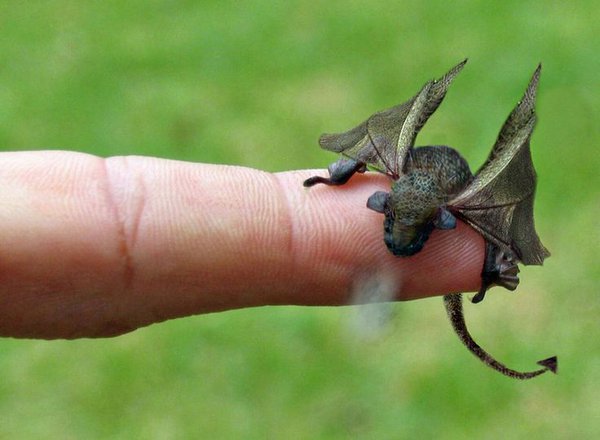
Closeup of a black baby dragon on a fingertip - really ral
Nope, not really real...
Game of Thrones is not the only dragon franchise that is everywhere these days. A much-loved child in my life is and has been obsessed with the colorful creatures in the How To Train Your Dragon trilogy. So, it’s been all dragons all the time around me lately. Nevertheless, I draw the line at disturbing baby dragon dolls (which you can get for the rock bottom price of $1,334.42) and I’m not buying that this is real, either. But, like all true Game of Thrones fans, I have cleared my calendar for Sunday night and am hoping that at least one dragon survives.


Submitted by Pam

Thursday, November 8, 2018

How To Control Fungus Gnats Indoors

Fungus Gnats are a common pest to the indoor grower or potted plant lover. With the expansion of indoor growing and the boom in both cannabis and hemp cultivation over the past few years, demand for effective, affordable control solutions is at an all time high. Watch the video below for some insights into quick and easy ways to get rid of fungus gnats in your growing environment.


As you can see, controlling fungus gnats doesn't have to be a chore. If you treat with nematodes early in the growing season, monitor effectively and manage populations with predators when necessary you will be fungus gnat free in no time. Try our Fungus Gnat Control Bundle to get what you need in one without the shipping costs!

Want more information about how to keep fungus gnats away from your grow? Click Here

Tuesday, October 16, 2018

It Just Wouldn't Be Halloween Without A Mummy Or Two.

A cartoon of the extended left arm of a mummy
Mummies - like all good Halloween monsters, this icon of the season can be both delightful and frightening. This holds true for those mummies that are found in nature, specifically amongst insects. In the insect world, there are true mummies and those that are forever linked to mummies.

For many, the Brendan Fraser movie, The Mummy (1999)provided the ultimate in mummy-centric scariness. Their depiction of an evil mummy was top-notch, but not all the horror came from him. The flesh-eating beetles that stream out of crypts and over and into people could give even the most fearless viewer the heebie-jeebies. In case you haven’t seen this mummy movie recently, here is a compilation of the best beetle moments. They literally make people’s skin crawl.

Overhead view of a black scarab beetle on a white background
Scarab beetle
While the 1999 version of tomb beetles is more than a little over the top, there really are beetles that are associated with Egyptian mummies. These beetles are known as Egyptian scarab beetles (Scarabaeus sacer) and they are in the dung beetle family. Despite what every mummy movie has said, scarab beetles do not feed on mummies. They feed on dung - the fresher the better. So, while they may be in ancient tombs, it is not the mummies they are after. They would be after the excrement of the small mammals that make such dark spaces their homes. The true connection between scarab beetles and mummies is that ancient Egyptians worshiped this particular beetle as a symbol of creation and rebirth. Their god, Khepri, even has the head of a scarab beetle. The Egyptians
Illustration of the head and shoulders of the Egyptian god Khepri, who has a scarab beetle as a face
Khepri
related the way that dung beetles roll their balls of dung across the ground to the way that the sun moves across the sky. This reasoning may seem far-fetched to us today; but remember that there were long days and nights to fill with imagination before there was TV and an internet.

The connection between insects and mummies is actually much more direct than one would gather from reading up on scarab beetles. There are a number of insects that make mummies out of other insects. These insects behave similarly to those that create insect zombies, but they do not keep their hosts alive for long and they do not practice mind control, they mummify and kill.

Close-up of  Sugarbag bee
Aussie Sugarbag bee
One such insect mummifier is the stingless bee from Australia known as a Sugarbag bee (these bees were originally called Trigona carbonaria until they were reclassified as Tetragonula carbonia in 2012). These Aussie bees have developed an interesting technique in the war against invasive small hive beetle. Small hive beetles have led to devastating numbers of colony collapses in North American and Australia. Here at ARBICO, we recommend Heterorhabditis indica nematodes to fight them in their larval stages, but Sugarbag bees have come up with another battle plan: Once a beetle invader is confronted in a hive it will react much like a turtle and pull its legs and head into its shell. It will stay that way until the attacking bees eventually give up. Except Sugarbag bees don’t give up, they coat the beetle with the same mixture of wax and resin that they use to build their nests. The beetle is stuck inside its mummified shell of doom while the bees go on about their business around him. Unfortunately for North American bee lovers, these clever bees are only found in Australia.

Close-up pf a Aleiodes shakirae wasp
Aleiodes shakira wasp
Back in 2014, scientists announced that they had discovered 24 new species of mummy-making wasps in the cloud forests of Ecuador. The female wasp picks its preferred caterpillar host and injects it with an egg. The caterpillar remains alive for a bit as the wasp larvae gorges on it from the inside. As the feeding continues, the caterpillar shrinks and mummifies;eventually it will be a just a husk that the immature wasps make a cocoon in. The scientists that discovered these wasps colorfully named them after famous people, including Jimmy Fallon, Ellen DeGeneres and poet Robert Frost. The Aleiodes shakirae was named for the Colombian singer, Shakira. The entomologists thought that the twisting and turning of the agonal death throes of the caterpillars looked like Shakira dancing. I’m not sure how they decided on how to name the others, hopefully the thought process wasn't quite as morbid.

Aphid mummies
We have a couple of mummy-makers here at ARBICO that we are particularly fond of. We offer Aphidius colemani and Aphelinus abdominalis to our clients as an natural alternative for aphid control and an ideal part of an Integrated Pest Management program.  These helpful insects seek out aphids and lay their eggs inside the aphid nymphs. In time, the nymphs will turn into leathery greyish-brown mummies. The aphid parasites will eventually emerge as adults to begin their aphid hunting cycle again. These beneficial insects are extremely effective in cleaning up aphid infestations in both home gardens and large scale growing.

Happy Halloween and be on the lookout - mummies are all around you!

Cartoon image of a mummy peeking over an edge
Submitted by Pam                                   


Thursday, October 11, 2018

Pt. 2 - These Zombies Don’t Eat Brains – But They Might Have Theirs Eaten.

In my last blog, I offered an overview of zombies in the insect world and showed you some of its stars. When writing that blog, I quickly realized that there is a whole Milky Way of zombie-making stars that should be shown. What follows are some of those stellar parasites that I did not get to before.

Dinocampus coccinellae: These parasitic wasps prey on cocinellid beetles, which include the ever-popular ladybug. The wasp attacks the bug and injects an egg into it.Included with the egg is a nice little dose of a virus that paralyzes the ladybug.
Lady blue sitting on a straw-like Dinocampus coccinella cocoon
Ladybug sitting on a Dinocampus coccinella cocoon.
About 3 weeks after the egg has been laid, the wasp larvae pushes out of the bug’s body and weaves a cocoon between its legs. Here’s the twist in this scenario: the ladybug is not completely paralyzed; it is left with the ability to twitch around (which works to keep predators away), but unable to leave the cocoon. In this way, it becomes a zombie babysitter. All’s well that ends well for the ladybug though; once the wasp offspring are ready to venture out on their own the ladybug is released from its bondage. The ladybugs continue on with no apparent damage from their alien abduction.To see how they come out of this check out this video.

Long tangled mass of worms protruding from the body of a cricket
Horsehair worms emerging from a cricket.
Horsehair worms
: These parasitic worms have a multi-stage life cycle that is complicated enough to need some zombies to complete it. Their larvae are laid in water, but they are unable to swim and
need to get to the surface before they can metamorphosize into their next phase. So, they wobble around on the bottom until the more advanced larvae of another insect (like the mosquito or midge) finally eats it. They stay with the larvae as it grows into a flying insect and now they are airborne. They will fly around with this host until it either dies and gets eaten by a cricket or gets eaten by a cricket and dies. And now they are in the cricket, where they will bore through the gut and get into the body cavity (how they do this is very puzzling as they have no mouths). Usually it is only one worm, but as many as 32 have been found in one cricket. It is when they are growing (to about 1 foot long) in the body of the cricket that the mind control begins. At a point known only to the worm, the cricket will be compelled to move toward light and the reflective surface of water. Crickets usually avoid the water and the dangers it carries, but these zombie crickets head right for it and jump in. Once they hit the water, the worms will erupt from the host (to see this in all its grossness, click here). They then immediately mate and begin the cycle anew. The crickets generally die in the water, but every now and then one will survive and take its ravished body back to shore.

Orange Phorid aka Hump-backed fly on a grey tree branch
Phorid or Hump-backed fly

Flies and bees: When it comes to bees, there are two predatory parasites that create “zombees”: In the case of honeybees, phorid flies (Apocephalus borealis), also known as hump-backed flies, use the living bee as an incubator for their eggs. As with other ill-fated hosts, the bee will be consumed from the inside. While this is happening, the honeybee will exhibit most un-bee-like conduct such as flying at night and seeking artificial light. No one except, perhaps the fly, knows why they do this. The bee eventually dies, but the weirdness does not end there. About 7 days later, flies will burst out of the neck of the bee, decapitating the corpse.
Black Conopid aka Thick-headed fly in the air
Conopid or Thick-headed fly

Bumblebees have their own nightmarish zombie maker – the conopid (Conopidae) or thick-headed fly. These flies pry open the body segments of a bee and lay their eggs inside. They are so good at this, that they can do it while both insects are flying. When the larvae inside has grown sufficiently, the mind control takes over. The bee will begin digging in the ground. This is not normally something a bee has any reason to do, but a nice burrow is an excellent place for developing fly babies. And a nice little grave for the helpful host/food supply.

Orange dragonfly sitting on a branch with white spikes protruding all over his body
Dragonfly with a Cordyceps problem
Cordyceps fungi: By now, many people have heard of these terrifying fungi; their effects are nothing short of lurid. In short, the spores enter the host body and force it to climb and move around (this helps further spread spores). Once the host’s nutrient value is gone, the fungus grows stalks that shoot out of the body and further spread their spores. If you haven't seen it, you should watch the morbidly beautiful video of this fungus on an ant from Planet Earth on BBC. This fungus only affects insects and arthropods, but it is so grisly and creepy that it has been imagined as a threat to humans in an apocalyptic video game called The Last of Us by Naughty Dog for PlayStation 3. Check it out here.

Drawing of a zombie woman with white specks protruding from her head. Image from the video game The Last of Us.
Image from The Last of Us
All of the above zombie situations are gruesome and a bit disturbing, but they are simply another part of inherently brutal Nature. It is interesting how we place some insect behavior in the negative category while others are seen as a positive. A number of our most important products here at ARBICO Organics™ are parasites: Fly Eliminators™, Aphidius colemani and Beneficial Nematodes, to name a few. ARBICO would not be here without these parasites, I'm just glad we aren’t in the horsehair worm business!                               

Submitted by Pam

Sunday, May 27, 2018

Let's Talk Praying Mantids (or is it “Praying Mantises”?).


Green praying mantis perched on a purple flower on a black backgroundAlthough some people use the term “Praying Mantises” as a plural for Praying Mantis, for our purposes here we will be calling them “Praying Mantids”, as it just makes things simpler. After all, “Praying Mantis” refers to an insect that belongs solely to the genus Mantis, whereas a Praying Mantid is an umbrella term for all types of mantids.

There are three main species of mantids found in North America-the Carolina mantid (Stagmomantis carolina), European mantid (Mantis religiosa) and Chinese mantid (Tenodera sinensis). The Carolina mantid is the only species that is native to our continent, the other species were introduced either accidentally or intentionally (depending on whose account you choose to believe) sometime before or around the turn of the 20th century.  Many people consider the introduced species to be invasive, while others point to their long-term residency here as proof they have adapted and cause no harm. We will leave it to our readers to come to their own conclusions on this controversial subject.

Small praying mantises emerging from a brown, walnut-sized egg case
Praying Mantises hatching - many more will follow!
As I write this, we have reached the time of year (late spring-early summer) when people are beginning to find mantids in their yards and gardens. Mantids lay their egg cases (oothecas) in the late fall-early winter and these oothecas stay dormant until warm weather returns and then hatch. If you are finding mantids in your garden and have not purposefully placed oothecas there to hatch-congratulations-you have created a welcoming place for a really cool insect. If you purchased oothecas and are waiting for them to hatch, please check out the hatching instructions on our website. It can be difficult to know when an ootheca hatches as the egg case will remain behind and can look untouched. Newborn mantids wiggle their way out and quickly disperse. Check out the video below to see them in action.

Mantids can be beneficial, but should not be considered as useful in pest control as insects such as green lacewings or ladybugs. There are several reasons for this: one is that mantids will not develop a large population in a specific area that could combat a pest infestation. This is largely due to the fact that they are enthusiastic cannibals. Mantids are just as happy to eat their own as they are to eat other insects. Once hatched, they usually try to get away from their siblings as quickly as possible (a phenomenon that is all-to-familiar for many humans). Additionally, since they are voracious eaters, they need plenty of their own space to meet their food needs. Yet another factor that make them the less-than-perfect beneficial is that their murderous tendencies are unrefined. They will devour a honeybee just as quickly as grasshopper, making them a threat to insects that are considered desirable.

Like any other insects, pesticides can seriously reduce the number of mantids in an area. If you must use a pest control agent, we suggest you use products containing Bacillis thuringiensis and insecticidal soap targeted for soft-bodied insect control. These products have little effect on mantids.

To develop the best possible habitat for mantids, remember to not over-groom your garden. These predators need vegetation to provide cover for their hunting and for a place to lay their oothecas in for next year.


- Contributed by Pam at ARBICO Organics

Featured Post

The Spiritual Messages of Insects

We are deep in the hot, sweaty, and buggy time of year. It’s summer and millions and billions of insects have appeared to put a damper on wh...