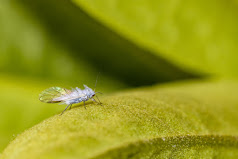
Not much to look, at but a devil to deal with in the garden – aphids are fascinating and unique creatures of the insect kingdom. In my humble opinion they deserve respect. Here are some interesting factoids about the nefarious aphid:
1. Is That Blue Bug Really an Aphid?
Most commonly aphids are an off-white, cream color but don’t be fooled – if it looks like an aphid and eats the sugars out of the bottom of leaves like an aphid – it is an aphid. They come in virtually all colors: blueish-black, purple, pink, yellow and green. The way to identify them is to look at the underside of leaves with mottled yellow spots showing up. They cluster underneath leaves so it is critical when treating to get any sprays under the leaves and on top of the leaves.

2. Their Tailpipes Produce More Than Exhaust
The aphid has tailpipes called cornicles (or siphunculi) that produce a waxy fluid (cornicle wax) used for self-defense from predators and parasites. When attacked, aphids produce the cornicle wax to deter predators and trap parasitoid insects. It’s a bit like dropping the banana peel in the path of pursuers in the game Mario Kart.
3. They Produce Double Duty Pheromones
While most insects are satisfied with pheromones that only help with the mating process, aphids have adapted to produce pheromones that also alert their compadres to insect threats. Once an aphid releases the alarm pheromone, the aphid colony rapidly moves en masse to another location. The colony may lose a few, but the majority will survive. Always one step ahead of the game – ladybugs have adapted to locate this pheromone source to have a nice meal.
4. Aphids Poop Sugar…and Lots of It
One of the ways to identify an aphid infestation is if you find a thin, sticky substance on the plant leaves. Upon further investigation of the underside of the leaves you will most likely locate a colony of aphids. Aphids suck the sugars from plant foliage creating pinpoint mottled yellow spots on the leaves they are feeding on.