Showing posts with label plants in winter. Show all posts

Monday, January 10, 2022

The WALT Of Winter Houseplant Care

Looking out a window at a wintry scene from a room full of houseplants.
Houseplants face a particular set of problems in winter that can often take a serious toll on them. This does not have to be the case, however, if you keep an eye on certain key factors that I have dubbed “WALT”. This acronym stands for Water, Air, Light and Temperature. Let’s look at each one in turn:

Water – According to this article, overwatering is the most common problem houseplants face in winter (although, arguably, this could be the same problem year-round). The fact is that plants need less water in winter as they enter a slow growth phase or go dormant entirely. In most cases, you should let the plant dry out thoroughly before watering.  The dry air of winter will cause surface soil to dry out faster than other times of the year, so if you use your finger to check soil moisture be sure to push it in an inch or so. While the surface soil may dry quickly, it takes longer for the whole plant to dry out, so plan your watering with that in mind. One more thing: If you are using tap water and it’s very cold in winter, let it warm up before using. Frigid water is as shocking to a plant as it to us.

A woman leaning over a white humidifier spewing mist.

Air  – The same dry winter air that brutalizes your skin can be a problem for your houseplants. When you consider that most homes in winter have a relative humidity between 5-10% and houseplants thrive in 40-50%, the problem is clear.  If your plants are losing their leaves, or they’re yellowing or browning, or they’re wilting and drooping, low humidity may be the cause. There are many ways to increase the humidity in a house (here are several), and none of them are complicated or expensive. At the very least, give your plants a good misting as often as you can (which can especially help when/if you reduce waterings) It behooves you to keep on top of this issue as many pest insects, like Spider Mites, thrive in low humidity.
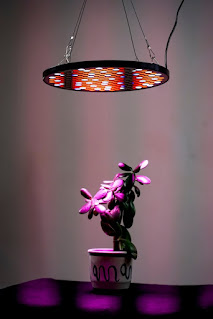
A single potted succulent under a round light with a checkerboard pattern making purple light.

Light  – There is one fact about winter that there is no getting around – there is simply less sun. Not only are the sun’s UV rays less strong, but it also shines for fewer hours and that sunshine comes in at a lower angle. What this means for your plants is that they may need to be moved to an area that has southern/ western exposure (these areas stay sunny the longest), or they may need supplemental light. But before you invest in lighting you should (if possible) turn plants about a ¼ way around each time you water so all sides get exposure, make sure all windows are clean enough to let every ray pass through, and wipe down leaves so they can soak up every bit of that sun. Most houseplants slow their grow in winter, but if you notice growth with skinny stems and scraggly-looking  leaves your plants are hurting for sun. All in all, the good news here is that low sunlight will (most likely) not kill a plant outright; they can adjust, they just won’t flourish.
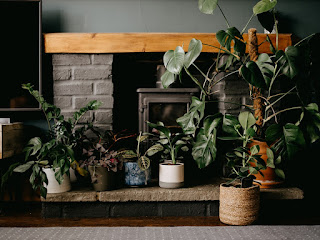
An assortment of potted plants on a hearth in front of a fireplace.

Temperature – That warm blast of air you feel when you step inside on a frosty winter day may feel wonderful to you, but chances are your plants feel differently. Houseplants just don’t like temperature fluctuations – drafts, hot air vents, a door that frequently opens to the outside, fireplaces, and radiators are all stressful to them. Plants are just not built to handle rapid temperature changes. Take a look around your house and move any plants that may be in a drafty situation. If these changes disrupt your interior design or feng shui, remember that this is only a short-term repositioning. If you have your plants positioned properly and keep your daytime temperatures between 65 °F and 75° and nighttime temperatures above 50°F, your plants should be fine.  

Two plants in a windowsill with abstract shapes falling outside
Many of the above problems can be monitored by using one of the two Active Air meters that ARBICO Organics carries. The 2-way meter monitors moisture and pH levels, while the 3-way meter checks moisture, light and pH. Please visit our website at www.arbico-organics for more information on other products that can help your houseplants and more.


Take Care

Submitted by Pam


Thursday, February 18, 2021

Got Snow? Don’t Worry – Your Garden’s Okay

A garden and surrounding trees all covered in snow.
This past week has been full superlatives when describing the snow that has fallen – unprecedented and disastrous (Hello, Texas), unlike anything they’re used to (Hello, Seattle), etc. For millions of Americans, this is something they’re not accustomed to, and that alone can be scary. For others, snow is a regular visitor in the winter, but this year there’s been so much more of it than usual. The snowfall is unusual all over –Russia is staggering under their massive amounts (more here) and Saudi Arabia has been uncharacteristically hit (see some bewildered camels here ).  It’s enough to worry anyone who’s been looking forward to a spring garden.

Close-up of a snowflake. Photo by Zdenek Machacek on Unsplash.
The truth is that snow is not as disastrous for a garden as it may seem at first glance, although it does carry some risk. Let me lay it out in pros and cons:

PROS – 

Fresh snow works like a cozy blanket as it covers plants. Snowflakes contain tiny pockets full of air, and when they accumulate on the ground they heap together and form larger and warmer air pockets. This air can prevent the soil from freezing and allows roots to continue thriving and taking up water to supply the plant. This is especially true in those areas where sudden low temperatures are not expected to last a sustained amount of time.

Snow forms a barrier to keep drying and damaging winter wind from bark and delicate plant leaves. 

Green leaves popping up out of the snow.
A layer of snow can protect a plant from the worst effects of the freeze-thaw phenomenon. This is when ice causes the ground to expand when it freezes and constricts when it thaws. The end result of this can be favorable for the soil by creating a lighter, more friable soil that new plants in spring and overwintering bulbs will appreciate. In the worst case, freeze-thaw can turn bulbs into mush and uproot plants. A layer of warming snow can reduce this likelihood.

Snow holds water in the soil and, as it melts, it slowly waters the area. This is especially beneficial for emerging perennials. 

The sun shining though snow-covered tree branches. Photo by Kristjan Kotar.
There is an old saying that snow is “Poor Man’s Fertilizer”, and, like many old sayings, it turns out to be true. As snowflakes make their long fall down to earth they accumulate nitrogen and other micronutrients along the way. These elements are then slowly released into the soil as it melts. Even dormant plants can absorb nitrogen deposited in this way.

Snow can enhance the sunlight given to plants. The brightness of the snow causes light to shine all around and even down through it so that plants can continue to photosynthesis through the darkest months of winter. 

Snow cover can hide the egg cases and chrysalis of many beneficial insects and moths and protect them from predation.

Snow-covered trees with some branches that have broken off lying on the ground.
CONS – 

The weight of snow on branches and small trees can quickly become too much for them. Branches can split or break off entirely, and trees can collapse or uproot. To avoid this, clear snow off your growing things as soon and as often as possible. Don’t forget to clear it from the roofs of any structures that are next to your trees and plants. A mini-avalanche from your garage roof onto your landscaping along your house could be tragic. 

Close-up of ice melting off a branch. Photo by Damo T. on Unsplash.
As the snow melts, watch for ice pools that can form around trees and plants. If the temperature falls again, you can find yourself in that freeze/thaw cycle that many plants cannot recover from. If you see this happening, you’ll need to get out there and get some drainage going. If you have to make some furrows where there weren’t any before, don’t hesitate. As long as you keep your plants alive, you can tweak the aesthetics later. Now that you can see how winter affects your garden, this would also be a great opportunity to develop a better year-round garden plan, with plants’ placements that suit their needs all year round. 

Snow creates cover for hungry animals like voles, who work underground, but also serves as a step up for those that prey on bark, branches, and leaves. When the snow hides their close-to-the-ground food sources, those lighter creatures can easily scamper up it to feast on plants. Be watchful for tell-tale tracks and take gentle steps to keep them away from your plants.

Two squirrels playing with snowballs.
In areas where there was drought the previous summer (which is almost everywhere nowadays), trees and shrubs that go into winter drought-stressed may have little left to fight off the cold. While there is little that can be done once the cold has arrived and the snow has fallen, this should be a reminder to prepare your plants for tough winter weather by first preparing them to get through a tough summer. For more on this, check out this article.

Snow can provide a safe place for beneficial insects but is also works to protect less desirable entities like snails, slugs, overwintering insects, and molds. Keep a careful eye on what emerges not just after the snow, but as everything truly warms up in spring. Remember that early and pro-active treatment of pests and pathogens is the most effective treatment overall, so an early problem does not have to develop into a mid-season infestation. 

The effects of a snowstorm are considerably different than an ice storm. There is not a whole lot of positive to be found after one of those (read more here). So, as much as you are able, if you’re only dealing with snow try to enjoy it while it lasts. And if you want to keep the kids busy, send them out to knock some snow off the trees.

The Simpsons standing at their front door shocked by the snowfall.
Stay Warm.

                  Submitted by Pam                   


Featured Post

IT'S EARTH DAY 2026!

Happy Earth Day from ARBICO Organics! This year we'd like to introduce you to our newest local non-profit partner - Mission Garden. Loca...