Showing posts with label houseplants. Show all posts

Friday, November 18, 2022

It's Time To Winterize Your Plants

Close-up of a frost bubble on a plant stem.
At this time of year the weather in North America is wildly variable. As I write this, there are parts that are getting blasted by a winter storm and where I sit in Southern Arizona the weather is sunny and in the 70s. Not matter where you are sitting, it is time to get your plants winterized so they have the best chance to make it through to spring. Some of the following pointers may not pertain to your locale but others will, so take a moment to double-check your preparations.

CLEAN UP & REMOVAL

A rake laid down on a pile of leaves.
After a busy growing season, you will need to tidy things up in the fall. Now is the time to pull weeds, remove annuals and trim down perennials. Be sure to avoid cross-contamination and carefully dispose of any cuttings that may be harboring insects or diseases. Having said that, if your cuttings are clean it is best to leave some where they lie. A carpet of plant material offers insulation to plant and tree roots, provides shelter for bees and other desirable insects, and is the basis for rich soil in the spring.

A brown, black and white cat snuggled in a nest of fallen leaves. Photo by Milica Spasojevic on Unsplash.

A word about leaves:

Leaves will provide all of the above advantages and should not be removed completely. Just be sure to keep them away from the house. Undesirable insects can hide in leaf litter and migrate into the comfy warmth of your home once they get cold, but most can’t travel very far. Also, when considering your leaves please remember that they are 100% biodegradable and naturally a part of the season-change process, and that plastic is killing our planet. Please consider this thoroughly before raking up leaves and putting them in plastic bags to send to the dump.

MULCH

A woman in a coat and hat pushing a wheelbarrow full of yard debris toward a garden bed.
Mulch, whether commercially produced or made with your leaf litter and other materials, is an essential step in getting your plants through winter. It should be placed around plants, trees and shrubs. Be generous with it – you’ll want at least a 3-5 inch layer; and more if you live in cold country. Adding leaves, hay, straw, cornstalks and other no-compacting materials will create a more robust mulch. Save some mulch to add to your hibernating flower beds and gardens; extra organic matter in them now will pay off later.

CLOCHES

Plastic bottles with their bottoms cut off used as cloches in a garden.
If you are worried about a sudden frost and/or have smallish plants in the ground to protect, consider the simple cloche. A cloche is a usually bell-shaped cover made of glass or plastic that you can plop over your plant. Cover the plant before nightfall and remove the cloche the next day so they utilize the sun. You can purchase cloches, but there are any number of items around your house that can be repurposed. Cloches are not a solution in super-cold regimes with hard frosts.
TREES
A view up the trunk to its canopy. It is wrapped a multi-colored knitted scarf-type thing.

Trees take the first step in getting ready for winter by dropping their leaves. But we humans can take
further steps to help them get to spring. At this point in the season, a good tree wrap or frost protection bag can do a great deal to help a tree – they can temper the harsh environmental factors of winter, discourage nibbling mammals, and are an excellent barrier insect control (here are some wraps that ARBICO offers). Sunscald (caused by warm daytime temperatures that drop way down after dark), winter burn (caused by water loss through foliage) and damage caused by snow, ice and animals are all serious threats to tree health. This article gives some succinct and helpful steps to take to reduce the risk from these factors. For more on how winter affects tree, here is my blog on just that from December 2020. 

CONTAINER PLANTS

Three terracotta planters full of snow with green stems poking through the snow.
Because the sides of a pot are exposed to the elements, container plants are very vulnerable and often not able to survive the winter. If possible, bring them inside to an area that gets sufficient sunlight. Before you bring in any plant from the outside, be certain it is insect-free so that you are not introducing problem into your home. If you have large containers that cannot be moved, your best bet is to bundle them up by wrapping layers around them. This could be anything from burlap to fabric to even bubble wrap (the air in the bubbles makes a surprisingly good insulator). Another option is to remove the plant and either replant it inside or put it in a spacious container where the soil around it can act as an insulant. You may want to hedge your bets and still wrap this larger container. 

TROPICALS & HOUSEPLANTS 

A frosty view from outside a greenhouse looking in. You can see the tropical plants inside.
Many of the houseplants that people love are native to tropical environments. This is also true of many of the popular plants and grasses used in landscaping and patio décor. All of which means that they will not survive outside in the cold. When used in outdoor settings, these types of plants should be considered as annuals. If you are not okay with having them die or having to replace them, it is probably best to not use them in the first place. Re-locating them inside may work in some instances, but you will need to provide a place that gets lots of sunlight all year round and has a stable temperature. This can be problematic since the level of sunlight goes down in the winter and the temperature inside a winter home can be all over the place. These caveats for tropical plant care extend to houseplants, as most of them are tropical as well. To further understand the particular winter needs of plants inside homes in the winter, please refer to my blog on the subject here

A purple tube blowing a bubble that quickly turns to frost.
You should keep watering your plants as usual right up until you get a hard frost. The same can be said for most garden chores. And when you get your first snow, your well-tended garden will have a strong chance of coasting through it all (read more here).

Take Care

Submitted by Pam


Monday, January 10, 2022

The WALT Of Winter Houseplant Care

Looking out a window at a wintry scene from a room full of houseplants.
Houseplants face a particular set of problems in winter that can often take a serious toll on them. This does not have to be the case, however, if you keep an eye on certain key factors that I have dubbed “WALT”. This acronym stands for Water, Air, Light and Temperature. Let’s look at each one in turn:

Water – According to this article, overwatering is the most common problem houseplants face in winter (although, arguably, this could be the same problem year-round). The fact is that plants need less water in winter as they enter a slow growth phase or go dormant entirely. In most cases, you should let the plant dry out thoroughly before watering.  The dry air of winter will cause surface soil to dry out faster than other times of the year, so if you use your finger to check soil moisture be sure to push it in an inch or so. While the surface soil may dry quickly, it takes longer for the whole plant to dry out, so plan your watering with that in mind. One more thing: If you are using tap water and it’s very cold in winter, let it warm up before using. Frigid water is as shocking to a plant as it to us.

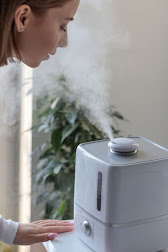
A woman leaning over a white humidifier spewing mist.

Air  – The same dry winter air that brutalizes your skin can be a problem for your houseplants. When you consider that most homes in winter have a relative humidity between 5-10% and houseplants thrive in 40-50%, the problem is clear.  If your plants are losing their leaves, or they’re yellowing or browning, or they’re wilting and drooping, low humidity may be the cause. There are many ways to increase the humidity in a house (here are several), and none of them are complicated or expensive. At the very least, give your plants a good misting as often as you can (which can especially help when/if you reduce waterings) It behooves you to keep on top of this issue as many pest insects, like Spider Mites, thrive in low humidity.

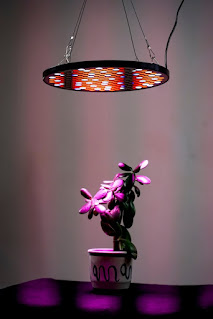
A single potted succulent under a round light with a checkerboard pattern making purple light.

Light  – There is one fact about winter that there is no getting around – there is simply less sun. Not only are the sun’s UV rays less strong, but it also shines for fewer hours and that sunshine comes in at a lower angle. What this means for your plants is that they may need to be moved to an area that has southern/ western exposure (these areas stay sunny the longest), or they may need supplemental light. But before you invest in lighting you should (if possible) turn plants about a ¼ way around each time you water so all sides get exposure, make sure all windows are clean enough to let every ray pass through, and wipe down leaves so they can soak up every bit of that sun. Most houseplants slow their grow in winter, but if you notice growth with skinny stems and scraggly-looking  leaves your plants are hurting for sun. All in all, the good news here is that low sunlight will (most likely) not kill a plant outright; they can adjust, they just won’t flourish.

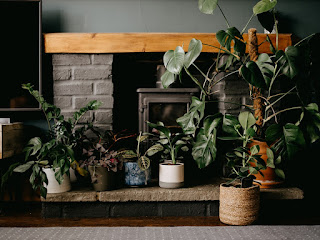
An assortment of potted plants on a hearth in front of a fireplace.

Temperature – That warm blast of air you feel when you step inside on a frosty winter day may feel wonderful to you, but chances are your plants feel differently. Houseplants just don’t like temperature fluctuations – drafts, hot air vents, a door that frequently opens to the outside, fireplaces, and radiators are all stressful to them. Plants are just not built to handle rapid temperature changes. Take a look around your house and move any plants that may be in a drafty situation. If these changes disrupt your interior design or feng shui, remember that this is only a short-term repositioning. If you have your plants positioned properly and keep your daytime temperatures between 65 °F and 75° and nighttime temperatures above 50°F, your plants should be fine.  

Two plants in a windowsill with abstract shapes falling outside
Many of the above problems can be monitored by using one of the two Active Air meters that ARBICO Organics carries. The 2-way meter monitors moisture and pH levels, while the 3-way meter checks moisture, light and pH. Please visit our website at www.arbico-organics for more information on other products that can help your houseplants and more.


Take Care

Submitted by Pam


Monday, August 30, 2021

Dangerous Houseplants

Rear view of a woman holding back sheer curtains and looking out a window. There are potted plants on the windowsill.
There are a lot of plants commonly sold as houseplants that can be dangerous for people and pets; the list is surprisingly long. With these types of plants, there are more inherent dangers for pets (cats and dogs) but small children who chew on everything can be at risk as well, so keep an extra-close eye on those kiddos around them. In this list, I am concentrating on plants that may actually pose a threat to adult humans who live around them. It pays to educate yourself because in many cases the plant seller either downplays the risk or does not acknowledge it at all.

 Sago Palm (Cycas revoluta) –

Sago Palm in a white and green pot on a wooden stool.

First of all, these are not palm trees - they are Cycads, an ancient type of plant that dates back to prehistoric times. These are incredibly tough, slow-growing plants that are clearly on this planet for the long-haul. Perhaps part of their successful longevity can be attributed to their toxicity. Sago Palms contain cycasin, a neurotoxin that causes a litany of unpleasant symptoms and then liver damage, liver failure and death. All parts are poisonous, but the danger is concentrated in the seeds. The good news is that the plant parts have to be ingested for the poison to take effect and most animals avoid this plant. It is the unwitting or unwise human who may purposely ingest this that are at serious risk. Perhaps it’s best to choose another plant for your house – they take too long to grow anyway.

 Euphorbia spp

Euphorbia tirucalli (aka Pencil Cactus) in a green pot on a wooden table.
All of the succulents in this family are toxic, with some being no-so-much and others being highly toxic. In all likelihood, you will not be informed by sellers as to which ones are worse when you are out shopping so you may as well consider all of them highly toxic. To be on the safe side, as the saying goes. The danger here, and it’s quite serious, is that these plants have a milky sap that is super-toxic. These plants also poisonous if ingested, but ingestion is not likely to happen in the normal course of events.  What does happen is that people take cuttings or do trimming-up and repotting and come in contact with the sap. It is extremely irritating to the skin and mucus membranes (keep your hands out of your mouth!), but the effects can be tragic if it is gets in your eyes. This article has more to say on this. These plants have become very popular, with the Pencil Cactus (Euphorbia tirucalli) being one of the most popular.  With the real danger literally in these plants, it may just be best to plant them outside. When planted outside, succulents in general may even help keep your house safe from fires by serving as a firebreak.

 Peace Lily (Spathiphyllum) – 

Peace Lily (Spathiphyllum) in a white and brown pot on a white surface.
These pretty plants have become known among plant collectors for their air purifying qualities. And while that may be true, they also contain calcium oxalate crystals in their sap that are like tiny little needles. As with the Eurphorbia, this liquid can come into contact with skin (and eyes, and mouth) with general plant care. This contact may not be dangerous (again, unless it gets in your eye), but it can be extremely unpleasant. Should a person ingest the flowers or seeds, however, it can cause diarrhea and vomiting and other increasingly disagreeable symptoms; some patients even end up hospitalized.  According to this article, it actually makes the blood toxic.  Because the crystals make eating this plant painful and swallowing difficult, severe poisonings are rare and usually of an accidental nature.

Aloe Vera (Aloe barbadensis miller) –

Aloe Vera (Aloe barbadensis miller) in a white speckled pot.
Yes, that Aloe Vera that seems to be in everything from body lotions to makeup to health drinks. The thing is, while the gelatinous inside of the leaves is an excellent topical ointment that soothes and helps heal any number of skin conditions, the outside of the leaves are not so good. Strangely enough, that part of the plant can cause serious skin irritation. And, like everything else on this list, it should not be ingested. Although it is commonly used as a laxative, latex produced from the aloe should definitely not be taken orally.  Scientists have discovered that this plant causes cancer in animals and, by extension, most likely people. Which means, of course, ingesting it for health benefits may have the exact opposite effect that’s desired. Just stick to rubbing the gel on your skin and you’ll be fine. 

Danger Zone!
These are the plants that you could easily come into contact with that could easy hurt you. Please bear in mind that there are many plants I left off this list that can seriously sicken or kill your pets, so please do your homework before you bring something home. The ASPCA (American Society for the  Prevention of Cruelty to Animals®) has a site with a comprehensive list of plants that are toxic to dogs, cats and horses. Check it out here before you adopt anymore plants.

On another note, if you are interested in scary-potent plants check out this article on the world’s deadliest flowers.

Submitted by Pam

Friday, February 5, 2021

What’s This Bug? The Springtail.

A close-up of a golden-colored Globular Springtail on a green stem.
This cute, almost cartoon-like, creature is a common bug you’ve probably never even noticed. They're known as springtails, are no more than 1/8” in size (which would be a big one), and live just about everywhere in the world in soil and in water. Springtails are not insects, they are classified as Collembola, which makes them arthropods. But, for the purposes of this blog, I am just going to call them “bugs”.

The number of species of springtails is upwards of 8,000 and they come in a huge variety of shapes and colors. The chubby-looking round one is the Globular Springtail and it has unmistakable charisma. Others are long and flattish and can easily be mistaken for less-benign bugs. But, all springtails have one thing in common - that which gives them their name, a v-shaped appendage on the rear end of their body that allows them to jump. This body part works just like one of those little toy frogs that you push down and then let go and it pops up in the air. Springtails usually only jump like this as an escape mechanism, otherwise they just scurry around (no flying-they’re wingless). The problem with the spring action is that the bug has no control over it, so their attempted escape can be rather chaotic, especially when there is a large group of them going off all at once. For more on how they do their jumping, check out this article and you can see them go off in this video.

Three different types of springtails.

Springtails are often misidentified as fleas. In fact, they’re sometimes called “snow fleas” because some species can and will live in snow. Although springtails are about the size of fleas and jump like them, they do not bite and pose no risk for humans. They are also not harmful to plants. In cases of extreme infestation in outdoor settings, they can begin to nibble on plant roots, but even that action may stimulate additional root branching and result in little to no damage. It is important to make sure that what you have are springtails; more damaging insects can be mistaken for springtails as easily as vice versa. 

A view of the anatomy of a springtail, with the furcula clearly shown in the bottom rear of the body.
Here at ARBICO, we often have customers sending pictures or calling and asking about the itty-bitty jumping bugs in their plants. Once we know they have springtails, many people are surprised when we tell them they’re beneficial. Often the first response people have to any bug is to wipe out the multi-legged invaders, but you should resist this response when it comes to springtails. They are a valuable member of the soil microfauna. They feed on decaying organic matter in the soil, which releases minerals that your plants will love. Their feeding action also keeps the soil and its microbial life healthy and thriving and the soil structure aerated, which provides pathways for water and nutrients to move through. All in all, these little guys are quietly doing a great deal of good for your plants. 

Blue springtails swarming on a grey board.
Even though soil springtails are considered beneficial, sometimes springtails in general can be a bit much. They can swarm in very high numbers in and around homes and throughout outdoor spaces. While the “yuck” factor is high when you see this, their presence in and near your home can actually alert you to problems you may not know you have. Springtails are damp-loving creatures and wherever they are gathering you can be assured that there is a consistent source of moisture there. If you see them in houseplants, you’ll know you’re overwatering and simply allowing the plants to dry out should solve the problem (for more on springtails in houseplants, go here. If you are seeing them inside areas with easy access to outside, follow the trail to find the moisture source. Damp landscaping material or soil beds along your outside wall could be sustaining the colony and the smallest of openings letting them in. If you find them deeper in the house under sinks, by floorboards, or in the basement, you could have a serious leakage problem in your walls or foundation. Once the dampness is removed from the equation, the springtails will quickly disappear as well. If you’ve tried all the cultural controls and still don’t have a handle on the infestation situation, you can try sprinkling some Diatomaceous Earth on top of the soil or go the fire-vs-fire route and introduce a predatory insect that will feed on springtails. We carry two very enthusiastic predators that will do the job – Rove Beetles and Stratiolaelaps scimitus (Hypoaspis miles).

A yellow springtail walking through tall fungi with black stems and white bulbous tops. .

Springtails are fascinating little creatures and there is a vibrant community of people out there who study and collect them. The variety of springtails is astonishing and some of them are quite beautiful. Check out this page full of some dazzling examples. And then there is this man who combines exquisitely detailed macro-photography with years of study to provide totally entertaining information on these little bugs. But, of all the neat stuff there is to learn about springtails, I have to admit that I found their mating practices the most intriguing. Creatures of the micro-world often have bizarre (at least to us) reproductive behavior, but I have not come across any others who do it like the Globular Springtails do. You can read about it here - there’s even a video which I promise isn’t pornographic.

A cartoon bug jumping in a yellow box.

Take Care.

Submitted by Pam   


Thursday, January 14, 2021

What's This Bug? The Fungus Gnat.

A close-up of a Fungus Gnat
These itty bitty insects are fungus gnats, although they go by many names, including “soil maggots”, “soil gnats”, and, (very commonly) “fruit flies”. People often mistake fungus gnats for fruit flies, but if you look closely you will see that they look more like tiny mosquitoes than any kind of fly. Although they look like mosquitoes, they don’t behave like them. They can’t bite and are utterly harmless to humans. However, they do have a nasty habit of flying around people’s faces, so it’s pretty easy to inhale or swallow one. Unpleasant but not necessarily dangerous.

Houseplants in pots on a windowsill looking our onto a wintry scene.
Many people say that fungus gnats are worse in winter, but they may have been around all year long and you just didn’t notice them. Conditions in the home during winter are perfect for fungus gnats to thrive and people are inside more with their plants, so if you have a problem you will notice it during the cold weather months. And then there is the bringing-inside factor: when the temperature plummets, people scramble to bring in their plants that have been sitting on the porch or patio. It's very common to have hitchhikers on recently-outdoor plants, so always check them carefully before re-homing them.

Tiny black insects, fungus gnats, all over a green leaf.
Fungus gnat adults are harmless to plants – it is their offspring that cause the trouble. The adults lay their eggs in soil and within 3 days the larvae emerge and they are mighty hungry. Their foods of choice are fungi, decaying organic matter, and plant roots and they begin feeding as soon as they hatch. This feeding continues for about 10 days, at which time the larvae will pupate. A short 4 days later, the adults emerge from the pupae ready to reproduce. This short life cycle means that you could potentially have a continuous population of fungus gnats in your plants. When you take into consideration that these insects will thrive all year round in your climate-controlled home, it pays to be on guard and prepared to put down any potential infestations. 

Rows of potted plants on light-colored shelves. It's a greenhouse in Dublin, Ireland. Photo by Soff Garanavano Puw on Unsplash.
Fungus gnats can be a big problem in greenhouses. The conditions (moist & warm) that are optimal for
propagation are also optimal for fungus gnat development. Their larvae will not only damage roots and cause wilting or plant death, their root-eating behavior can open wounds that allow soil-dwelling pathogens in. One small opening can lead to massive damage to crops or plant collections. For more on what to watch out for and ways to control fungus gnats in these situations, check out 
this short but informative article.

 Because the larvae do their feasting underground, the signs of their activity are often hidden until the damage has been done and the plants are visibly suffering. Your best tactic is to be pro-active and take the following steps:

An arm holding a yellow watering can and watering a tall green plant in a green container on a wooden table.
Watch for flying adults - Fungus gnats are not great fliers, so you won’t see swarming like other insects do. What you may see is their sudden appearance as you water or turn lights on. The water will disrupt their hop-flying around the soil and, like other insects, light will draw them to it. Bear in mind that fungus gnats are very small, only 1/8”-1/10” long, and have clear wings and long antenna. If the insects flying around your plants don’t have these characteristics, then you have another insect pest problem. Here’s some more information on how to identify fungus gnats.

Watch your watering – Proper watering is not only important for overall plant health, it is an invaluable tool to control soil-dwelling larvae. Simply put, fungus gnats like living in soggy potting soil. Remember that plants require less water in winter, so your regular watering schedule should be cut back in cold months. Make sure that your plants are draining thoroughly and give the top couple of inches of soil (where the larvae like to dwell) a chance to dry out between waterings. 

A yellow sticky trap with insects on it. It sits in a container of basil.

Use sticky traps – Whether you have 15 or 15,000 plants, sprinkling some sticky traps around your growing area is a great way to find out what insects you have in there. And, with a little math, you should also be able to get at least a rough idea of how many there are. We carry a wide variety of sticky traps; you should be able to get whatever size, shape, and color you want here.

If you are a visual learner, we have a video about fungus gnats that you may enjoy. It’s a cartoon and (I think) rather fun.

An image of tiny gnats flying beside a plant.

If you think you have (or know you have) a fungus gnat problem, don’t despair - there are a lot of ways to get rid of them. Here at ARBICO, we have many solutions, including Beneficial Nematodes non-toxic sprays and soil drenches like Earth Juice® goGnats™, and beneficial insects that prey on fungus gnats. Interestingly, although fungus gnats are not related to mosquitoes, many of the products used to control mosquitoes work for them as well. If you would like more information on ways to control fungus gnats, go to our ARBICO Organics fungus gnats page here.

Submitted by Pam


Thursday, July 30, 2020

10 Great Plants That Need A Good Home

Brightly colored drawing of plants in pots on a black background
If you are deep in the throes of Plant Parenting (or just a Plant Lover), you are probably always looking for a new plant to add to your collection. I would like to suggest the following 10 candidates. These plants aren’t wildly new; in fact, you’ve probably seen most of them before. But give them a second look anyway - even the smallest, scrawniest brown dog in the pound has untold stories to share with you.

These are not in any particular order and I have thrown in a mix of types to (hopefully) offer something for everyone. Additionally, they are all fairly-easy to very-easy to grow, for those people whose eyes are bigger than their
nurturing skills. With the exception of the Fiber Optic Grass, this selection consists of tropical plants and several of them are toxic to a degree. While that should not necessarily disqualify them, it is something to consider for many people. I have also included links to more information on caring for them, so you can get the low-down quickly.

A plant with long green leaves and dark red flower spikes-BRAZILIAN FIREWORKS (Porphytocoma pohliana)  BRAZILIAN FIREWORKS (Porphytocoma pohliana) – aka Rose Pine Cone, Purple Shrimp, South African Acanthus, Jade Magic, and more. This South American native is nearly as flashy as a Carnival night in Rio. It's an evergreen with deep green leaves laced prettily with silver veins. But it’s the flowers that steal the show – they have fuchsia-colored bracts that clash beautifully with its small purple true flowers. The fireworks name may come from this explosion of color, but this plant also forcefully shoots out its seeds when the time is right. For more insight into this exceptional plant, check out this blog.
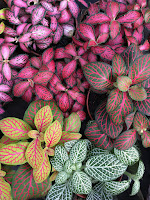
A sampling of the different colors of the Nerve Plant leaves. NERVE PLANTS (Fittonia argyroneura)
NERVE PLANTS (Fittonia argyroneura) – aka Fittonia, Mosaic Plant, and Net Plant. This plant comes from deep in the rainforests of South America. The foliage has an olive green background contrasted with bright veins of pink, white or red – the color variations seem endless. These low-growing plants are perfectly suited for a wide range of growing situations from tabletops to cover crops. Nerve Plants are very forgiving should you forget to water them - they can bounce back quickly. Check it out on this time-lapse video. Read more about these tropical beauties here and see more here.

A collection of ferns mounted and hanging on a wall. STAGHORN FERNS (Platycerium spp) STAGHORN FERNS (Platycerium spp) – aka Elkhorn Ferns and Antelope Ears. This fern is native to the jungles of Java, New Guinea and parts of Australia. What makes this plant unique (besides its antler-like foliage) is that it is both an air plant and a fern. Since this plant grows on tree trunks and rocks in its native habitat, it’s commonly mounted on a surface and then displayed on a wall or fence. This presentation can amplify the resemblance to antlers. But it can also be grown in a traditional pot and enjoyed as a hanging plant. Here’s more on this cool plant and here’s a tutorial on how to mount it.

A green houseplant with orange-red spikes and blue-ish spikes in a white container.AECHMEA BLUE RAIN (Aechmea spp)  AECHMEA BLUE RAIN (Aechmea spp) – aka Blue Rain Bromeliad. This stunner has its roots in Brazil and is decidedly low maintenance (which is probably not the case with other Brazilian stunners). This bromeliad only flowers once, but the flamboyant blue-violet flowers on orange spikes will last for months. After blooming, pups will appear around the mother plant. These pups will feed off their mother plant until it has deteriorated and they are big enough to produce blooms. Nature can be hardcore. Here’s more on this beautiful plant and here’s something to watch.

A plant with pale green leaves striped in a burgundy color. BUTTERFLY PLANT (Christia obcordata) BUTTERFLY PLANT (Christia obcordata) – aka Swallowtail Plant. This herbaceous perennial is from East Asia and can grow up to 3 ft. tall. The exquisite triangular-shaped leaves with burgundy stripes are real show-stoppers. To some people, they look like the veining on a bird’s tail feathers, while others think they resemble butterflies at rest. However you see it, this is a spectacular addition to any plant collection. For more on the Christia obcordata, read this. For a little something on a different variety, Christia vespertilionis, check out this video.

Plant with large green and white leaves in a white container. AFRICAN MASK PLANT (Alocasia Sanderiana) AFRICAN MASK PLANT (Alocasia Sanderiana) – aka Kris Plant and Elephant Ear. These tropical plants have no connection to Africa, they are native to the Philippines, but they look like African ceremonial masks to enough people to have the name stick. This plant brings the drama with forest green leaves that have wide, stripe-like veining. According to the International Union for Conservation of Nature (IUCN), the Alocasia Sanderiana is critically endangered in its native environment, so in growing this plant you are literally helping to save a species. Here is more information and here is an interesting video.

Poofy fern-like plant in a black container in front of a black door. FIBER OPTIC GRASS (Isolepis cernua) FIBER OPTIC GRASS (Isolepis cernua) – aka Livewire, Live Wire of
Fairy Lights. This fun plant is reminiscent of those funky fiber optic lamps. It’s a clumping plant with small flower spikes on the end of thin, bright-green stalks. Not technically a grass (it’s part of the sedge family), one variety or another is native to wide areas of the globe. Fiber Optic Grass is a multi-purpose plant in that it does well in most areas indoors or outdoors, in the ground or in containers. And it makes a captivating hanging plant. More on this delightful plant here and, if you are interested in planting it outside, check this out.
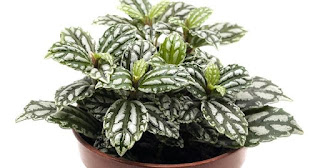
Plant with green leaves and bright silver markings.ALUMINUM PLANT (Pilea cadierei)
ALUMINUM PLANT (Pilea cadierei) – aka Watermelon Pilea. This alluring plant is originally from China and Vietnam, but it has found a place in homes worldwide due to its non-demanding nature. This smallish (6”-12”) evergreen will grow out umbrella-fashion and produce deep green pointed leaves patterned with silver markings that shine like tinfoil. This plant is very desirable for its beauty and easy care. The ASPCA has endorsed this plant as a non-toxic choice for animal lovers. To learn more, go here or watch this video.
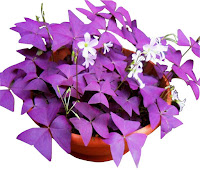
Plant with purple triangular leaves and little white flowers in a terracotta pot.PURPLE SHAMROCK (Oxalis triangularis) PURPLE SHAMROCK (Oxalis triangularis) – aka False Shamrock and Love Plant. This gorgeous Brazilian is more than just a pretty face – it has moves! It will turn its leaves to and follow the light during the day and then close them up when night falls. It can also retreat. Let me explain: The Oxalis triangularis grows from a group of bulbs and when conditions above the soil deteriorate enough, the plant will allow some die back and then wilt and pull back into its bulbs until conditions improve. Like the Butterfly Plant, many people think this purple stunner resembles a swarm of butterflies at rest. This plant is toxic, but it has a very bitter taste that works well as a deterrent for most nibbly pets. Here’s more on this beauteous plant and here’s a video.

A view looking down on a potted plant with wagon-wheeled shaped leaves,HARDY TAPIOCA (Manihot grahamii)
HARDY TAPIOCA (Manihot grahamii) – aka Graham’s Cassava, Graham’s Manihot, and Hardy Cassava. Pick this South American beauty if you have the space for a tall statement piece. It’s dramatic leaves and long, elegant shape will really pop in a sunny corner. It may come to you small, but it can easily grow several feet in a year and will eventually top out at around 10 feet. If you live in a warm climate you can turn it into an outside tree – the bees will appreciate it; they love the pale yellow flowers. The leaves and roots are poisonous, which will keep wild animals away if it’s outside but that may be a concern if you have pets. There’s more information here and a video on a different variety here.

South Park character talking to his plants.
As a reminder: We have great products to help keep your houseplants happy and healthy here.

I hope I have inspired you to commit to one of these delightful plants. If you already have amazing examples, send us pictures. If you plant some after this, send us pictures. Spread the beauty.

Submitted by Pam

Wednesday, July 22, 2020

Plant Parenting 2020

A woman's hand touching a potted plant.Photo by Lauren Fersti on Unsplash.
In my last blog, I talked about what’s trendy in gardening this year. My subject today is not just “in” for 2020, it’s been building for several years, but this year it’s come into full flower. I’m talking about houseplants, or more specifically –plant parenting. This relatively new term reflects that collecting plants is all the rage with young adults. While anyone with a love for plants and/or nature can appreciate this popular movement, the driving forces behind it are complex, compelling, and (like so many other things) heightened in this year of the pandemic.

A man with a dark beard hugging a potted plant and laughing with his head thrown backPhoto by Jason Edwards on Unsplash..Close up of two pots with small plants. One pot has the word grow on it.When I was first reading about this subject, I was somewhat taken aback by the term “plant parenting”. Not only had I never heard of it, but it seemed a bit childish. However, I quickly came to realize that it has more of a whiff of sadness than immaturity. The fact is that young adults nowadays are putting off having children and just not wanting them is only a tiny bit of why. Staggering student debt, archaic and discriminatory employment practices, and lack of affordable housing conspire to keep people from starting families and pursuing the mythical American dream. So, some are putting their nurturing and latent farming instincts into their plant babies. Plants can also be a first step towards the responsibility of pet ownership. If you aren’t ready to take care of a plant, you may not be ready to care for an animal. One more advantage to plants: you can make any parenting mistakes (up to and including killing them) without consequences, except perhaps a little guilt. While this may sound cold, it can be reassuring to the anxious and inexperienced.

Pictures, knickknacks and plants on little shelves.Apartments and other small-space quarters were once considered to be stepping stones to homes or, at least more spacious digs. Now that this is no longer a given, people are staying in these small places longer and making them as cozy as possible. This where plants come in. With plants, you generally do not need to worry about getting permission from or upsetting a landlord or paying additional deposits. They will not bark all day while you’re at work or pee wherever they want. This does not mean, of course, that you should turn your bathroom into a grow room – that could cause problems with more than the landlord. Here are some tips from a plant lover who has created an enviable oasis in an NYC apartment.
A plant-filled white room with a built-in white ladder going up to a loft.
The rise of plant parenting may be based on serious social and economic realities, but it is fueled by social media – especially Instagram. This brand of social media is visually driven and inundated with beautifully staged images. A person may see an Instagram model and aspire to look that good one day, but for most of us, it is not ever going to happen. However, when one sees an inviting space full of lush houseplants, it can seem realistically attainable. And so the obsession begins. If you find yourself on the verge of jumping into plant parenting, here are some things to consider before you leap. And remember, ARBICO has help for houseplants, should you need it.

A woman seated on a yellow bench-type seat at a table surrounded by plants.For many people, the health advantages of houseplants may not be top of mind when it comes to picking plants; but for millennials (who have been called the “wellness generation”), it’s part of the draw. Plants can improve air quality, reduce allergens, provide aromatherapy, produce medicine, and have innumerable mental health benefits (more on all they can do from WebMd here). Growing a plant that can directly benefit you is an easy step to getting self-care under control and that is not lost on many eager plant parents out there.

As the houseplant-loving community has grown, it has developed its own social media celebrities and favored bloggers like the Urban Jungle Bloggers. This blog calls itself “A Global Tribe of Plant Lovers” and embraces houseplants as/with design. They offer visually interesting and timely insights that appeal to hipsters all over the world. In April, they launched a challenge called “Stay Home with Plants” that addressed the lockdowns affecting everyone. It’s interesting to read about now, and is still relevant three months on. You can find it easily on their site.

A group of people milling around hanging plants and plants on tables.In addition to social media influencers, more traditional communities of plant parents have appeared. Devotees can make actual human connections with like-minded people at a plant swap or a talk at a nursery. National conventions like the Tropical Plant International Expo have found a whole new and highly enthusiastic group of visitors with these young plant aficionados. I’ll bet they have changed the experience of convention-going for traditional attendees. All these events are an excellent avenue for someone to get out and make friends, and they are less sticky alternatives to online dating or meet-ups.

A room with large windows jammed pack with plants.All of this may seem positive; but, just as with real parenting, there can be dark corners hidden from public scrutiny. Those with compulsive tendencies may find themselves over-buying and over-paying. Sometimes the act of acquiring is more fulfilling than the actual caring for the plant. This can cause an endless circle of buying as purchases die from neglect and new ones are bought to replace them. There are also instances where chasing the latest and most popular “it” plant has led to financial and emotional ruin. If you find yourself broke and you can barely make your way through the foliage in your apartment, you may have a problem.
A sign with the words Plants Not Pants surrounded by small potted plants.Photo by Georgia de Lotz on Unsplash.
Like everything else in 2020, this plant parenting thing has been affected by the Covid-19 pandemic. But not in a bad way. Sure, there are no plant swap meets or flower shows, but the community has been enriched with more eager and active members in lockdown. And nurseries, for the most part, have remained open. So it’s been easy enough for many to slip out and pick up a new baby, take it home, and hit Instagram to share it. Others are just staying home and nurturing their plants as they grow and change. And sharing that. After all, in a social media world, it is all about sharing and social media is wide open even when it seems the world is shut down.

A man in a sleeveless undershirt and suspenders is holding a yellow spray bottle and spraying his houseplants.

Stay tuned for upcoming blogs on succulents (which are also experiencing renewed popularity) and unique houseplants.

Submitted by Pam


Featured Post

The Spiritual Messages of Insects

We are deep in the hot, sweaty, and buggy time of year. It’s summer and millions and billions of insects have appeared to put a damper on wh...