Showing posts with label getting prepared for winter. Show all posts

Friday, November 18, 2022

It's Time To Winterize Your Plants

Close-up of a frost bubble on a plant stem.
At this time of year the weather in North America is wildly variable. As I write this, there are parts that are getting blasted by a winter storm and where I sit in Southern Arizona the weather is sunny and in the 70s. Not matter where you are sitting, it is time to get your plants winterized so they have the best chance to make it through to spring. Some of the following pointers may not pertain to your locale but others will, so take a moment to double-check your preparations.

CLEAN UP & REMOVAL

A rake laid down on a pile of leaves.
After a busy growing season, you will need to tidy things up in the fall. Now is the time to pull weeds, remove annuals and trim down perennials. Be sure to avoid cross-contamination and carefully dispose of any cuttings that may be harboring insects or diseases. Having said that, if your cuttings are clean it is best to leave some where they lie. A carpet of plant material offers insulation to plant and tree roots, provides shelter for bees and other desirable insects, and is the basis for rich soil in the spring.

A brown, black and white cat snuggled in a nest of fallen leaves. Photo by Milica Spasojevic on Unsplash.

A word about leaves:

Leaves will provide all of the above advantages and should not be removed completely. Just be sure to keep them away from the house. Undesirable insects can hide in leaf litter and migrate into the comfy warmth of your home once they get cold, but most can’t travel very far. Also, when considering your leaves please remember that they are 100% biodegradable and naturally a part of the season-change process, and that plastic is killing our planet. Please consider this thoroughly before raking up leaves and putting them in plastic bags to send to the dump.

MULCH

A woman in a coat and hat pushing a wheelbarrow full of yard debris toward a garden bed.
Mulch, whether commercially produced or made with your leaf litter and other materials, is an essential step in getting your plants through winter. It should be placed around plants, trees and shrubs. Be generous with it – you’ll want at least a 3-5 inch layer; and more if you live in cold country. Adding leaves, hay, straw, cornstalks and other no-compacting materials will create a more robust mulch. Save some mulch to add to your hibernating flower beds and gardens; extra organic matter in them now will pay off later.

CLOCHES

Plastic bottles with their bottoms cut off used as cloches in a garden.
If you are worried about a sudden frost and/or have smallish plants in the ground to protect, consider the simple cloche. A cloche is a usually bell-shaped cover made of glass or plastic that you can plop over your plant. Cover the plant before nightfall and remove the cloche the next day so they utilize the sun. You can purchase cloches, but there are any number of items around your house that can be repurposed. Cloches are not a solution in super-cold regimes with hard frosts.
TREES
A view up the trunk to its canopy. It is wrapped a multi-colored knitted scarf-type thing.

Trees take the first step in getting ready for winter by dropping their leaves. But we humans can take
further steps to help them get to spring. At this point in the season, a good tree wrap or frost protection bag can do a great deal to help a tree – they can temper the harsh environmental factors of winter, discourage nibbling mammals, and are an excellent barrier insect control (here are some wraps that ARBICO offers). Sunscald (caused by warm daytime temperatures that drop way down after dark), winter burn (caused by water loss through foliage) and damage caused by snow, ice and animals are all serious threats to tree health. This article gives some succinct and helpful steps to take to reduce the risk from these factors. For more on how winter affects tree, here is my blog on just that from December 2020. 

CONTAINER PLANTS

Three terracotta planters full of snow with green stems poking through the snow.
Because the sides of a pot are exposed to the elements, container plants are very vulnerable and often not able to survive the winter. If possible, bring them inside to an area that gets sufficient sunlight. Before you bring in any plant from the outside, be certain it is insect-free so that you are not introducing problem into your home. If you have large containers that cannot be moved, your best bet is to bundle them up by wrapping layers around them. This could be anything from burlap to fabric to even bubble wrap (the air in the bubbles makes a surprisingly good insulator). Another option is to remove the plant and either replant it inside or put it in a spacious container where the soil around it can act as an insulant. You may want to hedge your bets and still wrap this larger container. 

TROPICALS & HOUSEPLANTS 

A frosty view from outside a greenhouse looking in. You can see the tropical plants inside.
Many of the houseplants that people love are native to tropical environments. This is also true of many of the popular plants and grasses used in landscaping and patio décor. All of which means that they will not survive outside in the cold. When used in outdoor settings, these types of plants should be considered as annuals. If you are not okay with having them die or having to replace them, it is probably best to not use them in the first place. Re-locating them inside may work in some instances, but you will need to provide a place that gets lots of sunlight all year round and has a stable temperature. This can be problematic since the level of sunlight goes down in the winter and the temperature inside a winter home can be all over the place. These caveats for tropical plant care extend to houseplants, as most of them are tropical as well. To further understand the particular winter needs of plants inside homes in the winter, please refer to my blog on the subject here

A purple tube blowing a bubble that quickly turns to frost.
You should keep watering your plants as usual right up until you get a hard frost. The same can be said for most garden chores. And when you get your first snow, your well-tended garden will have a strong chance of coasting through it all (read more here).

Take Care

Submitted by Pam


Thursday, February 18, 2021

Got Snow? Don’t Worry – Your Garden’s Okay

A garden and surrounding trees all covered in snow.
This past week has been full superlatives when describing the snow that has fallen – unprecedented and disastrous (Hello, Texas), unlike anything they’re used to (Hello, Seattle), etc. For millions of Americans, this is something they’re not accustomed to, and that alone can be scary. For others, snow is a regular visitor in the winter, but this year there’s been so much more of it than usual. The snowfall is unusual all over –Russia is staggering under their massive amounts (more here) and Saudi Arabia has been uncharacteristically hit (see some bewildered camels here ).  It’s enough to worry anyone who’s been looking forward to a spring garden.

Close-up of a snowflake. Photo by Zdenek Machacek on Unsplash.
The truth is that snow is not as disastrous for a garden as it may seem at first glance, although it does carry some risk. Let me lay it out in pros and cons:

PROS – 

Fresh snow works like a cozy blanket as it covers plants. Snowflakes contain tiny pockets full of air, and when they accumulate on the ground they heap together and form larger and warmer air pockets. This air can prevent the soil from freezing and allows roots to continue thriving and taking up water to supply the plant. This is especially true in those areas where sudden low temperatures are not expected to last a sustained amount of time.

Snow forms a barrier to keep drying and damaging winter wind from bark and delicate plant leaves. 

Green leaves popping up out of the snow.
A layer of snow can protect a plant from the worst effects of the freeze-thaw phenomenon. This is when ice causes the ground to expand when it freezes and constricts when it thaws. The end result of this can be favorable for the soil by creating a lighter, more friable soil that new plants in spring and overwintering bulbs will appreciate. In the worst case, freeze-thaw can turn bulbs into mush and uproot plants. A layer of warming snow can reduce this likelihood.

Snow holds water in the soil and, as it melts, it slowly waters the area. This is especially beneficial for emerging perennials. 

The sun shining though snow-covered tree branches. Photo by Kristjan Kotar.
There is an old saying that snow is “Poor Man’s Fertilizer”, and, like many old sayings, it turns out to be true. As snowflakes make their long fall down to earth they accumulate nitrogen and other micronutrients along the way. These elements are then slowly released into the soil as it melts. Even dormant plants can absorb nitrogen deposited in this way.

Snow can enhance the sunlight given to plants. The brightness of the snow causes light to shine all around and even down through it so that plants can continue to photosynthesis through the darkest months of winter. 

Snow cover can hide the egg cases and chrysalis of many beneficial insects and moths and protect them from predation.

Snow-covered trees with some branches that have broken off lying on the ground.
CONS – 

The weight of snow on branches and small trees can quickly become too much for them. Branches can split or break off entirely, and trees can collapse or uproot. To avoid this, clear snow off your growing things as soon and as often as possible. Don’t forget to clear it from the roofs of any structures that are next to your trees and plants. A mini-avalanche from your garage roof onto your landscaping along your house could be tragic. 

Close-up of ice melting off a branch. Photo by Damo T. on Unsplash.
As the snow melts, watch for ice pools that can form around trees and plants. If the temperature falls again, you can find yourself in that freeze/thaw cycle that many plants cannot recover from. If you see this happening, you’ll need to get out there and get some drainage going. If you have to make some furrows where there weren’t any before, don’t hesitate. As long as you keep your plants alive, you can tweak the aesthetics later. Now that you can see how winter affects your garden, this would also be a great opportunity to develop a better year-round garden plan, with plants’ placements that suit their needs all year round. 

Snow creates cover for hungry animals like voles, who work underground, but also serves as a step up for those that prey on bark, branches, and leaves. When the snow hides their close-to-the-ground food sources, those lighter creatures can easily scamper up it to feast on plants. Be watchful for tell-tale tracks and take gentle steps to keep them away from your plants.

Two squirrels playing with snowballs.
In areas where there was drought the previous summer (which is almost everywhere nowadays), trees and shrubs that go into winter drought-stressed may have little left to fight off the cold. While there is little that can be done once the cold has arrived and the snow has fallen, this should be a reminder to prepare your plants for tough winter weather by first preparing them to get through a tough summer. For more on this, check out this article.

Snow can provide a safe place for beneficial insects but is also works to protect less desirable entities like snails, slugs, overwintering insects, and molds. Keep a careful eye on what emerges not just after the snow, but as everything truly warms up in spring. Remember that early and pro-active treatment of pests and pathogens is the most effective treatment overall, so an early problem does not have to develop into a mid-season infestation. 

The effects of a snowstorm are considerably different than an ice storm. There is not a whole lot of positive to be found after one of those (read more here). So, as much as you are able, if you’re only dealing with snow try to enjoy it while it lasts. And if you want to keep the kids busy, send them out to knock some snow off the trees.

The Simpsons standing at their front door shocked by the snowfall.
Stay Warm.

                  Submitted by Pam                   


Tuesday, December 29, 2020

The World of Winter Trees

Frozen trees in a field of snow. Lake District National Park, UK. By Click & Learn Photography.
Winter may seem like a dead time for tree lovers, but there really is a lot going on in the world of trees at this time of year. For trees, this is just another part of their yearly cycle. There are particular trials for winter trees, but also a lot happening out of sight. Evergreens have their own way of doing things in winter, but for the purposes of this blog, I want to explore the cold-weather life of deciduous trees.

Tall silhouettes of trees surround a dark path with orange leaves on wither side of it. By Bernd Schulz on Unsplash.
Trees begin preparing for winter months before cold weather and snow move in. Part of the transition is one that we can all see and appreciate, the magnificence of autumn trees. Green leaves contain chlorophyll, which not only gives them their color, it also feeds the tree through photosynthesis. During the winter trees will live off the food they have stored in the summer, so they will not need their leaves. They stop making chlorophyll, the green color disappears, and latent colors appear. The colorful leaves soon fall off entirely, relieving the tree of the need to provide the water and the mechanics of photosynthesis that leaves require. The tree is then able to focus its resources on its other parts. Losing their leaves is one way trees protect themselves ahead of winter dryness. They also move water around in their cells to protect them from freezing and to keep their nutrients intact. Read more on this here.

Water is a big issue for trees in cold winter climates. They cannot depend on the soaking rains from other times of the year, and when moisture does fall it is often bound up in snow. Moisture is moisture, one might think, but frozen water is very difficult for trees to access. If you are tending trees, water them when temperatures are above 40°F and there’s no snow, and use a product like Hydretain that holds water in the root zone. Here’s an article on watering trees at this time of year from the city of Greeley, Colorado, where they know a thing or two about winter weather. 

A pine branch encased in ice. By Sarah Cervantes on Unsplash.
Water is at the root of another problem for winter trees – the risk of exploding. Although it sounds very dramatic and catastrophic it is only one of those things. Trees can make a sound like a gunshot, which is definitely unsettling, but this phenomenon does not cause the tree to experience a bomb-like phenomenon. They crack (both physically and audibly) instead. This is caused by water freezing and expanding inside the tree (more on the science of it here), creating a rupture in the bark of the tree. This sort of thing happens in sub-zero weather in areas where native trees are winter-adapted, so they are generally able to shake off such cracking (more here). Check out this video, to see an “explosion” for yourself. 

Snow-covered trees in a line on a blue field with a blue background. By Tomas Tuna on Unsplash.
Internal ice is not the only thing that poses a problem for tree bark. Sunscald (sometimes called Southwest Winter Injury) can get them, especially if they’re younger trees. Sunscald happens when there are warm, sunny days and then cold winter nights. During the day the sun heats up the bark, causing the cells to open up and activate in response. Once night falls, freezing temperatures can damage the newly-opened cells. The end result can be bark cracks and even damage to the wood underneath the bark. There’s not much you can do once this happens, but proactive treatments include wrapping the tree or applying protective paint. We carry both wraps and paint

A deer face to face with a carrot-nosed snowman.
Wrapping a tree not only protects it from sunscald, it can offer some protection to the bark from animal damage. During the fall and winter, all sorts of critters want to feed off of, rub onto, or otherwise prey on your trees. Here is a brief article from the Chicago Tribune that explains the most common animal culprits and ways to ward them off. If you didn’t get around to wrapping your tree, or you didn’t want to, or if you did and want more protection, animal repellents can add another layer of care for your trees. We have a variety of great repellent products (see here) that can help with whatever is pestering your trees without resorting to toxic chemicals. 

Close-up of the red and orange bark of a Tibetan Cherry Tree.
Tibetan Cherry Tree 
Damage from weather or animals aside, bark can be a compelling sight on a winter tree. Some trees undress just enough in the winter for you to see the pretty wood they are hiding under their bark. There are those that hide their beauty behind their foliage and there are those that exfoliate their outer bark in winter and surprise you with the beauty beneath. Here and here are some gorgeous examples.

Despite all the hardships that the season can bring, trees do a lot of work in the wintertime. It’s just doing all the work out of sight underground, so it is hard for mere humans to observe and appreciate their efforts. This article explains (as well as scientists can determine) what’s going on down there in the root world. Basically, their goal is to spread out and strengthen before spring comes so that they have the resources they need for robust aboveground growth. This plan seems to work most of the time, unless there is an exceptionally hard frost that penetrates deep into the soil or the soil is disrupted by frost heaving. Frost heaving occurs when soil freezes and the ice moves towards the surface. This can weaken trees to the point where they are unable to stand. Fortunately, for all this to happen a number of variables have to come together, and for the overwhelming majority of trees, this will never be an issue. So, they are free to keep on developing their roots in pursuit of the perfect rhizosphere

Black trees, black water and snow-covered roots. Walnut Creek by Jeffrey Hamilton on Unsplash.

Trees are our priceless companions on this planet. They are sources of life-giving oxygen, but also life-affirming joy and beauty. As we head into a new year, let’s all resolve to appreciate and protect them.

Stay warm and stay safe out there. 

Submitted by Pam

Snow falling on a white tree in a snow-covered field. There is a wooded hillside in the background.


Friday, November 8, 2019

Winter is Coming – And The Bugs Know It


A low and long white house, lighted from inside. It sits on a hill with storm clouds bearing down. Photo by Dorin Vancea on Unsplash.
You may think that the worst of your insect worries are gone now that we are heading to winter; I’d like to suggest that you reconsider that notion. Late fall and early winter bring a whole slew of new characters into play and these insect pests can be just as pesky and potentially dangerous as those warm weather bugs. With the extreme weather predicted for much of the US in the next week, the time to address pests is now.
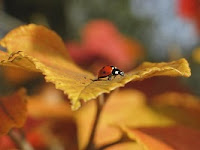
A close-up of a ladybug on a yellow autumn leaf.

It is very tempting to just pack insect worries away with the swimsuits, but this no-action plan can have some unpleasant consequences. For the most part, insects that are around in the winter are hibernating out of sight and not dead from the cold. Mosquito eggs, for instance, can survive in frozen water.  Granted, there is some cold weather die-off, but many more have found warm havens. Often, they do a little mating while they’re at it, so that they have nice fat bundles of babies when spring arrives. In other words, the numbers that go into a house can be far less than what will come out in the spring. A spring spider infestation could take all the pleasure out of those long-awaited warm days and a bumper crop of blood-suckers can exponentially increase your chances of exposure to dangerous diseases. So, when you batten down your hatches against the weather, take some extra time to be sure that you have kept insect pests out.

Closeup of many grayish stink bugs on a pumpkin.
Stink bugs on a pumpkin
Many participants in the Fall Crawl of insects are brazen return visitors. These include Asian lady beetles (not to be mistaken with plain old ladybugs), boxelder beetles and stink bugs, all of which congregate in swarms on walls and screens of homes and other buildings. If they are in your neighborhood, they are hard to miss. They are also hard to control, especially in the adult stage and in such large numbers. But, Asian lady beetles and stink bugs are invasive species (the boxelder is a homegrown troublemaker), so you will want to stop them if you can. Your best course of action if they are knocking on your door is to not let them in. Whatever you do, don’t attempt to squash your way out of an infestation of Asian lady beetles or stink bugs, both species emit a noxious odor when threatened. Your best weapon in this war is a vacuum cleaner – suck up any and all you can find. Here are some suggestions on ways you can seal out bugs.

Stacked firework in an black iron frame with a roaring fire in the fireplace in the background-the perfect thing for a chilly November night.Not all insect pests are as obvious as those mentioned above, many find ways to smuggle themselves into the cozy confines of your home. Before you dig out those boxes of winter clothing, oversized platters for Thanksgiving or trunks of Christmas ornaments, consider what you may be bringing into your home with them. Give everything a quick inspection before moving or relocating it. The following are some useful steps to avoid transporting unwelcome guests:

Store firewood at least three feet from your house. It may mean a chilly wood retrieval trip, but it will deter insects from making that same chilly jaunt into the house. If it’s placed too close to or up against the house, you give burrowing pests a platform to get busy on your brick or woodwork. If you can keep it off the ground, that's even better. It will make the wood less accessible to termites and other soil-dwelling pests. Once you bring the wood inside, use it within 48 hours; storing it any longer can just encourage already-inside pests to set up house.

Glass jars with silver lids on gray pantry shelves-no bugs are getting in here.
Pantry pests can arrive to your home in groceries and other packages. During the holidays we bring a lot of this inside. Shake out all bags before storing them or putting them in your trash can. Just as their name indicates, pantry pests can happily live in pantries and other storage. If you head down into the cellar or out to the garage to fetch some of the goodies you put up in the summer, keep an eye out for anything that may be nesting there (or attaching itself to your clothing to get inside). Here are some products that can help with these type of pests.

Standing water is an insect magnet. Eliminate it inside and out. There does not have to be much for an insect to take an interest – even the condensation from an appliance is enough.

A closeup of an antRecycling and trash bins in garages, attached to or too close to the house can also be insect beacons. Move them away from the house and keep them as clean as possible. Ants, especially, can go undetected until they use a scent trail to call in their whole colony. Then you’ve got a fight on your hands.

This is an excellent time of year to remove debris and cut back branches that make contact with your house. It is an easy insect commute from the branch to the house.

Two children and a man dragging a large evergreen tree towards a white house with a red door.
Now, let’s talk Christmas trees: Some people are never-plastic tree people and others are diehard artificialists. If you are still in the middle and insects give you the creeps, you may want to go fake. There are many insects commonly found on and in trees that will dislodge themselves and try to make your nice, warm home their nice warm home. It is a common practice for the Christmas tree industry to spray highly toxic insecticides (although many are moving away from this) on their trees, but this spraying takes place in the spring and summer; it is quite possible for insects to find their way back in before Christmas. Some tree lots have shakers, which aim to dislodge any intruders, but I wouldn’t depend on that too much as many pests will be inside the bark holding on tightly. If you are taking a tree from the forest, you are quite likely bringing home more than memories. A small, live tree that you can easily inspect for pests is the surest way to get an insect-free evergreen. Plus, when you plant it outside after the holiday, you are doing a small favor to the environment. This article lists some of the more common Christmas tree pests (a tree can have 25,000 bugs!), how to stop them and some preventative measures you can take before bringing the tree in. They recommend Diatomaceous Earth and Neem Oil-based sprays, which we have here and here. In some part of the country, there is a real worry that the invasive Spotted Lanternfly may be spread through Christmas trees. Read more about that here.
A cartoon of red ants carrying green leaves walking along a branch. There is a black spider under the branch and a bright yellow background.
There are, of course, mammal pests that wiggle their way into homes. Rodents of all kinds prefer a toasty house to a drafty den. But, if you take the steps to seal and protect your home from insects, you will be doing a great deal to discourage furry intruders as well.

Stay warm and pest free (not counting relatives)!

Submitted by Pam


Featured Post

IT'S EARTH DAY 2026!

Happy Earth Day from ARBICO Organics! This year we'd like to introduce you to our newest local non-profit partner - Mission Garden. Loca...