Showing posts with label pests in winter. Show all posts

Thursday, February 18, 2021

Got Snow? Don’t Worry – Your Garden’s Okay

A garden and surrounding trees all covered in snow.
This past week has been full superlatives when describing the snow that has fallen – unprecedented and disastrous (Hello, Texas), unlike anything they’re used to (Hello, Seattle), etc. For millions of Americans, this is something they’re not accustomed to, and that alone can be scary. For others, snow is a regular visitor in the winter, but this year there’s been so much more of it than usual. The snowfall is unusual all over –Russia is staggering under their massive amounts (more here) and Saudi Arabia has been uncharacteristically hit (see some bewildered camels here ).  It’s enough to worry anyone who’s been looking forward to a spring garden.

Close-up of a snowflake. Photo by Zdenek Machacek on Unsplash.
The truth is that snow is not as disastrous for a garden as it may seem at first glance, although it does carry some risk. Let me lay it out in pros and cons:

PROS – 

• Fresh snow works like a cozy blanket as it covers plants. Snowflakes contain tiny pockets full of air, and when they accumulate on the ground they heap together and form larger and warmer air pockets. This air can prevent the soil from freezing and allows roots to continue thriving and taking up water to supply the plant. This is especially true in those areas where sudden low temperatures are not expected to last a sustained amount of time.

• Snow forms a barrier to keep drying and damaging winter wind from bark and delicate plant leaves. 

Green leaves popping up out of the snow.
• A layer of snow can protect a plant from the worst effects of the freeze-thaw phenomenon. This is when ice causes the ground to expand when it freezes and constricts when it thaws. The end result of this can be favorable for the soil by creating a lighter, more friable soil that new plants in spring and overwintering bulbs will appreciate. In the worst case, freeze-thaw can turn bulbs into mush and uproot plants. A layer of warming snow can reduce this likelihood.

• Snow holds water in the soil and, as it melts, it slowly waters the area. This is especially beneficial for emerging perennials. 

The sun shining though snow-covered tree branches. Photo by Kristjan Kotar.
• There is an old saying that snow is “Poor Man’s Ferti lizer”, and, like many old sayings, it turns out to be true. As snowflakes make their long fall down to earth they accumulate nitrogen and other micronutrients along the way. These elements are then slowly released into the soil as it melts. Even dormant plants can absorb nitrogen deposited in this way.

• Snow can enhance the sunlight given to plants. The brightness of the snow causes light to shine all around and even down through it so that plants can continue to photosynthesis through the darkest months of winter. 

• Snow cover can hide the egg cases and chrysalis of many beneficial insects and moths and protect them from predation.

Snow-covered trees with some branches that have broken off lying on the ground.
CONS – 

• The weight of snow on branches and small trees can quickly become too much for them. Branches can split or break off entirely, and trees can collapse or uproot. To avoid this, clear snow off your growing things as soon and as often as possible. Don’t forget to clear it from the roofs of any structures that are next to your trees and plants. A mini-avalanche from your garage roof onto your landscaping along your house could be tragic. 

Close-up of ice melting off a branch. Photo by Damo T. on Unsplash.
• As the snow melts, watch for ice pools that can form around trees and plants. If the temperature falls again, you can find yourself in that freeze/thaw cycle that many plants cannot recover from. If you see this happening, you’ll need to get out there and get some drainage going. If you have to make some furrows where there weren’t any before, don’t hesitate. As long as you keep your plants alive, you can tweak the aesthetics later. Now that you can see how winter affects your garden, this would also be a great opportunity to develop a better year-round garden plan, with plants’ placements that suit their needs all year round. 

• Snow creates cover for hungry animals like voles, who work underground, but also serves as a step up for those that prey on bark, branches, and leaves. When the snow hides their close-to-the-ground food sources, those lighter creatures can easily scamper up it to feast on plants. Be watchful for tell-tale tracks and take gentle steps to keep them away from your plants.

Two squirrels playing with snowballs.
• In areas where there was drought the previous summer (which is almost everywhere nowadays), trees and shrubs that go into winter drought-stressed may have little left to fight off the cold. While there is little that can be done once the cold has arrived and the snow has fallen, this should be a reminder to prepare your plants for tough winter weather by first preparing them to get through a tough summer.

• Snow can provide a safe place for beneficial insects but is also works to protect less desirable entities like snails, slugs, overwintering insects, and molds. Keep a careful eye on what emerges not just after the snow, but as everything truly warms up in spring. Remember that early and pro-active treatment of pests and pathogens is the most effective treatment overall, so an early problem does not have to develop into a mid-season infestation. 

The effects of a snowstorm are considerably different than an ice storm. There is not a whole lot of positive to be found after one of those (read more here). So, as much as you are able, if you’re only dealing with snow try to enjoy it while it lasts. And if you want to keep the kids busy, send them out to knock some snow off the trees.

The Simpsons standing at their front door shocked by the snowfall.
Stay Warm.

                  Submitted by Pam                   


Thursday, January 14, 2021

What's This Bug? The Fungus Gnat.

A close-up of a Fungus Gnat
These itty bitty insects are fungus gnats, although they go by many names, including “soil maggots”, “soil gnats”, and, (very commonly) “fruit flies”. People often mistake fungus gnats for fruit flies, but if you look closely you will see that they look more like tiny mosquitoes than any kind of fly. Although they look like mosquitoes, they don’t behave like them. They can’t bite and are utterly harmless to humans. However, they do have a nasty habit of flying around people’s faces, so it’s pretty easy to inhale or swallow one. Unpleasant but not necessarily dangerous.

Houseplants in pots on a windowsill looking our onto a wintry scene.
Many people say that fungus gnats are worse in winter, but they may have been around all year long and you just didn’t notice them. Conditions in the home during winter are perfect for fungus gnats to thrive and people are inside more with their plants, so if you have a problem you will notice it during the cold weather months. And then there is the bringing-inside factor: when the temperature plummets, people scramble to bring in their plants that have been sitting on the porch or patio. It's very common to have hitchhikers on recently-outdoor plants, so always check them carefully before re-homing them.

Tiny black insects, fungus gnats, all over a green leaf.
Fungus gnat adults are harmless to plants – it is their offspring that cause the trouble. The adults lay their eggs in soil and within 3 days the larvae emerge and they are mighty hungry. Their foods of choice are fungi, decaying organic matter, and plant roots and they begin feeding as soon as they hatch. This feeding continues for about 10 days, at which time the larvae will pupate. A short 4 days later, the adults emerge from the pupae ready to reproduce. This short life cycle means that you could potentially have a continuous population of fungus gnats in your plants. When you take into consideration that these insects will thrive all year round in your climate-controlled home, it pays to be on guard and prepared to put down any potential infestations. 

Rows of potted plants on light-colored shelves. It's a greenhouse in Dublin, Ireland. Photo by Soff Garanavano Puw on Unsplash.
Fungus gnats can be a big problem in greenhouses. The conditions (moist & warm) that are optimal for
propagation are also optimal for fungus gnat development. Their larvae will not only damage roots and cause wilting or plant death, their root-eating behavior can open wounds that allow soil-dwelling pathogens in. One small opening can lead to massive damage to crops or plant collections. For more on what to watch out for and ways to control fungus gnats in these situations, check out 
this short but informative article.

 Because the larvae do their feasting underground, the signs of their activity are often hidden until the damage has been done and the plants are visibly suffering. Your best tactic is to be pro-active and take the following steps:

An arm holding a yellow watering can and watering a tall green plant in a green container on a wooden table.
Watch for flying adults - Fungus gnats are not great fliers, so you won’t see swarming like other insects do. What you may see is their sudden appearance as you water or turn lights on. The water will disrupt their hop-flying around the soil and, like other insects, light will draw them to it. Bear in mind that fungus gnats are very small, only 1/8”-1/10” long, and have clear wings and long antenna. If the insects flying around your plants don’t have these characteristics, then you have another insect pest problem. Here’s some more information on how to identify fungus gnats.

Watch your watering – Proper watering is not only important for overall plant health, it is an invaluable tool to control soil-dwelling larvae. Simply put, fungus gnats like living in soggy potting soil. Remember that plants require less water in winter, so your regular watering schedule should be cut back in cold months. Make sure that your plants are draining thoroughly and give the top couple of inches of soil (where the larvae like to dwell) a chance to dry out between waterings. 

A yellow sticky trap with insects on it. It sits in a container of basil.

Use sticky traps – Whether you have 15 or 15,000 plants, sprinkling some sticky traps around your growing area is a great way to find out what insects you have in there. And, with a little math, you should also be able to get at least a rough idea of how many there are. We carry a wide variety of sticky traps; you should be able to get whatever size, shape, and color you want here.

If you are a visual learner, we have a video about fungus gnats that you may enjoy. It’s a cartoon and (I think) rather fun.

An image of tiny gnats flying beside a plant.

If you think you have (or know you have) a fungus gnat problem, don’t despair - there are a lot of ways to get rid of them. Here at ARBICO, we have many solutions, including Beneficial Nematodes and beneficial insects that prey on fungus gnats. Interestingly, although fungus gnats are not related to mosquitoes, many of the products used to control mosquitoes work for them as well. If you would like more information on ways to control fungus gnats, go to our ARBICO Organics fungus gnats page here.

Submitted by Pam


Featured Post

5 Cool Things About Nematodes

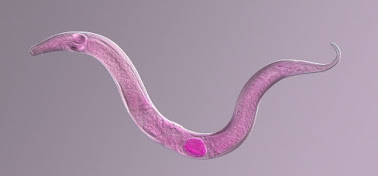
It’s September, and here at ARBICO, it’s Beneficial Nematode season. Every year we put our Beneficial Nematodes on sale at this time to enc...