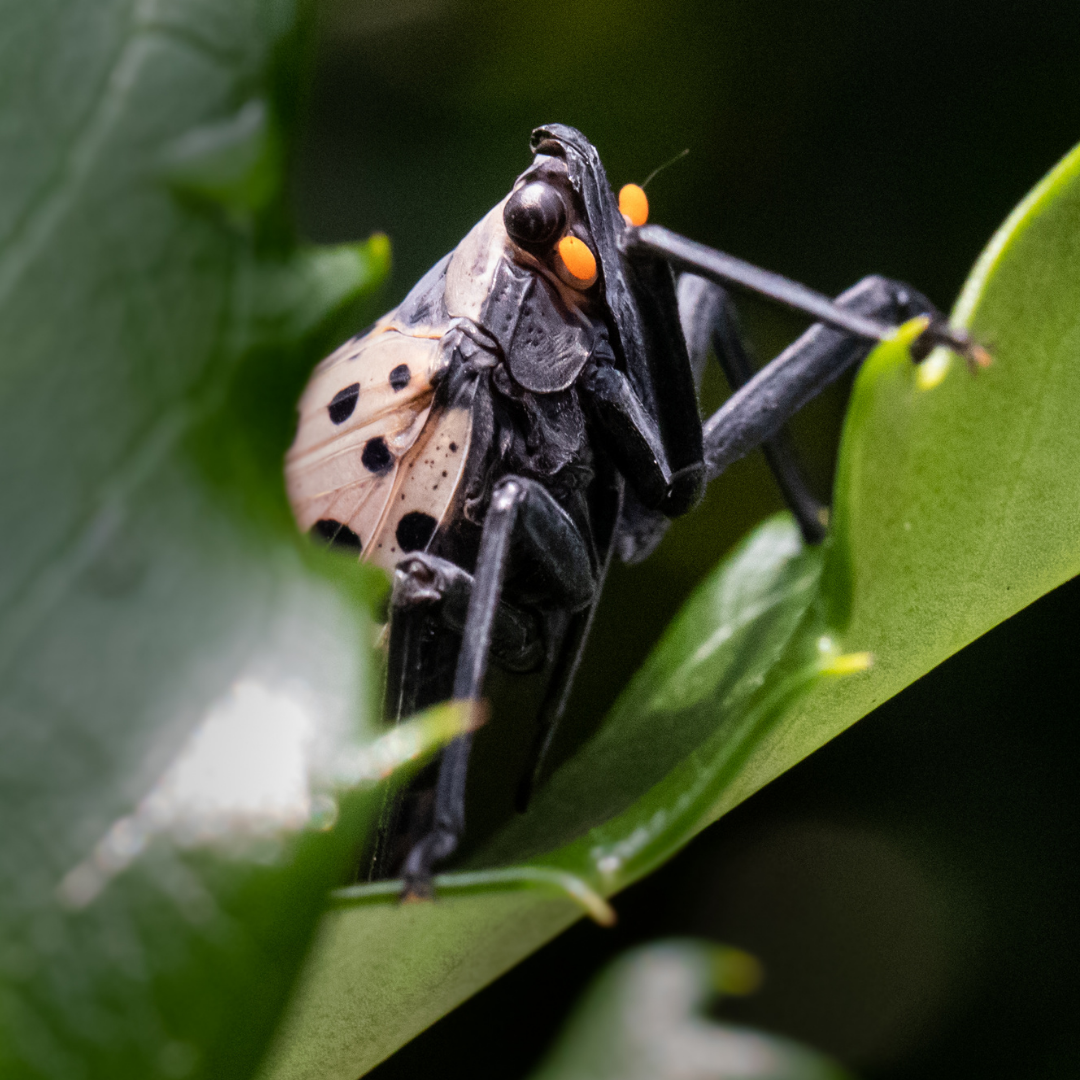
Wednesday, July 26, 2023

How to Protect Your Ornamental Plants from Disease and Pests


It’s summer in America, which means that many ornamentals are in full, vibrant bloom. Ornamentals cover a wide range of plants. The only qualification for being an ornamental is that the plant is not grown for consumption. This means that everything from petunias to non-fruit trees are considered ornamental plants. When you have such a wide range of plants, it’s difficult to give general gardening advice about ornamentals. A cactus requires vastly different care than a begonia. Regardless of what type of ornamental you’re growing, all plants deal with pests and disease at some point. Keeping on top of pest issues, maintaining a healthy growing environment, and developing repeatable regimens go a long way towards keeping your garden colorful this summer.

The foundation of pest and disease control is that you need to stop it before it happens. Benjamin Franklin said it best, “An ounce of prevention is worth a pound of cure.” However, it’s currently the middle of summer and past the time when you’re putting plants in the ground for an outdoor garden. While some species of plants naturally repel harmful insects and others are naturally hardy and disease resistant, there are steps you can take to make sure your fragile ornamental plants still flourish.

General Tips for Pest Control

Pests don’t just mean bugs. Rabbits, deer, and a variety of other mammals can mutilate a well-kept garden in a manner of minutes. Additionally, not all bugs are bad. Bees and butterflies are pollinators and are obvious examples of helpful insects, but other species of insects keep your garden safe by hunting harmful insects. Green lacewings are a great example of a beneficial insect that choosing to hunt and prey on aphids.

ARBICO’s Solution for General Insect Pests

If you’re seeing harmful insects in your garden, try BotaniGard® MAXX. This organic insecticide can be sprayed onto plants and pests when a pest population first becomes noticeable. It’s designed to be an all-purpose tool for pest management, taking care of weevils, whiteflies, aphids, and more.

ARBICO’s Solution for Mammal Control

A variety of simple, organic sprays are available that repel animals through smell and/or taste aversion. Check out the Bobbex-R™ Animal Repellent and the BONIDE® Hot Pepper Wax Animal Repellent RTU! Both sprays can be applied to plants without fear of chemical burns. As a bonus, you can apply the sprays to fencing around your garden to further ward off curious critters.
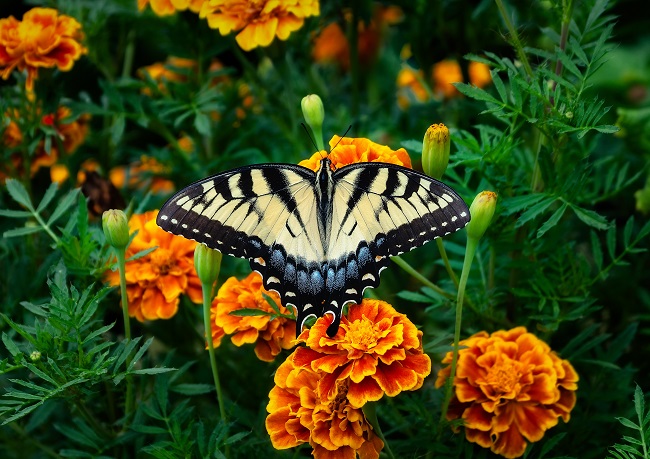
Marigolds are pollinator friendly ornamental plants that are naturally resistant to deer and rabbits.

Tips for Next Year

Try planting some pest-repellent plants in your garden. Zinnias and marigolds are beautiful ornamentals that are hated by deer and rabbits.

Keep your Ornamentals Healthy with Basic Disease Management

A pest infestation can be curtailed if you catch it early enough, but once a plant disease spreads through your garden, it’s largely up to chance if your plants survive. Keeping a healthy garden requires foresight and a good eye for high-risk areas. Here are 5 simple steps for keeping your ornamentals healthy this summer.

1. Mulch your garden! The best time is in spring, but mulch can be spread anytime, and you’ll still get positive benefits. Mulch retains soil moisture and can help prevent overwatering.

2. Water in the morning, and never overwater. If you see stagnant pools of water in your garden, you could be in trouble.

3. When using fertilizers, minimize the amount of nitrogen you’re applying to the plant. While nitrogen does help your plants grow, it can also cause fungal and bacterial infestations if applied in abundance.

4. Give your plants some space! If your plants are crowded together, humidity will increase in that localized area, which increases the possibility of infection.

5. Keep up on your pest control! If aphids are eating your leaves, the holes left behind are especially vulnerable to infection.

ARBICO’s Solution

Arber® Bio Protectant contains giant knotweed extract. When applied to your plants, it creates a barrier that inhibits fungal and bacterial growth.

Tips for Next Year

Make sure your garden is tilled and all previous weeds, discarded leaves, and plant debris are gone from the grow site. Diseases can remain dormant on dead plant life throughout the winter.

How to Eliminate Japanese Beetles From your Ornamentals

Japanese beetles aren’t only found in Japan. They’ve long since crossed the Pacific Ocean and have found America to their liking. They’re found across the USA and will settle anywhere with sufficient foliage, which may include your garden. These beetles aren’t picky. They’ll eat everything from leaves to stems to flowers, and they do travel in groups. If you find one beetle with the distinctive green and copper coloring, you will find many more. Two easy solutions exist to control a small beetle population: soap and water or manual removal. Spraying the beetles with soap and water will cause them to lose their grip and then fall to the soil. Japanese beetles do not bite or have any irritants, so putting on a pair of gardening gloves and picking them off your plants will get rid of a small population.

ARBICO’s Solution

Beneficial nematodes can eliminate Japanese beetle larva before they get the chance to mature. BotaniGard® MAXX, mentioned earlier in this article, also works to kill off adult Japanese beetles. Go to ARBICO’s dedicated webpage for a list of all products that can keep a Japanese beetle population under control.

Manage Potential Mildew Buildup

You’ll notice mildew by the white, powdery coating it leaves on the stem and leaves of plants. Managing mildew follows the same general principles outlined in the previous section on basic disease management. Below is a quick list that you can reference. Remember, preventative measures are key. If mildew establishes itself on one of your plants, prune away the infected area immediately, then properly dispose of the infected stems and leaves to avoid re-contamination burn the infected stems and leaves.
1. Make sure that your plants have some level of sun exposure every day. Shadier, enclosed locations are an ideal breeding ground for mildew.

2. Water early, and water to the roots. Splashing water onto leaves increases the risk of mildew. Installing a drip irrigation system can be a way to save water, save time, and prevent mildew from forming.

3. Keep plants separate. Too much crowding equals too much humidity, which can easily lead to mildew.

ARBICO’s Solution

SuffOil-X® can be applied over plants to control a variety of fungal diseases, such as Botrytis and mildew.

Friday, July 14, 2023

Environmentally Safe Solar Fly Trap Eliminates Flies


Flies are everywhere. They carry diseases (of plant, livestock, and sometimes human varieties), pester livestock, and they buzz constantly! Fly trapping is an important step to keeping an insect population under control. You’ve likely seen fly paper hanging from the ceiling, and when dealing with a large fly population, fly paper quickly gets filled and becomes ineffective. When you’re waging war against the flies, the best solution is to bring in the heavy artillery.

Like fly paper, the ARBICO Organics Solar Fly Trap is a passive method of fly control. Unlike fly paper, which traps flies by keeping them stuck to the paper, a solar fly trap uses sunlight to fry the flies once they enter the trap.

We’ll provide a step-by-step breakdown of how a solar fly trap works, but sometimes it’s easiest to see it in action. Watch this minute long video to see how the ARBICO Organics Solar Fly Trap operates.

How does a solar fly trap work?

1. The fly trap is a metal cylinder with an inverted funnel on the bottom. This funnel allows flies to enter the trap but prevents them from leaving.

2. Prepare the fly bait. If you’re purchasing the ARBICO Organics Solar Fly Trap, the trap comes with powdered bait. Simply mix the bait with water (a gallon jug or bucket works nicely for this) then loosely cover and wait seven days for the bait to ferment. Looking to make your own bait? See the next section for a simple recipe.

3. Once the bait has fermented, pour it into the suspended bait bowl at the bottom of the trap.

4. Flies are lured into the trap by the bait but move past it when trying to reach it. At this point, the flies are trapped in the metal cylinder and will be fried by the sun.

5. The solar fly trap is also reusable, so you can use it repeatedly. You can easily remove the lid, empty the trap, clean it with a hose and it’s ready to go.

Making your own fly bait

1. Fill a gallon jug halfway full of warm water.

2. Add one cup of baking yeast to the water.

3. Add a pinch of sugar to the mixture to make it even more appealing to flies.

4. Loosely cover the gallon jug to prevent gas build up. Store in a well-ventilated area.

5. After one week passes, your bait should be good to go!

What do I do with all these dead flies?


Even if your greenhouse or garden doesn’t have the insect problems that a livestock barn does, it can still be worth it to invest in a solar fly trap. After a day or two, you’ll see a shocking number of dead flies in your trap. A savvy gardener will take these dead flies (they’ll slide right out of the trap when it is tipped) and use them as fertilizer for a garden. While there isn’t any data to reveal the exact nutrient value of flies, many gardeners utilize dead flies as fertilizer. Just dig around the roots of your plants until you’ve created a trench. Spread a thin layer of dead flies, then bury the dead flies under the topsoil. If you’d like to save a little time and effort, you can just add the dead flies to your compost pile, providing that the insects are free of mold or other contaminates. The flies will be broken down by microorganisms in the soil and will organically replenish nitrogen levels. Since flies are so common, every time you set out your solar fly trap, you get a free batch of fertilizer!

The trap is made in the USA from lightweight, rust-free, heavy-duty aluminum. It is lightweight and may need to be mounted to a board or secured to the ground with rocks or blocks to prevent it from blowing away during a strong wind. Mounting the trap is easy, as the legs of the trap come with pre-made holes for mounting. This also helps if you are a horse owner who has a curious horse that may try to knock the trap over!

Fly trapping is only one part of a proper pest control plan. Stopping flies before they mature is another crucial step to keeping the insect population under control. For more information on how to target fly pupae, click here or go directly to Arbico-Organics.com to see ARBICO’s full lineup of pest control products.


Wednesday, June 28, 2023

Organic Weed Control Eliminates Weeds and is Kind to the Environment

Weed control is a tricky thing to get right. By their nature, weeds pop up where you don’t want them. In fact, the definition of a weed requires that the plant in question must be growing where it is not desired. If the plant is growing in a desired location, it can no longer be considered a weed, even if it is a species of plant that is considered invasive, such as wild violets or dandelions.

While you can certainly go to your local hardware store, head into their garden section, and pick up a big jug of name brand weed killer, many gardeners take the approach that gardening is not simply about eradicating weeds. Instead, the most important approach is be sustainable and do no harm to the environment. Using commercial weed killers composed of harsh chemicals violates this principle, so many environmentally conscious gardeners have turned to organic methods of weed control.

Just because you’ve chosen to stay away from commercial, chemical-intensive herbicides doesn’t mean that you’re waving the white flag and letting weeds overrun your garden or investing countless hours manually pulling up weeds by the root. Many methods of organic weed control are just as effective as chemical sprays, and some methods require only household items. Generally speaking, weed control falls into three stages: Pre-Emergent, Barrier, and Post-Emergent.

Pre-Emergent Care 

Oftentimes the best way to take care of a weed infestation is to prevent it from ever occurring. Once a weed takes root, you not only have to find a way to kill it, but you also need to understand that it can scatter seeds that will emerge next year. But we get it. Preventing weeds from entering your garden is easier said than done. Even with proper diligence, weeds will inevitably find their way into your garden. Don’t fret! There are still measures you can take to prevent weeds from overwhelming a garden.

When taking pre-emergent measures, think about what weeds need to take root and grow. They need 
suitable conditions to root and grow, just like the plants you want to nurture. After establishing your plants at the start of your growing season then verifying that they’ve taken root, turn your attention to ensuring that competing weeds never get the conditions they need to thrive.

Corn gluten is an effective and organic form of pre-emergent weed control.
Corn gluten is an effective and organic form
 of pre-emergent weed control. 
Corn gluten is an example of a substance used in pre-emergent weed control. When applied to topsoil, it prevents plants from forming roots after they germinate while not affecting plants with established root systems. Since the weed cannot establish a root system, any shoots will quickly wither and die. However, corn gluten is not a simple, catch-all method of weed control. Timing is critical when applying corn gluten. The soil needs to remain dry after the corn gluten is applied, and corn gluten can also impede the growth of your desired plants if it is applied too early. Corn gluten is available in liquid and granular forms. There’s no need to worry about dangerous chemicals when spreading corn gluten! It’s commonly used in pig feed and is digestible by both humans and common household pets, although it doesn’t taste particularly appetizing.

Focusing your watering also prevents weed growth. Using a sprinkler system spreads water across an entire surface area. Not only is this inefficient, but you’re also making uninhabited soil a perfect place for weed growth. A simple solution would be to manually water your plants using a watering can, but this can quickly become time consuming. We recommend investigating drip irrigation systems to see if this method of water distribution is right for you. Drip irrigation is delivered through underground piping directly into the roots of plants. Not only is this the most efficient way to water plants, but it also has one of the lowest water costs. By only delivering water to plant roots, you prevent weeds from taking over soil frequently moistened by a sprinkler system.

Biodegradable garden paper helps prevent dormant seeds from taking root and helps kill off
established weeds.
Establishing Barriers

Barriers can be classified as both a means of pre-emergent and post-emergent weed control. By depriving a patch of soil of sunlight, you will prevent any dormant seeds from taking root and kill off any established plants. When most households in America received a daily paper (or at least the Sunday paper), a common gardening tip was to place sheets of your newspaper on an area with weeds (or an area you wished to keep free of weeds). Wet the newspaper to add weight to it, then add a coat of mulch. Any weeds killed off by this method will be broken down by bacteria in the soil and repurposed into nutrients for your plants. Even though you may no longer get a newspaper, rolls of biodegradable garden paper are affordable and serve the same purpose.

Cover crops can be used to form a green barrier. This green barrier serves the same purpose as a barrier created by newspaper or garden paper. By forming a leafy barrier that blocks out sunlight or by competing for the nutrients in the soil, cover crops can prevent weed growth while simultaneously turning a gardening bed into an explosion of green. We recommend planting various types of clovers, as they are hardy, naturally replenish nitrogen in the soil (clovers are a type of legume) and can display a wide variety of flowers. Looking for recommendations on where to start looking? Yellow sweet clover, crimson clover, and hairy vetch all display vibrant flowers while crowding out unwanted weeds. Read this article for more information on how cover crops can help your garden.


Post-Emergent Management

Even with foresight and effort, weeds are still inevitable. You will encounter weeds in your garden, which means you need to have a plan to combat them. There will always be the classic example of putting on a pair of gloves and yanking out a stubborn nettle by the roots. And if you’ve done a good job of establishing pre-emergent weed control, manually yanking out the stragglers may be the simplest option.

Several effective household items that act as weed killers have been passed through gardening circles for many years. Try one of the following options to see what works best for you, but keep in mind that most sprays and formulations are non-selective and should be applied carefully to avoid contact with other plants. You don’t want to go hog wild spraying everywhere and end up accidentally killing your prized petunias!

Vinegar + Dish Soap: This is the time-tested classic. Most household vinegars have 5% acetic acid, but if you have something stronger, it will be more effective. Some gardeners add salt to this mix, but this is largely unnecessary. The dish soap causes the spray to stick to the weed while breaking down the upper epidermis of the leaf. The acetic acid in vinegar draws out the water and dehydrates the weed. Apply to weeds when 24-48 hours of sunny weather is forecasted. Make sure to note that this mixture often fails to kill the root system, which can result in the weed growing back if it recovers from the shock.

Rubbing Alcohol: Start with one quart of water. Add two tablespoons of rubbing alcohol to the water. Repeat these steps until you have enough weedkiller. This mixture mirrors the vinegar solution discussed above, though rubbing alcohol tends to be more potent than a standard cooking vinegar. If needed, you can even substitute vodka for rubbing alcohol—just make sure you’re using vodka from the bottom shelf!

Organic Herbicides: ARBICO Organics specializes in a wide variety of organic herbicides. The Avenger Weed Killer uses a d-Limonene base derived from citrus oil, to dissolve cuticles and dehydrate the plant down to the root system. If you’re looking for a simple, out-of-the-box solution, check it out.


Wednesday, May 10, 2023

The Dreaded Spotted Lanternfly (Lycorma delicatula)

Spotted Lanternfly adult
These invasive insects were first detected in Pennsylvania in 2014. It is believed that they were stowaways on a shipment of imported stone. Spotted lanternflies (SLF) are exceptional stowaways/hitchhikers, and it is precisely this type of behavior that accounts for their rapid spread to fourteen additional states. At the time of this writing (May 2023), they are found in Connecticut, Delaware, Indiana, Maryland, Massachusetts, Michigan, New Jersey, New York, North Carolina, Ohio, Pennsylvania, Rhode Island, Virginia, and West Virginia. Many experts believe that that number will climb within the next year to include states further south along the coast. By 2050 they are expected to be established all the way to California.                                        
Adult (left) and 4th instar nymphs (right)


Spotted Lanternflies, despite their name, are not flies - they are True Bugs from the order Hemiptera. Hemiptera have sucking mouth parts, called proboscis, which work like straws. They use their proboscis to pierce into plant parts and suck out the sap. Some of the most damaging and challenging to control insects are from this order, like aphids, bed bugs, brown marmorated stink bugs and scale insects.

Spotted Lanternfly infestation on grapes.According to Cornell University, SLF have yet to cause significant damage to agricultural crops. The exception to this is grapes, where they have proven to be a serious problem. SLF are swarm feeders, and they can quickly overrun an orchard with hundreds of individuals in multiple life stages on each vine. This will debilitate the vine, weakening it to the point that it produces poor or no blooms and fruit and loses its winter hardiness. These effects, as well as oozing, wilting and defoliation, can occur on any plant that SLF feed on. Plants are often unable to withstand the swarm and simply die. 

Tree of Heaven (Ailanthus altissima)

Since SLF do not sting or bite, they pose no direct risk to people. However, they do create significant trouble due to the copious amounts of sugary waste (known as honeydew), that they create. Some people report allergic reactions to honeydew, but this is not common. Mostly, it’s an unpleasant nuisance for people. It sticks on outdoor surfaces like porches, cars, benches and on clothing and pets. Honeydew also has an odor like fermentation that is unpleasant to most people but irresistible to many unwanted insects like ants and wasps. Bees are also drawn to it - they like to feed on the honeydew, especially when it is found on a Tree of Heaven (Ailanthus altissima) – the preferred host of SLF and another invasive species. Apparently it creates a uniquely tasty honey for an interesting reason. Read more here.

The bottom of tree showing sooty mold, honeydew and other damage caused by Spotted Lanternflies. There are also adults on the tree.
SLF adults and damage to tree

A significant issue with SLF is sooty mold. This fungus uses the honeydew as a grow medium and will quickly spread throughout the affected plant. Sooty mold spores and pieces of mycelia can be easily spread to other plants as well by splashing water or wind. Once there, the mold will exploit any weakness it finds to establish a foothold. More on sooty mold here.

So why is SLF so hard to control? Here are some reasons: 

Red 4th instar nymphs on a car heel.
4th instar nymphs on wheel
(1) They are such skilled stowaways that their most-used method of getting around is through human activity. They will jump into carts, fly into trucks, attach themselves to bags, hide in clothing – they’ll hide pretty much anywhere but in water. 

(2) SLF are extremely mobile. As nymphs and adults, they are impressive jumpers. As adults they will fly short distances. They have been known to travel miles on their own by a combination of jumping, flying and walking. When you add their hitchhiking into the mix, it explains why they are spreading so quickly. 

Spotted Lanternfly infestation on apples.
(3) The needs of the swarm drive their behavior. Their mobility is necessary to meet the needs of all the members of the swarm, so they will move often to feed and affect new plants with each move. The swarm protects itself by quickly vacating an area that’s being sprayed and will often return when the spray dissipates.
Egg masses on a tree.

(4) Their egg masses are hidden in plain sight. SLF females lay their eggs on all sorts of outdoor surfaces and items that are left outside (barbecue grills, folding chairs, etc.). She covers her eggs with a substance that’s white at first, but eventually it turns tannish-brown and cracks a bit. They look just like smears of dried mud, unremarkable and unnoticed. 

Photos in a graph showing the life cycle of the Spotted Lanternfly.
To get a grip on these wily insects, it takes a multi-pronged, diligent effort that addresses each life stage. SLF produce one generation a year, which includes an overwintering egg stage, four nymphal stages (instars) and an adult stage (more here). Egg cases need to be scraped off any surface they are found on and disposed of in such a way that they cannot survive. This can be done by putting them into a plastic bag filled with hand sanitizer or spraying them with suffocant like dormant oil. In the other stages, trunk, branch and foliar sprays will work to some extent but will probably need to be reapplied aggressively. Sticky traps and tree bands will work but must be monitored closely so that they don’t trap birds or other wildlife (more on that here) and that they do not fill up and become a bridge for other SLF. Neem oil, horticultural and dormant oils, insecticidal soaps and pyrethrins can be used as sprays. Fungicides as a pro-active pretreatment are a good idea, especially biologicals like Burkholderia spp. strain A396 and Beauveria bassiana. 
Sticky trap on a tree covered with mesh.

At this point, SLF have become part of our pop culture. They have appeared on Saturday Night Live, which is the ultimate arbiter of pop culture. This article uses them as an insult (as in don’t be one) and there is no shortage of informational and creative ways to kill them online, like this one with some yucky clips. Despite the entertainment value of these clips, it is important to remember that these are seriously invasive insects that the government is trying to control. If you come across them, they should be reported – here’s link that tells you how.Bowen Yang as a Spotted Lanternfly on Saturday Night Live.

Have fun squishing!

Submitted by Pam 


Tuesday, May 2, 2023

Product Review: NemAttack Beads Offer Simple, Environmentally Safe Pest Control

No matter if you grow indoors or outdoors, you have to be conscious of pests. If left unchecked, common nuisances like gnats, maggots, and types of fungal infections can devastate your carefully cultivated plants and crops. There are tried and true methods for keeping invasive populations down, such as making sure that your greenhouse is clean, draining any standing pools of water immediately, and using flypaper and sticky traps to trap harmful insects. However, a new product from ARBICO Organics has turned common pest control into a simple task that takes seconds to complete. NemAttack Beads Sf provide pest-killing beneficial nematodes in simple capsules that require no refrigeration to store.

So, what is a nematode? They’re commonly referred to as roundworms, which often develop parasitic relationships with animals. However, there are also certain types of nematodes that feed on plants. These nematodes are called eelworms. These microscopic creatures have adapted to every biome on earth, ranging from the bottom of the ocean floor to mountain peaks. Some nematodes cause grave diseases in humans while others benefit humanity by playing a crucial role in insect regulation.

This ability to kill insects without using toxic, environmentally damaging chemicals is what makes certain species of nematodes an extremely effective form of plant pest control. This specific type of nematode is referred to as an entomopathogen. Similar to how certain species of nematodes cause illness in humans or plants by parasitic infection, entomopathogenic nematodes disable insect populations by hampering growth, development, and reproduction.

NemAttack Beads Sf contain Steinernema feltiae, a species of nematode that disables several hundreds of different garden pests, including a large majority of common indoor pests in their soil developing stage. Using NemAttack Beads Sf is incredibly simple. The nematodes can be shipped directly to your door by ordering at Arbico-Organics.com. Once purchased, the nematodes arrive in resilient capsules. No refrigeration is needed to store the nematodes, simply storing them in a room temperature environment is more than adequate.

Apply ARBICO’s NemAttack Beads Sf in any type of growing environment. They’re perfect for a simple houseplant to a professional greenhouse. If you’re growing in a soil medium, apply the nematodes to the top layer of soil. Do not pre-mix with water. After placing the beads on the soil, water the soil until it is moist. Nematodes flourish best in moist soil. For all growing mediums, introducing the nematodes at dawn or dusk produces the best results.  

NemAttack Beads Sf are just one of the 10 beneficial nematode options offered by ARBICO for controlling pests in the soil.

Friday, April 21, 2023

Earth Day 2023

Earth Day 2023 collage drawing of various plants and animals, It says "Invest in our planet".
It’s Earth Day time again! This year it will be celebrated on Saturday, April 22nd, and people across the world are preparing to mark the day in interesting and inspiring ways. Earth Day is meant to be a highlight of a year of everyday practice of being earth-friendly and not a one-off day. This is easy enough for some people and harder for a lot more. For instance, I heard about a new housing development that features extra-large garages for recreational vehicles and their sales pitch was to come out and celebrate Earth Day with them. The message there is not only tone-deaf, but also blatantly hypocritical and turns a meaningful event into another commercialized pseudo-holiday. To resist such undermining, every day needs to be Earth Day to keep the mission alive.

A panoramic view of the area along the US-Mexico border in Southern Arizona.
The Borderlands of Southern Arizona
Each year we here at ARBICO choose a local non-profit to feature on Earth Day. We look for a group that walks the earth-loving walk year-round and is dedicated to our homegrown environment. This year we are highlighting the Borderlands Restoration Network (BRN) and will be donating a portion of our proceeds on Saturday to them. The land surrounding our border with Mexico is not a barren space inhabited only by outlaws and immigrants. It is, instead, a fragile and highly complex ecosystem that needs loving care to stave off decline and keep it thriving. BRN is dedicated to meeting the needs of this unique land and the creatures that call it home (including jaguars!). These hardworking environmentalists hope to ultimately build a restorative, and not destructive, economy in the borderlands. Visit their website to learn more about the many programs they run – and please consider donating to this very worthy organization. 

Scientists observing a Bengal tiger from a jeep on a sanctuary in India.

A drawing of a cow and a pig, and other animals, in front of the Earth. It says "Go Vegan For The Earth Day".People around the world are gearing their Earth Day activities to fit their local needs. In India (which is on track to become the most populous nation in the world this year)  they have programs that are on-going, but they spotlight them on Earth Day. Some of their biggest concerns are clean water, plastic pollution and the protection of their many unique species of plants and animals (especially since many of them are endangered). They are also working to educate people in ways that pollution and habitat destruction hinders economic growth. In an over-packed and poor country, this is an urgent need. Read more here on all they are doing – it’s impressive. Australia, Spain, Japan  and South Africa are just some of the other countries that mark the day in their particular way– this article discusses seven of them.

Drawing of a bearded man with a knapsack riding a bike.
Silhouette of an adult in a cap, a child, and a dog looking at something on a beach.
If you are not the type to organize or join a community event on Earth Day, there are still ways to show your support (even if you’re just showing yourself). You could plant a tree – or plant any native plant for that matter. You could not use your car for the day and instead enjoy a bike ride or take the plunge and get comfortable with your public transport. If you don’t want to or can’t leave the house, you could read a relevant book or watch a move that deals with environmental issues with an eye to following up on what you learn. Here are 21 of the best films out there (and they’re not all devastatingly grim – some are actually uplifting). You could remove your shoes, feel the earth beneath your feet and lift your head to the sky to absorb the energy of our world. Or take a walk on a beach or sit under a tree and gaze up through the leaves. Or you could simply change out any old incandescent light bulbs for new energy-efficient models. 

A cartoon of a green-haired superhero saying, "The Planet Needs You!"

Earth Day has been created to build awareness of the needs of our mother planet, and to inspire people to become stewards of the natural world around them. We can all do more, and I invite all readers to find ways to do just that. And don’t forget to include, educate and inspire the children – after all, it's their future we need to protect.

Take Care                     Submitted by Pam


Friday, April 14, 2023

Flower’s Power

Mulr-colored psychedlic flowers on a black background.
 “If we could see the miracle of a single flower clearly our whole life would change.” –  Buddha

Humans have an undeniable attraction, and even reverence for, flowers that is unlike our appreciation for other objects in our natural world. Throughout our history, people have been inspired by flowers to write poetry and songs, give them symbolic power, philosophize about their purpose in the world, add them to our folklore, paint and draw them endlessly and so much more. The famous German philosopher, Goethe, claimed that he could look at a flower and experience our whole cycle of existence. Leaves or grass or sand have never garnered such adoration. What is it about flowers that moves us so?

Pink tulips with their bulbs still attached. Photo by Sixteen Miles Out on Unsplash.

Roses that represented the factions in the Wars of the Roses. From left: Red Rose of Lancaster, Tudor Rose and White Rose of York.
Roses of the Wars of the Roses
Flowers have shaped human behavior throughout our history and the importance and symbolism given to them has caused great destruction and ruined millions of lives. The Wars of the Roses (1455–1487), is a good example. The rose plant had nothing to do with the conflict (it was a “who will be king” thing), but it became a matter of life or death if you identified with the white or red roses. And then we have Tulipmania in the mid-1600s in Holland. At that time, tulip bulbs became a highly desired commodity, and their cost became wildly inflated. There is some question of just how crazy things got, but there’s no doubt that people suffered for their flower obsession. Then there is the flower that caused a number of wars and assorted violence and is still destroying lives on a daily basis – the opium poppy.
Tables of people earing and drinking at tables under blooming cherry trees. A Hanami Festival in Kyoto, Japan.
Hanami Festival - Kyoto, Japan

The Japanese have tuned the simple act of admiring flowers into a cultural phenomenon. Known as Hanami (flower viewing) the tradition of gathering to contemplate flowers dates back to at least the Nara period of their history (710-794 AD). Over the centuries, this practice has become focused on the undeniably gorgeous cherry blossoms of spring. These flowers are so important to the Japanese that, in 1909, the mayor of Tokyo gifted Washington D.C. cherry trees as a token of friendship between the two countries. This gift is appreciated every year by the throngs of people who come to D.C. to see the glorious blooms.  

“The rose is the flower and handmaiden of love – the lily, her fair associate, is the emblem of beauty and purity.” – Dorothea Dix

The Flower Power photograph by Bernie Boston, taken during the March on the Pentagon, October 21, 1967
The Flower Power picture - October 21, 1967
We are all familiar with the term “Flower Power”, and for most of us it brings images of flamboyantly colorful hippies dancing dreamily while holding daisies. But the full story is much more intricately layered and features riots, the anti-war and human rights movements, and even the Hells Angels. It begins in 1965 when the poet and activist Allen Ginsberg created a vision for street protests against the Viet Nam war. He saw a street full of flowers, theatrics and religious iconography (read more here), that would answer violent authoritarian suppression with gentle words and deeds. While he didn’t specifically say “Flower Power”, in a very short time the phrase was an integral part of the late 60s zeitgeist. The ultimate expression of this is the beautiful song “San Francisco"
Multi-colored blossom. Photo by Sharon Pittaway on Unsplash.
The apple-green Coelogyne mayeriana orchid. Photo by David Clode on Unsplash.
Coelogyne mayeriana orchid
by Scott McKenzie. 

People love to ascribe meanings to the different colors of flowers. For instance, we send red roses to show passion or deep love, while pink is more playful. But some people say that colors also can influence emotional health. In this theory, flower colors don’t just symbolize a message, they directly affect the person who is in the vicinity of them. Orange flowers bring optimism and sociability  while blue ones invoke serenity.  On a side note: Green is the most common color in the natural world, but green flowers are very rare (one exception is this beautiful orchid). I wonder what the philosophers make of that?

“In joy and in sadness, flowers are our constant friends.” – Unknown

Orange and white flowers amid white table settings. Photo by Amber Kipp on Unsplash.
Over the years scientists around the world have researched the effects of  flowers on people and these studies show what we all know instinctively – no matter the type or color, flowers make us feel good.  In Tokyo, they learned that people experience physiologically measurable benefits within four minutes of looking at roses. In the Netherlands, they found that diners with flowers on their tables were in better moods. Read more here

Close-up of a white magnolia blossom.
Magnolia blossom
In the course of writing this blog, I have concluded that the deep love that humans have for flowers is in our ancient DNA. During the Cretaceous period (145.5 to 65.5 million years ago) flowering plants burst on the scene and thrived spectacularly. Scientists believe the first flower looked very much like a magnolia blossom (see it here). The advent of flowers brought changes to the world, including fine-tuning insect life, that allowed humans to evolve and prosper (more on all this here). So, perhaps somewhere deep in our souls we just get what flowers mean. 

"One perfect flower says more in its silent beauty than all the voices in the world." - Me 

Multi-colored flowers spewings from a blue Earth.
Take Care
Submitted by Pam


Featured Post

Common Pests of Hemp and Cannabis Plants

The cannabis industry has steadily grown over the years, and with that expansion comes a remarkably diverse set of insects that want a piece...