Friday, February 24, 2023

Indigo: A Plant, A Hue, A Phenomenon

Different blue hues of indigo yarn with green indigo plant leaves on top of them.
We’ve all heard of indigo; some of us think of it as a color and some of us even know that it’s a plant that makes blue dye. But fewer of us know the length and breadth of the story of indigo. And no one knows the whole story. 

A scrap of blue & white woven fabric - the oldest indigo cloth ever found.
Oldest Indigo Cloth
The use of indigo dye is an ancient practice that quite literally goes back as far as recorded history. For decades, scientists believed they had the oldest piece of indigo cloth. It was from the 5th Dynasty (~2465-2323 BCE) in ancient Egypt. That changed when archaeologists discovered a fabric remnant in an excavation in Peru. That well-preserved piece, cotton dyed with indigo, was made more than 6,100 years ago. This meant it was roughly 1,500 years older than the Egyptian piece (here’s video on the find). Not only did this expand the indigo timeline, but it also stunned the scientific world. The indigo plant grows easily and well in many parts of the world, and there are many native species, but getting that brilliant blue dye is a complex process. Had the knowledge of indigo popped up nearly simultaneously on both continents? Or had there been some sort of still-unknown trade between the two? Or was it aliens?
An illustration of what life would have been like in ancient India. There are bits of indigo dye and fabrics in the foreground.

Traditionally, it has been believed that the Indus Valley - or Harappan - Civilization (c. 3300-1300 BCE) was the birthplace of indigo. Situated strategically the area of modern Pakistan and northwest India, this was a highly-advanced trading culture that reached across their known world. They were peers of ancient Greece and Rome and introduced indigo to that Mediterranean world sometime in the 2nd or 3rd century. In fact, the Greeks gave indigo its name - “indikon”, meaning “from India. 

A hand holding indigo dye in a cake-like form.
The Indus Valley people didn’t just produce indigo; they elevated the weaving and dyeing of fabrics to an art form. This naturally made their textiles an in-demand commodity. They traded prepared indigo dye as well, but the knowledge of how to make blue from a green plant with pink flowers was a closely guarded secret within families. In order to transport the dye, and maintain their monopoly, the prepared indigo was shipped in hard, dry blocks that looked more like a mineral than a plant product. Even after the Indus Civilization died out, India remained the source of indigo; it was rare and highly prized elsewhere. It wasn’t until the Age of Exploration (1400s-1600s) that European nations were able to acquire a steady supply from India. And as they plundered the New World, the dazzling blue colors and quality of the indigo fabric there became nearly as desired as the golds and gems.Watch this well-made short video for more on the history and spread of indigo.

A portrait of a Taureg man with his face mostly covered.
Taureg Man

As indigo moved along the trade routes, people naturally learned how to make it with their local varieties of the indigo plant. People around the globe adopted the wearing of this color as a part of their identity. Many still do, like the Tuareg (the Blue Men of the Sahara) and the Yoruba of Western Africa, and the Dong of China. When indigo reached Japan around the 10th century AD, they adopted it with their characteristic intensity. Indigo is known as aizome there and the creation of indigo-dyed fabric is a highly-regarded, yet fading, artisanal skill

Three people hand dyeing indigo in China. The two on the left are reaching into vats full of blue liquid.
While growing indigo is fairly straight-forward, making the dye is a time-consuming and labor-intensive process. First the leaves are fermented (not soaked) in vats, often in-ground to easily regulate the temperature inside. Then additional components are added to warm up the mix and oxidize the indigo. This is when the blue color begins to emerge. In can take months to complete the fermenting and oxidation process, and then the wringing out, drying and possibly re-emerging the fabric proceeds. The darker the indigo, the deeper the blue, and the longer it takes. Here is much more on the dyeing process.

So why have millions of people across millennia gone to all the effort it takes to make this dye? It creates undoubtedly beautiful colors, but it also imbues fabric with some amazing qualities.
It makes fabrics softer: When added to cotton, it makes a fabric that gets softer with washing. Indigo only binds to external parts of the cotton, so each wash strips away a little of the indigo with some of the dye. The color fades a little, but the fabric is softer. People who spend a lot of time in the same clothes would find this especially desirable.
It has insect repellent properties: The elites in ancient Egypt slept under indigo-dyed mosquito nets and in Japan field workers and arborists still wear traditonal indigo to keep the bugs away. 
A collage of different people wearing indigo cloth working outdoors.

It's antibacterial: It has been widely used to soothe and treat skin condition like eczema. In Japan, samurai would wear it under their armor to stave off wound infections.
It controls body odors: This is clearly another advantage for someone who is wearing, and working in, the same clothes for long periods of time. It may also explain why they used it for shrouds in Ancient Egypt.
It’s fire-retardant: Japanese firefighters draped themselves in indigo for protection. Supposedly it works up to 1500°F. I wonder how they came to that conclusion 1000 years ago?
It dyes hair: Because some ancient people were as vain as modern ones can be. 

A variety of indigo cloth creations hanging outside to dry.
And since there are always non-believers despite thousands of years of practical knowledge, many of the above “claims” have been backed up by modern scientific testing.An anime cartoon character of a girl with blue hair and clothing.

Sadly, after so many years of people loving it, indigo finally went into decline when the German company BASF created a synthetic version in 1897. Thankfully  it’s still appeciated by many people.

 Submitted by Pam


Thursday, February 9, 2023

Plants With Romance

An illustration of a tree with black bark and pink and red hearts for foliage. It also says Happy Valentine's Day.


The traditional plant gift on Valentine’s Day is, of course, the rose. More specifically, red roses. But, what about blazing a new trail and give a living plant? All these plants have love-related names, and they will last a lot longer than those cut flowers. After all, who can forget a Forget-Me-Not? 

Bleeding Heart (Lamprocapnos spectabilis)

A close-up of the dangling, pink and white flowers of the Bleeding Heart plant.
In early spring and summer, the delicate arching branches of this elegant perennial fill with puffy heart-shaped petals that have protruding white inner petals. Most commonly the outer petals are pink, but there are some all-white versions. The Bleeding Heart is native to countries in Northern Asia (Siberia, Korea, Northern China and Japan) and North America. Here is a video with more information on this garden favorite.

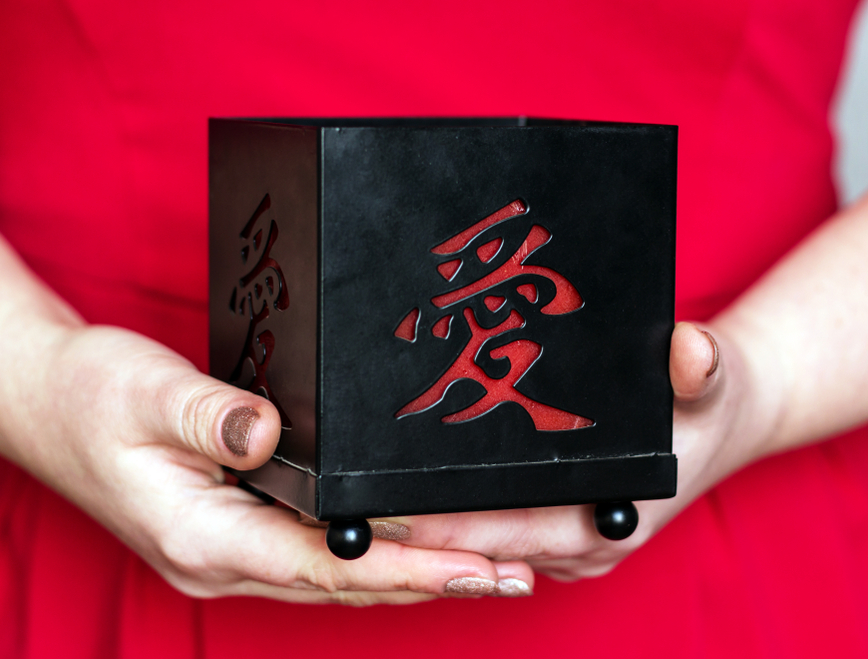
Hands with red nail polish holding a black laquer box with the Japanese  kanji symbol for love on it.
Fun Fact: In Japan there is a legend about a man who falls deeply in love with a beautiful woman and spends everything he has on gifts trying to win her. The hard-hearted woman takes the gifts but rejects him. Penniless and heartbroken, he stabs himself in the heart. The cool thing about this story is that it can be told by using the various parts of the flower – see that here.

Forget-Me-Not (Myosotis sylvatica)

Freshly picked blue and yellow forget-me-nots.
These popular plants have grey-green, hairy stems and an abundance of little flowers that can bloom throughout the growing season. To me, these flowers look like the typical flower that children draw; but their name comes from two Greek words: “mus” for “mouse and “otis” for “ears”, so others must think they look like mouse ears. These flowers are generally blue with yellow centers, but with 50 species in the family you’ll find pink and white variations as well. Forget-Me-Not flowers are relatively scent-free during the day, but at night they become very fragrant. This plant carries much symbolism, read more about it here.

A man with dark hair wearing armor on the left and a wioman withe red hair wearing a red dress on the right.

Fun Fact: As the story goes, a German knight was strolling along the Danube River with his ladylove when he went to pick some of these little blue flowers for her. He ended up in the water and was taken by the strong current. As he was being swept away, he called out “Forget me not!”. 

Love Lies Bleeding (Amaranthus Caudatus)

A close-up of the red flowers spilled from green leaves.An Aztec dancer in Mexico City wearing elaborate regalia.And since the path of love is anything but smooth, I present the Loves Lies Bleeding. This large annual has small, blood-red flowers that spill out from bright green leaves. This show-stopper makes a great ornamental plant, but it is also edible and has a plethora of medicinal uses. A native of the western hemisphere, It be traced back 7-8,000 years and was a domesticated grain crop 6,000 years ago. Watch this video to see how to cook amaranth. To the Victorians, this plant symbolized hopeless love, while others have seen it as a representation of Christ’s wounds on the cross.

“Fun” Fact: Amaranth was a staple food of the Aztecs, but it was also used ritualistically. They would honor their god of sun and war, Huitzilopochtli, by making little statues of him from human blood and amaranth grains. Which were then considered a real treat and gobbled down enthusiastically. Read mire about the Aztecs and amaranth here.

Closeip of the bright pink and orange berries of th Hearts-A-Bursting plant.

Hearts-A-Bursting (Euonymus americanus)

A drawing of a finger hovering over a spindle with threads in it.This deciduous shrub is native to the east coast of the US, from Florida all the way to Canada. The flowers of this plant are fairly non-descript; it’s the showy fruit that gives it is name. When the fruit appears it’s glossy red, with a warty strawberry-like texture. As it becomes mature, the fruit opens to expose a glossy, almost neon-orange berry. All parts of this plant are poisonous and should not be ingested by humans. It is a favorite of wildlife, however, and they can eat it with impunity.

Fun Fact: The European version of this plant, Euonymus europaeus, is known as the Spindletree because its spines were used to make the sharp spindles on spinning wheels. In the tale of Sleeping Beauty, she pricks her finger on her spinning wheel and falls asleep - or into a coma. This came from the once-popular belief that the wood was so poisonous that even the smallest cut could cause comas and death.

Lad’s Love (Artemisia Abrotanum)

Cloe-uo of hands grinding herbs with a mortar and pestle.Close-up of the foliage from a Lad's Love plant.This herbaceous shrub grows to be about 3’ x 3’ and has aromatic and bushy fern-like leaves. Lad’s Love is originally from southern Europe, but it was first introduced to our continent way back in the 1600s. This plant has a ridiculous number of common names, but Southernwood is one of the most widely used. People enjoy this plant just for its lemony, camphor-like scent and lovely foliage, but over the years it has been used for everything from pest control to medicine. One if it’s common names is “Maiden’s Ruin’, which reflects one of its rumored qualities – it’s supposed to be an aphrodisiac. Check out this video for one man’s adults-only take on the smell.

A gif of hands planting, watering and growing hearts in a flowering pot.
Fun Fact: According to folklore in southern Europe along the Mediterranean, teenage boys can kickstart their beard growth by using a facial ointment made from the ashes of this plant, olive oil and rosemary.


Happy Valentine’s Day to one and all!

Submitted by Pam


Thursday, January 26, 2023

Creepy-Crawlies In Your Firewood

A man and boy carrying firewood. They are in front of a house with a yellow door that has a large front porch with firewood underneath it.
This is the time of year when millions of people are reaching for firewood on a regular basis. For some of these people, wood is a necessity to keep warm and cook food, for others it is a source of comfort and coziness on a wintry day. In any case, firewood can harbor insects that no one wants inside their dwellings.

Close-up of carpenter ants in wood.
Carpenter Ants

There are two basic types of insects that dwell in firewood - those that burrow into and feed on wood (beetles and borers) and those that use the firewood as shelter (sometimes short term, sometimes overwintering). Any type of insect popping out of your wood  can be an unpleasant surprise, but neither of these types pose any real threat to your home. Carpenter ants and termites, on the other hand, can be found in firewood and they have the potential to infest a home. Keeping those two damaging pests at bay begins with the proper storage of firewood – up and off the ground. Wood placed directly on the ground makes it simple for termites to annex your woodpile as an addition to their underground lairs. These insects can also use a woodpile stacked against the house to gain access to the structure, so don’t do that either. 

Close-up of Metallic Wood-Boring Beetle
Metallic Wood-Boring Beetle
There are many species of insects that infest wood like metallic wood-boring beetles, powderpost beetles (aka shothole borers), bark beetles and roundheaded wood borers
Closeup of a horntail wasp - also called wood wasps.
Horntail Wasp
 (aka longhorned beetles). However, there are some wasps (horntail or wood wasps)  that attack wood as well. These types of insects will have been in the wood before it was cut into logs. If you are doing the cutting, you will no doubt see the damage caused to the wood or the insects themselves. If you use commercially cut wood, and most of us do, you should be aware of what to look for. These types of insects feed on and bore into wood throughout their lifespan, which can be a couple of years. If you don’t see the actual insects, you will see the tunnels and other damage they make. For instance, you’ll know you have powderpost beetles by the small piles of sawdust dripping from small holes. There are also wasps that go for dead and dying wood – horntail wasps (aka wood wasps). Generally speaking, these types of insects prefer a moist wood, so you should allow your firewood the dry out thoroughly before bringing it in.

Evidence of a powder post beetle infestation-piles of sawdust below small bore holes in wood.
A closeup of a bark louse.
Bark Louse
There are a lot of different kinds of beetles that make their homes inside firewood, but there are even more creatures that use the woodpile for shelter. These include sowbugs, wood cockroaches, mice, scorpions, spiders, millipedes and centipedes and bark lice. All of these can inadvertently be brought into your house and most pose very little threat to people. The problem is that you don’t want any of them popping out of a woodpile and joining you for a cozy night around the fire. The best way to avoid this is to give the logs a visual once-over to check for webbing or cocoons. After that, shake or knock the logs together to dislodge anything hiding.

Closeup of the invasive Emerald Ash Borer
Emerald Ash Borer
An invasive Asian Longhorned Beetle in motion.
Asian Longhorned Beetle
There are two invasive pests that can be found in firewood that you should be on the lookout for. These are the Asian longhorned beetle and the emerald ash borer. These pests are threatening our native trees and need to be contained. Take a minute to familiarize yourself with these pests so that you will recognize them. If you find any, take the proper steps. This article gives guidance on the Asian longhorned beetle and this one addresses the emerald ash borer. Only buying local firewood (within 50 miles) and not transporting firewood are two easy steps you can take to stop the spread. 

A closeup of a Praying Mantis ootheca (egg case) with several baby mantids are it.
Baby Mantids & Their Ootheca
A word about praying mantids: Over this past Christmas season, there was a lot of chatter about mantid egg cases on Christmas trees. Such a thing is clearly possible, but unlikely. The same can be said for firewood. Praying mantids place their egg cases on trees and bushes, and while they appear quite sturdy, they are not invincible and can be dislodged or damaged by transport. These are some things I’ve learned here at ARBICO from purchasing tens of thousands of wild-gathered mantid oothecas each year. If you do come across an egg case, you should put it outside or in a jar with teeny-tiny holes in it. When it hatches you'll have dozens of baby mantids running amok.

A woman sitting in front of a fireplace with wool socks on holding a coffee cup . She is only visible from the shoulders down.
At this point, you may be considering spraying your firewood with insecticide to avoid any unwanted visitors. But this is an absolute “NO”. Firstly, most insecticides will not penetrate the wood deeply enough to actually be effective. Secondly, insecticides can emit highly toxic fumes that are especially intense when burned. So, just don’t do it. 
A cartoon cat on a chair in front of a fire. It's moving its head and  twiiching its tail.

I have given you some actions to take to reduce the likelihood of pests in your firewood, but this article gives more detailed directions. And their recommendations are easy to do.

Take Care 

Submitted by Pam


Tuesday, January 3, 2023

Six Simple Ways to Start the New Year Right

Happy New Year 2023

As we start 2023 with all the hopes and dreams we have every new year, I’d like to propose a different way of looking at resolutions. Many of us are highly ambitious at this time of year – we want to lose weight, get a better job, start working out, spend more time with the family, etc. However, as the reality of life sets in, these resolutions begin to slide away. As a way to avoid the self-loathing of failed resolutions, I propose mini-resolutions. These are tasks that need doing and that aren’t difficult to do but are, nevertheless, often neglected. If you knock out a few of these at the beginning of the year, you’ll feel like you’ve accomplished something. And the more you do, the better you’ll feel about yourself. Here are some suggestions to get you started:
A young mechanic leaning into the engine of a car.

1) Get Your Car Serviced – Get that oil change done, or even better, get a complete checkup done. Make sure all your systems are running well. An additional advantage is that you’ll know your car is ready for any winter weather coming your way. Be sure to look for coupons and sales; these businesses know that people have less money for their services after Christmas, so you can find really good deals.

Items that fill a first aid kit - bandages, scissors, pins, etc.2) Clean Out Your Medicine Cabinet and Bathroom Drawers – If you are pushing old stuff aside to get to the items that you really want, you need to de-clutter your bathroom supplies. Check expiration dates and throw out old over-the-counter remedies. For prescription medications, edit them as well but first look into the protocols for disposal as many types cannot be thrown directly into the trash or flushed down the toilet. Old makeup or cosmetics that you bought once upon a time and never used need to go. This is also a good time to get rid of those sample sizes you brought home from vacation three years ago. All in all, when in doubt, discard it. Oh, and maybe refill your first aid kit while you’re at it. 

The toes of someone looking down onto a vision board. There is a stack of magazines, scissors and a tape dispenser on the ground by the board.

3) Make a Vision Board – I know that some readers will think this is a bunch of hooey, but I also know that many ambitious and successful people use them. Sometimes just calmly contemplating what you want makes it easier to see the path to your goal. And for creative projects, having visual inspiration nearby is a wonderful thing.  Whether or not you’re a true believer, vision boards can be a lot of fun to make so why not? This article from Oprah Daily has great guidelines and ideas.

Very messy shelves in a pantry.

4) Clean Out Your Pantry – Now that the holidays are over and many of us are determined to eat better, it’s time to approach your pantry or kitchen cabinets. Remove and store or discard those things that are holiday-related. If you won’t be using it until next Christmas or Hanukkah, get it out of there. Old spices lose their oomph, so throw out the old stuff. When one is cleaning out their closet, it’s said that you should discard anything you haven’t worn in a year. I think the same is true in a pantry – if you haven’t eaten or used it in a year it needs to go. While you’re throwing out things, consider eliminating as much processed food as possible. While you may not be ready to make a full commitment to changing your diet, your chances of eating badly go way down if that kind of food is not readily available. 

Santa Claus sitting on a bed mending his red suit.
5) Do Some Mending – Do you have buttons that need to be sewed on, a pulled thread in a sweater or some tears in clothes that need fixing? Maybe a little repair work on your Christmas outfit? Now is the time to do these little chores. Grab everything that needs to be mended and settle down to get it done. This sort of work is perfect to do while bundled up on the couch watching TV on a cold day. And once it’s done, and you have some “new” stuff to wear, you’ll get immediate validation.

A very cluttered desk with the keyboard pulled out underneath it.
6) Clean Out Your Desk or Office Clutter – Now that the holidays are in the rearview mirror, tax season is upon us, and the weather outside is frightful it’s the perfect time to clean up your workspace at home. You can organize your important papers, send out those thank-you notes (yes, people still do this), put up and fill out your new calendar, and evaluate your work and finances from the past year as you go. Right after the holidays is the best time to figure out whether you spent the right amount, or if those credit card bills will affect how much of a vacation you take in the summer. While you’re at it you could beautify your workspace with some new desk décor. Here are some cute/useful/silly options from Etsy. And if you do this on National Clean Your Desk Day on January 9th, you will get extra points.

Resolutions are a social construct - you are fine. Happy New Year 2023.
If the above projects don’t resonate in your world, consider what you may have “pending” that needs doing. It could be cleaning out the basement, going through and donating baby clothes, getting the carpets cleaned, or updating all the apps on your phone. The important thing is to accomplish something, what that is exactly is less important. Finishing these projects may not ensure a happy and fruitful 2023, but it will assure that you go into it feeling better about yourself. And that makes  nearly everything better.

Happy New Year

Submitted by Pam


Thursday, December 22, 2022

Reusing Christmas Trees for Any Skill Level

A woman in a blue puffy coat holding a spindly Christmas tree.

Whether you are a person that takes down their Christmas tree before New Year’s Eve or someone who waits until way into January, you still have to decide what to do with it once it’s stripped bare. If your tree is artificial you most likely just stuff it in the box, but real trees have to be disposed of somehow. There are a lot of ways to do this; some are easy, but others require tools and motivation. Here are some ideas based on just how much work you want to do.

- The Simplest Ways –

A sign saying Christmas Tree Recycling.
Recycle It - Most communities in the U.S. have some sort of tree recycling program and it’s usually available to both apartment dwellers and single-family homes. They usually offer curb-side pickup or some equally convenient way to get your tree to them. You really can’t get much easier than hauling your tree to the curb when you are taking out the mountain of packaging and other garbage that Christmas creates.

A man dragging a Christmas tree through the snow.

Leave It Outside
– If you live where you can pull it off, just leave your tree in your yard or nearby fields or woods. Natural Christmas trees are 100% biodegradable, and the soil will appreciate the donation of organic matter. Shelter can be hard to come by in winter, so all types of animals and will appreciate the added protection the tree offers. Additionally, both insects and animals will feed on the tree. You should only dispose of a tree this way if it is chemical-free and everything artificial has been removed, down to the last bit of tinsel. If you are leaving it anywhere but your own property, be sure there are no regulations prohibiting it and that you are not trespassing on someone else’s property. 

Four young people gathered around an outdoor fire pit.
Add It To A Firepit – Some people may argue that this is not the best choice since burning them adds CO2  to their air. However, if you have regular fires at this time of year, one single tree will not increase your emissions in any significant manner. Never burn a tree in an indoor fireplace; they are an extreme fire hazard in many ways (more details here).

Chickens in the snow looking at a pine tree.
Give It To Your Chickens – Giving your Christmas tree to your chickens offers multiple benefits to them. Not only do they like the taste of pine, but it is a nutrient-rich snack. Additionally, having the tree in their run will provide hours of stimulation as they root around in it, which will also spread the refreshing smell of pine around. Goats also love pine, and it’s been shown to reduce intestinal worms and support overall digestive health for them (more here). So, when you go out to feed your animals,
drag your tree out with you. 

- A Little Work Is Needed –

Brown pine trees on a sand dune in the Outer Banks, North Carolina.
Use It’s Ashes - Wood ash is nutrient-rich, so after your tree is burned you can dig it out of the firepit and add its ashes to your garden. They can also be composted. 

Find A Place That Wants It – There are municipalities that use donated trees for projects like landscaping and erosion control. For instance, many seaside communities are using them to strengthen their sand dunes. There are also some zoos that take trees to give to their animals to eat or play with (see lions living it up with their trees, here) Do a little research to find what’s around you and who might want your tree.

A fark-haired woman wearing a Santa suit underwater decorating a Christmas tree.

Sink It In A Lake – Just as land animals would appreciate the shelter of the tree, overwintering fish will also. While this is as simple as tossing the tree in water, unless you have a pond on your land you will need to find a location that will allow this, and you will need to transport the tree to that site. As mentioned before, your tree will need to be chemical-free and completely bare before you dispose of it in water. 

Pine boughs in a wooden raised bed planter.
Put It On Your Beds – Break off some boughs and lay them over your  perennial beds. This will provide some insulation as well as a barrier protection from snow. It will also help reduce frost heaving. You don’t have to limit yourself to bedding areas, put them anywhere you feel could benefit from that extra layer.

Use It As Plant Stakes – Break off small branches, strip the bark and use them to support your plants. Since this is a super-adaptable process, this will work for everything from bushy small indoor plants to leggy seedlings. Look around and you may find another way that this break-and-support thing would work for you. 

           - You’ll Need Tools For These-

Several shiny ornaments with some pine branches on wood chips.
Chip It Up – Rent or borrow a woodchipper and feed your tree to it. You can use the resultant chips as mulch right away or save them until spring. Pine mulch will suppress weeds and add nutrients to the soil as it decomposes. The acidic nature of pine mulch makes it an excellent additive for acid-loving plants like blueberries, hydrangeas and potatoes.

Gnomes with white beards and red hats painted on sticks.
Make It Into Twig Gnomes – This is an exceptional tree disposal solution if you have small children. You’ll probably not be able to get rid of a whole tree by making twig gnomes, but you’ll have plenty to play with. And they couldn’t be easier to make : Cut off some branches, sand them down a little and add hats, beards and faces. The hats can be painted on or made with felt, fabric and cotton balls. Here’s how one lady makes them . 

Edge Things With It – If you strip off the branches and cut the trunk into disks (2” is a good size), you can set them in the soil as a border. This would be especially effective along flower beds, walkways and driveways.

Make It Feet – In much the same way as you’d make the edging, you can make pot feet for your outdoor container plants. Lifting outdoor plants off the ground helps reduce insect problems, improves drainage and air circulation around the pot and lessens the chance of staining your wood or concrete surfaces. Make them any size you want and make extra to hold onto and use when the originals deteriorate.

- Master Level Crafts –

A modern woodern clock.
There are innumerable ways you can use your tree in crafts. At the end of the day, Christmas trees are wood, and one can make nearly anything from wood. These types of crafts can be pretty easy, like the ones I’ve talked about, but others require more tools, time and finesse than most of us have (i.e., clocks, musical instruments). This article has a lot of ideas and even gives instructions on how to prepare a tree to reuse.

No matter how you recycle your tree, remember to first enjoy it thoroughly in all its sparkly, shiny decorated beauty. Christmas with loved ones around the tree can be magical, and we all need a little magic in our lives.

A lion rolling around with a Christmas tree with snowlfake ornaments.

Happy Holidays!

Submitted by Pam


Featured Post

Common Pests of Hemp and Cannabis Plants

The cannabis industry has steadily grown over the years, and with that expansion comes a remarkably diverse set of insects that want a piece...