Showing posts with label praying mantis. Show all posts

Thursday, November 4, 2021

Creatures To Be Thankful For

An image of Earth, showing different ecosystems like jungles and underwater.
At this time of year, we are all encouraged to find things to be thankful for and this year I'm encouraging you all to look beyond humans and to consider all the other living things that help us survive on our planet. Without the input of these creatures, the conditions that allow people to live comfortably would not exist (or perhaps humans wouldn’t exist at all). All of these deserve our gratitude. While we are familiar with many animals that are essential for the environment (hello, bees), there are many others you may not think of. I’d like to introduce you to some.

A black silhouette of a female praying mantis
BENEFICIAL INSECTS & NEMATODES- Here at ARBICO beneficial insects are a big part of our daily lives, so I can’t help but mention them first as something to be thankful for. We are all about good bugs that kill bad bugs. We have bugs that fly around hunting others, bugs that crawl around to hunt, and others that burrow through the soil while hunting. Some like specific prey, and some eat just about everything they come across. What all these beneficials have in common is that they feed on things that feed on our food. In other words, they keep gardens free from predators, so they can grow lushly and produce prolifically. If you are not familiar with all that we have, this page will get you started on learning more.

An artist's rendering of Bifidobacteria, a beneficial bacteria.
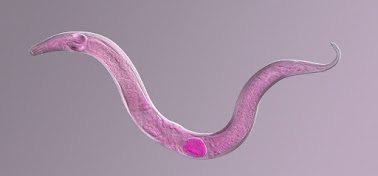
 BENEFICIAL MICROORGANISMS - As far as beneficials go, insects may be the stars of the show, but beneficial microorganisms are essential supporting characters. Without healthy soil, full of bacteria, mycorrhizae (and even fungi), your soil will not be able to sustain any plant life. These tiny beings are crucial for our survival, but it’s probably safe to say they never cross the mind of most people. Let’s take a minute to be thankful for them. We have a great many products that have one form or another of beneficial microorganisms, but they really shine in our microbial inoculants.

Silhouettes of bats flying through the trees against a blue sky
BATS – There’s nothing scary about bats; they are gentle mammals that are great to have around.. On any “World’s Most Dangerous Animals” list, you’ll find mosquitoes listed as the most dangerous  (those that don’t include humans, that is). They kill roughly 725,000 people a year from the various diseases they carry, so any animal that can put a dent in that number should be thanked. An individual bat can eat 1-2,000 mosquitoes an hour, so just imagine how many a large colony can take care of! Experts say that birds eat more mosquitoes than bats, but those bats that are not insect-eaters are pollinators. So, bats are either eating a deadly insect, or pollinating our plants – a two-fold reason for appreciating bats. One more thing: their guano is excellent fertilizer. 

A close-up of a beaver in water with his eyes and nose poked out above the surface.
BEAVERS – Most of you reading this have probably never see a beaver in the wild, but you should be thankful for them nonetheless. These North American mammals are tireless stewards of our waterways and their busy aquatic lifestyle keeps wetlands wet, groundwater levels up, and provides essential firebreaks that protect forests. Even if you don’t have beavers where you live, all life benefits when waterways are working as they should. Any creature that protects such a crucial resource as water get my thanks. This article tells how scientists in California are working with beavers to combat devastating drought and fire caused by climate change that state.

Snakes swimming in a blue ocean with a reef below them full of colorful coral and fish.
SHARKS -  I realize that this creature provokes a visceral response in many people, but it really does play an important part in keeping our oceans in balance. And we all know that a healthy ocean is key to life on Earth. Sharks preserve the balance in the sea by being an apex predator, but they also keep coral reefs healthy. They do this by eating the fish that eat the herbivores that graze on algae. When there is too much algae, the coral (and other species) will die off (for more on why reefs are important, watch this video). On the other hand, the appetite of sharks also prevents the overgrazing of seagrass (which store carbon and help prevent erosion). They do this by eating herbivore fish, so they are really working both sides of the equation.  For more on the what the wondrous shark can do, here is an excellent short article. Thanks, you big toothy environmental warrior! 

A close-up of a Red Squirrel.
 SQUIRRELS – Squirrels are (with the exception of Australia and Antarctica, found all over the world),  so they are very familiar to most people. These bushy-tailed little mammals are both endearing and entertaining as they scamper about in their busy little way. And it’s this behavior that we should be thankful for. As squirrels gather, eat, bury, store, and poop out seeds and nuts they are keeping the forest floor groomed and are ensuring a healthy distribution of future plants and trees. According to this article, it’s estimated that squirrels can be credited with planting millions of years every year in North America alone.

Green and purple phytoplankton under a microscope.

PHYTOPLANKTON – These microorganisms are even more important to life on Earth than soil microorganisms. These microscopic marine algae are a key component in both marine and freshwater ecosystems, but their impact goes beyond the water. As the foundation of the aquatic food chain, without this tiny creature whales, seals, sea birds and even humans would go hungry. But probably the most important role that phytoplankton play is in producing oxygen – up to 2/3 of the world’s atmospheric oxygen. We are all aware that trees produce oxygen, but it is these hardworking microorganisms that produces the most for us by far. This, simply put, is why we need clean oceans. So that they can continue to thrive and survive. Although they may be hard for some people to appreciate because they cannot be seen, let’s just consider them magic. A vital environmental magic.

A squirrel standing on a stack of nuts and munching on one. Of course, there are many other creatures on this planet to appreciate; in a well-functioning ecosystem all parts played by each species are important. I challenge you all to notice, and be grateful for, those that I did not have space or time to mention.

Take Care                           Submitted by Pam


Wednesday, March 3, 2021

It's Ootheca Time!

A green praying mantis on the right and a mantid ootheca attached to a branch on the right.
Every year at this time, we get Ootheca Fever here at ARBICO. We have been carefully stockpiling the Praying Mantid egg cases (oothecas) that we’ve been receiving for weeks and now we’re ready to share them with our customers. It’s always interesting and exciting to follow their journey to us and we want to make sure that they are as carefully cared for when they leave our building. Enlightening and informing our customers is something that we are happy to do; so in this blog, I’ll be answering some FAQs.

WHAT’S AN OOTHECA?

Praying mantids have a fairly simple life cycle, especially for an insect: Adults grow and eat from late spring through the summer, then they mate and females lay their eggs in an egg case in the fall. The egg case is called an ootheca and it begins as a white, foamy mass that hardens into a fibrous brown case resembling a walnut. After mating and producing the oothecas, the adults will die of old age or cold. The eggs, however, will snuggly overwinter inside their case until warmer weather sends the cue for them to emerge as nymphs. These nymphs look like tiny adults and those that survive (about 1/5th of them) will grow rapidly. For more on all of this, check out this article, and here’s a video of a mantis laying her eggs. 

A graphic showing the life cycle of a praying mantis, from the soft ootheca (upper left) to the hard ootheca (upper right), to the nymphs (lower right) and the adults (lower left).

WHERE DO WE GET THE OOTHECAS?

The oothecas we sell are gathered in the wild in and around the Allegheny Mountains (which straddle Ohio, West Virginia, Maryland, and Virginia). We work with people who have been picking for many years – some more than 30 years. These are people who take great pains to safeguard this valuable resource, not only because they depend on the revenue year after year, but because they do their picking in their homelands. 

WHAT KIND OF PRAYING MANTIDS ARE IN MY OOTHECA?

Although there are three main species of mantids found in North America (Carolina, European, and Chinese), the Carolina is the only one that is native to our continent. However, these are not the predominant species found in the area where we get our oothecas. The egg cases we have are Chinese mantids, with a Carolina appearing every now and then. You can tell the difference by their shape – the Chinese ootheca is round, while the Carolina is longer and more oblong or rectangular-shaped. If you want more on identifying between the species, this article has some excellent tips and pictures.

AREN’T CHINESE MANTIDS INVASIVE?

A praying mantis perched on top of a snail in the water.

Many people consider the Chinese mantid invasive, and it inarguably was at one point. However, now that they have been in North America for at least a century, they have become naturalized in the region that we are supplied from. They have dominated (and most likely eaten) the native species, causing them to decline, but otherwise have caused no harm to existing ecosystems. 

HOW MANY ARE EGGS ARE IN A CASE?

The best answer for this is would be “Who knows?" because the number is hugely variable and dependent on things like weather conditions and species. There’s simply no way to determine what’s going on in there until they hatch. There may be as few as a handful or more than 300, but 50-200 is a safe bet. The size of the ootheca in no way determines the number of eggs inside; in many cases, the smaller ones will produce more nymphs than larger ones. 

Nymph praying mantids emerging from the bottom of an brown ootheca on a branch.
WHERE DO I KEEP MY OOTHECA?

They can be kept indoors or outdoors, but we recommend indoor hatching so they are less vulnerable to predators and the weather. You can keep the ootheca in the vial it comes in, but if you have more than one you’ll probably want to separate them. They do not need a lot of air, a simple, tight (but non-airtight) lid will do; if you do poke holes in a lid, make sure they are tiny. Observe your ootheca closely and often. The emerging mantids will need to be released as soon as they start hatching or they will begin to eat each other. Once you see the hatching, take them to your desired release area and sprinkle them out. You can leave the egg case outside in the event that there are still some mantids inside waiting to hatch.

WHEN WILL MY OOTHECA HATCH?

This is another mystery that only Nature is sure of. In the wild, hatching is all about the seasonal change in temperature. When you purchase an egg case, you have a little more control in when they hatch. To keep them in a dormant stage, store them around 41° (no lower) until you are sure warmer weather is arriving. At that time, keep them between 60-80°F (no higher) and they should hatch in 2-6 weeks. Here are two tips to get them to hatch faster from our Bug Wrangler, Christina, who handles many, many oothecas every year: Keep them right at the 80°F mark and hang them pointy-side down.

IT’S BEEN WEEKS AND MY OOTHECA STILL HASN’T HATCHED, WHY NOT?

A tiny praying mantis sitting on top of an open beer bottle.
Some cases will hatch fast and some take more time. If you order more than one case, the oothecas you will receive will come from the same location/picker, which means they should hatch close to the same time. So, if one has hatched the other(s) should follow fairly close behind. If you are hatching outside, it is easy to mistake a hatched and abandoned case for an unhatched one. When hatching, the nymphs push out between fibers in the case, which will then close up behind them and leave no evidence of their departure. There is also the simple truth that sometimes an oothecal is not viable. 

WHAT WILL THE MANTIDS EAT?

A close-up of a praying mantis eating a gecko.
The nymphs will eat each other if they’re not released into the wild. This is the reason that you must monitor your egg cases regularly for hatching and release them when it happens. However, if you want to observe them for a while, you can hold them for a day or two, but it's risky. Mantids in general will eat anything that moves and that they can kill. This includes beneficial insects and pollinators. Don’t release desirable insects into an area where you have previously released mantids. This eye-opening video shows just how bold they can be in search of a meal. They even eat murder hornets - watch the video here.

If you’d like more information on Praying Mantids and their oothecas, check out my other mantid blogs here. And if you’d like to order some, you can do so here.

A GIF showing a mantis on a branch knocking another one off.

Take Care                                                           

Submitted by Pam


Thursday, March 5, 2020

5 Cool Things about Praying Mantids

two praying mantids on a branch - they look like they are dancing but they are probably fighting.
It’s Mantid Season again here at ARBICO; a time when these fascinating creatures are on all of our minds. Back in 2018, I wrote a blog that gave an overview of these nifty killers (read it here) and last year, I focused on some of their more singular attributes (look here). For my contribution this year, I’ve found some interesting little tidbits that you may not know:

A big gray bat hovering over the top of a green plant with a mantis on it1. They monitor bats: Mantids are not only voracious predators, they are also prey for voracious predators, which means they have had to develop some effective survival tactics. This is especially true at night, when bats are on the hunt and mantids are on the menu. To combat this threat, mantids have developed the ability to “read” the echolocation that bats use to find prey. Mantids can tell where the bats are and which way they are heading. If they come too close, mantids execute a quick nose dive (often flipping and slashing on their way down). This sudden shift directly downward is the same maneuver that fighter pilots use in aerial combat and is, according to this article, effective 80% of the time.

12 million year old praying mantis in amber
2. They are ancient creatures: Ancient insect fossils are exceedingly rare (due to the delicacy of their bodies), but a primitive mantid fossil was found that dates from the Cretaceous Period (66-146 million years ago). Scientists believe that mantids have been around as long as 200 million years (which pre-dates the dinosaurs), but this fossil represents when they first began evolving into what we recognize as a mantid. See it here. When you consider that scorpions have remained virtually unchanged for 300 million years and have been around (in one form or another) for over 400 million years, it seems fair to say that mantids came late to the prehistoric insect/arthropod game.

A sepia-toned photo of an old gray-haired woman and a young girl. San woman and granddaughter.
San woman & granddaughter
3. They are abundant in folklore: From ancient cultures to modern times, mantids have been made notable by people around the world. They found their way into ancient Sumerian texts and into Greek literature (Their name itself comes from the Ancient Greek word mantikos for prophet or seer). They were on Roman coins and in the Egyptian Book of the Dead. In China, they were matched up in fights like modern-day cockfights and Chinese proverbs are full of praise for their courage. Generally speaking, they have been portrayed as being wise and fearless, but sometimes they are seen as tricksters. In the tradition of the ancient San people of southern Africa, the mantis is seen as an embodiment of a mischievous, trickster god.

Master Mantis from Kng Fu Panda
4. They inspired martial arts: If you think of Kung Fu when you see how a mantid moves, there is good reason for that. There are two distinct styles of Kung Fu (Northern and Southern) who have adopted the moves of the insect for their art. The Northern Style was created around 350 years ago and the Southern Style in 1800. These martial arts styles have been used widely in movies and television and are probably what most people recognize as Kung Fu.

Movie poster - The Deadly Mantis (1957)
5. They’re movie stars: Praying mantids have appeared in a bunch of movies. Usually they are large and fearsome; but, in the case of Kung Fu Panda, the role of the mantis
character is one of a courageous warrior (sound familiar?). Interestingly, there are two movies, Praying Mantis (1993) and Preying Mantis (2003), where there are no actual insects and the mantis referred to in each is a female serial killer (make of that what you will). In case you want to binge watch some mantis movies, I've made a list for you:
Praying Mantis (1993)
Monster Island (2004)
Goosebumps (2015)
The Deadly Mantis (1957)
The Preying Mantis (2016)
Kung Fu Panda (2008)
Kung Fu Panada 2 (2011) 

A video of a little boy watching a mantis - then it jumps on his nose.

If
I have excited your interest in praying mantids, you may want to check out our flash sale. For today and tomorrow we are offering special deals on the oothecas. These praying mantid egg cases are only available for a few months, so you should buy sooner rather than later.

Happy Mantid Season, y’all!
Submitted by Pam

Sunday, May 27, 2018

Let's Talk Praying Mantids (or is it “Praying Mantises”?).


Green praying mantis perched on a purple flower on a black backgroundAlthough some people use the term “Praying Mantises” as a plural for Praying Mantis, for our purposes here we will be calling them “Praying Mantids”, as it just makes things simpler. After all, “Praying Mantis” refers to an insect that belongs solely to the genus Mantis, whereas a Praying Mantid is an umbrella term for all types of mantids.

There are three main species of mantids found in North America-the Carolina mantid (Stagmomantis carolina), European mantid (Mantis religiosa) and Chinese mantid (Tenodera sinensis). The Carolina mantid is the only species that is native to our continent, the other species were introduced either accidentally or intentionally (depending on whose account you choose to believe) sometime before or around the turn of the 20th century.  Many people consider the introduced species to be invasive, while others point to their long-term residency here as proof they have adapted and cause no harm. We will leave it to our readers to come to their own conclusions on this controversial subject.

Small praying mantises emerging from a brown, walnut-sized egg case
Praying Mantises hatching - many more will follow!
As I write this, we have reached the time of year (late spring-early summer) when people are beginning to find mantids in their yards and gardens. Mantids lay their egg cases (oothecas) in the late fall-early winter and these oothecas stay dormant until warm weather returns and then hatch. If you are finding mantids in your garden and have not purposefully placed oothecas there to hatch-congratulations-you have created a welcoming place for a really cool insect. If you purchased oothecas and are waiting for them to hatch, please check out the hatching instructions on our website. It can be difficult to know when an ootheca hatches as the egg case will remain behind and can look untouched. Newborn mantids wiggle their way out and quickly disperse. Check out the video below to see them in action.

Mantids can be beneficial, but should not be considered as useful in pest control as insects such as green lacewings or ladybugs. There are several reasons for this: one is that mantids will not develop a large population in a specific area that could combat a pest infestation. This is largely due to the fact that they are enthusiastic cannibals. Mantids are just as happy to eat their own as they are to eat other insects. Once hatched, they usually try to get away from their siblings as quickly as possible (a phenomenon that is all-to-familiar for many humans). Additionally, since they are voracious eaters, they need plenty of their own space to meet their food needs. Yet another factor that make them the less-than-perfect beneficial is that their murderous tendencies are unrefined. They will devour a honeybee just as quickly as grasshopper, making them a threat to insects that are considered desirable.

Like any other insects, pesticides can seriously reduce the number of mantids in an area. If you must use a pest control agent, we suggest you use products containing Bacillis thuringiensis and insecticidal soap targeted for soft-bodied insect control. These products have little effect on mantids.

To develop the best possible habitat for mantids, remember to not over-groom your garden. These predators need vegetation to provide cover for their hunting and for a place to lay their oothecas in for next year.


- Contributed by Pam at ARBICO Organics

Featured Post

5 Cool Things About Nematodes

It’s September, and here at ARBICO, it’s Beneficial Nematode season. Every year we put our Beneficial Nematodes on sale at this time to enc...