Showing posts with label bats. Show all posts

Thursday, November 4, 2021

Creatures To Be Thankful For

An image of Earth, showing different ecosystems like jungles and underwater.
At this time of year, we are all encouraged to find things to be thankful for and this year I'm encouraging you all to look beyond humans and to consider all the other living things that help us survive on our planet. Without the input of these creatures, the conditions that allow people to live comfortably would not exist (or perhaps humans wouldn’t exist at all). All of these deserve our gratitude. While we are familiar with many animals that are essential for the environment (hello, bees), there are many others you may not think of. I’d like to introduce you to some.

A black silhouette of a female praying mantis
BENEFICIAL INSECTS & NEMATODES- Here at ARBICO beneficial insects are a big part of our daily lives, so I can’t help but mention them first as something to be thankful for. We are all about good bugs that kill bad bugs. We have bugs that fly around hunting others, bugs that crawl around to hunt, and others that burrow through the soil while hunting. Some like specific prey, and some eat just about everything they come across. What all these beneficials have in common is that they feed on things that feed on our food. In other words, they keep gardens free from predators, so they can grow lushly and produce prolifically. If you are not familiar with all that we have, this page will get you started on learning more.

An artist's rendering of Bifidobacteria, a beneficial bacteria.
 BENEFICIAL MICROORGANISMS - As far as beneficials go, insects may be the stars of the show, but beneficial microorganisms are essential supporting characters. Without healthy soil, full of bacteria, mycorrhizae (and even fungi), your soil will not be able to sustain any plant life. These tiny beings are crucial for our survival, but it’s probably safe to say they never cross the mind of most people. Let’s take a minute to be thankful for them. We have a great many products that have one form or another of beneficial microorganisms, but they really shine in our microbial inoculants.

Silhouettes of bats flying through the trees against a blue sky
BATS – There’s nothing scary about bats; they are gentle mammals that are great to have around.. On any “World’s Most Dangerous Animals” list, you’ll find mosquitoes listed as the most dangerous  (those that don’t include humans, that is). They kill roughly 725,000 people a year from the various diseases they carry, so any animal that can put a dent in that number should be thanked. An individual bat can eat 1-2,000 mosquitoes an hour, so just imagine how many a large colony can take care of! Experts say that birds eat more mosquitoes than bats, but those bats that are not insect-eaters are pollinators. So, bats are either eating a deadly insect, or pollinating our plants – a two-fold reason for appreciating bats. One more thing: their guano is excellent fertilizer. 

A close-up of a beaver in water with his eyes and nose poked out above the surface.
BEAVERS – Most of you reading this have probably never see a beaver in the wild, but you should be thankful for them nonetheless. These North American mammals are tireless stewards of our waterways and their busy aquatic lifestyle keeps wetlands wet, groundwater levels up, and provides essential firebreaks that protect forests. Even if you don’t have beavers where you live, all life benefits when waterways are working as they should. Any creature that protects such a crucial resource as water get my thanks. This article tells how scientists in California are working with beavers to combat devastating drought and fire caused by climate change that state.

Snakes swimming in a blue ocean with a reef below them full of colorful coral and fish.
SHARKS -  I realize that this creature provokes a visceral response in many people, but it really does play an important part in keeping our oceans in balance. And we all know that a healthy ocean is key to life on Earth. Sharks preserve the balance in the sea by being an apex predator, but they also keep coral reefs healthy. They do this by eating the fish that eat the herbivores that graze on algae. When there is too much algae, the coral (and other species) will die off (for more on why reefs are important, watch this video). On the other hand, the appetite of sharks also prevents the overgrazing of seagrass (which store carbon and help prevent erosion). They do this by eating herbivore fish, so they are really working both sides of the equation.  For more on the what the wondrous shark can do, here is an excellent short article. Thanks, you big toothy environmental warrior! 

A close-up of a Red Squirrel.
 SQUIRRELS – Squirrels are (with the exception of Australia and Antarctica, found all over the world),  so they are very familiar to most people. These bushy-tailed little mammals are both endearing and entertaining as they scamper about in their busy little way. And it’s this behavior that we should be thankful for. As squirrels gather, eat, bury, store, and poop out seeds and nuts they are keeping the forest floor groomed and are ensuring a healthy distribution of future plants and trees. According to this article, it’s estimated that squirrels can be credited with planting millions of years every year in North America alone.

Green and purple phytoplankton under a microscope.

PHYTOPLANKTON – These microorganisms are even more important to life on Earth than soil microorganisms. These microscopic marine algae are a key component in both marine and freshwater ecosystems, but their impact goes beyond the water. As the foundation of the aquatic food chain, without this tiny creature whales, seals, sea birds and even humans would go hungry. But probably the most important role that phytoplankton play is in producing oxygen – up to 2/3 of the world’s atmospheric oxygen. We are all aware that trees produce oxygen, but it is these hardworking microorganisms that produces the most for us by far. This, simply put, is why we need clean oceans. So that they can continue to thrive and survive. Although they may be hard for some people to appreciate because they cannot be seen, let’s just consider them magic. A vital environmental magic.

A squirrel standing on a stack of nuts and munching on one. Of course, there are many other creatures on this planet to appreciate; in a well-functioning ecosystem all parts played by each species are important. I challenge you all to notice, and be grateful for, those that I did not have space or time to mention.

Take Care                           Submitted by Pam


Thursday, March 5, 2020

5 Cool Things about Praying Mantids

two praying mantids on a branch - they look like they are dancing but they are probably fighting.
It’s Mantid Season again here at ARBICO; a time when these fascinating creatures are on all of our minds. Back in 2018, I wrote a blog that gave an overview of these nifty killers (read it here) and last year, I focused on some of their more singular attributes (look here). For my contribution this year, I’ve found some interesting little tidbits that you may not know:

A big gray bat hovering over the top of a green plant with a mantis on it1. They monitor bats: Mantids are not only voracious predators, they are also prey for voracious predators, which means they have had to develop some effective survival tactics. This is especially true at night, when bats are on the hunt and mantids are on the menu. To combat this threat, mantids have developed the ability to “read” the echolocation that bats use to find prey. Mantids can tell where the bats are and which way they are heading. If they come too close, mantids execute a quick nose dive (often flipping and slashing on their way down). This sudden shift directly downward is the same maneuver that fighter pilots use in aerial combat and is, according to this article, effective 80% of the time.

12 million year old praying mantis in amber
2. They are ancient creatures: Ancient insect fossils are exceedingly rare (due to the delicacy of their bodies), but a primitive mantid fossil was found that dates from the Cretaceous Period (66-146 million years ago). Scientists believe that mantids have been around as long as 200 million years (which pre-dates the dinosaurs), but this fossil represents when they first began evolving into what we recognize as a mantid. See it here. When you consider that scorpions have remained virtually unchanged for 300 million years and have been around (in one form or another) for over 400 million years, it seems fair to say that mantids came late to the prehistoric insect/arthropod game.

A sepia-toned photo of an old gray-haired woman and a young girl. San woman and granddaughter.
San woman & granddaughter
3. They are abundant in folklore: From ancient cultures to modern times, mantids have been made notable by people around the world. They found their way into ancient Sumerian texts and into Greek literature (Their name itself comes from the Ancient Greek word mantikos for prophet or seer). They were on Roman coins and in the Egyptian Book of the Dead. In China, they were matched up in fights like modern-day cockfights and Chinese proverbs are full of praise for their courage. Generally speaking, they have been portrayed as being wise and fearless, but sometimes they are seen as tricksters. In the tradition of the ancient San people of southern Africa, the mantis is seen as an embodiment of a mischievous, trickster god.

Master Mantis from Kng Fu Panda
4. They inspired martial arts: If you think of Kung Fu when you see how a mantid moves, there is good reason for that. There are two distinct styles of Kung Fu (Northern and Southern) who have adopted the moves of the insect for their art. The Northern Style was created around 350 years ago and the Southern Style in 1800. These martial arts styles have been used widely in movies and television and are probably what most people recognize as Kung Fu.

Movie poster - The Deadly Mantis (1957)
5. They’re movie stars: Praying mantids have appeared in a bunch of movies. Usually they are large and fearsome; but, in the case of Kung Fu Panda, the role of the mantis
character is one of a courageous warrior (sound familiar?). Interestingly, there are two movies, Praying Mantis (1993) and Preying Mantis (2003), where there are no actual insects and the mantis referred to in each is a female serial killer (make of that what you will). In case you want to binge watch some mantis movies, I've made a list for you:
Praying Mantis (1993)
Monster Island (2004)
Goosebumps (2015)
The Deadly Mantis (1957)
The Preying Mantis (2016)
Kung Fu Panda (2008)
Kung Fu Panada 2 (2011) 

A video of a little boy watching a mantis - then it jumps on his nose.

If
I have excited your interest in praying mantids, you may want to check out our flash sale. For today and tomorrow we are offering special deals on the oothecas. These praying mantid egg cases are only available for a few months, so you should buy sooner rather than later.

Happy Mantid Season, y’all!
Submitted by Pam

Tuesday, August 20, 2019

Mosquito Control On The Fly

Silhouette of a bat in flight with light coming through its wings and lots of little insects flying around it.
Back in April, I wrote about ways we can bring pollinators to our yards. Now I am turning to mosquito eaters. In these dog days of summer, mosquitoes are the fun spoilers of our backyard parties, hikes in the woods and days on the water. Here in southern Arizona, our monsoons came late so we’ve had a reprieve for a while. But now that we’ve had some serious storms, puddles and water-filled crannies everywhere are turning into mosquito nurseries. Besides using some of ARBICO’s awesome and earth friendly mosquito products, I’d like to suggest you consider luring some voracious skeeter eaters to your yard. Specifically, bats.

By now, I’m hoping, most people know that bats have been falsely and unfairly portrayed in popular culture. They are not fearsome and malevolent creatures that go after people. They are more like Batman, really. They swoop in and come to humanity’s aid. Not by beating up the Joker, but by pollinating plants for us and devouring millions of mosquitoes.

A gray bat in flight with a moth in its mouth on a black background
Bat eating a moth
Bats are extraordinary insect hunters. Each one can eat up to 1,200 mosquito-sizes insects every hour. If they are out and about getting their bug grub on for 7 hours, that adds up to over 8,000 insects per bat! Of course, bats do not only eat mosquitoes, they also enjoy moths, beetles, flies, gnats and lots more. In this way, their opportunistic and enthusiastic predation covers insects that target crops as well as people. With their outsized appetites, encouraging insect hunting by bats around your home can significantly reduce the number of bites you and your pets will have to endure. And their droppings (guano) is an exceptional fertilizer for your garden.

A water fountain with containers of multicolored flowers around it with tall trees in the background
The key to luring anything anywhere is to have something it wants. In the case of bats, if you want to lure them to your yard, you’ll want to create a space that bats will want to visit. The most important things for bat visitors are water, insects, plants and shelter. All of these elements are symbiotic and together make a first-rate bat habit, but adding even one or two of them would be helpful and enticing to your bat neighbors.

A brown bat flying down to the water's surface to drink. You can see his reflection in the water.Water Being a bat is thirsty work. It is estimated that bats can lose 50% of their body weight in water in a single day due to their non-stop, high-energy hunting style. They rarely even stop to drink, preferring the drive-by dip and sip method (see them in action here). So, you’ll want to provide some water in an area or container without high edges that they can access mid-air and mid-flight. It does not need to be big, a little backyard water feature can do nicely.

Insects – Bats definitely need water, and where these is water there is also insects. For an insectivore, a pond or water feature can become a convenience store with one-stop shopping. It doesn’t make much sense to try to bring in bats to kill mosquitoes and then provide a space for mosquitoes to thrive in. But you also can’t be overly hostile to insects or all of them, beneficial and otherwise, will abandon the area. What to do? First, if you absolutely must treat for mosquitoes, use something that will not harm the bats. Natular DT and Natular G30 WSP are very effective and easy to use and is safe for everything but mosquito larvae. Whether you treat to control mosquitoes or not (but especially if you do), encourage native and beneficial insects to stick around. Insect-eating bats enjoy a diverse diet, so a moth appetizer with its mosquito dinner is appreciated.

A white Night Blooming Water Lily on a black and blue background.
Plants – One of the crucial elements in a bat and beneficial-friendly garden are native plants. Native insects love their hometown plants and will congregate around them. Bats in the area will be tuned into this and will be on the lookout for healthy clusters of these plants. So, plant native species first. The other option is to create an oasis of night blooming flowers that will attract nocturnal insects. Datura, Moonflowers, Nicotonia and Night-Blooming Jasmine are all beautiful and deliciously fragrant options. Night-blooming water lilies would give you the water ingredients and the insect attractant in one gorgeous setting. If you don’t have (or want) a pond, here is how you can have water lilies in containers. Or go all out and create a Moon Garden; it will be as enticing to you as it is to night insects.

Two brown bat houses hanging high up on the trunk of a tree. You can see leaves in the background.
Bat Houses
Shelter – When you plant native species, you are not just providing a space for native insects to dwell; you are giving native bats a place that feels safe to them. They may rest for a while or make themselves at home for extended periods. If you are interested in giving bats a more secure or permanent home, the only way to go is with a bat house. Individuals and communities around the globe are embracing the potential and installing bat houses. Before you take this awesome step, be sure to read up on how it should be designed, built and positioned in the yard. Bats are particular about where they set up house and will either ignore or abandon a structure that doesn’t measure up. Here is a document from the experts at Bat Conservation International that clearly lays out the criteria for success. There is a place in Florida that built one of the largest bat houses in the world in order to help an endangered bat, check out this interesting and inspiring story here.

Sparkly brown substance - Twinkle Turds gif by Joe DecruyenaereI encourage you to open your mind (and yard, garden or patio) to bats, but that does not mean that you should be overly friendly with them. Just keep your distance from them. Sit back and watch them hunt while you enjoy your moon garden and water feature; don’t try to interact with them. Remember that bats can carry rabies and other diseases (but not always), so watch wisely. And never pick one up!

On a lighter note, did you know bats have sparkly poop? I didn’t, either, until I read it here.

Submitted by Pam

Monday, June 17, 2019

Migrant Pollinators In My Backyard.

A White Winged Dove sitting amongst some white blossoms on top of a Saguaro cactus.In support of National Pollinator Week, I’ve decided to showcase a pair of very welcome summer visitors to Southern Arizona, the White Winged Dove (Zenaida asiatica) and the Lesser Long-Nosed Bat (Leptonycteris yerbabuenae). These species have several things in common: they are super-pollinators, they migrate between southern Arizona and Mexico and they are both flying around in abundance in my neighborhood.

Although I have lived in the Sonoran desert for many years, I have to admit that I paid very little attention to the doves around me. I had heard their calls (they are hard to miss), but I attributed most of that to Mourning Doves without giving it much thought. All that changed a little over a month ago when I opened my bedroom curtain and came face-to-face with a bird sitting on a nest. It was so close to my window that I could have reached out and touched it. In order not to disturb it, I quickly and quietly closed the curtain. But, not before surreptitiously taking a photo. I showed the picture to a co-worker who excitedly said. “That’s a White Winged Dove! They are so cool!” I
2 white winged doves (an adult and a juvenile) sitting in a nest in the branches of a tree.
White Winged Dove Adult & Juvenile
wondered why and thus began my new-found fascination with this bird.

White Winged Doves appear in southern Arizona in late spring to begin their breeding season here. What makes them special is that they migrate at this time to correspond with the reproductive cycle of the iconic Saguaro cactus (Carnegeia gigantea). Saguaros begin flowering from late April until mid-June; fruiting and ripening take place in June and July. As soon as they get to town, White Winged Doves start visiting the saguaros. They hop from one cactus to another sipping nectar and picking at seeds until the fruit comes in and the feasting begins. It is this flitting to and fro that makes them exceptional pollinators as they fly with pollen all over them. The doves are also adept at dispersing seeds; they scatter them everywhere they go. Here is a video of them in action.

The White Winged Dove and the saguaro are a perfect example of Mutualism in nature. This is when two species depend on and benefit from each other. The doves rely nearly exclusively on the saguaro for water and nutrients and the cactus needs the birds to spread its seeds and pollen.

Thousands of bats in flight at sunset.
Lesser Long-nosed Bats travel at least 1,000 miles north from Mexico to join us here in southern Arizona for pretty much the same reasons as the dove: to have babies and take advantage of the cactus buffet. In response to the presence of these pollinators, the saguaros have generously adapted to provide for both day and night feeders. Not only do their flowers bloom at night and stay open until the afternoon of the following day, nectar is produced in the night and in the morning. There is clearly enough for everyone!

a close up of a Lesser Long-nosed Bat on a black background approaching a white cactus blossom.
Lesser Long-nosed Bat
Saguaro cacti are not the only form of succulent on the menu for Lesser Long-nosed Bats. They also feed on various types of agave. In fact, those people who love tequila (okay, maybe not the morning after) owe a debt of gratitude to these bats. Simply put, without bats pollinating agave in the natural manner, there would be no tequila. As the demand for more, and higher quality, tequila has increased the attention paid to these creatures has also increased. Once on the endangered list, these little guys have made a comeback in part due to those growers preserving safe migratory pathways for them. Nothing has proven to be as successful in getting a good crop as the old bat standby. Rarely does increased human demands bring back a species from the brink, but this seems to be the case here. Here is an interesting video with more on this.

Two White Winged Doves sitting close together with their heads resting on each other.
Dove Love
I spent weeks peeking at the bird family in my bedroom tree; it was as if I was in on a secret world. I learned that both parents take turns sitting on the nest and, although their markings are essentially the same, I came to recognize each individual. They laid two eggs, but only one survived. That baby was remarkably strong and beautiful and gifted (do I sound like a proud relative?) and was up and out in no time. Now all that is left in their spindly little nest is the left-behind unhatched egg. It seems sad now. White Winged Doves are monogamous, at least through a mating season, and sometimes reuse a nest, so I take a look everyday hoping they’ve come back. I wish I had a picture to share, but I was worried about disrupting them, so the only pictures I have are through screen and glass and the details are hard to see. However, this blog has some pictures that show just what I was seeing. If you like birds in general or just want to see some truly amazing bird pictures, check out these 2018 Audubon Society Award Winners.

Submitted by Pam

Featured Post

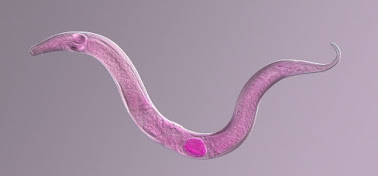
5 Cool Things About Nematodes

It’s September, and here at ARBICO, it’s Beneficial Nematode season. Every year we put our Beneficial Nematodes on sale at this time to enc...