Monday, March 7, 2022

Four-Legged Pest Control

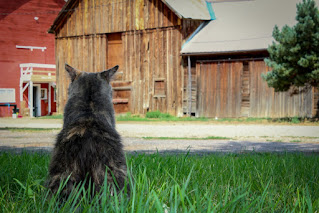
The back of a grey cat in foreground facing a barn.
 Pest Control is an issue that anyone who keeps  domestic animals is well aware of. Here at ARBICO we offer lots of natural and non-toxic ways to address all sorts of pests. But we do not carry the oldest method available – the cat. Ever since cats started hanging around with people at least 10,000 years ago, they have been feeding on insects and rodents that are drawn to humans and the animals we raise.

 Whether you have a big ole’ farm or a small homestead, you owe it to yourself and your animals to have a barn cat. If you have resisted the idea of cat ownership perhaps I can sway you with some of the good reasons to have one.

 First of all, let’s talk rodents: Everyone knows that cats go after mice; their predilection for hunting rodents is hard-wired in them and they are indefatigable in their efforts. Mice are not just gross, but they carry multiple nasty diseases that you don’t want introduced into your barn. Since keeping your animals healthy to maintain their value (and avoid vet fees) is arguably the most important part of raising livestock, rodent control is essential. Additionally, rodents can affect your bottom line if they decide that your livestock feed is a convenient meal. Feed is expensive and any loss to rodents can do real damage to that bottom line. The minimal cost of maintaining a couple of barn cats is definitely worth it for the protection they offer.

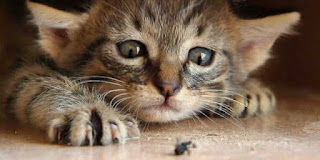
Close-up pf a grey striped cat trying to reach a bug.
Cats help keep insect numbers in check by hunting and eating them. While eating insects is not a vet-approved diet for a cat, they can generally do so with little or no trouble (learn more here). Which is a good thing, since a cat will chase down anything that flutters, crawls, flies, or skitters past it. Felines cannot clean up an infestation for you, but they may be able to keep numbers down enough to prevent one. And even one less fly is a blessing. According to this lady, flies are “sky raisins” to cats.

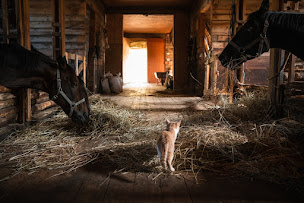
A tabby cat walking in the hay through horse stalls.
Barn cats are working animals, as opposed to family pets. They need to remain independent and tolerant of people, but not aggressive and hostile. A full-on feral cat will probably not make the best of barn cats and a housecat can’t be expected to do the work. You can sometimes bring a wild cat around to your way of thinking, but what you really need is a cat that is somewhere in between. Semi-wild if you will. Your best bet for acquiring this sort of cat is to adopt a feral one through an animal shelter. A feral cat that has been in a shelter will be at least somewhat conditioned to being around people and will have learned to see us as their food source. An even better adoption choice would be through a group that works with feral cats (this one focuses candidates for barn cats). A cat you receive from both kinds of places will have been fixed and vaccinated, greatly reducing the potential for disease as well as roaming and marking behavior.

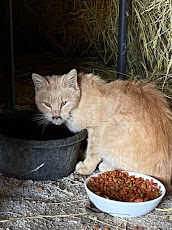
A tabby cat drinking from a black bucket with a blue bowl of food in front of it.
Acquiring a barn cat requires some commitment on your part. Although they are not pets, they are not wildlife either. You should be prepared to do what’s necessary to keep them healthy and fed. It may seem counter-intuitive to feed them if you want them to hunt mice and stuff, but it’s the thing to do. Not only is it compassionate, but you’ll also get better results from your little hunters. A well-fed cat will not only stick around, but it will also be able to spend its time patrolling its realm (aka recreational hunting) as opposed to the constant hunt for food which could lead them far away. 

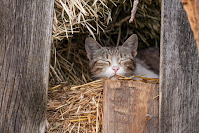
The face of grey and white cat sleeping in the hay.Along with feeding them, you should provide shelter as well. Like many of your other animals, they could be easy pickings for predators, so they will need a safe and cozy place for them to hunker down at night. Feed them at the end of the day in the location where you want them overnight and they will quickly learn where they should be at nightfall. In the morning, let them out when the chickens and everyone else goes out.

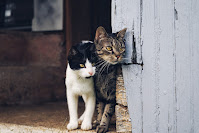
Two cats by a barn door. One is black and white and one is greyish brown.
There are a few factors to consider that will work to keep your felines happy and at home. First of all, you should  be in a rural, or at least semi-rural, area in order to keep your cats (and only your cats) on the job without interference. That being said, you may find a cat useful in town in a warehouse or nursery type of setup (with active monitoring). In truth, if your cats are spayed or neutered they will not be as attractive to or attracted by other cats. Secondly, when you adopt, you should take home a pair if you can. A cat that has a companion will be happier and more likely to stay put.

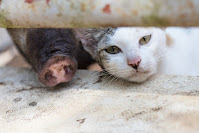
A white cat face and a pig's snot sticking out from a pen.
Bringing a barn cat into your world is an excellent way to give an animal a good life while keeping pests in check. They will love (maybe, they’re cats after all) and appreciate you for the chance, but your other animals will like them there as well. They like the
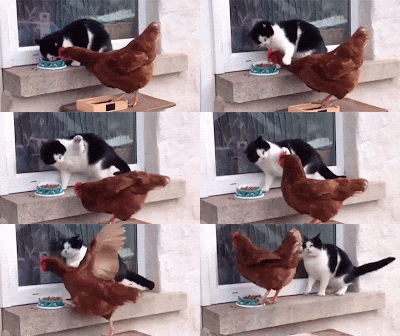
companionship of cats as much as people do - except for chickens. Chickens and cats have to learn to get along.
A balck and white cat and a chicken fighting over a bowl of food.

There is a surprising amount of information out there on barn cats. If this blog has gotten you to think about them, I encourage you do a quick search to get more information.

  Submitted by Pam


.


Monday, February 28, 2022

Could Algae Save The World?

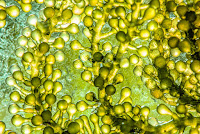
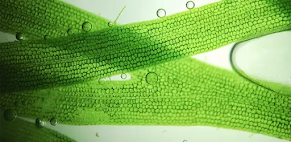
A strand of seaweed in a beaker.
At this point in the 21st century, widespread pollution and climate change are existential problems for our species. Our planet will adapt and remain standing, but whether humans will be part of it is the big question. However, as with many of the big questions, Nature has supplied us with an answer. In this case, it’s algae. As the largest supplier of oxygen and a vital link in the food chain, algae in all its forms is crucial to life on earth but scientists are routinely discovering other ways that algae can help us humans. Algae is positioned to solve many of  our most pressing environmental issues, now we just have to make it happen.

Microalgae
In case you need a reminder: Algae is the overall term that covers the photosynthetic organisms of microalgae and macroalgae. Microalgae are the unicellular microscopic algae and are often referred to as phytoplankton. Macroalgae, on the other hand, are large-celled, plant-like forms known as seaweed. This whole subject can get very granular quickly, but here’s a quick little cheat sheet that gives more information.

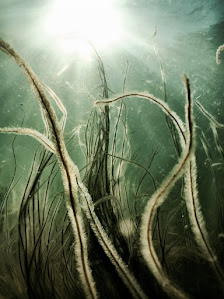
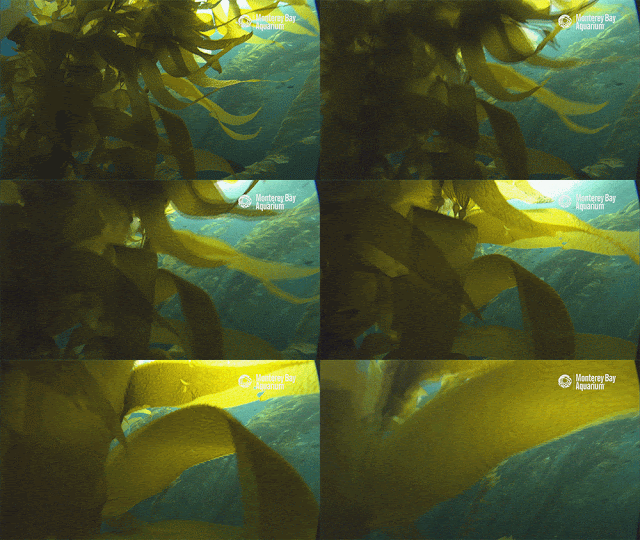
Strands of seaweed reaching for the light underwater. Photo by Naja Bertolt on Unsplash.

PETROLEUM:

Phytoplankton are constantly working their magic to photosynthesize the sun’s rays. In doing so, they store energy in the form of natural oils. These oils can be distilled into a biofuel that could replace all manner of transportation fuels from gasoline to jet fuel. Additionally, simple sugars are made available when algae is broken down in water and these can be fermented to make bioethanol. Using algae to replace petroleum as an energy source isn’t without its set-backs (see the pros and cons here), but just because the road may be bumpy does not mean we shouldn’t go down it.

PETROLEUM-BASED PRODUCTS:

A scientist holding a piece of algae close to the camera.
The same characteristics make algae uniquely positioned to replace petroleum as a fuel source also pertain to commercial products that contain petroleum. According to this article, almost anything made with petroleum can be made with algae. The number of everyday items that are petroleum-based  is staggering and includes things as diverse as toothpaste and upholstery (see more here). As we all know, our dependence on fossil fuels/petroleum is damaging to the environment, but it is also a destabilizing factor in many aspects of modern life. Simply put, algae could save us from the economic effects of political and environmental events in oil-producing regions. Algae can be cultivated anywhere there’s a water source, which would make this energy source more equally available across the world. 

PLASTICS:

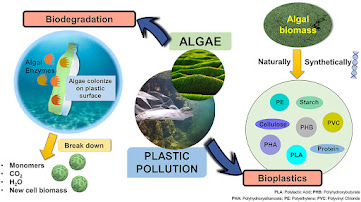
A chart showing how algae can be used to fight plastic pollution.
Plastic pollution is a glaringly obvious desecration of our environment (particularly the marine ecosystems) and a serious danger to the health and wellbeing of every creature on the food chain of this planet. Algae is able to tackle this mega-problem in two ways: It can be used to degrade plastic and it can be used to make bioplastics. Algae has many properties that make it ideal for bioplastic production, including its low lignin content and abundant carbohydrates. Also, algae is 100% biodegradable, so the bioplastic it makes goes back to the earth to begin the cycle anew. As far as breaking down plastic goes, scientists have discovered plastic can be degraded by the toxin systems and and enzymes synthesized by algae. Not only will the algae breakdown the plastic, but it will also use the plastic polymers as a carbon source. The possibilities are heartening; learn more here.

FERTILIZERS:

Microscopic view of microalgae.
The AlgaEnergy facility with algae bioreactors in the foreground.
AlgaEnergy facilities
Fertilizers are some of the greatest polluters and contributors to cancer on our planet and the amount used globally every year is stupefying – it’s in the 100s of millions of tons (details here). Moving away from harmful synthetic fertilizers towards plant-based ones shouldn’t be a hard sell as kelp has been used for who-knows-how-many thousands of years as a fertilizer. But many people need to be brought around by some sort of innovation. This is where one of our partners, AlgaEnergy, comes in. Kelp fertilizers are traditionally created by harvesting kelp from the sea and then building and maintaining kelp beds. AlgaEnergy has used technology to create a way to move from that traditional form of macroalgae-based fertilizer to a microalgae-based one. They have a facility in Spain that captures the CO2 emissions from a power plant and use that energy to cultivate microalgae. By piggybacking on another industry, they reduce the amount of energy resources they would have used to create their products and they gobble up CO2 emissions would otherwise be released into the atmosphere. Their process is technologically advanced, environmentally sound, and completely sustainable. In the interest of space I have condensed all they do; I encourage you to go to their site (here) to learn more. And I also encourage you to try their microalgae products, Surety® MA and Surety® Soil.

A journey through the kelp forest.

Although the possibilities for algae are nearly limitless, there is still a lot of research and development to be done for us to be able to appreciate all it can do. Nevertheless, the advantages are so extensive (here are just 10) that we need to press forward and come up with the needed solutions, like AlgaEnergy has done. 

Submitted by Pam


Tuesday, February 8, 2022

What's This Bug? The Ice Crawler.

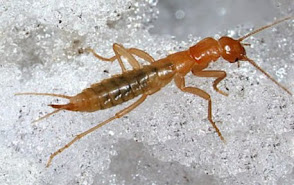
A brown Ice Crawler on grey ice.
As I write this, winter storms are creating misery across huge portions of the US. There’s just so much snow and ice a person can take. But that is not the case with the Ice Crawler (aka Rock Crawler, Ice Bug) of the Grylloblattodea order. These critically endangered insects are small insects (about an inch) that live in cold and snowy mountainous places like ice fields, glaciers, subterranean lava tubes, and ice caves.

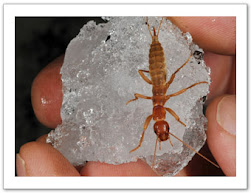
A female on a clump of ice in someone's hand. You an see her ovipostor at the rear of her body.
Ice Crawlers are only found in western North America and Canada and in northeast Asia. In these areas this plucky insect has carved out a place for itself where they have less risk of being preyed upon and are not competing with other insects. They thrive in temperatures that hover around the freezing mark, but they will freeze to death if it gets much lower. Conversely, temperatures much above that point will kill them as well. In fact, merely holding them in a warm hand too long can kill them. They have adapted to living on mountains as temperatures there tend to be more stable than in lower altitudes. And if it gets too cold, they will go underground or under the snow (an insect igloo). Their preferred temperature range is too cold for most insects; the ones that venture there quickly die. There are also fewer of the common predators (birds, small mammals) up there, but if one comes too close they will retreat into their underground lairs. In addition to all these adaptions, Ice Crawlers have adopted a nocturnal lifestyle to further enhance their survival chances.

A Mount Spokane Ice Crawler foraging in the ground.
If high altitude landscapes offer specific survival benefits for Ice Crawlers, they also offer little in the way of food. Ice Crawler has adapted to this in a very basic way – they’ll pretty much eat anything they come across. It is believed that they feed on aerial plankton, but they also scavenge under rocks for decaying plant
matter or mosses. Additionally, they will snap up any hapless flies or moths that made the fatal error of visiting the snowy realms. 

Ice Crawlers have an unusually long lifespan for an insect. Long lives are common amongst cold weather dwellers, and for the Ice Crawler it can take as much as 7 years to complete a life cycle from egg to adult. Add to that the year or so that an adult can live, and you got yourself the Methuselah of the insect world. 

Professor Sean Schoville at work on a mountaintop.
Unfortunately, all these adaptations that have allowed the Ice Crawler to survive in an environment that is inhospitable to most other living things is what is putting their species at risk for extinction. Just as amphibian health reflects the condition of the watery world they live in; Ice Crawlers reflect the ice that’s their home. As we lose ice to climate change, their numbers are falling. Scientists know that much, but there is still a lot to learn about these shy insects and the fear is that we are losing populations before we even know they existed. Luckily, we have some scientists who are willing to spend hours sitting on ice to get the needed data. Sean Schoville, a professor at the University of Wisconsin deserves a special shout-out .He has gone the extra mile (literally) to discover as much as he can about these little creatures. If you want to learn more about what he does, check out this fun article written by an adventurous man who joined him on an expedition (there are some great pictures). 


Submitted by Pam


Friday, January 28, 2022

Russian Dacha Farming

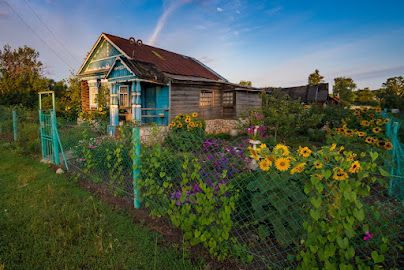
A house painted blue in front to the left with a garden on the right that has sunflowers in front.
This is the time of year when gardeners pour over seed catalogs and haunt home and landscape websites as they decide what their 2022 gardens will look like. If you’re still unsure of what you want to do, I’d like to suggest you take some inspiration from Russian dacha farms.

 For thousands of years Russians have been providing food for their tables from small, carefully tended gardens. The immense vastness of Russia both creates and solves the problem of getting fresh food to people. Remote settlements have never been able to depend on food deliveries, but they do have plenty of land. So, they plant. This long tradition of hard work and self-reliance has created a strong tie to the land, a peasant culture, that continues today amongst both rural and urban Russians. 

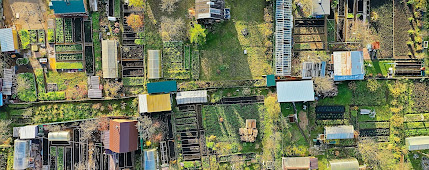
A drone view of a dacha community
The model for these garden plots is called dacha gardening. Dachas have been a  part of Russian life for centuries. At one time, they were mostly rural estates of nobleman and political elites looking to escape city summers. But, after the after the traumas of World War I and the Bolshevik Revolution, there were serious food shortages and the people turned back to what they knew – tending the land. The idea of a dacha changed from an elitist retreat to a small plot of land for growing a garden, with living structures that were initially very basic. Millions of city-dwelling Russians began commuting back and forth to their dacha gardens in the spring and summer. The whole custom has worked so well that it continues to this day. 

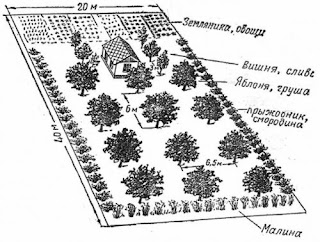
A drawing of the guidelines of a plot. (Source: Revue Jardins aupres des Oussas’bas, Moscow, April 1959, p.13)
The rise of dacha gardens in the early part of the 20th century was initially an informal and organic response to food insecurity, but the state soon stepped in to regulate the allotments. It was not just the land that was regulated, but also what was planted and how it was laid out. This may seem a bit over-reaching regulation-wise (something the Soviets were well known for), but in this case the model they presented was essentially what had been working for centuries. A traditionally laid out Dacha garden perfectly encapsulates not just Russian food culture but includes crops that can work within the short growing season to provide exactly what is needed and desired.

A shirtless Russian man leaning on a shovel by a smoking fire. He is surrounded by gardens and there is a blue house in the background.
Classic dacha gardens are an average of 600 square meters (or around 6458 square feet) in size and will contain cucumbers, tomatoes, beets, radishes, carrots, garlic, dill, horseradish and potatoes. Potatoes are especially important for a couple of reasons; they are undeniably nutritious, but they are also what old-fashioned vodka comes from (to this day, it is estimated that more than 90% of Russia’s potatoes come from small farms). Berries are also grown, with currants, gooseberries and strawberries being popular. Another essential ingredient in a dacha garden are the fruit trees, often placed around the plot to form growing fences. A wide variety of fruit trees are cultivated, including apple, pear, cherry and plum. And don’t forget the flowers – particularly those like the sunflower that offer more than just beauty. These crops create a beautiful garden that promises a well-rounded, nutritious and flavorful harvest. And, of course, it is all organic.

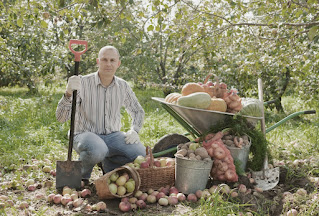
A bald man kneeling with a shovel by a wheelbarrow. There are a variety of fruits and vegetables around him.
There are two additional elements that define a traditional dacha garden but may not play well here in the US (for reasons I don’t believe I need to elaborate on) – the bounty of the harvest is shared with others and all the work is done by hand with tools (no animals or machinery). Throughout the Soviet period, how much people grew and how much they shared was highly regulated, but the mindset to share has long been a part of that cultural attachment to community and the land. Likewise, the practice of only using hand tools began in the past but continues today. It may have started out of the necessity of poverty or lack of access to resources, but nowadays people seek out the physicality of it all and there is pride in producing just what you and your handful of tools can coax from the earth. Again, this reflects that the ancient peasant culture is alive and well today.

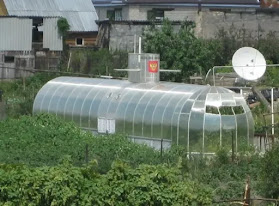
A greenhouse shaped like a Russian submarine in a garden plot. There is a satellite dish in the background.
Dacha gardens are a uniquely Russian creation that are like mini snapshots of their rich culture. After all, where else would you find a greenhouse shaped like a Russian submarine? If this blog has stirred your interest, there is a lot of information out there about them. You can research them as a food cultivation subject, or from a socio-political or historical viewpoint. There are probably other angles as well, but you get the idea. And if you are interested in what's  happening currently, here is a nice little video that shows what a dacha garden looks like for a family today, and this article is a first-person account of a dacha community that was written last summer.

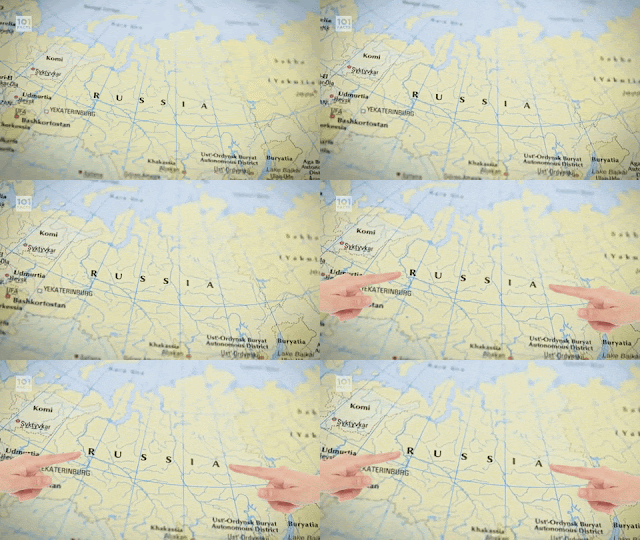
To fingers pointing at a map of Russia.

Submitted by Pam

Monday, January 10, 2022

The WALT Of Winter Houseplant Care

Looking out a window at a wintry scene from a room full of houseplants.
Houseplants face a particular set of problems in winter that can often take a serious toll on them. This does not have to be the case, however, if you keep an eye on certain key factors that I have dubbed “WALT”. This acronym stands for Water, Air, Light and Temperature. Let’s look at each one in turn:

Water – According to this article, overwatering is the most common problem houseplants face in winter (although, arguably, this could be the same problem year-round). The fact is that plants need less water in winter as they enter a slow growth phase or go dormant entirely. In most cases, you should let the plant dry out thoroughly before watering.  The dry air of winter will cause surface soil to dry out faster than other times of the year, so if you use your finger to check soil moisture be sure to push it in an inch or so. While the surface soil may dry quickly, it takes longer for the whole plant to dry out, so plan your watering with that in mind. One more thing: If you are using tap water and it’s very cold in winter, let it warm up before using. Frigid water is as shocking to a plant as it to us.

A woman leaning over a white humidifier spewing mist.

Air  – The same dry winter air that brutalizes your skin can be a problem for your houseplants. When you consider that most homes in winter have a relative humidity between 5-10% and houseplants thrive in 40-50%, the problem is clear.  If your plants are losing their leaves, or they’re yellowing or browning, or they’re wilting and drooping, low humidity may be the cause. There are many ways to increase the humidity in a house (here are several), and none of them are complicated or expensive. At the very least, give your plants a good misting as often as you can (which can especially help when/if you reduce waterings) It behooves you to keep on top of this issue as many pest insects, like Spider Mites, thrive in low humidity.
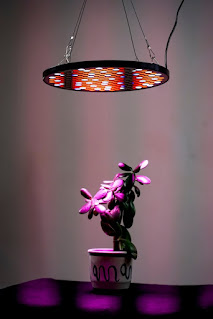
A single potted succulent under a round light with a checkerboard pattern making purple light.

Light  – There is one fact about winter that there is no getting around – there is simply less sun. Not only are the sun’s UV rays less strong, but it also shines for fewer hours and that sunshine comes in at a lower angle. What this means for your plants is that they may need to be moved to an area that has southern/ western exposure (these areas stay sunny the longest), or they may need supplemental light. But before you invest in lighting you should (if possible) turn plants about a ¼ way around each time you water so all sides get exposure, make sure all windows are clean enough to let every ray pass through, and wipe down leaves so they can soak up every bit of that sun. Most houseplants slow their grow in winter, but if you notice growth with skinny stems and scraggly-looking  leaves your plants are hurting for sun. All in all, the good news here is that low sunlight will (most likely) not kill a plant outright; they can adjust, they just won’t flourish.
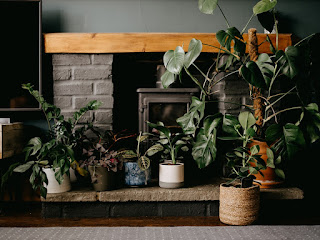
An assortment of potted plants on a hearth in front of a fireplace.

Temperature – That warm blast of air you feel when you step inside on a frosty winter day may feel wonderful to you, but chances are your plants feel differently. Houseplants just don’t like temperature fluctuations – drafts, hot air vents, a door that frequently opens to the outside, fireplaces, and radiators are all stressful to them. Plants are just not built to handle rapid temperature changes. Take a look around your house and move any plants that may be in a drafty situation. If these changes disrupt your interior design or feng shui, remember that this is only a short-term repositioning. If you have your plants positioned properly and keep your daytime temperatures between 65 °F and 75° and nighttime temperatures above 50°F, your plants should be fine.  

Two plants in a windowsill with abstract shapes falling outside
Many of the above problems can be monitored by using one of the two Active Air meters that ARBICO Organics carries. The 2-way meter monitors moisture and pH levels, while the 3-way meter checks moisture, light and pH. Please visit our website at www.arbico-organics for more information on other products that can help your houseplants and more.


Take Care

Submitted by Pam


Monday, December 20, 2021

Have Yourself A Nostalgic Little Christmas

A Santa dressed in blue holding a white kitten. He is in the foreground, out of focus yellow lights are in the background.
According to people who keep track of these sorts of things, a big trend this Christmas is nostalgia.
Decorating and celebrating in retro ways seems to offer the modern reveler some comfort in the storm of current events. What better way to escape the inflation, social upheaval and pandemic that has colored all our lives than by retreating into an imagined time of good old days? In this blog, I have put together a smattering of Christmas joy ideas from the 1950s and 60s. I’ve chosen those decades because, frankly, I think they’re the most fun to replicate. It may be late in the season to do all this, but maybe do it next year, or pick a few
elements to embrace. 

A box of Shiny Bright ornaments, the original glass ornaments.
A photo from the 50s - it shows a woman in a blue dress and black heels in front of a heavily itself tree with lots of presents under it.
The Tree - You’ll need to get the tree right for a proper vintage Christmas. You’ll want  plenty of brightly colored glass ornaments (maybe even some bubble lights), and you’ll want to make some popcorn or paper chain garlands. If you can swing a toy train to put under the tree, that would be ideal. And of course, a must-have is tinsel – and gobs of it. Unfortunately, the modern tinsel made of mylar doesn’t drape as well as the old-school kind that was made of lead. They outlawed that stuff back in 1972. You could go for an aluminum tree; their heyday was from the very end of the 50’s until the mid-60s  (see my blog from last year for their story). If you go with the metal tree, you may as well commit to a color wheel as well (also super-fun).
Décor -  Artificial snow spray was patented in 1953, and it was a big hit immediately.  After you spray some of this all over your tree, give you windows a good coating.. A word of warning, though: That stuff can be hard to get off surfaces. 

Many different types of nutcrackers.
Nutcrackers became a Christmas thing during the 50s. You could add one to your table or put it under the tree with the train, but really they can be as little or as big as you like and go almost anywhere. 

Although people don’t send out Christmas cards like they used to, you should prominently display any that you get. 

Rudolph the Red-Nosed Reindeer first aired in 1964, so that little reindeer was very much a part of pop culture at the time. Any decorations that he's a part of are good.

Santas on rockets vintage ornaments
Starting in the late 50s, the US and Soviet Union were in a Space Race that culminating with the moon landing in 1969. Anything that was outer space or astronaut themed was popular and this was when science fiction came into its own as an entertainment genre. So, add anything space-y to your theme to tap into the excitement that all the new science brought. Here’s an article on how to go full Space Age on Christmas.

A Santa doll with a thousand-yard stare
Santas, you need Santas. Santa ornaments, tabletop Santas, Santa door-hangings, Santa linens, Santa dolls – all kinds of Santas were popular throughout the 50s and 60s. And some of them were pretty creepy. For more Santa decor (some creepy, some not), check these out.A tabletop plug-in ceramic Christmas tree.

Kitsch is king in vintage decorations, so you have a great deal of leeway in choosing. Think rocking horses, Christmas villages, wreaths, tree toppers and wall hangings. All of these are available retro-style, extra-cheesy optional. Here’s some examples.

Food - If you choose to do an authentic mid-century Christmas, you should commit to mid-century tastes. So, out with the paleo or keto routine and in with relish trays, Christmas cookies,  elaborate cakes and even more elaborate appetizers, Jell-O molds and creamed onions. Or maybe not – here’s some menus to get inspired by. And don't forget the nut tray - it's the perfect accessory to your nutcracker because back in the day people would actually use them to crack nuts.

A Christmas gathering where they are offering eggnog from a punch bowl to the grandma.

Drink - I don’t want to portray everyone as drinkers in the 50s and 60s, but the culture of cocktails was strong. Cocktail parties and boozy poker nights were common, so a proper host or hostess had a well-stocked bar. But no IPAs or flavored vodkas – we’re talking scotch, vermouth and gin. And whatever it is they need to make a Pink Gin Fizz. And there was eggnog, of course. This was a special favorite of those that “only drank on Christmas”. Holiday punch (spiked or not) was also popular. Here are some excellent cocktail suggestions that would be right at home at any mid-century gathering. 

Dress Code -  After you’ve dolled up your tree and house, get yourself all fancy. In the 50s, one always dressed up for Christmas. So, gentlemen get the tie out and ladies, put your heels on (I think you can skip the girdle, though).

In a scene from It's A Wonderful Life, Donna Reed and one of the children are putting tinsel on a tree.

Music - Although it should go without saying, I'm saying it anyway - no retro Christmas would be complete without a soundtrack of  great mid-century Christmas crooners. Bing Crosby, Eartha Kitt, Perry Como and Dean Martin are some of my favorites but there is an abundance of goodness in Christmas music of the era.


Happy Holidays!

Submitted by Pam


Monday, December 6, 2021

What's This Bug? The Antlered Wasp.

Closeup of the Antlered Wasp on a green background
It’s Christmastime, and to mark the season I bring you the Antlered Wasp (Eucharitidae).  What these
guys lack in size (they’re less than an inch), they make up for with their large and dramatic antennae. These insects are known as Antlered Wasps, because with a little imagination, they could be itty bitty reindeer (although some people see their “antlers” as punkish mohawks). And while it’s entertaining to view them as tiny reindeer, you will not come across one of these wasps where reindeer reign, as they are tropical insects.

A tint Antlered Wasp on a person's fingertip
Antlered Wasps, like many other wasps, practice parasitism as a part of their life cycle. And they only parasitize ants, an insect that is often the aggressor in the insect world and not the victim. To put an even finer point on it, each specie (there are over 400 species) specializes in a particular species of ant. Here is a list of some of those pairings.

Child-rearing in nature is extremely variable, with some species providing long-term, hands-on care and other species leaving their offspring to fend for themselves. Antlered Wasps are firmly in the latter category. When the female is  ready to lay her eggs, she chooses a plant that is a favorite of ants, or one with an ant colony nearby. She lays her eggs and moves on; after a week to ten days the larvae will hatch. The larvae will then spend several days lolling about on the plant, getting their energy and nerve up, and (presumably) planning their strategy for the next step. The goal of the larvae is to infiltrate the ant colony, so the next step is to find an ant to take it into the nest. For this attachment to happen, most 
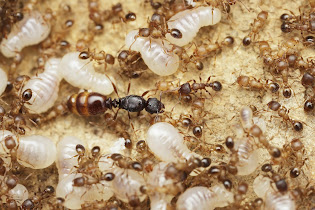
A ant queen on her nest with eggs and other offspring
Ant Queen and her offspring
Eucharitid wasp larvae depend on rubbing up against an ant and fastening themselves to it. If there are no available ants around, the wasp larvae will use an intermediary host that can get them up close enough to grab an ant. However, according to this article, the Kapala species in the Eucharitidae family has developed jumping abilities. Apparently, they will stand up on the leaf and jump down onto a passing ant. High diving larvae – nature is amazing.

Once a larva has found its Trojan Horse/ant host, it will ride it right into the ant colony. Ants are notoriously and intensely protective of their nests, so how do these larvae get away with this? It seems they have developed the ability to mimic the odor of the ant larvae. Scientists have observed that ants will avoid the adult wasps, a clear indicator that they view them as a threat. But, thanks to the aromatic camouflage, ants seem to not recognize the wasp larvae as different from theirs. 

Closeup of an ant tending to a newborn wasp.
Ant tending to a newborn wasp
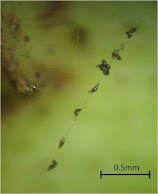
Small black larvae moving along a nearly invisible filament.
Wasp larvae on the move
The camouflaged wasp larva makes its way, with the unwitting help of the ants, deep into the ant colony’s inner sanctum – the brood chamber. This may be the easiest part of their mission, as the wasp simply has to find an ant larva to attach to. Since a queen ant can lay up to 300,000 eggs a day, there is an abundance of potential hosts for the little wasp. Once attached, the wasp larva will begin feeding on its ant counterpart, but it eats just enough to keep them both going until the ant pupates. Once this happens, the wasp will finish off its host. The wasp uses this last bit of ant fuel to finish growing into an adult and will then emerge from its host. At this point, still helpful and unwitting, ants will feed and groom the newborn as they do their own. Eventually, the wasp will fly out of the colony and mate, usually right above the ant nest. 

Closeup of an Antlered Wasp facing the camera

Cartoon ants shouting "Arghh!" fearfullyThe life cycle of the Antlered Wasp could be adapted into a Mission Impossible type action movie. And be as unbelievable. Except this is an incredible true story.

Take Care. 
Submitted by Pam

Featured Post

5 Simple Ways To Celebrate The Summer Solstice

The summer solstice will make its yearly appearance on Sunday, June 21, 2026. It is the longest day of the year and considered by many to be...