Showing posts with label Arizona. Show all posts

Wednesday, October 21, 2020

Yes, We Have Trees In Our Desert


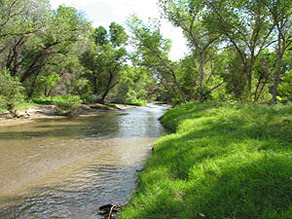
Large shade trees over grass in Riverfront Park in Oro Valley, AZ
The biggest misconception non-desert dwellers have about our ecosystem is that we don't have trees. Or that our “trees” are saguaros. Both couldn’t be more untrue: We have a huge number of trees that grow happily here and, while we love our saguaros, they are the grandfathers of the desert cacti and not trees at all. The Sonoran Desert where I live is a harsh and arid place, but by no means the harshest or most arid of deserts (see here for those). The part of the Sonoran Desert I live in (Tucson) is not even the most extreme area in the region. Here we have some elevation, deep underground water resources, and, on occasion, are able to pull moisture from the Sea of Cortez and even the Gulf of Mexico. All of which means this ecosystem is able to maintain healthy trees and tree diversity.

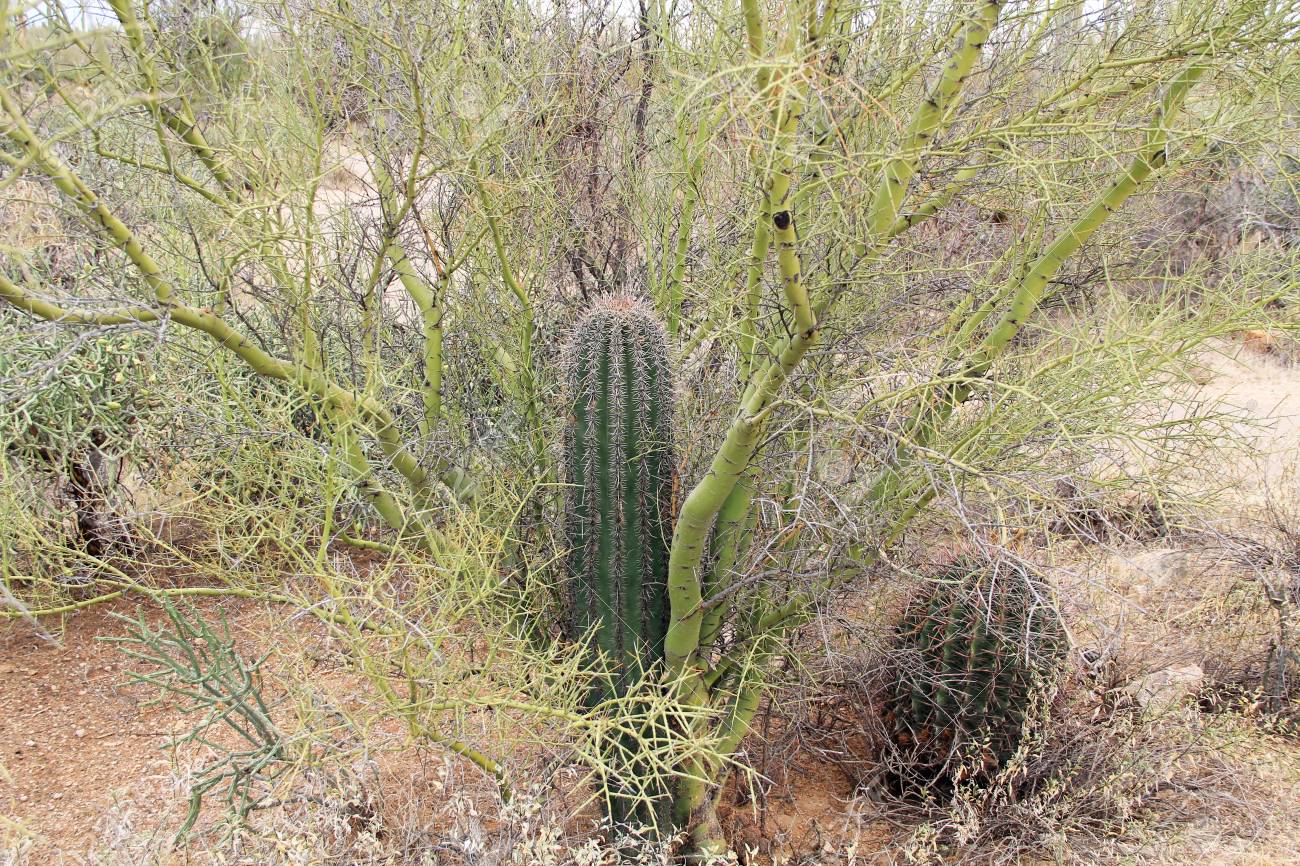
A Palo Verde serving as a nursery tree with a young Saguaro growing up amongst its branches.
Besides their aesthetic appeal and the alluring shade they offer to people, desert trees are entire ecosystems unto themselves. What goes on in their understory is a huge part of their story. Birds, small mammals, reptiles, arachnids, baby plants, and cacti all depend on the shade and protective cover of nursery trees. The shade of the branches of and the water-holding power of roots create a cool hide-away from the brutal sun. It is the perfect place for something small to grow in until it is strong enough to step out into the sun. The very-sharp spikes on many of these trees also adds a layer of protection from predators for small animals. Even the most determined of coyotes will hesitate before poking his nose into such a thorny situation. Without our native trees to nurture our wildlife, many species simply couldn’t survive. Here’s more on this.

A Mesquite tree with branches full of yellow polllen and pollen forming a carpet of yellow on the ground. Photo by Caroline Reilly.
Africa may have its Big 5 of animals, but here we have a big 5 of desert trees: Palo Verde, Mesquite, Catclaw Acacia, Desert Willow, and Desert Ironwood.  There are other natives, but these, in their various varieties, are the most prolific in our area. Palo Verdes are our state tree; they can grow up to 30 feet and live for hundreds of years. Their distinctive green bark provides their name; it means “green stick” in Spanish. Mesquites are the most common tree in the Tucson valley. They are fire-resistant and provide food from their seedpods for people, birds, and animals. They also have abundant golden pollen that can be mighty troublesome for allergy sufferers. Catclaw (aka Devil’s Claw) Acacia, (as the name implies), have imposing curved thorns that most creatures steer clear off. Birds and bees, however, love these trees and acacia honey is especially delicious. Desert Willows are not related to true willows but do have long,
A close-up of a Catclaw Acacia branch showing its curved thornes.
thin branches with graceful, drooping leaves like willows have. These trees have multiple trunks and fragrant, pink trumpet-shaped flowers that are a favorite of hummingbirds. Desert Ironwoods are the slowest-growing of our Big 5 group. They are also the tallest (up to 45 ft.) and longest-lived (as much as 1,500 years). They are essential to our native environment as nursery trees, but they also have deep cultural ties to our indigenous people. The dark, finely textured and dense wood of this tree has been used for artistic, utilitarian, and ceremonial purposes for untold hundreds of years. There is even an Ironwood Forest
An Ironwood tree with pinkish blooms surrounded by smaller mesquite trees.
National Monument in our state, a good portion of which is on Tohono O’Odham tribal lands to the west/northwest of Tucson. 

Many of the trees you may see in Tucson are not originally from here but have proven popular because they do so well in our sunny climate. These include palms (which you see everywhere), olive trees, citrus of all kinds, fig-trees, Texas Mountain Laurels, Vitex/Chaste trees, Pistache trees, guava, and even Southern Live Oaks. One non-native that all Tucson kids seem to love is the Pomegranate tree. As soon as kids find out about the juicy goodness that is their fruit, no neighbor’s tree is safe. Most mothers I know (myself included) have had their offspring come home with smeary, red faces and hopelessly stained T-shirts. 

A very large tree called Phina's tree towering over a 6 story building.
Another outsider species of note is the Eucalyptus tree. These aromatic Australian natives are fast-growing and undemanding water-wise and can grow to be 80 ft. tall and more. In fact, the tallest tree in the city is a Red Gum Eucalyptus near downtown Tucson known as Phina’s tree. It is between 110 and 120 feet tall and has a charming backstory (read more here). Great trees they may be, but the Eucalyptus has several things working against it: They have relatively weak limbs, which can become projectiles on a windy day. This can be especially dangerous during our violent monsoon storms. And then there is their immense size - in a neighborhood of closely placed homes they can be problematic. And, due to their high oil content, they are quite flammable. Even though they have fallen out of favor for these reasons, they were once a popular choice and there is still a lot to be found in older neighborhoods. 
Olive trees lining the walkways at the University of Arizona. There is a man in red shorts running in the foreground.
One last group of Tucson trees I’d like to mention make their home on the University of Arizona campus. Known as the Heritage Trees, there are 8,000 of them from 400 species around the world. Some of these trees date back to around the time that the U of A was founded in 1885. There is even a “Moon Tree”, an American sycamore that was grown from seeds that went to the moon with the Apollo 14 astronauts in 1971. I have always loved the trees at the U of A and enjoyed them as an undergrad, graduate student, and employee.

A moving images of trees and cacti along a pathway.
Even though we have a lot of trees around here, we can always use more to combat climate change and habitat loss. To that end, Mayor Regina Romero has started a Tucson Million Trees campaign. The aim is to get a million trees in the ground by 2030.

I’m sure there are some notable, or note-worthy, trees that I have missed. If so, I think that makes my point that there really are a lot of trees here in our desert. And they add so much to our lives – here is an excellent article (with fabulous pictures) about all they do.


Take Care.

Submitted by Pam


Wednesday, December 4, 2019

World Soil Day - Build Soil. Help The World.

A drawing of a black rectangle with a green leafed plant growing in it. Some of the soil and leaves are blowing away on the right.Last Thursday Americans celebrated Thanksgiving, which is meant to be a day of gratitude. (Okay, you don’t have to be grateful for mean old Uncle Cyrus). But, as we were celebrating, I believe it is safe to say that very few people thought to be thankful for the ground they were standing on. Or for the soil that produced their annual feast. World Soil Day hopes to change that by building awareness of the precarious position of our soil in the world today.

Red/brown dirt ravines with green forest in the background - soil erosion from deforestation


World Soil Day is an annual event put on by the United Nations. It is observed worldwide on December 5th with outreach, functions and even contests. The basic purpose of this campaign is to raise awareness of and advocate for healthy soil. Every year there is a theme that relates to soil; last year it was soil pollution and this year it is soil erosion. All around the world, our soil is eroding at an alarming rate. According to the UN, one soccer field worth of soil is lost every five seconds and it is not an exaggeration to say that the very food we rely on is being threatened. Climate change (which is an even larger issue) plays a part in increased soil erosion, but an awareness of the importance of healthy soil and good soil management can make a real difference on a micro level. Big changes can be made in small steps. Here is a cool little cartoon on soil health from the World Soil Day site.

Yellow-orange flames in front of three men in turbans and white clothing. There are trees in the background.
Slash and burn farming in India
Aside from wind, water and other climatic factors, in many parts of the world soil erosion and degradation (when what soil is left is no good) is the result of human activity such as ecologically damaging farming methods like slash and burn agriculture. However, healthy soil loss from overgrazing, deforestation, mining and pollution is found everywhere. Combine all that with the extreme storms, drought and flooding that come from climate change and the need to do something is urgent. India, home to over a billion people, is already in crisis. Their largely poor and agrarian population is struggling and every year they are hit with intense monsoons and flooding. While the rains have always been a part of Indian life, they are becoming more and more extreme. The US is not immune to soil problems; this  enlightening article explains why we are running out of soil (including a super-interesting tidbit on the Roman Empire and their soil issues).

The Grand Canyon - the valley is purple-hued with a river running through it. The walls are yellowish. There are rocks and bushes in the foreground.
Here in Arizona, we have the premier example of water-caused soil erosionthe Grand Canyon. The canyon may have taken eons to be created, but we have all seen mini versions of it in our yards after heavy rains. This is a particularly thorny problem here in southern Arizona, where a good portion of our soil contains a Caliche layer. Caliche is, quite literally, as hard as concrete and does not allow water to pass through it. Combine this with the intense storms that we get during our summer monsoons (they can be bad, but not as bad as those in India) and there goes the surface soil.

Aerial view of a giant dust cloud bearing down on housing tracts. Photo by Jason Ferguson
Haboob bearing down on Phoenix
Additionally, we have extremely dangerous and damaging haboobs (dust storms), which are an exceptionally dramatic display of soil erosion. I once had the misfortune of being caught up in one of these on the freeway between Phoenix and Tucson. I am not a person who scares easily, but the whole experience was truly terrifying. Beyond the windshield everything is just a weird tan-orange color and all you can do is hope you don’t run into something and that nothing runs into you. Experts say you should pull over and turn off your lights (and pray nothing finds you), but I just got off on the first exit I could. I found out later that three people had died in a multiple car accident just ahead of me. If I hadn’t made that turn, I would have been a participant in that. Here is a video that really shows what they’re like.

Two hands holding a plant in black dirt. In the background is a field-on the left it is brown and on the right it is green.Addressing soil health is often done best right from home. Here at ARBICO, we have been singing the healthy soil song for decades. We have gathered a great many excellent products that anyone can use in their yard or garden to encourage strong soil that’s rich in microbial life. You could begin with a mineral (or more than one)  like Soil Replenish (Elemite), Andesite, Glacial Rock Dust or Harvest Gold Premium Soil Conditioner (Silica). To add nutrients and jump-start your soil biology, you can add items such as Fulzyme SP, Earth Alive Soil Activator, and Neptune’s Harvest Humate Concentrate. Or you could go the one-stop-shop route and get our Healthy Soil Recipe or John & Bob’s Clay & Hard Soil Kit (excellent for Arizonans). These are just a brief sampling of what we have to offer in the soil building arena, there is much more in our Soil Amendments, Micronutrients & Biostimulants category..

Short clip from the Food and Agriculture Division of the United Nations. The text reads, "Over 33% of the Earth's soils are already degraded and over 90% could become degraded by 2050".
If you are unable to contribute in changing the soil around you, I encourage you to consider recycling your green waste. And if you’re unsure of what to do with it once you’ve collected it, here is my blog with suggestions for that. If you are interested in reading more on soil building and/or soil in general, here is a link to some of our blogs that you may enjoy. Now, go out and get your hands dirty – and help the world!

                                                                                                                               Submitted by Pam

Friday, July 26, 2019

A River's Story

A brown-grey river running between green banks and trees
The Santa Cruz River 2019
Many of the great cities of the world (London, New York, Paris) have rivers that run through them and are the throbbing hearts of their existence. Here in Tucson we also have a river, the Santa Cruz, which holds enormous historical, cultural, environmental and identity value to Southern Arizona. However, its heartbeat is erratic at best. Some of the reasons for this are natural, while others echo problems that rivers face around the globe: overuse and a changing environment. The Santa Cruz also has to deal with the Mexico-US border, a man-made obstacle that our little river has to contend with just like its monster-sized, better known neighbors to the east and west – the Rio Grande and the Colorado rivers.

Quirky is an excellent adjective to use when describing the Santa Cruz. It is certainly fitting when one looks at how and where it flows during its 184 mile journey. It starts in southeastern Arizona and heads south into modern-day Mexico. Once there, it ambles around for about 12 miles and then makes a U-turn and heads north and back into the US. This route is one that many Americans generally take (go to Mexico, wander around and come right back), but it is unusual for a river. There are very few rivers that make a south to north U-turn and the Santa Cruz is the only river in the US to cross the international border twice. Here is a map that shows what it’s doing around the border.

An old black & white picture of a man standing by an old Hohokam canal. Photo from AZ Historical Society 1907
A Hohokam canal incorporated into a "new" canal in 1907.
Tucson is one of the longest continually inhabited places in North America and, like other riverside cities and towns, it was the river that drew them here and nourished them. The Hohokam were here 4,000 years before any Europeans and built massive and sophisticated irrigation systems to harness the water of the Santa Cruz. Sometime between 1350 and 1450, the archaeological record of the Hohokam disappears; but their waterworks lived on and were cleaned out and used by others for hundreds of years. The Tohono O’Odham of today are their descendants and they carry on the traditional stewardship of the land and water.

White and tan Spanish mission church- San Xavier, Tucson, AZ
The White Dove of the Desert
Starting in the first half of the 16th century, Spanish Conquistadors began marching around Arizona looking for lost cities of gold and other treasures. None of them stuck around, though; the landscape and natives being equally unfamiliar and hostile to them. It wasn’t until the last decade of the 1600s that an outsider came to stay, Father Eusebio Francisco Kino. He established missions in the native settlements along the Santa Cruz at Tumacácori and San Xavier del Bac. The church at San Xavier was not completed until after Father Kino’s death but it stands as a breathtaking tribute to those who founded, worked and still work the mission. While the Tumacácori is now a national park, San Xavier remains a greatly treasured and carefully guarded part of everyday Tohono O’odham life.

And now back to the quirky factor: how Tucson was “founded” by an Irishman. In 1775, a Dublin-born man named Hugh O’Conor rode into town. A Colonel in the Spanish army, Hugh was tasked with finding a suitable spot for a new outpost. He chose a spot under Sentinel Peak that native people had inhabited for 1,000s of years and declared they would build a presidio there. They did and the walls are still there - smack dab in the middle of downtown Tucson, which has made for some interesting time juxtaposition moments when researchers dig among office workers. His original proclamation still resides at the National Archives of Mexico.

Old black and white picture of two houses by a lake. AZ Historical Society 1888
Silver Lake, Tucson 1888
Fast forward to the 1850s, when yet another set of newcomers decided to claim and change the habitat around the Santa Cruz. Virginians William and Alfred Rowlett build a dam downstream from Sentinel Peak. Known as Silver Lake, by the 1880s, this lake covered several acres and hosted numerous cultural and recreational activities. The family type entertainment value began to wane toward the end of the decade as a rougher element began to move in - this was, after all, the height of the cowboy-gunslinger era in the Southwest. A series of floods had damaged and, then completely wiped out, the dam by 1900. Today, on the corner of Silverlake and Mission roads, you can find the Pima County Jail.

A sandy-colored dry riverbed dotted with small green bushes. 
An empty Santa Cruz
A large, black mushroom shaped cloud dumping water on an AZ city. Monsoon 7-17-14. Photo by L. Markley
Not a nuclear explosion, just a monsoon in AZ
The turn of the century also meant a turn in the health of the Santa Cruz. By the 1940s, it had run dry due to overuse and, after that, the only time people would see water in it was during our monsoons. Summer monsoons and the floods that come with them have always been a necessary and normal part of the life of the river. But, as more water has been diverted from it and natural drainage systems paved over, water has become a damaging force for the infrastructure of the river itself and the land and people around it. Water comes down hard, fills up the river quickly and drains out just as quickly. In between the coming down and draining out, a lot of damage can be done.

Black and white photo of 3 people standing by a guardrail looking at a raging river. Tucson, October 1983 
Tucson, October 1983
During the floods of 1983, a result  of Tropical Storm Octave, the Santa Cruz experienced the highest crest ever recorded. The sheer volume and power of the water caused 2-3 foot waves on the surface and splashed over bridges as it roiled by. Often called the “100-year flood”, this episode opened many people’s eyes to the fact that the dry riverbed they had become used to was in fact a dangerous river.

 As demands on the river and climate change have kept the Santa Cruz dry, many people have fought valiantly to get the river and its ecosystem up and running again. Organizations such as The Sonoran Institute (who ARBICO donates to and supports), Friends of the Santa Cruz and The Santa Cruz River Heritage Project have made real progress. In June of this year, in a part of the river, water began flowing again – for the first time in 70 years. Fish (including the newly-released endangered Gila topminnow) and other wildlife are now beginning to thrive in the river. There is a long way to go to bring back the past glory of the Santa Cruz, and it is probably not reasonable to expect that. But, our beloved river is still there and it looks like it will be beyond our lifetimes.

Submitted by Pam

Featured Post

IT'S EARTH DAY 2026!

Happy Earth Day from ARBICO Organics! This year we'd like to introduce you to our newest local non-profit partner - Mission Garden. Loca...