Showing posts with label sonoran desert. Show all posts

Wednesday, October 21, 2020

Yes, We Have Trees In Our Desert


Large shade trees over grass in Riverfront Park in Oro Valley, AZ
The biggest misconception non-desert dwellers have about our ecosystem is that we don't have trees. Or that our “trees” are saguaros. Both couldn’t be more untrue: We have a huge number of trees that grow happily here and, while we love our saguaros, they are the grandfathers of the desert cacti and not trees at all. The Sonoran Desert where I live is a harsh and arid place, but by no means the harshest or most arid of deserts (see here for those). The part of the Sonoran Desert I live in (Tucson) is not even the most extreme area in the region. Here we have some elevation, deep underground water resources, and, on occasion, are able to pull moisture from the Sea of Cortez and even the Gulf of Mexico. All of which means this ecosystem is able to maintain healthy trees and tree diversity.
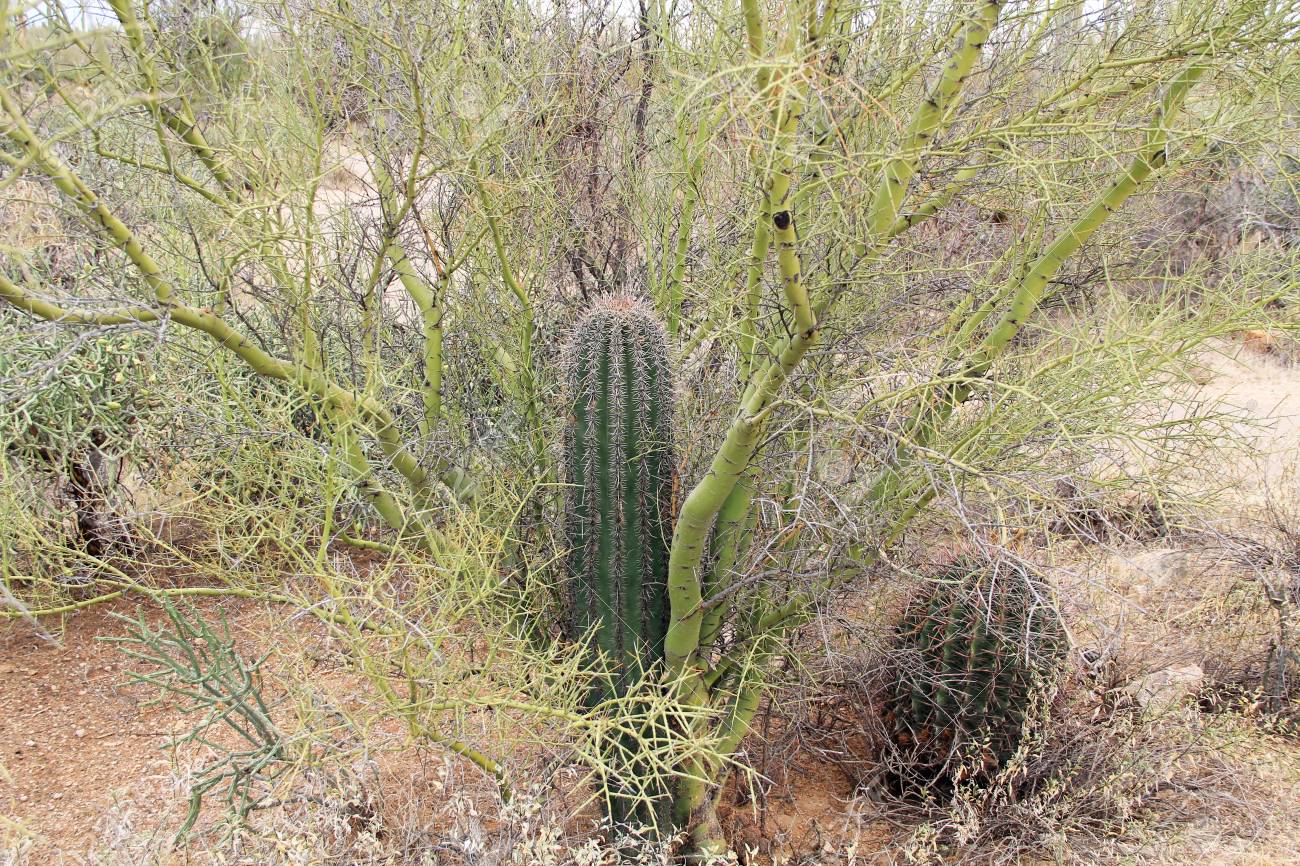
A Palo Verde serving as a nursery tree with a young Saguaro growing up amongst its branches.
Besides their aesthetic appeal and the alluring shade they offer to people, desert trees are entire ecosystems unto themselves. What goes on in their understory is a huge part of their story. Birds, small mammals, reptiles, arachnids, baby plants, and cacti all depend on the shade and protective cover of nursery trees. The shade of the branches of and the water-holding power of roots create a cool hide-away from the brutal sun. It is the perfect place for something small to grow in until it is strong enough to step out into the sun. The very-sharp spikes on many of these trees also adds a layer of protection from predators for small animals. Even the most determined of coyotes will hesitate before poking his nose into such a thorny situation. Without our native trees to nurture our wildlife, many species simply couldn’t survive. Here’s more on this.

A Mesquite tree with branches full of yellow polllen and pollen forming a carpet of yellow on the ground. Photo by Caroline Reilly.
Africa may have its Big 5 of animals, but here we have a big 5 of desert trees: Palo Verde, Mesquite, Catclaw Acacia, Desert Willow, and Desert Ironwood.  There are other natives, but these, in their various varieties, are the most prolific in our area. Palo Verdes are our state tree; they can grow up to 30 feet and live for hundreds of years. Their distinctive green bark provides their name; it means “green stick” in Spanish. Mesquites are the most common tree in the Tucson valley. They are fire-resistant and provide food from their seedpods for people, birds, and animals. They also have abundant golden pollen that can be mighty troublesome for allergy sufferers. Catclaw (aka Devil’s Claw) Acacia, (as the name implies), have imposing curved thorns that most creatures steer clear off. Birds and bees, however, love these trees and acacia honey is especially delicious. Desert Willows are not related to true willows but do have long,
A close-up of a Catclaw Acacia branch showing its curved thornes.
thin branches with graceful, drooping leaves like willows have. These trees have multiple trunks and fragrant, pink trumpet-shaped flowers that are a favorite of hummingbirds. Desert Ironwoods are the slowest-growing of our Big 5 group. They are also the tallest (up to 45 ft.) and longest-lived (as much as 1,500 years). They are essential to our native environment as nursery trees, but they also have deep cultural ties to our indigenous people. The dark, finely textured and dense wood of this tree has been used for artistic, utilitarian, and ceremonial purposes for untold hundreds of years. There is even an Ironwood Forest
An Ironwood tree with pinkish blooms surrounded by smaller mesquite trees.
National Monument in our state, a good portion of which is on Tohono O’Odham tribal lands to the west/northwest of Tucson. 

Many of the trees you may see in Tucson are not originally from here but have proven popular because they do so well in our sunny climate. These include palms (which you see everywhere), olive trees, citrus of all kinds, fig-trees, Texas Mountain Laurels, Vitex/Chaste trees, Pistache trees, guava, and even Southern Live Oaks. One non-native that all Tucson kids seem to love is the Pomegranate tree. As soon as kids find out about the juicy goodness that is their fruit, no neighbor’s tree is safe. Most mothers I know (myself included) have had their offspring come home with smeary, red faces and hopelessly stained T-shirts. 

A very large tree called Phina's tree towering over a 6 story building.
Another outsider species of note is the Eucalyptus tree. These aromatic Australian natives are fast-growing and undemanding water-wise and can grow to be 80 ft. tall and more. In fact, the tallest tree in the city is a Red Gum Eucalyptus near downtown Tucson known as Phina’s tree. It is between 110 and 120 feet tall and has a charming backstory (read more here). Great trees they may be, but the Eucalyptus has several things working against it: They have relatively weak limbs, which can become projectiles on a windy day. This can be especially dangerous during our violent monsoon storms. And then there is their immense size - in a neighborhood of closely placed homes they can be problematic. And, due to their high oil content, they are quite flammable. Even though they have fallen out of favor for these reasons, they were once a popular choice and there is still a lot to be found in older neighborhoods. 
Olive trees lining the walkways at the University of Arizona. There is a man in red shorts running in the foreground.
One last group of Tucson trees I’d like to mention make their home on the University of Arizona campus. Known as the Heritage Trees, there are 8,000 of them from 400 species around the world. Some of these trees date back to around the time that the U of A was founded in 1885. There is even a “Moon Tree”, an American sycamore that was grown from seeds that went to the moon with the Apollo 14 astronauts in 1971. I have always loved the trees at the U of A and enjoyed them as an undergrad, graduate student, and employee.

A moving images of trees and cacti along a pathway.
Even though we have a lot of trees around here, we can always use more to combat climate change and habitat loss. To that end, Mayor Regina Romero has started a Tucson Million Trees campaign. The aim is to get a million trees in the ground by 2030.

I’m sure there are some notable, or note-worthy, trees that I have missed. If so, I think that makes my point that there really are a lot of trees here in our desert. And they add so much to our lives – here is an excellent article (with fabulous pictures) about all they do.


Take Care.

Submitted by Pam


Monday, June 17, 2019

Migrant Pollinators In My Backyard.

A White Winged Dove sitting amongst some white blossoms on top of a Saguaro cactus.In support of National Pollinator Week, I’ve decided to showcase a pair of very welcome summer visitors to Southern Arizona, the White Winged Dove (Zenaida asiatica) and the Lesser Long-Nosed Bat (Leptonycteris yerbabuenae). These species have several things in common: they are super-pollinators, they migrate between southern Arizona and Mexico and they are both flying around in abundance in my neighborhood.

Although I have lived in the Sonoran desert for many years, I have to admit that I paid very little attention to the doves around me. I had heard their calls (they are hard to miss), but I attributed most of that to Mourning Doves without giving it much thought. All that changed a little over a month ago when I opened my bedroom curtain and came face-to-face with a bird sitting on a nest. It was so close to my window that I could have reached out and touched it. In order not to disturb it, I quickly and quietly closed the curtain. But, not before surreptitiously taking a photo. I showed the picture to a co-worker who excitedly said. “That’s a White Winged Dove! They are so cool!” I
2 white winged doves (an adult and a juvenile) sitting in a nest in the branches of a tree.
White Winged Dove Adult & Juvenile
wondered why and thus began my new-found fascination with this bird.

White Winged Doves appear in southern Arizona in late spring to begin their breeding season here. What makes them special is that they migrate at this time to correspond with the reproductive cycle of the iconic Saguaro cactus (Carnegeia gigantea). Saguaros begin flowering from late April until mid-June; fruiting and ripening take place in June and July. As soon as they get to town, White Winged Doves start visiting the saguaros. They hop from one cactus to another sipping nectar and picking at seeds until the fruit comes in and the feasting begins. It is this flitting to and fro that makes them exceptional pollinators as they fly with pollen all over them. The doves are also adept at dispersing seeds; they scatter them everywhere they go. Here is a video of them in action.

The White Winged Dove and the saguaro are a perfect example of Mutualism in nature. This is when two species depend on and benefit from each other. The doves rely nearly exclusively on the saguaro for water and nutrients and the cactus needs the birds to spread its seeds and pollen.

Thousands of bats in flight at sunset.
Lesser Long-nosed Bats travel at least 1,000 miles north from Mexico to join us here in southern Arizona for pretty much the same reasons as the dove: to have babies and take advantage of the cactus buffet. In response to the presence of these pollinators, the saguaros have generously adapted to provide for both day and night feeders. Not only do their flowers bloom at night and stay open until the afternoon of the following day, nectar is produced in the night and in the morning. There is clearly enough for everyone!

a close up of a Lesser Long-nosed Bat on a black background approaching a white cactus blossom.
Lesser Long-nosed Bat
Saguaro cacti are not the only form of succulent on the menu for Lesser Long-nosed Bats. They also feed on various types of agave. In fact, those people who love tequila (okay, maybe not the morning after) owe a debt of gratitude to these bats. Simply put, without bats pollinating agave in the natural manner, there would be no tequila. As the demand for more, and higher quality, tequila has increased the attention paid to these creatures has also increased. Once on the endangered list, these little guys have made a comeback in part due to those growers preserving safe migratory pathways for them. Nothing has proven to be as successful in getting a good crop as the old bat standby. Rarely does increased human demands bring back a species from the brink, but this seems to be the case here. Here is an interesting video with more on this.

Two White Winged Doves sitting close together with their heads resting on each other.
Dove Love
I spent weeks peeking at the bird family in my bedroom tree; it was as if I was in on a secret world. I learned that both parents take turns sitting on the nest and, although their markings are essentially the same, I came to recognize each individual. They laid two eggs, but only one survived. That baby was remarkably strong and beautiful and gifted (do I sound like a proud relative?) and was up and out in no time. Now all that is left in their spindly little nest is the left-behind unhatched egg. It seems sad now. White Winged Doves are monogamous, at least through a mating season, and sometimes reuse a nest, so I take a look everyday hoping they’ve come back. I wish I had a picture to share, but I was worried about disrupting them, so the only pictures I have are through screen and glass and the details are hard to see. However, this blog has some pictures that show just what I was seeing. If you like birds in general or just want to see some truly amazing bird pictures, check out these 2018 Audubon Society Award Winners.

Submitted by Pam

Monday, April 22, 2019

Earth Day and The Sonoran Institute


For this year’s Earth Day, ARBICO is donating to The Sonoran Institute. This is a non-profit located here in Tucson, with a reach that encompasses large areas of the West and into Mexico. Their focus is on protecting and restoring waterways and other natural resources while building and nurturing the communities that depend on them. We feel this mission fits well with how we see ourselves here at ARBICO – we have our roots  in the Sonoran desert but our environmental concerns and responsibilities branch out much further.


Their work on restoring the Colorado River estuary perfectly exemplifies what they do. It’s a cross-border initiative whose goal is to revive the natural runoff of the river and recreate the delta’s ecosystem, including those towns that dried up along with the river. Learn more here.

 I encourage everyone to find a way, great or small, to support these environmental warriors.

Submitted by Pam

Tuesday, September 11, 2018

Famous Faces of the Desert – Rattlesnakes


In my last few blogs, I have been talking about some of the iconic flora and fauna of the Arizona desert – all of which are outside our doors here at ARBICO Organics™. We are at the base of Pusch Ridge in the Catalina Mountains, amidst miles of open desert. This makes for great views of the mountains and also makes for a great wildlife viewing platform.
Pusch Ridge in the western Catalina Mountains, Tucson AZ
In the last few years, in our parking lot at work, I have seen deer and a coyote. Not to mention all the birds – hawks, roadrunners, cardinals, quail and many more. Then there are the reptiles – a Gila Monster and endless lizards. And, of course, snakes. Twice we have arrived to find a nice fat rattler sunning itself in front of our door. They appear commonly enough in our warehouse that they keep a catch stick back there and know how to use it.

Rattlesnakes are a daily reality around here. There are 13 species of rattlesnakes that are native to Arizona; we have more venomous snakes than any other state. Our climate and terrain is a reptile paradise. Despite the number of snakes sharing a landscape with humans, there are fewer snake bites than you’d expect and fatal bites are extremely rare. Many more people die from lightning and bee
Western Diamondback snake poised to strike
Western Diamondback
stings. Effective antivenoms and proximity to emergency care keeps these numbers low. Most of the snake bite deaths that occur are due to other medical problems the victim has or from anaphylaxis (an allergic reaction to the venom) and not from the venom itself.

The best way to avoid an encounter that can have serious results, is to learn more about rattlesnakes and their behavior so that you and the rattlers do not cross paths. Additionally, there are a number of myths and misconceptions that need to be thrown out:

Myth #1: Baby rattlesnakes are the most dangerous.
Do not be fooled by this idea. Because baby rattlers are born live and need to be independent right away, they are born with venom to kill prey. While this venom is potent, their small bodies do not produce large volumes of venom. It is the large adults that can strike with enough venom to kill an adult. Don’t run away from a baby and right into the fangs of its mother!

Myth #2: If you do get bit, you can suck out the poison.
Cutting into the skin and trying to suck out poison, as well as applying ice or tourniquets, are all dangerous, time-wasting and futile. You would never want that poison in your mouth and handling the bitten area can cause painful additional damage to the tissues already affected by the toxin. Use that time instead to get to a hospital.

Myth #3: You need to kill the snake and bring it to the hospital to identify which antitoxin is needed.
Taking the time to try to catch an already agitated snake is detrimental to the victim and simply increases the chance of a second bite. It is also completely unnecessary. There is one antivenom used for all North American pit viper bites. Not only is it effective for every rattlesnake, it also works for Cottonmouths (Water Moccasins) and Copperheads. The only other venomous snake in North America is the Coral Snake and they are not pit vipers, so there is a different anitvenom for them.

Myth #4: You will hear the rattle and be warned of it presence.
Rattlesnakes are shy and non-aggressive. Remember that they are prey as well as predator and will
Well camouflaged Sonoran Sidewinder snake in Tucson Arizona
Well camouflaged Sonoran Sidewinder in Tucson, AZ
instinctively avoid you. Their preferred defense mechanism is to lie still and blend in.They will then try to flee as quietly as possible.Shaking their rattle is a last ditch effort before they strike. Never put your hand where you cannot see. People are bitten because they do not see them – although most bites occur when people handle or provoke them.

The University of Arizona’s Poison and Drug Information Center has snake bite instructions and a bite video here.

If you are sharing an ecosystem with rattlesnakes, there are a number of things you can do to keep them away from your house:
Control rodents (a favorite snake food).
Build a wall that can keep reptiles out, but make sure it is high enough. Rattlers can lift themselves quite high. Males routinely stand “on tiptoe” while fighting for females.here.
Western Diamondback snakes fighting for females
Western Diamondbacks fighting for females
Keep grass short to eliminate hiding places.
Reconsider bird feeders – snakes are as drawn to them as birds.
Dogs and cats can be a deterrent – snakes don’t like their smells. Dogs are curious, though, and can get bit This Golden Retriever puppy was curious and heroic and took a bite for his owner. Consider getting your dog snake avoidance training (there are companies out there who do this – your vet should be able to direct you).
Other smells snakes dislike include sulphur and mothballs. Spread them around the outside of your home and in your yard.
Use environmentally-safe repellents.

Like any living creature, rattlesnakes should not be killed indiscriminately. Their value in rodent control alone makes them useful; those hairy little mammals carry many diseases that are a direct threat to humans.

Did you know there is a rattlesnake that has evolved to eliminate its rattle? It is the highly threatened Santa Catalina Island Rattlesnake.


Friday, August 31, 2018

Famous Faces of the Desert – The Saguaro

A Saguaro With Many Arms
Several years ago, I traveled to Budapest, Hungary with a friend. While we were there, some locals strongly recommended a particular bar. It was in the basement of a stately building in an old and beautiful part of the city alongside the Danube River. We went down the stairs with great expectation, opened the door and were hit with a cacophony of bright colors and cheesy images. There were saguaros, scorpions, rattlesnakes, tarantulas and sombreros. Our friends had recommended this spot because, knowing we were from Arizona, they thought we’d feel at home. We did not have the heart to tell them that the level of kitsch was almost painful to us Arizonans, so we lied and told them it was fabulous. We had a wonderful time with lovely people and, as the hours passed, the décor became less and less noticeable.

This event has always stood out in my mind as a true example of how the image of the desert southwest has been made almost cartoonish over time. In reality, we live in a complex ecosystem with deep layers of subtlety that is far more interesting than the stereotypes. Our environment may seem rugged, but it is extremely delicate and needs careful caretaking. The more you know, the more you appreciate it. All the ubiquitous symbols of the desert that were on display in that bar have incredibly interesting sides to them that are not well known.

The Saguaro cactus (Carnegia gigantea) is the perfect example of a misunderstood icon. Most people connect it immediately to the American West and even more to the Wild West. However, saguaros are only found in the Sonoran Desert, which includes southern Arizona, southeastern California, Baja California and the Mexican state of Sonora. Tucson is the epicenter of saguaro habitat; we even have two National Parks dedicated to them that book-end our city.
Saguaro In Bloom

Saguaros are very slow-growing (at 10 years it may only be 1-1½ inches tall), but can live to be 150-200 years old. They don’t even flower until they are around 70 years of age, at which time they are about 6½ feet tall. Their famous arms finally begin to appear when the cactus is 95-100 years old (when they will be between 15-16 ft tall). So, the famous shape of a multi-armed saguaro depicts an old desert soul that has been around far longer than the humans it shares a habitat with.

As with other desert dwellers, the saguaro thrives in the desert due to its ability to maximize available water. They store water when it is available and use it as needed. When full of water, a full-grown saguaro can weigh as much as 3200-4800 pounds. But saguaros don’t only care for themselves; they support multiple species within their thorns and around their roots. Brenda Z. Guiberson wrote a fabulous children’s book (with also-fabulous illustrations by Megan Lloyd) about the multi-tasking saguaro called Cactus Hotel. It is great fun for adults and kids and has long been a favorite in my family.

Crested vs. Uncrested
As interesting as saguaros are, their mutant relations, known as Crested (or Cristate) Saguaros, are even more fascinating. These rare cacti grow outward and form fan shapes at their tops instead of the normal circular pattern of a saguaro. The cause of this mutation is still a mystery; theories include lightning strikes, gene mutations and frost damage. The interest in and love for these unique cacti have even sparked the Crested Saguaro Society, who are dedicated to “these beautiful mutants”.

Yep! Those Are Cell Towers.
Saguaros are incredibly hardy plants; they are not prone to disease and have adapted to thrive in one of the most extreme environments in North America. Additionally, although they are only found in a limited range geographically and grow incredibly slowly, they are not endangered. The greatest danger to saguaros, like most of the species on Earth, is humans. Unchecked development, over-popularization of the species and the introduction of non-native species all threaten our saguaros. Thankfully, they are strictly protected by law in Arizona and it is illegal to own, remove or transport the protected plants without proper permits. Likewise, harming a saguaro in any way carries strict penalties.

Southern Arizona saguaros are seen as a natural treasure by most of us who live here. Their limitless variations and enduring beauty are a source of endless marvel. We like them so much that we even have cell towers shaped like saguaros.

Submitted by Pam

Featured Post

The Spiritual Messages of Insects

We are deep in the hot, sweaty, and buggy time of year. It’s summer and millions and billions of insects have appeared to put a damper on wh...