Showing posts sorted by relevance for query soil. Sort by date Show all posts

Thursday, May 24, 2012

Soil is the Soul of your Garden


Organic gardeners and farmers know that the organisms that live in a well-balanced soil are the very heart of that soil. The ideal is a loamy soil, a mixture of sand, silt, clay and decaying organic material. The presence of decaying organic material is an indicator that the soil is healthy and rich and has great potential for supporting plants.

Most of us have soil that is too sandy, has too much clay, is too acidic or too alkaline - the list is long and varies dependant on where you live. There are many things that you can do to improve the quality of your soil and the first step is to determine what type of soil you have and its general health.

Sandy, Clay or Loam?

If your soil is too sandy, you probably have a problem with retention of water and nutrients. Soil that has too much clay is dense and heavy because it is composed of particles that are small and bind tightly together. Clay soil can be difficult for healthy root structure and growth. A quick way to test which type of soil you have is to take a handful of moistened soil in your hand and squeeze. If the soil binds together you have too much clay. If the soil falls apart as soon as you open your fist, you have too much sand. If your soil holds together but does not clump you may be fortunate enough to have loamy soil.

The easiest and most important way to improve or maintain any soil type is by using compost. Adding
compost can help these specific soil problems:
  • The addition of compost to sandy soil will help bind loose particles together to increase the ability of the soil to retain water and nutrients.  
  • By adding compost to clay soil, you help to form larger soil particles as the compost will bind with the clay – this will increase the air space around the particles allowing for better drainage and air movement.  
  • Annual applications of compost to any type of soil add life and vitality as well as essential nutrients.
How Healthy is Your Soil?
To find out if your soil has good nutrient value it is best to start with the basics.
  • Determine whether your soil has the basic nutrient components of nitrogen, phosphorous, and potash.
  • Determine the pH level of your soil. pH tests indicate the soil’s acid and alkaline levels.

ARBICO Organics carries two easy-to-use soil test kits. The Rapitest Kit includes enough materials to perform 10 tests for pH, nitrogen, phosphorous, and potassium. The LaMotte Garden Soil Test Kit features a rapid test procedure and comes with diagrammed instructions and enough material to perform 30 pH tests and 15 tests for nitrogen, phosphorous, and potassium.

Once you have the results of your soil test, ARBICO Organics has a wide variety of products to make your soil healthier and more productive. Take a look at our easy-to-use soil solutions guide that tells you what soil amendments or supplements we recommend to help improve your soil and your garden.


Wednesday, December 4, 2019

World Soil Day - Build Soil. Help The World.

A drawing of a black rectangle with a green leafed plant growing in it. Some of the soil and leaves are blowing away on the right.Last Thursday Americans celebrated Thanksgiving, which is meant to be a day of gratitude. (Okay, you don’t have to be grateful for mean old Uncle Cyrus). But, as we were celebrating, I believe it is safe to say that very few people thought to be thankful for the ground they were standing on. Or for the soil that produced their annual feast. World Soil Day hopes to change that by building awareness of the precarious position of our soil in the world today.

Red/brown dirt ravines with green forest in the background - soil erosion from deforestation


World Soil Day is an annual event put on by the United Nations. It is observed worldwide on December 5th with outreach, functions and even contests. The basic purpose of this campaign is to raise awareness of and advocate for healthy soil. Every year there is a theme that relates to soil; last year it was soil pollution and this year it is soil erosion. All around the world, our soil is eroding at an alarming rate. According to the UN, one soccer field worth of soil is lost every five seconds and it is not an exaggeration to say that the very food we rely on is being threatened. Climate change (which is an even larger issue) plays a part in increased soil erosion, but an awareness of the importance of healthy soil and good soil management can make a real difference on a micro level. Big changes can be made in small steps. Here is a cool little cartoon on soil health from the World Soil Day site.

Yellow-orange flames in front of three men in turbans and white clothing. There are trees in the background.
Slash and burn farming in India
Aside from wind, water and other climatic factors, in many parts of the world soil erosion and degradation (when what soil is left is no good) is the result of human activity such as ecologically damaging farming methods like slash and burn agriculture. However, healthy soil loss from overgrazing, deforestation, mining and pollution is found everywhere. Combine all that with the extreme storms, drought and flooding that come from climate change and the need to do something is urgent. India, home to over a billion people, is already in crisis. Their largely poor and agrarian population is struggling and every year they are hit with intense monsoons and flooding. While the rains have always been a part of Indian life, they are becoming more and more extreme. The US is not immune to soil problems; this  enlightening article explains why we are running out of soil (including a super-interesting tidbit on the Roman Empire and their soil issues).

The Grand Canyon - the valley is purple-hued with a river running through it. The walls are yellowish. There are rocks and bushes in the foreground.
Here in Arizona, we have the premier example of water-caused soil erosionthe Grand Canyon. The canyon may have taken eons to be created, but we have all seen mini versions of it in our yards after heavy rains. This is a particularly thorny problem here in southern Arizona, where a good portion of our soil contains a Caliche layer. Caliche is, quite literally, as hard as concrete and does not allow water to pass through it. Combine this with the intense storms that we get during our summer monsoons (they can be bad, but not as bad as those in India) and there goes the surface soil.

Aerial view of a giant dust cloud bearing down on housing tracts. Photo by Jason Ferguson
Haboob bearing down on Phoenix
Additionally, we have extremely dangerous and damaging haboobs (dust storms), which are an exceptionally dramatic display of soil erosion. I once had the misfortune of being caught up in one of these on the freeway between Phoenix and Tucson. I am not a person who scares easily, but the whole experience was truly terrifying. Beyond the windshield everything is just a weird tan-orange color and all you can do is hope you don’t run into something and that nothing runs into you. Experts say you should pull over and turn off your lights (and pray nothing finds you), but I just got off on the first exit I could. I found out later that three people had died in a multiple car accident just ahead of me. If I hadn’t made that turn, I would have been a participant in that. Here is a video that really shows what they’re like.

Two hands holding a plant in black dirt. In the background is a field-on the left it is brown and on the right it is green.Addressing soil health is often done best right from home. Here at ARBICO, we have been singing the healthy soil song for decades. We have gathered a great many excellent products that anyone can use in their yard or garden to encourage strong soil that’s rich in microbial life. You could begin with a mineral (or more than one)  like Soil Replenish (Elemite), Andesite, Glacial Rock Dust or Harvest Gold Premium Soil Conditioner (Silica). To add nutrients and jump-start your soil biology, you can add items such as Fulzyme SP, Earth Alive Soil Activator, and Neptune’s Harvest Humate Concentrate. Or you could go the one-stop-shop route and get our Healthy Soil Recipe or John & Bob’s Clay & Hard Soil Kit (excellent for Arizonans). These are just a brief sampling of what we have to offer in the soil building arena, there is much more in our Soil Amendments, Micronutrients & Biostimulants category..

Short clip from the Food and Agriculture Division of the United Nations. The text reads, "Over 33% of the Earth's soils are already degraded and over 90% could become degraded by 2050".
If you are unable to contribute in changing the soil around you, I encourage you to consider recycling your green waste. And if you’re unsure of what to do with it once you’ve collected it, here is my blog with suggestions for that. If you are interested in reading more on soil building and/or soil in general, here is a link to some of our blogs that you may enjoy. Now, go out and get your hands dirty – and help the world!

                                                                                                                               Submitted by Pam

Thursday, January 30, 2020

Preparing To Plant? First, Pick The Right Soil.

Green sprouts popping out of dark soil. Photo by Jen Theodore on Unsplash.
As we move through winter and eye the upcoming spring, gardeners everywhere are preparing to plant. But before decisions are made as to where and what to plant, it is important to pick the right soil to plant in. Dirt is not just dirt. Potting soil, topsoil, native soil and garden soil are all different and each has unique and specific properties that make them suitable for different types of growing. Additionally, what you are planning to grow in the soil can color what type of soil you should use.

A colorful array of different types of soil.
Types of soil
All soils contain three components: clay, sand and silt. The percentages of each of these can vary widely according to geographical regions and mixes in bags. The first step to knowing what type of soil is optimal for you,  is to determine where and how you are growing. This will help determine whether you need soil that is more of one component than another.

Multi-colored pots filled with a variety of plants and flowers.
Are you planting in pots? Resist the temptation to use just any soil mix. Soil formulated for container growing provides enough drainage and aeration to allow healthy root growth, whereas denser soils may lead to compaction and water retention. Our recommendations for potting soil are A little girl squatting by a a raised garden bed. Photo by Kelly Sikkema on Unsplash.Tank’s Pro Coco-Soil Potting Mix, Tank's Pro-Lite Seeding & Potting Mix and Soil Mender 109 Potting Mix.

Considering a raised bed?
You’ll want something a little “heavier” than a potting mix, with a bit more organic matter. Blending potting mix with another pre-mixed soil blend at around a 50/50 ratio should yield close to what you need. Depending on what you’re planning to grow, you may want to tinker with that ratio to meet your plants’ needs. Take a look at our Prococo Coconut Coir Products; you may find just what you want in one of the three formulations.

A pile of black dirt with a gardening trowel in it and white gloves beside it.Should you use topsoil or garden soil? Topsoil is more of a general landscaping tool and can be used for filling out and leveling or conditioning native soil. It should not be used for new plantings. Here is what we have for topsoil. Garden soils are pre-mixed blends that contain added nutrients and other organic matter. Garden soil can be used when planting, but is only intended for in-ground use. For more on the differences and how to choose between them, check out this article.

A person kneeling down in brown dirt, holding some in both hands.Do you want to cultivate a garden plot? You’ve already got the native soil in place. But chances are your native soil will need some help to properly support what you’d like to grow. Your first step to figuring this out is to determine  what your native soil consists of, In this article, Home Depot suggests doing a “feel test” as follows:
Moisten a tablespoon of soil and roll it into a small ball.
If the soil pack together and is moldable, your soil contains clay.
If you can form a 2-3” ribbon with your ball of soil, you have a very high clay content.
If the ribbon falls apart or feels gritty, you have a mix of clay and sand.
If the soil ball will not hold together regardless of how much water you add, and it feels a little gritty, it’s sandy soil.
Once you know what you have, you'll have a better idea of how to get to where you need to be soil-wise.

A woman and a brown bear cub digging side by side in a garden plot. 
Yep, that's a bear cub.
A pink ceramic pot with a handle with a green cactus in it. Photo by Stephanie Harvey on Unsplash.Plants can grow in many different  soils, but the trick is to know which ones grow best in what. You can plan your garden by what the soil will support, or build the soil that can handle what you prefer to grow. Succulents, for instance, need good drainage, while flowers prefer lighter soils. How you approach what you cultivate is not important as long as you get to the right soil choice.

In the coming weeks, we will go through the steps to getting the soil ready to plant as we test for pH and add soil amendments.

Submitted by Pam (with Sterling)

Tuesday, April 15, 2025

Timing Soil Inputs

Getting your soil right for planting can often leave many growers scratching their heads in confusion. There are numerous options available on the market and knowing when to add inputs to your soil is crucial.

Let’s explore the “WHENs” of soil inputs:

When to test the soil

Before you plant a single seed or buy a product, you need to know what’s going on beneath the surface. A soil test can tell you what your soil lacks or has too much of. Getting soil tests in the fall after harvest or early spring allows you to correct imbalances way ahead of planting time. Testing early gives you time to understand your soil’s nutrient profile, pH, and organic matter content.

For cannabis and other nutrient-hungry crops, regular testing (at least once per season) helps guide mid-season inputs, especially before flowering. Other growers may only need to get their soil tested every three years.

When to add fertilizers and amendments

Whether you want the greenest lawn in the neighborhood or a lush garden this year, adding fertilizers and other soil amendments can make all the difference. Once you have your soil test results back, you’ll be able to make the right fertilizer choices for your particular soil and plants.

You can apply slow-releasing fertilizers in the fall or spring to provide consistent nutrients over time. If you notice that your plants are weak and yellowing, you may need to give them a boost with a fast-acting fertilizer. This can be done every 3-4 weeks during the growing season. However, be cautious when applying fast-acting fertilizers, as they can cause damage and even kill your plants.

Apply any additional soil amendments, such as compost, manure, rock dust, or other minerals, based on your soil test results. You can do this before you start planting or top dress throughout the growing season as needed.

When to add microbial inoculants

There are a number of microbial inoculants you can add to your soil from biofertilizers to biostimulants. However, it’s always best to apply them at the beginning of the growing season so the microbials have enough time to colonize the root zone early and form symbiotic relationships as roots begin to grow.

For transplants, it’s ideal to apply inoculants directly to the root ball or into the planting hole, ensuring close contact with the roots. In systems where the soil has been tilled or disturbed, you’ll want to reapply your inoculants to reestablish the colonies. Growers should also consider reapplying inoculants after using fungicides or sterilizing agents that may kill or reduce the microbes in or on the soil.

In cannabis cultivation, microbial inoculants are particularly valuable during the cloning and transplanting phases. Mycorrhizal fungi can significantly enhance phosphorus uptake and improve stress tolerance, both of which are critical for strong vegetative growth and successful flowering later on. Because these organisms thrive in moist, aerated soils, timing applications with irrigation can also help them establish more effectively.

When to add Beneficial Nematodes

Pests under the soil are often the most challenging. Luckily for growers, they can add an exceptional underground ally-beneficial nematodes-to support their operations. Beneficial nematodes should be applied in when the soil temperatures are between 42°F – 95°F. The warmer the soil, the more active the nematodes, and the greater the protection and results. Also, avoid applying them during dry spells or in full sunlight, as UV rays and dehydration can cause them to die quickly. Water the soil before and after application to help them establish.

Knowing when to apply the nematodes depends on what pest you are trying to control. For example, if you're targeting fungus gnat larvae in greenhouse cannabis or vegetable production, it's best to apply nematodes early in the season or just after transplanting, just before adult gnats start laying eggs. If you're managing root-knot nematodes or root weevils in perennial systems, applications are most effective in late spring when larvae are actively feeding near the root zone. In turfgrass or pasture settings, nematodes targeting white grubs should be applied in late summer or early fall, when young larvae are close to the soil surface and most vulnerable.

Each pest has a specific life cycle stage that’s most susceptible to nematode predation. Proper timing ensures that beneficial nematodes find their targets before they cause significant damage, and before they retreat deeper into the soil where nematodes are less effective.

Final Thoughts

Treat your soil right, and you’ll reap huge benefits in the end. Improving the soil won’t happen overnight, as great soil health starts long before you plant your first seed. By testing your soil early, timing inputs to match plant growth stages, and using biology-based inputs like microbes and nematodes, you set your crop up for long-term success.

So, don’t just feed your soil. Observe and listen to it.  It might just tell you exactly what you need.


Friday, March 1, 2019

Soil Amendments: When You Know Your Soil Needs Something….

An old brown church in a field of green plants in red dirt at sunset. Unnamed Road,Palmital, Brazil. Photo by Sergio Souza

The time is rapidly approaching when gardeners have to ask what it’s going to take to build the spring garden they want. Before you can grow plants, you need to grow the soil. There is almost always something that can be done to optimize the soil early in the season for your raised beds, garden plots or container plants. In order to do that, you need to take a good look at what your soil is like before planting. Some good questions to ask are:

    Blue garden spade and black dirt next to a pot. Photo by Neslihan Gunaydin
  • Is it compacted? 
  • Is it too acidic or alkaline? 
  • Does it have all the nutrients my plants need 
  • Has it become hydrophobic? 
  • Have I introduced beneficial microorganisms to help me along the way?

All of these are valid questions and should be part of your pre-planting checklist. If you need it, you can find the answers to or help with these questions right in your area. Ask at a local county extension office run by the Department of Agriculture, a Master Gardener (also part of the national extension program), universities and colleges, local gardening clubs or neighborhood nurseries. The expertise of people growing right where you are (especially those prolific ones!) can’t be overestimated.

Green plants growing in red dirt. Photo by Jens JohnssonAnother option is a simple soil test. We offer several do-it-yourself options as well as a soil analysis done by professionals. Test kits will take the guesswork out of the soil analysis problem and ease the minds of all but the most worrisome of gardeners.

Once you have an idea of where your soil’s at quality-wise, you’ll know how to proceed. If you don’t need much added to get where you want, it might be time to look at soil amendments instead of fertilizer mixes (which make a stronger punch). There are lots and lots and lots of soil amendments to choose from, here are some popularly used and proven options:
Compost – a great all-round addition to soil. It will revitalize depleted soil by adding organic matter and microbes, which in turn will speed up the decomposition of other organic matter and encourage microbial life to flourish in the amended soil. Our ARBICO Organics™ Compost Plus is also high in nitrogen, if that is what you are looking for.
A close-up of a man's hands as he cleans them of dirt. He is wearing a green tank top and standing in the forest. Muddy Man photo by Eddie Kopp.Humic Acid – The benefits of Humic Acid are very similar to that of compost. The liquid form of Humic Acid, however can be easier to use than compost, especially when working in a small area and for indoor and container plants. The liquid will also get to the roots quicker than compost.
Earthworm Castings – This is an old-time favorite for good reason. Castings are full of the micronutrients and trace minerals that your soil craves. They also breakdown slowly for long-term benefits (and fewer applications) and reduced risk of nutrient burn. While castings do their work in the soil, they are improving the soil structure, which reduces transplant shock and helps to buffer pH. Earthworm Castings contain chitinase, which is a natural compound that helps the plants fight soil-dwelling diseases and pests. 

Looking up at an apartment building with blue windows & white balconies full green trees and shrubs. Photo by Chris Barbalis.
Bosco verticale, Milan, Italy. Photo by Chris Barablis
Kelp Meal – It’s all about the nutrition when it comes to Kelp Meal. Bursting with amino acids, vitamins and trace minerals, it feeds the soil well to get it healthy. This well-fed soil welcomes organic matter and microbial life and is much better at retaining water.
Minerals – Many people go straight to a mineral to get minerals for their soil. Azomite and Soft Rock Phosphate fall into this category. They are packed with minerals that leach into the soil over time to provide dynamic and long-lasting benefits. In the case of Andesite, your garden may even get an electrical charge!

The bottom line is that nearly any soil (even balcony soil) can use a little amending and with the affordability of most amendments, why not give one a try? Since soil amendments generally work well with others, you can even try a combination.

Submitted by Pam & Sterling

Wednesday, April 3, 2024

Why It is Important to Test and Know Your Soil


You’ve likely heard something along the lines of, “Good soil makes good crops” if you’ve been gardening for any amount of time, but do you know what makes quality soil? And if you do understand what goes into good soil, do you know how to check if your soil measures up?

What is NPK?  What does NPK Stand For?


NPK is an initialism that stands for nitrogen, phosphorus, and potassium. These are the big three nutrients that are necessary for healthy soil. An excess or deficit of any of these three nutrients will result in improperly developed plants. At best, you’ll get reduced or inedible yields. At worst, all of your plants will die off. 

Each nutrient corresponds to a specific aspect of how plants develop:

  • Nitrogen is commonly equated with the amount of “green” in one’s garden. Too little nitrogen will cause yellowing in leaves and stunted growth in the plant. Too much nitrogen will cause an excess of blooming, which quickly results in rot. Additionally, over-applying nitrogen will result in the excess nitrogen being washed away during rainfall. As this runoff flows into streams, ponds, and other bodies of water, it becomes extremely harmful to the environment. See ARBICO’s nitrogen solutions here

  • Phosphorus plays a critical component in plant growth and development. A lack of phosphorus results in stunted, shallow roots, and spindly stems. A plant’s reproductive capabilities will also be inhibited if a plant has a phosphorus deficit. Phosphorus levels require proactive monitoring. By the time you notice the physical signs of a phosphorus deficit, it’s usually too late to save the plant. See ARBICO’s phosphorus solutions here. 

  • Potassium benefits plant health and root strength. Proper potassium levels in the soil make crops more resistant to disease. Generally, proper phosphorus levels don’t need to be as high as the levels of nitrogen and phosphorus in your soil. If you’re growing plants that produce fruit, maintaining proper potassium levels can result in firmer and more flavorful fruit. See ARBICO’s potassium solutions here.

What about Soil pH?

Just like how each species of plant prefers different amounts of water and different temperatures, the preferred soil pH varies between plants. A perfectly neutral pH isn’t always the best. Typically, most plants do best when the soil is slightly acidic and between 6 and 6.5, though there are exceptions to this rule of thumb. For instance, blueberries do best when the soil has a distinctly acidic pH of 4.5, while asparagus actually needs a pH of 7 or slightly higher. Make sure that you check the pH of your soil before planting new seeds and continue to check it while planting to ensure that no imbalances have unexpectedly occurred.

Anything Else?

Nitrogen, Phosphorus, and Potassium aren’t the only nutrients necessary for healthy soil. Other trace elements play important roles in soil and plant health. Calcium keeps roots healthy and encourages the growth of root hairs, which are critical for absorbing water from the soil. Magnesium is a critical component in photosynthesis and keeping the chloroplasts in plant cells functional. Sulfur maintains the integrity of amino acid chains and helps with nitrogen intake.


The Basic Needs of Soil

In addition to nitrogen, phosphorus, potassium, a proper pH level, and numerous trace elements, there are other aspects to healthy soil. The presence of organic matter is a critical part of healthy soil. Organic matter is composed of three categories: living, dead, and very dead. Living organic matter are creatures that live in the soil, such as earthworms and smaller microorganisms. Dead organic matter can range from fallen leaves to deceased organisms to manure. Very dead organic matter is also referred to as soil humus, and it is largely insulated from chemical change. Adding compost to your garden is a common way to maintain proper levels of organic matter in a controlled growing environment.

How to Test Soil

For an easy to use pH and NPK tester, try the Luster Leaf® Rapitest Soil Test Kit

Just take a sample of the soil 2-3 inches below the surface then mix with water.  Transfer the soil-water mix to the test chamber, then add the powder from the appropriate capsule (pH, Nitrogen, Phosphorus, or Potassium). The mixture will change color—just match the color to the included guide to determine the pH or NPK level. 


Contributed by Robin @ ARBICO Organics. 


Friday, September 27, 2019

When There’s Just Too Much Water…

Close-up of a white crocus flower in the rain
Hurricanes, flooding, rain for days, tornadoes, high tides, early snow, late snow, snowmelt – whatever is causing it, it seems that people everywhere are dealing with more water than anyone wants. Even here in Southern Arizona; this week we’ve been hit with days of heavy rain courtesy of Hurricane Lorena. For anyone who has cultivated property, enjoys their yard or lovingly tends a garden, bringing it back after it’s been underwater is not an easy process. What type of damage a flood causes and how to recover (if you can recover) can depend on many factors.

pencil cartoon of two people on the roof of a house with floodwaters all aroungd; one has an umbrella and is saying" At what point does it stop being goof good for the garden?" By RoystonWhere to begin: The only actions that can be taken while the water is still present are diversion or pumping it out, both of which can be impractical at best in an active flood situation. Plus, neither can reverse damage to soil that has already occurred if it has been underwater for 12-24 hours. It is best in general to stay out of floodwaters; they can be full of contaminants and creatures. Fire Ants, for instance, form rafts of many thousands of individuals to escape floodwaters and you do not want to bump into one of those!

Once the water is gone: If there is trash or tree and plant debris, you will want to get that out of your space. If you have flood-deposited soil, you’ll have to decide if it should be removed. Although as little as one inch of silt can kill a lawn and three inches or more can harm a tree, removing it may not be the best idea. Adding and removing soil can be very hard work, is quite costly, puts you in danger of handling contaminants and is damaging to the soil (more on that below). It might be best to simply scrape residue away from some of the bigger plants and start all over.

Close up a person in red and blue rain boots and jeans walking in the mud. Photo by Daiga Ellaby on Unsplash
Assess your soil: Whatever you do, do not work wet soil – it can cause serious damage to the soil structure. Wet soil can easily become compressed, which can lead to compaction and drainage issues when it dries. Wait at least several days to weeks before digging and if you plan to rototill, the recommended wait time is 90 days. You will want to determine how your soil biology held up to all the water. Soil microbes are an essential part to a healthy soil and they need oxygen. If the soil is submerged overly long, water displaces the oxygen in it and beneficial microorganisms can suffocate and die. Anaerobic microbes, which do not need oxygen, may take their place. A foul smelling soil is an excellent indicator that this has happened and that the soil needs to be brought back to a healthy balance before any planting is done.

Close-up of a green plant in clay pot full of water.Plant viability: How your plants are affected by flooding depends on many factors: length of time they were under water, what kind of plants and how old they are, time of year and the type of water that flooded. Warm weather flooding will affect plants more than flooding that occurs when plants are dormant in cold weather. Salt water will be much more damaging to most plants than will fresh water. Determining the condition of your plants can be tricky as symptoms can take weeks, and even years, to appear. Vegetables and flowering annuals will show symptoms before trees and shrubs. Damage caused by flooding mirrors common disease problems, so the root cause is often unclear. Here is a list of symptoms that appear in water damaged plants.

Vegetable gardens: First off, any produce that has gone through a flood should not be eaten. This is an EPA recommendation and it makes good sense. With all the unknowns in floodwater, it is the only way to be sure you are not ingesting contaminants. With fruiting vegetables, any fruit on them during the flood needs to be discarded, but whatever grows later should be fine. If you wish to err on the side of caution, wash those fruits thoroughly and plant a non-edible crop for a season.

Close-up of a white crocus flower in the sunWhat to do before replanting: As with all planting, start with your soil. A soil test is highly recommended after flooding.Water is notoriously good at leaching nutrients from soil, so even a minor water issue can affect what you’re planting in. If a soil test is not for you, you should still amend your soil and lightly fertilize (no heavy fertilizer while the plant struggles to come back). You can’t go wrong with the following products: Begin with TerraClean 5.0 to eliminate soil-borne pathogens; apply BioAct™ SD to chew through organic material; use products like ROOTBiojuvant® Beny-GroEarth Alive™ Soil Activator™ or Inocucor Garden Solution® to return to a healthy microbial balance; add Earthworm Castings and, when the new plants are in, fertilize with DTE™ Liquid All Purpose or SaferGro® Biomin Starter®. Fungal diseases are common after floods and they are best controlled by applying proactively; so get ahead of the problem and plan to treat as soon as you can. Check out our Fungicides page for some excellent products to choose from.

Like fungal diseases, flood damage is best dealt with before it occurs. I will offer some suggestions on how to do that in this blog next week. Until then, stay dry out there.

Submitted by Pam

Tuesday, November 14, 2017

Great Soil is the First (and Best) Method for Fighting Weeds

Weed Control Begins With Soil Preparation
When I was just discovering my passion for gardening, one of my neighbors, an experienced gardener, gave me the best soil tutorial. On one of her walks, she noticed as I struggled to deal with weeds in my drought stricken yard. She stopped to chat and casually mentioned that I really needed to work on the tilth of my soil. When I asked what that meant, she kindly invited me to check out her garden – it would be better to see and feel what she meant.

When she poured some of her soil in my hand it was clear that what I saw, felt, and smelled was very different from the dirt that I was dealing with.  I had an immediate and visceral reaction to the wonderful musky richness.  The soil was soft and darkly colored and it felt good – plump, moist, lively – not thin, grainy and dry like the stuff I was dealing with. She told me that this was my goal in the garden - create soil that was dark brownish-black and smelled good, clean and earthy and held together but did not clump or fall through my fingers when moist.

Avoid weed problems the easy way. Build living soil with high nutrient content today!


How to accomplish this? Her message was simple – back off the chemical fertilizers, feed the soil by adding organic matter and she promised that over time my soil would become like hers and I would have no weeds. Really? No weeds??? I was a skeptic at first but over time I have learned that if I cultivate healthy soil and I make sure to water and fertilize properly* – weeds are unlikely to grow in such a healthy soil environment.

Organic Mulch Helps Build Healthy Soil
Adding organic mulch
can prevent weeds.
In the ensuing decades (yes decades), I've learned that most of us don't inherit or buy a piece of land with great soil, the fact of the matter is that we need to improve the soil with every growing season.  Our best friend in the garden is soil that is rich in micro-nutrients, has enough macro-nutrients to support what we are growing, and has abundant microbial life.  Good soil encourages:

• The breakdown of organic matter.
• Microbial life that develops good soil structure.
• Fights pathogens that would harm plants.
• Transforms minerals so they can be better used by plants.

It's not that I never have any weeds, but the weeds I do have are easy to manage. Another great lesson learned from a fellow gardener – pull weeds in the first 15 minutes you are in the garden and that bend and snap helps warm-up your muscles and joints in preparation for the tough gardening ahead. Smart advice to help avoid an aching back!

*Watering and fertilizing properly are dependent upon many factors – soil, temperature, humidity, wind, and the type and health of the plants you grow. It is important to know how all of these factors influence your garden's needs. Responding appropriately is a lot easier with knowledge. Just remember "The Three Bears" – not too much, not too little, just the right amount of water and fertilizer are very good things!

Wednesday, February 19, 2020

Preparing To Plant? Get Your Soil pH Right Ahead Of Time.


An illustration of garden tools and white pots on brown soil next to blue-green wheelbarrow

What is soil pH? 

In simple terms, it represents the acidity or alkalinity of the soil on a scale from 0-14. Anything lower than 7 is acidic, while anything higher than 7 is alkaline. While most plants prefer slightly acidic conditions (roughly 6.5), a number of flowering plants prefer soil in the range of 4.5-5.5. You should be able to determine what your plants like with a simple internet search.

Why does it matter? 

Soil pH indirectly affects plants in many ways. Chief among them is nutrient availability as soil pH directly impacts how a nutrient gets to plants.

Truog, E. (1946). Soil reaction influence on availability of plant nutrients. Soil Science Society of America Proceedings 11, 305-308


Something diagnosed as an iron deficiency based on plant symptoms may actually be a result of high pH not allowing the right iron compounds to form, leading to a lack of uptake. On the other hand, overly acidic conditions leave plants vulnerable to manganese toxicity from over-absorption (similar to metal poisoning in people). Soil pH also impacts soil life–again, slightly acidic is ideal for most soil-born organisms including earthworms and most microbes.

Why does it change?

Soil pH fluctuates based on a number of natural factors including rainwater leaching, acids formed from root respiration and acid formation from decomposition. Human inputs like chemical fertilizers can also have significant effects.

Monitoring & Adjusting:
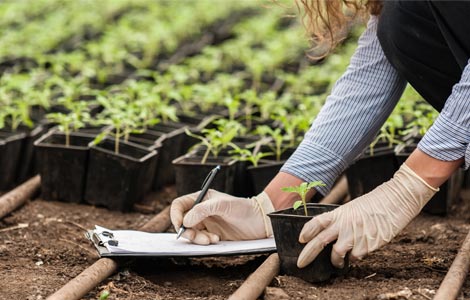
A person crouched down and writing on a white pad next rows of green plants in black containers.

  • First things first – test your soil. There are many choices for you test-wise, we carry a variety, but there are also high-end options out there. There are even some DIY techniques out there that you could give a whirl. Once you know the status, you can plan accordingly. 
  • Need to acidify the soil? Elemental sulfur may be your best bet and it can be top dressed to soil or worked into the top 6”. Tiger 90CR® Organic Sulphur should do the trick. If you prefer using a liquid (or are growing hydroponically), SaferGro pH Down will work wonders.
  • Need to boost alkalinity? Look to lime – commonly bought as calcitic limestone or dolomitic limestone. Not only does it raise pH, lime provides the secondary macronutrients calcium and magnesium. We recommend BONIDE® Hydrated Lime
Whether the soil needs major adjustment or not, it is a good practice to test soil pH seasonally in order to maximize your growing potential. Three green plants growing from mounds of brown dirt.
Submitted by Sterling (with Pam)

Thursday, September 4, 2025

Gardening Again After a Flood

2025 has been a banner year for floods, and their destruction has been almost unfathomable. Here in the U.S., we were shocked and saddened by the Central Texas floods and their devastating death toll, but ruinous flooding has been happening all over the world. Large swaths of Africa have been severely affected, and Brazil has had its worst-ever floods. Pakistan, India, and China are no strangers to flooding, but even they have had bigger, stronger, and more frequent floods.  While dealing with such natural disasters is a nearly impossible task, dealing with flooding in your garden is very manageable. 

Where to begin: 

The only actions that can be taken while the water is still present are diversion or pumping it out, both of which can be impractical at best in an active flood situation. It is best to stay out of floodwaters; they can be full of creatures as well as organic (think sewage) and non-organic contaminants. Fire Ants, for instance, form rafts of many thousands of individuals to escape floodwaters, and you do not want to bump into one of those! Watch them in action here.

Once the water is gone: 

If there is trash, tree, or plant debris, you will want to get that out of your space. If you have flood-
deposited soil, you’ll have to decide if it should be removed. Although as little as one inch of silt can kill a lawn and only a few inches can kill a tree, removing the silt may not be the best idea. Adding and removing soil can be very hard work, is quite costly, puts you in danger of handling contaminants, and is damaging to the soil (more on that below). It might be best to simply scrape residue away from some of the bigger plants and start all over.

Assess your soil: 

Whatever you do, do not work wet soil – it can cause serious damage to the soil structure. Wet soil can easily become compressed, which can lead to compaction and drainage issues when it dries. Wait at least several days to weeks before digging, and if you plan to rototill, the recommended wait time is 90 days. You will want to determine how your soil biology held up to all the water. Soil microbes are an essential part of a healthy soil, and they need oxygen. If the soil is submerged overly long, water displaces the oxygen in it, and beneficial microorganisms can suffocate and die. Anaerobic microbes, which do not need oxygen, may take their place. A foul-smelling soil is an excellent indicator that this has happened and that the soil needs to be brought back to a healthy balance before any planting is done.

Plant viability:

 How your plants are affected by flooding depends on many factors: the length of time they were
underwater, what kind of plants they are, where they are in their lifecycle, the time of year it is, and the type of water that flooded. Warm-weather flooding will affect plants more than flooding that occurs when plants are dormant in chilly weather. Salt water will be much more damaging to most plants than will fresh water. Determining the condition of your plants can be tricky, as symptoms can take weeks and even years to appear. Vegetables and flowering annuals will show symptoms before trees and shrubs. Damage caused by flooding mirrors common disease problems, so the root cause is often unclear. If you have questions, contact your local Cooperative Extension to get expert information on your specific area. Here is a link to find the one nearest to you.

Vegetable gardens:

 First off, any produce that has gone through a flood should not be eaten. This is an EPA
recommendation
, and it makes good sense. With all the unknowns in floodwater, it is the only way to be sure you are not ingesting contaminants. With fruiting vegetables, any fruit on them during the flood needs to be discarded, but whatever grows later should be fine. If you wish to err on the side of caution, wash those fruits thoroughly and plant a non-edible crop for a season.

What to do before replanting: 

As with all planting, start with your soil. A soil test is highly recommended after flooding. Water is notoriously good at leaching nutrients from soil, so even a minor water issue can affect what you’re planting in. If a soil test is not for you, you should still amend your soil and lightly fertilize (no heavy fertilizer while the plant struggles to come back). You can’t go wrong with the following: Apply BioAct SD to chew through organic material; use products like ROOT, EM-1, SCD BioAg or Mikrobs to return to a healthy microbial balance; add Earthworm Castings and, when the new plants are in, fertilize with Arber Soil and Root Food or any of our other excellent fertilizers; see our full range here.

Bear in mind that fungal diseases are common after floods, and they are best controlled by applying proactively; so, plan to treat as soon as you can. Cease would be a top-notch choice for this job, or choose another of our fine products on our Fungicides page.


Submitted by Pam 


Featured Post

IT'S EARTH DAY 2026!

Happy Earth Day from ARBICO Organics! This year we'd like to introduce you to our newest local non-profit partner - Mission Garden. Loca...