Showing posts sorted by relevance for query saguaro. Sort by date Show all posts

Friday, August 31, 2018

Famous Faces of the Desert – The Saguaro

A Saguaro With Many Arms
Several years ago, I traveled to Budapest, Hungary with a friend. While we were there, some locals strongly recommended a particular bar. It was in the basement of a stately building in an old and beautiful part of the city alongside the Danube River. We went down the stairs with great expectation, opened the door and were hit with a cacophony of bright colors and cheesy images. There were saguaros, scorpions, rattlesnakes, tarantulas and sombreros. Our friends had recommended this spot because, knowing we were from Arizona, they thought we’d feel at home. We did not have the heart to tell them that the level of kitsch was almost painful to us Arizonans, so we lied and told them it was fabulous. We had a wonderful time with lovely people and, as the hours passed, the décor became less and less noticeable.

This event has always stood out in my mind as a true example of how the image of the desert southwest has been made almost cartoonish over time. In reality, we live in a complex ecosystem with deep layers of subtlety that is far more interesting than the stereotypes. Our environment may seem rugged, but it is extremely delicate and needs careful caretaking. The more you know, the more you appreciate it. All the ubiquitous symbols of the desert that were on display in that bar have incredibly interesting sides to them that are not well known.

The Saguaro cactus (Carnegia gigantea) is the perfect example of a misunderstood icon. Most people connect it immediately to the American West and even more to the Wild West. However, saguaros are only found in the Sonoran Desert, which includes southern Arizona, southeastern California, Baja California and the Mexican state of Sonora. Tucson is the epicenter of saguaro habitat; we even have two National Parks dedicated to them that book-end our city.
Saguaro In Bloom

Saguaros are very slow-growing (at 10 years it may only be 1-1½ inches tall), but can live to be 150-200 years old. They don’t even flower until they are around 70 years of age, at which time they are about 6½ feet tall. Their famous arms finally begin to appear when the cactus is 95-100 years old (when they will be between 15-16 ft tall). So, the famous shape of a multi-armed saguaro depicts an old desert soul that has been around far longer than the humans it shares a habitat with.

As with other desert dwellers, the saguaro thrives in the desert due to its ability to maximize available water. They store water when it is available and use it as needed. When full of water, a full-grown saguaro can weigh as much as 3200-4800 pounds. But saguaros don’t only care for themselves; they support multiple species within their thorns and around their roots. Brenda Z. Guiberson wrote a fabulous children’s book (with also-fabulous illustrations by Megan Lloyd) about the multi-tasking saguaro called Cactus Hotel. It is great fun for adults and kids and has long been a favorite in my family.

Crested vs. Uncrested
As interesting as saguaros are, their mutant relations, known as Crested (or Cristate) Saguaros, are even more fascinating. These rare cacti grow outward and form fan shapes at their tops instead of the normal circular pattern of a saguaro. The cause of this mutation is still a mystery; theories include lightning strikes, gene mutations and frost damage. The interest in and love for these unique cacti have even sparked the Crested Saguaro Society, who are dedicated to “these beautiful mutants”.

Yep! Those Are Cell Towers.
Saguaros are incredibly hardy plants; they are not prone to disease and have adapted to thrive in one of the most extreme environments in North America. Additionally, although they are only found in a limited range geographically and grow incredibly slowly, they are not endangered. The greatest danger to saguaros, like most of the species on Earth, is humans. Unchecked development, over-popularization of the species and the introduction of non-native species all threaten our saguaros. Thankfully, they are strictly protected by law in Arizona and it is illegal to own, remove or transport the protected plants without proper permits. Likewise, harming a saguaro in any way carries strict penalties.

Southern Arizona saguaros are seen as a natural treasure by most of us who live here. Their limitless variations and enduring beauty are a source of endless marvel. We like them so much that we even have cell towers shaped like saguaros.

Submitted by Pam

Monday, June 17, 2019

Migrant Pollinators In My Backyard.

A White Winged Dove sitting amongst some white blossoms on top of a Saguaro cactus.In support of National Pollinator Week, I’ve decided to showcase a pair of very welcome summer visitors to Southern Arizona, the White Winged Dove (Zenaida asiatica) and the Lesser Long-Nosed Bat (Leptonycteris yerbabuenae). These species have several things in common: they are super-pollinators, they migrate between southern Arizona and Mexico and they are both flying around in abundance in my neighborhood.

Although I have lived in the Sonoran desert for many years, I have to admit that I paid very little attention to the doves around me. I had heard their calls (they are hard to miss), but I attributed most of that to Mourning Doves without giving it much thought. All that changed a little over a month ago when I opened my bedroom curtain and came face-to-face with a bird sitting on a nest. It was so close to my window that I could have reached out and touched it. In order not to disturb it, I quickly and quietly closed the curtain. But, not before surreptitiously taking a photo. I showed the picture to a co-worker who excitedly said. “That’s a White Winged Dove! They are so cool!” I
2 white winged doves (an adult and a juvenile) sitting in a nest in the branches of a tree.
White Winged Dove Adult & Juvenile
wondered why and thus began my new-found fascination with this bird.

White Winged Doves appear in southern Arizona in late spring to begin their breeding season here. What makes them special is that they migrate at this time to correspond with the reproductive cycle of the iconic Saguaro cactus (Carnegeia gigantea). Saguaros begin flowering from late April until mid-June; fruiting and ripening take place in June and July. As soon as they get to town, White Winged Doves start visiting the saguaros. They hop from one cactus to another sipping nectar and picking at seeds until the fruit comes in and the feasting begins. It is this flitting to and fro that makes them exceptional pollinators as they fly with pollen all over them. The doves are also adept at dispersing seeds; they scatter them everywhere they go. Here is a video of them in action.

The White Winged Dove and the saguaro are a perfect example of Mutualism in nature. This is when two species depend on and benefit from each other. The doves rely nearly exclusively on the saguaro for water and nutrients and the cactus needs the birds to spread its seeds and pollen.

Thousands of bats in flight at sunset.
Lesser Long-nosed Bats travel at least 1,000 miles north from Mexico to join us here in southern Arizona for pretty much the same reasons as the dove: to have babies and take advantage of the cactus buffet. In response to the presence of these pollinators, the saguaros have generously adapted to provide for both day and night feeders. Not only do their flowers bloom at night and stay open until the afternoon of the following day, nectar is produced in the night and in the morning. There is clearly enough for everyone!

a close up of a Lesser Long-nosed Bat on a black background approaching a white cactus blossom.
Lesser Long-nosed Bat
Saguaro cacti are not the only form of succulent on the menu for Lesser Long-nosed Bats. They also feed on various types of agave. In fact, those people who love tequila (okay, maybe not the morning after) owe a debt of gratitude to these bats. Simply put, without bats pollinating agave in the natural manner, there would be no tequila. As the demand for more, and higher quality, tequila has increased the attention paid to these creatures has also increased. Once on the endangered list, these little guys have made a comeback in part due to those growers preserving safe migratory pathways for them. Nothing has proven to be as successful in getting a good crop as the old bat standby. Rarely does increased human demands bring back a species from the brink, but this seems to be the case here. Here is an interesting video with more on this.

Two White Winged Doves sitting close together with their heads resting on each other.
Dove Love
I spent weeks peeking at the bird family in my bedroom tree; it was as if I was in on a secret world. I learned that both parents take turns sitting on the nest and, although their markings are essentially the same, I came to recognize each individual. They laid two eggs, but only one survived. That baby was remarkably strong and beautiful and gifted (do I sound like a proud relative?) and was up and out in no time. Now all that is left in their spindly little nest is the left-behind unhatched egg. It seems sad now. White Winged Doves are monogamous, at least through a mating season, and sometimes reuse a nest, so I take a look everyday hoping they’ve come back. I wish I had a picture to share, but I was worried about disrupting them, so the only pictures I have are through screen and glass and the details are hard to see. However, this blog has some pictures that show just what I was seeing. If you like birds in general or just want to see some truly amazing bird pictures, check out these 2018 Audubon Society Award Winners.

Submitted by Pam

Tuesday, May 4, 2021

Flowers In May And Beyond

Multi-colored poppies on long stalks with a cloudy sky in the background. Photo by Schwoaze on Pixabay.
It’s May – and that means it’s the time of year when gardeners will delight as their long-planted bulbs bloom, and everyone is awed by nature’s spectacular wildflower displays. May flowers are truly a joy when they appear, but there are ways you can stretch the abundance of blooms through the summer months.

If you are seeing your bulbs bloom now, then you have spring (or hardy) bulbs. Tulips, hyacinth, and daffodils are all spring bulbs. These bulbs are planted in the fall, overwinter in your garden, and need that cold period to complete their growth cycle. But there’s another type of bulb – the summer (or tender) bulb. These bulbs don’t like cold temperatures at all and need to be planted well after a last frost date. Summer bulbs include gladioli, dahlias, and lilies. It is an easy transition from one type of bloom to the other, if you follow these few basic steps at this time of year:

A close-up of a purple dahlia. Photo by Couleur on Pixabay.

• Deadhead your spring-blooming bulbs but leave the foliage intact.

• While deadheading, examine your plants carefully for insect activity. Pest insects enjoy May flowers as much as we do, and you don’t want to introduce them to your next batch of flowers.

• Separate and remove any bulbs that did not thrive.

• Dig up and store any bulbs that need to be kept cool through the summer.

A blond girl holding a lily bulb up close to the camera.
• Keep an eye out for any soil-dwelling pests as you dig into the dirt.

• Plant your summer bulbs amongst your spring ones.

• Summer bulbs do well in containers and look lovely on a front step or porch when in bloom.

This article is a wealth of information on bulbs and is laid out in a very easy-to-read format.

Close-up of white and yellow saguaro flowers, with green buds behind them.
Nature rewards us in spring with wildflowers. Almost anywhere you go at this time of year, you’ll find some. Here in southern Arizona, we have been tickling summer temperatures for a while now, so our wildflower season is well behind us. But we do have reliable May blooms in the form of saguaro flowers (which is also our state flower). These gorgeous white blooms appear in jaunty clusters on the tops of the saguaros and/or the ends of their arms. Along with the flowery show comes the companion animal of the saguaro, the White-Winged Dove. This pretty little bird migrates to Mexico through the winter and early spring months and then returns to the Sonoran Desert just in time to enjoy the saguaro flowers (and subsequent fruit). This cactus and bird are a perfect example of mutualism in nature, where on species depends on another. I wrote a blog on the dove-saguaro relationship, if you want to know a little more.

A field of Trillium grandiflorum (a spring ephemeral)  in a forest
Desert ecosystems notwithstanding, some of nature’s greatest flower shows are found deep in the forest. It is there, thriving in undisturbed organic material and undiluted by mankind, that you can find truly authentic wildflowers. Some of these beauties only appear for a short time and are known as “spring ephemerals”. If you are lucky enough to have a forest that you can get to in May, I recommend you do so this month. You won’t be disappointed. Here is more on spring ephemerals and forest wildflowers in the Saranac Lake region of New York, but these types of flowers can be found many other places as well.


Wildflowers sprouting from the rocky shore on Gannon Beach, Oregon. There is a boulder-island in the background.
Whether you live in the woods, at the beach, or on the prairie, you can find flowers growing around you in May. Even in the biggest of cities, keep an eye out and you’ll see them alongside raucous highways or along a neighbor’s fence line. Granted, some people may call these weeds, but they are also wildflowers. If you don’t want to go looking for wildflowers, or you want specific varieties, you can easily plant your own. There are a great many seeds available commercially that will sprout and bloom quickly so that you can enjoy wildflowers all summer long. According to this article, when planting wildflowers the most important thing is to plant them on prepared, bare ground. If you are unsure as to what will work best for you, here are some glorious suggestions. Of course, it goes without saying that the best choice would be whichever wildflowers are native to your area. 

A partial view of a woman's face as she is looking down and smiling at a bunch of tulips wrapped in brown paper. Photo by Priscilla Du Preez on Unsplash.
There is one more flower that comes in May that I’d like to address: Mother’s Day flowers. Millions of women across America will be receiving some form of flower gift this coming weekend. Unfortunately, most will be dead by the next week. This article has some thorough guidelines, including type-specific care, while this floral company gives four simple steps.

Everything is blooming most recklessly; if it were voices instead of colors, there would be an unbelievable shrieking into the heart of the night – 
Rainier Maria Rilke


Happy May!

Submitted by Pam             


Friday, September 7, 2018

Famous Faces of the Desert - Scorpions


There has been a scorpion bonanza here in our ARBICO offices lately. A couple weeks ago, I was in the bathroom and looked down and there was a lovely orange scorpion with his stinger raised right beside my foot. My critter-loving colleagues quickly re-homed it outside. The other day, near the same part of the building, another colleague found a little bitty one (maybe an inch or so long) that was missing a pincer but still very much alive. On the same day as that incident, another co-worker brought in a (deceased) sample of the type of scorpion that is currently infesting her home. Clearly, these arachnids are very common in our part of the world.

Scorpions are a desert icon and, like the saguaro I wrote about in my last blog, they are misunderstood. For one thing, they are hardly exclusive to the desert; they are found in almost every terrestrial habitat on every continent with the exception of Antarctica. Not only are they everywhere, they have been here for a very long time. These ancient arthropods can trace their ancestry back more than 400,000,000 years. Evolution does not appear to have found a reason to change the design of a scorpion. Aside from being larger, those Paleozoic scorpions have the same basic anatomical details as the modern version.

People generally react with fear when they come across a scorpion; but this is a baseless fear for most Americans. Of the approximately 100 species found in the US, only a handful have venom that is harmful to humans. Of these, the most venomous scorpion in North America is the Arizona Bark Scorpion (Centruroides sculpturatus) . If bitten, highly effective antivenoms are readily available. Nevertheless, it pays to keep children, pets and the elderly protected from this scorpion.

Rather than just killing prey and hurting people, it appears that scorpion venom can greatly help people. It is currently being used in medical research and has shown to have benefits in fighting cancer. As this becomes more of a reality, it should leave us with a new appreciation for the humble scorpion.

If you are still not able to see scorpions as anything but dangerous creatures, consider the fact that scorpions (unlike most other invertebrates) are surprisingly attentive and tender mothers.

Kenyan scorpion mother with babies. Photo by Ivan Zuzmin
They give birth to live offspring (as many as 100), which they then arrange carefully and carry around on their backs. Some species spend up to two years caring for their young, much longer than many other creatures.

Photo by Kenton Elliott
One of the coolest things about scorpions is that they fluoresce under ultraviolet light. Scientists believe that there is something in their epidermis that causes this. If you take a black light out on nice dark night, you will be able to see the world of the scorpion as it lights up.There are many more out there than most people would believe and they are living their lives nocturnally all around us.

Scientists consider scorpions to be excellent bio-indicators. Their specie's durability and longevity as well as their habitat and range specificity provides researchers with valuable baseline information related to changes in their environment. Unfortunately, like too many other species, they are losing space to habitat degradation.

 Even though scorpions have great potential in medicine and are important bio-indicators, there are few scorpion experts out there. The shortage is great enough that the American Museum of Natural History is actively encouraging and recruiting new researchers.

While there aren’t as many scorpion scientists as we need, there are some out there doing important work. And sometimes this new information is as disgusting as it is interesting. Scientists at the National University of Cordoba in Argentina have discovered that certain scorpion species will drop their tail when threatened (like a lizard does). Unfortunately for them, their anus is located on the part of the tail that is dropped. Which means they fill with feces and die. National Geographic has all the scatological details here. 

We encourage everyone to refrain from killing scorpions simply because they exist. Instead, keep your yard clear of hiding places for them (think potted plants, firewood, boxes, crates) and close up any holes or cracks that offer access into your house. If you simply must exterminate them, bear in mind that they are not easily controlled. You can use Diatomaceous Earth as a barrier or spray  spray EcoPCO®AR-X Multi-Purpose Insecticide.

Submitted by Pam

Wednesday, October 21, 2020

Yes, We Have Trees In Our Desert


Large shade trees over grass in Riverfront Park in Oro Valley, AZ
The biggest misconception non-desert dwellers have about our ecosystem is that we don't have trees. Or that our “trees” are saguaros. Both couldn’t be more untrue: We have a huge number of trees that grow happily here and, while we love our saguaros, they are the grandfathers of the desert cacti and not trees at all. The Sonoran Desert where I live is a harsh and arid place, but by no means the harshest or most arid of deserts (see here for those). The part of the Sonoran Desert I live in (Tucson) is not even the most extreme area in the region. Here we have some elevation, deep underground water resources, and, on occasion, are able to pull moisture from the Sea of Cortez and even the Gulf of Mexico. All of which means this ecosystem is able to maintain healthy trees and tree diversity.

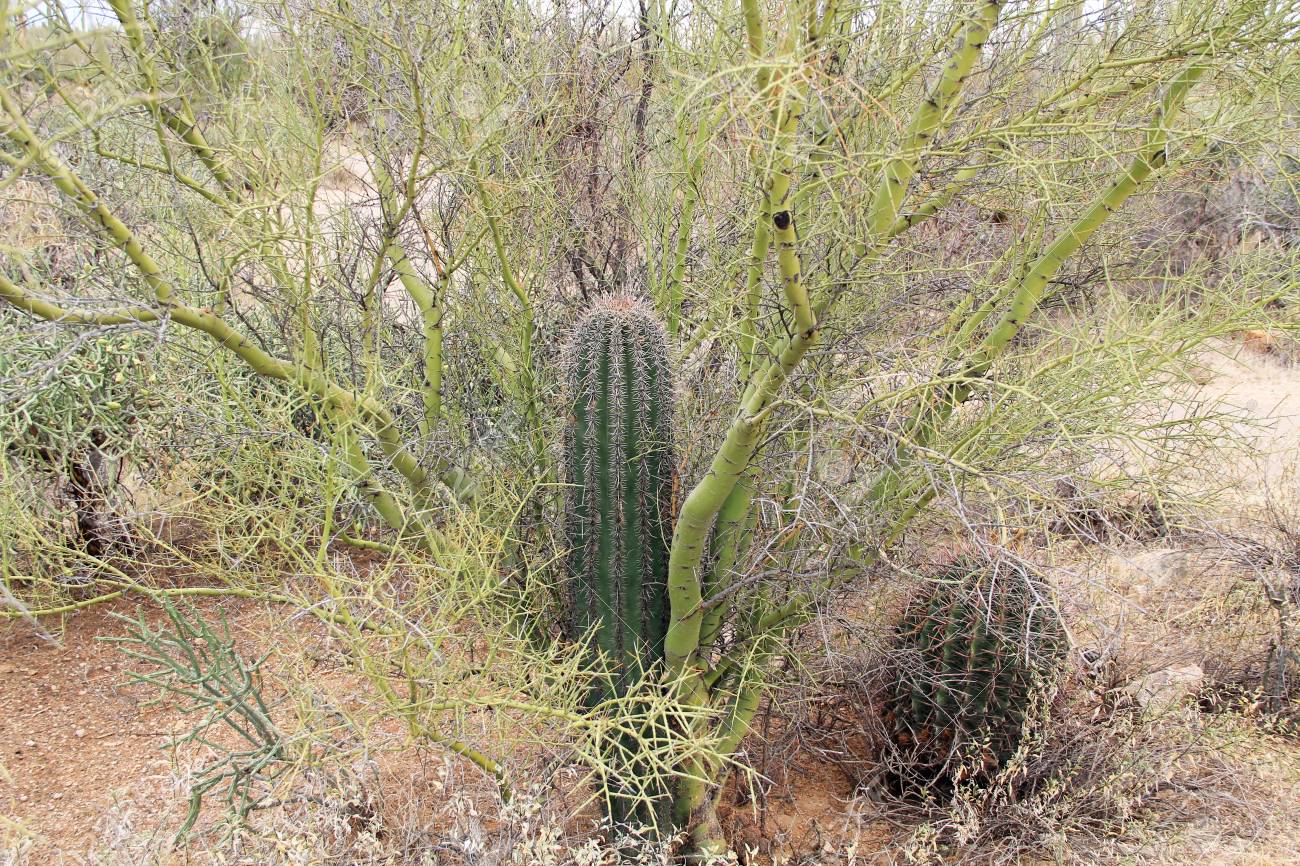
A Palo Verde serving as a nursery tree with a young Saguaro growing up amongst its branches.
Besides their aesthetic appeal and the alluring shade they offer to people, desert trees are entire ecosystems unto themselves. What goes on in their understory is a huge part of their story. Birds, small mammals, reptiles, arachnids, baby plants, and cacti all depend on the shade and protective cover of nursery trees. The shade of the branches of and the water-holding power of roots create a cool hide-away from the brutal sun. It is the perfect place for something small to grow in until it is strong enough to step out into the sun. The very-sharp spikes on many of these trees also adds a layer of protection from predators for small animals. Even the most determined of coyotes will hesitate before poking his nose into such a thorny situation. Without our native trees to nurture our wildlife, many species simply couldn’t survive. Here’s more on this.

A Mesquite tree with branches full of yellow polllen and pollen forming a carpet of yellow on the ground. Photo by Caroline Reilly.
Africa may have its Big 5 of animals, but here we have a big 5 of desert trees: Palo Verde, Mesquite, Catclaw Acacia, Desert Willow, and Desert Ironwood.  There are other natives, but these, in their various varieties, are the most prolific in our area. Palo Verdes are our state tree; they can grow up to 30 feet and live for hundreds of years. Their distinctive green bark provides their name; it means “green stick” in Spanish. Mesquites are the most common tree in the Tucson valley. They are fire-resistant and provide food from their seedpods for people, birds, and animals. They also have abundant golden pollen that can be mighty troublesome for allergy sufferers. Catclaw (aka Devil’s Claw) Acacia, (as the name implies), have imposing curved thorns that most creatures steer clear off. Birds and bees, however, love these trees and acacia honey is especially delicious. Desert Willows are not related to true willows but do have long,
A close-up of a Catclaw Acacia branch showing its curved thornes.
thin branches with graceful, drooping leaves like willows have. These trees have multiple trunks and fragrant, pink trumpet-shaped flowers that are a favorite of hummingbirds. Desert Ironwoods are the slowest-growing of our Big 5 group. They are also the tallest (up to 45 ft.) and longest-lived (as much as 1,500 years). They are essential to our native environment as nursery trees, but they also have deep cultural ties to our indigenous people. The dark, finely textured and dense wood of this tree has been used for artistic, utilitarian, and ceremonial purposes for untold hundreds of years. There is even an Ironwood Forest
An Ironwood tree with pinkish blooms surrounded by smaller mesquite trees.
 National Monument in our state, a good portion of which is on Tohono O’Odham tribal lands to the west/northwest of Tucson. 

Many of the trees you may see in Tucson are not originally from here but have proven popular because they do so well in our sunny climate. These include palms (which you see everywhere), olive trees, citrus of all kinds, fig-trees, Texas Mountain Laurels, Vitex/Chaste trees, Pistache trees, guava, and even Southern Live Oaks. One non-native that all Tucson kids seem to love is the Pomegranate tree. As soon as kids find out about the juicy goodness that is their fruit, no neighbor’s tree is safe. Most mothers I know (myself included) have had their offspring come home with smeary, red faces and hopelessly stained T-shirts. 

A very large tree called Phina's tree towering over a 6 story building.
Another outsider species of note is the Eucalyptus tree. These aromatic Australian natives are fast-growing and undemanding water-wise and can grow to be 80 ft. tall and more. In fact, the tallest tree in the city is a Red Gum Eucalyptus near downtown Tucson known as Phina’s tree. It is between 110 and 120 feet tall and has a charming backstory (read more here). Great trees they may be, but the Eucalyptus has several things working against it: They have relatively weak limbs, which can become projectiles on a windy day. This can be especially dangerous during our violent monsoon storms. And then there is their immense size - in a neighborhood of closely placed homes they can be problematic. And, due to their high oil content, they are quite flammable. Even though they have fallen out of favor for these reasons, they were once a popular choice and there is still a lot to be found in older neighborhoods. 
Olive trees lining the walkways at the University of Arizona. There is a man in red shorts running in the foreground.
One last group of Tucson trees I’d like to mention make their home on the University of Arizona campus. Known as the Heritage Trees, there are 8,000 of them from 400 species around the world. Some of these trees date back to around the time that the U of A was founded in 1885. There is even a “Moon Tree”, an American sycamore that was grown from seeds that went to the moon with the Apollo 14 astronauts in 1971. I have always loved the trees at the U of A and enjoyed them as an undergrad, graduate student, and employee.

A moving images of trees and cacti along a pathway.
Even though we have a lot of trees around here, we can always use more to combat climate change and habitat loss. To that end, Mayor Regina Romero has started a Tucson Million Trees campaign. The aim is to get a million trees in the ground by 2030.

I’m sure there are some notable, or note-worthy, trees that I have missed. If so, I think that makes my point that there really are a lot of trees here in our desert. And they add so much to our lives – here is an excellent article (with fabulous pictures) about all they do.


Take Care.

Submitted by Pam


Friday, July 23, 2021

It's Time To Start Watering Smarter

Water cascading down onto green plants in the ground.
It’s summer and every year this season gets more intense – hotter, drier, wetter, or all of these things (which is what we’ve had in southern Arizona). Unfortunately, with the lack of public will and clear-cut actionable solutions, these climate-change effects are with us to stay. Which means it’s time to re-evaluate how we water.

I recently spent some time house-sitting for a family member who has some substantial plantings around the property. When I began my sojourn there, we were experiencing extreme heat and the watering chores were focused on dealing with that. But within a few days, we had some intensely powerful monsoon storms, the ground was waterlogged, and flash floods were happening. This sudden change made my caretaking duties less obvious and more stressful. To water or not to water was and continues to be the big question. Luckily, there are answers, especially in a well-though-out watering plan. 

A close-up of a white flower with water droplets on it.

All watering strategies should come from an understanding that water resources are finite and the only way to maintain a healthy garden long-term is by using less water. Or by watering smarter. Many municipalities (especially in the drought-stricken West) have or are considering putting restrictions on water use, so you will be ahead of the game when planning to water properly but less. The mantra to follow should be: “Water as much as needed while using as little as possible”. To that end, here are some guidelines:

 - HOW TO WATER - 

WATER EARLY IN THE MORNING, OR MAYBE IN THE EVENING – Watering in the daytime is simply wasteful as you lose a good bit of it to evaporation, especially in summer. Here in Arizona, we discourage evening watering because that is when water use is at its highest. But it can be done safely then or even later at night due to our dry conditions. In more humid climates, you run the risk of welcoming disease if your plants are put to bed with wet leaves. These are also favorable conditions for snails to make themselves at home. It’s probably best to just water in the morning – and in the hottest places this can be as early as before dawn. 

A snail on a red watering can.
MULCH AND MULCH SOME MORE – Where possible, add mulch around your plants to help hold water in, reduce runoff, and lower the surface soil temperature. Avoid coco peat, however, as it will hold the water and makes a soggy mess that can encourage disease. 

WATER SLOWLY, DEEPLY AND THOROUGHLY – You don’t want to squander water on leaves where it will evaporate rapidly, especially since plants need water most in their root zones. In general, water needs to move 6”-12” into the soil to get to the roots and this can take more than a couple of minutes, so soak slowly (soaker hoses work well when monitored carefully). Or water some, walk away and water elsewhere, and then come back to water more. Watering deep in the soil encourages plant roots to grow down, creating stronger and healthier root systems.  In our recent storms, a lot of large trees have fallen and many of these were the victims of quick and shallow watering. They had responded to this type of watering by developing wide-spread, surface level roots that aren’t able to hold up to heavy rain or strong winds. 

An assortment of watering cans - with a milk can in the back. Photo by Clerment Falize on Unsplash.
USE A WATERING CAN AND NOT A HOSE – 
I realize that this may not be practical in all situations, but it’s a good strategy to use when you are able. A watering can delivers targeted water where you want it with less spray lost to mist. The use of a well-placed soaker hose is an exception to this rule. 

 - HOW MUCH WATER TO USE – 

YOU SHOULD PROBABLY BE USING LESS WATER THAN YOU ARE – According to this EPA article, landscaping typically requires one inch of water a week. But that seems rather arbitrary to me and definitely too much in many circumstances. Rather than seeking a way to make sense of the amount of water you use, it’s far better to consider ways to cut down. Xeriscape practices have been popular in southern Arizona for decades but is no longer just for desert communities. With xeriscaping you can have the beautiful landscaping you want – with less yard maintenance - while reducing water and fertilizer usage, embracing native species, and improving the soil.

Monsoon storm with lightning, rainbow & saguaro in Tucson, Arizona.
STRETCH YOUR RAIN RESOURCES – People have been using grey water on gardens since gardens were invented and it’s still a good idea. Collecting and harvesting rainwater is also nothing new, but surprisingly few people take advantage of this literal gift from the heavens. Although they are nice, you do not need a fancy collection system; you can start small with buckets or something similar (just be sure to use the water and not let it sit and become a mosquito breeding ground). If your rainstorm is a gentle one, push your container plants out so they can get the good stuff straight from the sky. Lightning-packed rain events can be a little terrifying, but they offer more than water as the lightning can help deliver nitrogen into the soil (and your plants love that). That doesn’t mean that you should go out amongst lightning strikes to put out your favorite potted plant, but it does mean that what you have growing out there is appreciating the charge they’re getting. If you have recently received a lot of rainfall, do not continue to water as usual, wait until the soil has dried out. Turn off the irrigation and re-evaluate. This especially true in arid places where plants are adapted to dry soil. Keep in mind that over-watering can kill as surely as too little watering can.

A nonsensical GIF of a giant man in a white jacket using  a watering can to water people on a beach.
The bottom line is we all have to use less water. It’s that simple. However, we still need plants in our world, so it’s on us to figure out as individuals the best way to manage our small part of the world. If everyone was a careful steward of their tiny part, the whole world would grow healthier and stronger. So, when you save a little rainwater, think of yourself as an environmental crusader – you have to start somewhere.

Take Care

Submitted by Pam


Thursday, August 13, 2020

10 Super Succulents and Cool Cacti

A figurine of the Marvel Comics character Groot standing next to cacti and succulents in brown pots.As part of the Plant Parenting craze that has surfaced in the last few years, succulents have seen a rise in popularity that is more of a tsunami than a surge. As a person who lives in and loves the Sonoran Desert, it pleases me to know that cacti and succulents are getting the appreciation and respect they deserve. On the other hand, as with many things that suddenly become popular, their very popularity can be devastating to them. Desert habitats may seem tough and durable (and in many ways they are), but they are also finely balanced and the flora that thrives in them can be quite delicate. They can be damaged irreparably by the smallest amount of foot traffic, not to mention rampant and/or random harvesting. Here are two excellent articles on the effects of the succulent/cactus trade: This one explains how all cacti are endangered and this one lists the succulents that are almost gone already. There are several plants on the following list that are endangered and/or rare. If you are interested in them or are actively collecting any cacti or succulents, always order from a reputable dealer and never purchase from unknown sources online or attempt to collect them yourself.

As an aside: If you are unsure as to the difference between cacti and succulents, this article explains it simply.
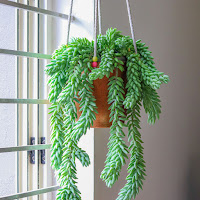
SEDUM MORGANIANUM hanging in front of a white-paned window.SEDUM MORGANIANUM – aka Burro’s Tail, Burrito, Donkey’s Tail, Lamb’s Tail, Horse’s Tail, Sedum Burrito. Originally from southern Mexico, this is a dramatic yet easy-to-grow succulent, with long, thick, trailing stems of overlapping grey-green leaves that look almost braided. This plant can get quite long (up to 4’) and heavy; it looks fantastic as a hanging plant, but make sure you have a strong enough pot and hanger. Here's more on their care and here's a video as well.

Close-up of the leaves and flowers of a CRASSULA UMBELLACRASSULA UMBELLA – aka Crassula Wine Cups, Wine Cup Succulent. This unique succulent is native to South Africa. It has erect, smooth stems that end in leaves that are roundish and curved under around the edges to form an upside-down umbrella-like shape. Flowers will appear around an erect, inflorescence that pops out of the middle of the leaf. This lovely succulent is easy to grow but hard to find commercially, making it a desirable addition for any collection. Learn more here.

ESCOBARIA ABDITAESCOBARIA ABDITA – This cool-looking cactus was named after the Mexican naturalist Romulo Numa Escobar. It comes from a very dry basin in the Mexican state of Coahuila. In times of extreme drought, this plant can retract its stems and live partially (or even completely) underground. The unique spines that thickly crisscross the surface are white and look like spindles or flowers. The actual flowers are large and daisy-like and pop out from between the spines. This cactus is not easy to keep alive and thriving – it’s hard to duplicate the harshness of the environment it is accustomed to without actually killing it. But that does not mean it is impossible; here's more.

CONOPHYTUM BURGERI
CONOPHYTUM BURGERI – aka Burger’s Onion, Little Light Bulbs. This endangered South African plant is a simple, single-bodied succulent that can be green, white, strawberry-colored, vaguely purple, or some mix of each. It has a roundish, almost onion-like shape and a big ole purple and white flower that perches on top like a lady’s sun hat. It is reported that the flower smells like honey. The native habitat of this little gem is protected by the current owner – a mining company, no less. Here’s a video on the always-important watering of this family of succulents.
A hanging PSEUDORHIPSALIS RAMULOSA
PSEUDORHIPSALIS RAMULOSA – aka Red Rhipsalis, Red Mistletoe Cactus. This stunning epiphytic cactus is native to rainforests in large parts of the Caribbean, Central America, and northern South America. The Red Mistletoe Cactus has long (up to 2’) stems full of flat, ribbon-like leaves. It starts out green, but bright sunlight will cause it to color up in shades from peach or light violet to a deep burgundy-red. Along the leaf edges, it will produce small white flowers that look like a trim of seed pearls. To learn more, read this and watch this short video.


BOOPHONE HAEMANTHOIDESBOOPHONE HAEMANTHOIDES – aka Namaqua Century Plant, Cape Century Plant. This southern African native is unusual among succulents in that it does its active growing during winter months (because that’s when the rains come in its native land). The wavy, bluish-green leaves can get 15”-18” long and protrude from a massive (8+ inches) bulb. This bulb grows in layers like an onion and displays most of its bulk out of the ground. This plant will bloom, and the flowers are indeed beautiful and fragrant, but it is extremely slow to flower. This is because Boophone Haemanthoides is a long-living plant, with some bulbs living as long as 100 years in the wild, so it can easily take as much as 8-10 years for them to reach their blooming stage. Luckily, the foliage of this neat plant is so entertaining you may not care if it ever flowers. More on the intriguing plant here and watch a woman talk about her first bloom from one here.
XEROSICYOS DANGUYI in a white pot

XEROSICYOS DANGUYI – aka Silver Dollar Vine, Silver Dollar Plant, Dollar Vine, Penny Plant, String of Coins. This fast-growing vine from Madagascar is actually a member of the Cucurbitaceae family, which makes it a relative of the cucumber. This succulent is nearly all tendrils, which have thick, coin-shaped leaves at intervals along their length. In mid-to-late spring, you can expect tiny, four-petaled pale yellowy-green flowers. The arms of this succulent can get quite long (20” or so) and will spread nicely along a windowsill or tabletop - or allow it to make a statement as a hanging plant. Watch this video and/or read this for more information.


EUPHORBIA TIRUCALLIEUPHORBIA TIRUCALLI – aka Pencil Cactus, Sticks on Fire, Milk Bush, Firesticks, Firestick Plant, Indian Tree Purge, Naked Lady. Think you have the chops for a “dangerous” plant? And the space for a large indoor tree? If so, this succulent may be for you. Euphorbia Tirucalli hails from the warmest climes of Africa and India, where it can grow up to 30 feet. Grown indoors, it can achieve six feet and, at certain times of the year, it glows in shades of orange, yellow, and pink. Its danger lies in its milky-white sap. The sap carries toxins that, for most people, are not a huge concern. But for some people, it can cause severe, even anaphylactic, reactions. And everyone should take precautions to keep it away from their eyes. If you take proper safety measures when handling and don’t have children or pets to worry about, this gorgeous plant could be a stunning addition to your collection. For more on the inherent risks in keeping this succulent, read this article. For general information on this plant, check out this article and video.

CRESTED SENECIO VITALIS - it looks like a mermaid's tail coming out of a white pot filled with blue stones.CRESTED SENECIO VITALIS – aka Mermaid Tails, Whale’s Tail, Blue Chalk Fingers, Blue Chalksticks, Narrow-Leaf Chalk Sticks. Here is another terrific South African succulent and this one gives off some serious under-the-sea vibes. The particular shaping of these specimens is caused when they crest, meaning they stop producing stems and branches and, instead, flatten out and grow out wild shapes on top. This process is natural and may only last a few years, at which time they can begin to take one another more “normal” shape, These look really cool in a pot, but keep in mind that they can grow 3-5’ wide 2’ tall. You can grow them outside in some areas, but they’ll need to be watched as they can turn invasive in certain environments. Watch this video to see how to trim one and read this article for more information overall.

A close-up of anAEONIUM ARBOREUM ZWARTKOPT
AEONIUM ARBOREUM ZWARTKOPT – aka Black Rose, Black Rose Aeonium, Black Tree Aeonium, Black Beauty. Are you ready to add some unusual color to your collection? This exotic succulent has its roots in the Canary Islands and its delightful deep-burgundy, almost-black-looking leaves are a real treat. There is a caveat, however: these beauties need plenty of direct light – about 6 hours a day. This preference for sunbathing (they’re from the Canary Islands, after all) allows them to maintain their gorgeous coloring. Without it, they will fade to an ordinary green. They also can get pretty big (4’ high and 2’ wide), which is something else to take into consideration for an indoor plant. As a patio plant, they would do well. Once you get their space and light requirements down, they require little attention. See more here and read more here.

A cartoon of a cat popping out of a pot surrounded by cacti and other plants.An essential component to growing any of these plants successfully is to have the right soil. We offer a really terrific one from a company right here in Tucson, where we know our cacti and succulents. Check it out here. And for all you cactus lovers, there is a way to safely adorn yourself with our iconic Saguaro Cactus.

Stay cool out there.
Submitted by Pam

Featured Post

5 Cool Things About Nematodes

It’s September, and here at ARBICO, it’s Beneficial Nematode season. Every year we put our Beneficial Nematodes on sale at this time to enc...